

12Sigma Launches σ-Discover/Lung AI System for Pulmonary Nodule Detection and Malignancy Assessment
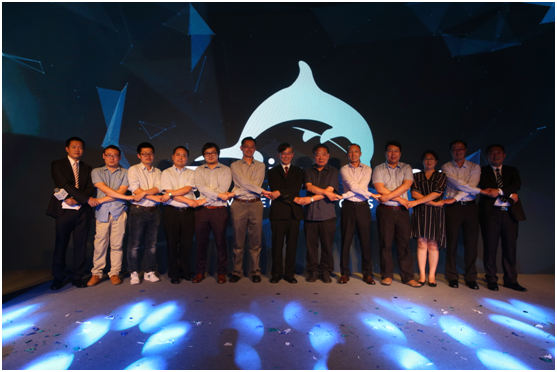
On the afternoon of August 10, 2017, Tuma Shenwei unveiled its latest product in Beijing—the σ-Discover Intelligent Diagnostic System for Pulmonary Nodules. This system not only identifies the location and size of pulmonary nodules but also assesses their benign or malignant nature, generating structured diagnostic reports to maximize the reduction of physicians’ workload.
“Since its establishment in April 2015, TomoDeep has completed two rounds of financing and officially launched its products. The company is currently undergoing certification by the CFDA and the FDA, with CFDA approval expected by the end of this year or early next year,” said Zhong Xin, founder and CEO of TomoDeep, as he introduced the company’s progress at the press conference. VCBeat (WeChat ID: vcbeat) has been following up with reports on how TomoDeep’s products are performing.
Despite significant advances in lung cancer research over the past few decades, lung cancer remains the malignant tumor with the highest incidence and mortality rates, accounting for 22.7% of all cancer-related deaths in China, with an overall 5-year survival rate of only approximately 16%. The current clinical reality is that about two-thirds of lung cancer patients are diagnosed at an advanced stage. Correspondingly, extensive studies have demonstrated that surgical resection during the early stages of the disease (particularly Stage I lung cancer) can significantly improve prognosis, raising the 5-year survival rate to approximately 80%.
Therefore, improving early diagnosis of lung cancer has become a critical issue for enhancing patient prognosis. Low-dose spiral CT has significantly increased the detection rate of early-stage lung cancer and non-calcified nodules.
Zhong Xin, the founder of Tuma Shenwei, holds a Master’s degree in Electrical Engineering within Biomedical Engineering from the University of Michigan and an MBA from Carnegie Mellon University. His research interests include machine learning, computer vision, and big data mining and analytics. After graduation, he served as a Project Manager in the Multimedia Division at Qualcomm Corporation. Recognizing the critical importance of early diagnosis and treatment of lung cancer, he joined forces with Gao Dashan, the company’s co-founder and CTO, to establish Tuma Shenwei.
Gao Dashan is also an artificial intelligence expert. He graduated from the University of California, San Diego, with a degree in Electrical and Computer Engineering, and previously served as a Senior Engineer in Qualcomm’s Computer Vision R&D group. Zhong Xin and Gao Dashan quickly found common ground and co-founded the company in April 2015.
The company was originally founded in the United States. Later, recognizing China’s development potential, Zhong Xin led the founding team back to China in April 2016.
Since then, the company has entered a period of rapid development. The team now comprises over 40 members, with core personnel drawn from top-tier technical research teams at Qualcomm, Google, Kitware, Apple, GE, Siemens, and the Allen Institute for Brain Science, bringing extensive expertise in artificial intelligence, deep learning, and medical image analysis. Notably, 83% of the R&D staff hold doctoral degrees. The company currently maintains R&D teams in Beijing, Suzhou, and San Diego, USA.
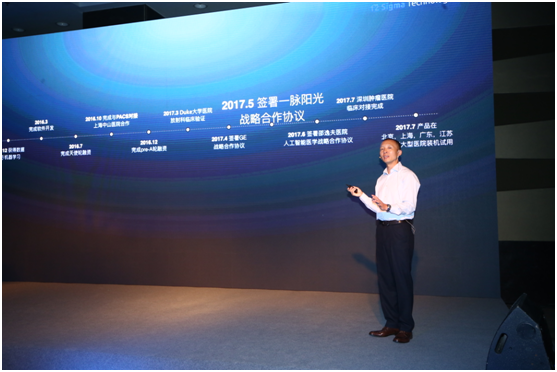
December 2015: Data Acquisition for Machine Learning
March 2016: Software development completed
In July 2016, the company completed a $1.5 million angel round of financing, with ZhenFund as the investor.
In October 2016, completed integration with PACS and established collaboration with Zhongshan Hospital in Shanghai.
In December 2016, the company completed its Pre-A financing round, led by Xianfeng Changqing, with ZhenFund and Matrix Partners China as co-investors.
March 2017, Clinical Validation by the Department of Radiology at Duke University Hospital
April 2017: Signed a Strategic Cooperation Agreement with GE
In May 2017, signed a strategic cooperation agreement with Yimai Yangguang.
In June 2017, a strategic cooperation agreement on artificial intelligence in medicine was signed with Sir Run Run Shaw Hospital.
In July 2017, clinical integration was completed with Shenzhen Cancer Hospital, and the product was installed for trial use in major hospitals across Shanghai, Beijing, Guangdong, Jiangsu, and other regions.
Reviewing the development trajectory of Tumor Deepwise, we can observe that the company has experienced rapid growth since its return to China in April 2016. At the press conference, Zhong Xin also remarked with a smile that although there remains a gap between China and the United States in foundational technologies, startups in China find it easier to secure support from both capital markets and hospitals.
According to the latest Market Study report, AI applications in the healthcare sector are projected to account for 40% of the compound annual growth rate (CAGR) between 2017 and 2024, with the total market across medical imaging, diagnostics, personalized AI assistants, drug development, and genomics reaching $10 billion. TumorDeep’s newly launched globally leading AI medical imaging system, σ-Discover/Lung, is an automated medical diagnostic and medical data analysis system based on deep learning technology.
Introduction to Zhong XinThe Tumavis σ-Discover/Lung intelligent diagnostic system for pulmonary nodules primarily features four core functions: nodule detection, nodule analysis, nodule diagnosis, and report generation.。
Nodule Detection and AnalysisMost medical AI companies currently focus on automatically detecting features such as the location, size, and type of nodules. Zhong Xin stated that the system was trained on more than 22,000 image datasets annotated by medical experts, capable of detecting nodules ranging from 2 to 96 mm in size, and demonstrating high sensitivity to ground-glass opacities (GGOs). Tuma Shenwei’s technical advantages are primarily reflected in image segmentation and feature extraction; it can effectively segment nodules even when they are connected to blood vessels or the lung margins.
Nodule diagnosis is highly technically challenging; through nodule assessment, the system can determine whether nodules are benign or malignant., thereby assisting physicians in making clinical judgments. Zhong Xin stated that the current accuracy of σ-Discover exceeds 90%, and its application in primary healthcare settings can significantly enhance diagnostic capabilities. Currently, this determination of benign versus malignant nature is derived from machine learning based on annotated image data, rather than constituting the pathological gold standard. For ambiguous nodules, pathological examination should be conducted as appropriate based on individual clinical circumstances.
Report generation refers to the process by which the system, after reading the images,Automatically Generate Structured Imaging Reports, saving doctors' working time. Zhong Xin introduced that the system's overall image interpretation time is about 2 minutes, compared to the 5–10 minutes required by physicians, thereby saving a significant amount of time. Furthermore, structured electronic medical records eliminate the hassle of taking screenshots and manually entering data.
Additionally, Zhong Xin stated at the press conference that the system demonstrates excellent adaptability. It can interface with and interpret imaging data from CT scanners manufactured by GE, Siemens, or other companies, without requiring any parameter adjustments.
According to Zhong Xin, in addition to screening for pulmonary nodules and lung cancer, Tuma Shenwei is developing a series of products along the line of thoracic diseases. Furthermore, research and development efforts have been initiated in the areas of cardiovascular disease, cerebrovascular disease, diabetes, and oncology, involving close collaboration with various hospitals. The company plans to launch 8–10 types of computer-aided diagnostic products for different diseases across China within the next three to five years.
Regarding commercial exploration, Zhong Xin stated, on the one hand, they collaborate with medical device companies such as GE, which require such software systems to enhance their sales competitiveness. On the other hand, after obtaining CFDA certification, Tuma Shenwei will also sell the system to hospitals to improve their operational efficiency.。
VCBeat has reviewed pulmonary nodule screening products from multiple companies in the market. Tuma Shenwei’s advantages lie in its assessment of nodule benignity versus malignancy and the progress of its commercialization efforts.