Electronic Medical Records as the Foundational Database: Critical to the Future of Healthcare Big Data

1
# The Most Watched Subsectors This Week
#Electronic Medical Record#
With the implementation of national policies on healthcare big data, electronic medical records, as one of the foundational databases, in hospital information systemsMediumstatus continues to rise. In response toElectronic Medical Records in Healthcare Big Datadevelopment issues, VCBeat (WeChat Official Account: vcbeat) conducted an exclusive interview withExperts from several of the most representative electronic medical record (EMR) companies in China.
VBInsight
1. The value of data depends on the user and application scenario
From the perspective of Kingdee Medical, clinical foundational data in hospitals is supported by systems such as HIS, LIS, and EMR. For hospital resource data, Kingdee Medical utilizes the HRP system for management. Meanwhile, patient behavior data can be collected through various mobile terminals or data acquisition devices.
For instance, physicians need to monitor the amount of social resources consumed by a specific disease and determine the reimbursement rate that the state should cover within the insurance payment system, which involves data from the Hospital Resource Planning (HRP) system.
By leveraging interconnected information systems to obtain clinical and financial data related to specific disease types, performing precise cost calculations for these diseases based on clinical pathways, and then comparing hospital disease costs with health insurance payment standards, the reimbursement ratio for the diseases can be determined.
If physicians focus on clinical diagnosis and treatment practices and aim to improve therapeutic outcomes and clinical efficacy in diabetes management, they should place greater emphasis on data related to disease diagnosis, treatment, medications, and post-consultation follow-up.
This necessitates the support of systems such as Electronic Medical Records (EMR). By leveraging disease-specific cost analysis, hospitals can optimize departmental services, provide quantitative recommendations for departmental development, and establish reference indicators for disease-specific performance management.
2. Enhance the Data Value of Electronic Medical Records to Empower Health and Medical Big Data
The value of medical record data stems from two fundamental elements: first, the data must be parsable and open; second, the data must be authentic. Both are indispensable.
The authenticity of data hinges significantly on whether the software is reliable, concise, and practical. Data within electronic medical record (EMR) systems are ultimately entered by physicians during clinical practice. If the software interface is cumbersome, physicians are inevitably prone to fatigue during data entry, which substantially compromises the authenticity of the recorded data.
Duchang Information’s electronic medical record (EMR) control component excels in user experience. It offers a comprehensive suite of features, including structured data entry, audit trail retention, quick-assist input, and full keyboard operation. Through these meticulous functional details, the component enhances the usability of partner systems, enabling physicians to enter data both accurately and efficiently, thereby improving the overall accuracy of medical data.
3. The parsability and standardization of electronic medical record data form the foundation for the development of big data in health and healthcare
Data within hospital internal systems primarily consists of data generated by electronic medical record (EMR) systems. However, when data from various hospitals are integrated outside the hospital setting, they form a Personal Health Record (PHR). Both processes—extracting data from within hospitals and consolidating it externally—are based on interoperability.
In this regard, the electronic medical record editor file format of Duchang Information has two major advantages:
First, it is interpretable; second, it is standardized.
Duchang Information’s open file format allows third-party companies to parse data directly through application software, without relying on Duchang Information’s software products. Thanks to this convenience, regional healthcare information systems developed by IT companies can achieve high-speed data analysis, upload, download, and integration. As a result, IT companies can easily upgrade electronic medical records into personal health records.
In terms of standardization, since electronic medical record (EMR) files adopted by different hospitals share a consistent format, concatenating data in the same format becomes straightforward. This lays a solid foundation for the interoperability of EMRs and the formation of big data in healthcare.
Artery Report
Where Are Electronic Medical Records Headed in the Internet Era?
2
Don't Miss This Week's Top Stories
"Zero Markup" Policy for Drugs to Be Implemented in All Public Hospitals by End of September: What Issues Remain Unresolved?
Author: Gao Kangping
The drug markup policy has been in effect for half a century. The introduction of the drug markup policy in public hospitals can be traced back to the mid-1950s. The drug price markup policy was introduced in 1954. At that time, the state allowed medical institutions to add a markup to the wholesale price when selling drugs at retail, thereby determining the retail price of drugs. The drug markup rate. In the 1980s, the revenue structure of medical institutions was adjusted again, and the state implemented a system of “full-scale management, fixed-amount subsidies, and retention of surpluses” for financial subsidies to medical institutions.
After the elimination of drug markups, hospitals’ revenue shortfalls are covered through three channels: 80% from adjustments to medical service prices, 10% from government fiscal subsidies, and 10% absorbed internally by the hospitals. However, in practice, deviations may occur in the implementation of all three approaches. With the removal of drug markups, pharmaceuticals have effectively become an operational cost for hospitals, prompting some institutions to pilot “pharmacy trusteeship” models. This has fostered new interest-based relationships between pharmaceutical suppliers and hospitals, thereby creating unfair competition in the pharmaceutical market.
The zero-markup policy and the separation of prescribing from dispensing will bring growing pains to pharmaceutical manufacturers and distributors, significantly impacting their existing sales channels and profit structures, thereby necessitating adjustments to their market strategies. However, from another perspective, while healthcare reform is underway, pharmaceutical reform is also progressing. The state encourages new drug research and development, establishes green channels for drugs with proven efficacy and urgent clinical needs, continuously accelerates drug registration and approval processes, and gradually aligns regulatory standards with international norms.Medicine and pharmaceuticals are inextricably linked. It is essential to recognize both the challenges presented by the current round of reforms and the opportunities embedded within them. The direction of the new healthcare reform is correct; through continuous practical adjustments to its details, it may ultimately provide all stakeholders with a clear implementation plan that safeguards their interests.
Amazon’s New Healthcare Strategy: Quietly Establishes “1492 Lab” to Actively Explore EHR and Telemedicine Technologies
Author: Chen Xin
An article published by CNBC at the end of last month stated that Amazon has created a secret laboratory focused on internet healthcare technology, named “1492.”In 1492 AD, the Italian navigator Christopher Columbus crossed the Atlantic Ocean and reached the Americas, ushering in the European exploration and development of the New World. By naming this new project “1492,” Amazon seems to signal its determination to replicate its success in a new frontier.
Reportedly, Team 1492 is currently exploring methods to extract and push data from legacy electronic health record (EHR) systems. If successful, this would enable Amazon to provide such information more conveniently to consumers and their physicians. Meanwhile, the team is also seeking opportunities to establish a telemedicine platform that allows patients to conduct virtual consultations with doctors.
With the launch of the “1492” project, Amazon is sending a clearer message to the outside world about its ambition to make significant strides in the field of digital health technology. In addition to Amazon, many major tech companies—such as Apple, Google, Samsung, IBM, and Microsoft—are also focusing on the internet healthcare sector. Leveraging their robust technological capabilities and financial strength, they are actively driving industrial innovation in healthcare and are sure to bring more surprises to the development of medical digitalization.
China’s Liquid Biopsy Industry Landscape: A Panoramic Scan of 6 Subsectors and 64 Companies
Author: Zhou Mengya
Whether it is chemotherapy, radiotherapy, or surgery, traditional cancer treatment methods all have pain points. The emergence of liquid biopsy is expected to disrupt traditional technologies for early cancer diagnosis and recurrence monitoring, providing real-time and effective technical support for precise medication guidance and treatment plans. After several years of development, this new technology, which has received positive reviews from MIT, has evolved into a massive, global industry, becoming a hot and continuously expanding market. A report by Galaxy Securities points out that the liquid biopsy market is expected to maintain a compound annual growth rate (CAGR) of 21.7% over the next decade, with the global market capacity reaching $28.6 billion.
Liquid biopsy can be divided into six subfields, namely the upstream markets for capture, gene amplification, reagents, and instruments; the midstream market for testing services; and the downstream data market. Due to the high technical barriers in the upstream market, more companies have chosen to establish their presence in the midstream segment. Currently, there are 13 companies involved in the upstream capture market, 6 companies related to gene amplification, and 37 companies operating in the midstream segment.
In the upstream sector, capture technology is core. The midstream segment relies on the expansion of channel marketing and the accumulation of data samples. The downstream focus lies in the analysis of big cancer data. Benefiting from advances in sequencing technologies, next-generation techniques have greatly enriched and supplemented our understanding of cancer genomics. Furthermore, as the liquid biopsy industry has gradually matured in recent years, our knowledge of cancer genetic information has continued to deepen. However, achieving more precise interpretation requires not only the integration of sequencing technologies with omics research, but also depends on the accumulation of sequencing samples. Therefore, it is crucial for the midstream segment to devote efforts to building up sample volumes.
3
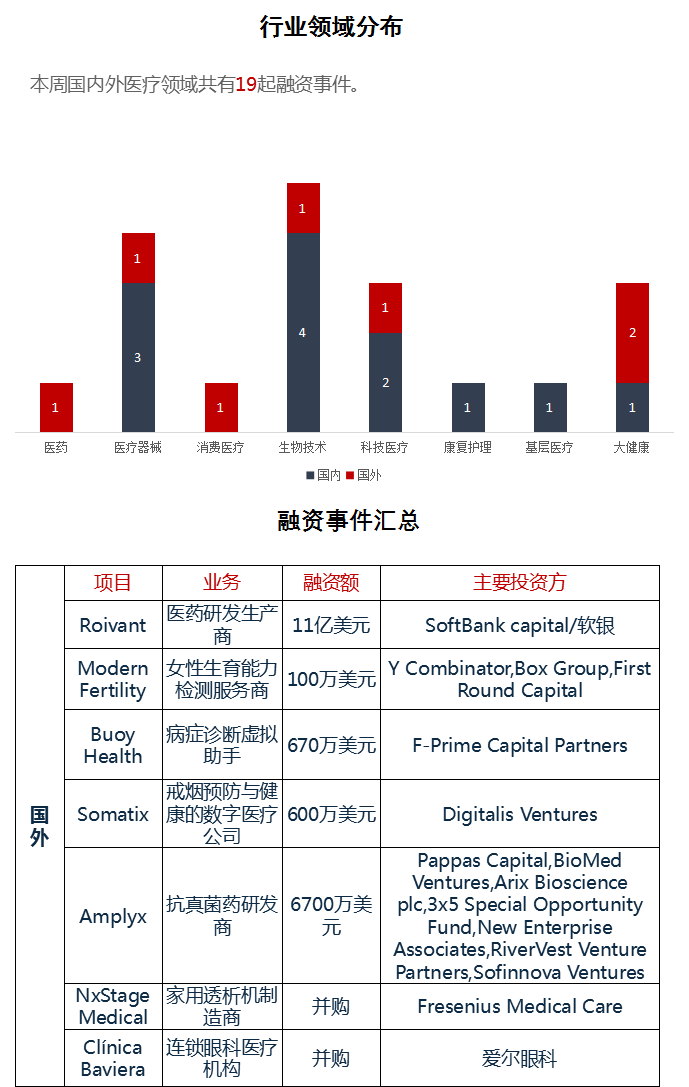
This Week’s Financing Deals in the Healthcare Sector

4
This Week’s Healthcare Sector Activity Updates

4
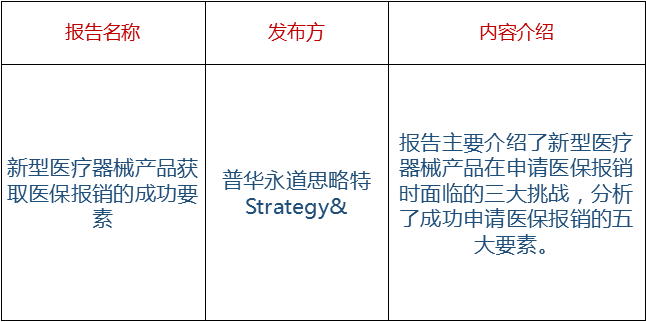
This Week's In-Depth Report
For more content, please refer to the VCBeat Knowledge Base!