

Getwell Health Files IPO Prospectus: Pioneering Aerobic Capacity Monitoring for Chronic Disease Management through Exercise-Based Medicine
“With the growing number of people suffering from chronic diseases, improving health through lifestyle management has become increasingly important. Everyone knows that exercise is beneficial to the body, but there is no effective solution for how to exercise properly.” From the tone of Gong Yu, CEO of Jiadong Health, the reporter detected her urgent desire to change this status quo.
As an avid sports enthusiast, Gong Yu has always been passionate about participating in various outdoor activities. She has taken part in the Gobi Desert Challenge and is one of the founders of the CEIBS South China Tigers Football Club. She also holds unique insights into sports, believing that integrating sports with medicine would be mutually beneficial for both individuals and society.
Thus, in September 2015, Gong Yu teamed up with several long-time friends to launch a startup, establishing Getwell Health (Getwell). Guided by the concept of integrating sports and medicine, Getwell Health is dedicated to the commercial application of aerobic capacity in the fields of medical fitness, chronic disease rehabilitation, cancer rehabilitation, and professional training.
Aerobic Capacity, as the world's most advanced health indicator, was incorporated into medical guidelines by the North American medical community in 2016 and began to be applied in healthcare institutions across the United States,Officially recognized as the fifth major clinical vital sign, alongside respiration, body temperature, pulse, and blood pressure.. By assessing aerobic capacity and guiding users in precise exercise, it is possible to effectively enhance aerobic fitness, reduce various health risks, and improve overall physical health.
Interdisciplinary Collaboration Among the Four Founders
While this integrated approach combining sports and medicine is highly beneficial, it places exceptionally high demands on developers. They must possess the ability to collaborate across disciplines, with expertise spanning not only medicine and sports science but also hardware, human biology, psychology, and more. Consequently, these requirements have shaped the formation of Jiadong Health’s core team.

From left to right: Gong Yu, Zhang Gong, Huang Bin, and Huang Bei.
CEO Gong Yu holds an EMBA from CEIBS, as well as dual master’s degrees in Marketing and Executive Business Administration. He has extensive experience in corporate management and market development across multinational corporations, state-owned enterprises, and private firms, with many years of deep expertise in the healthcare services industry.
Dr. Zhang Gong, Chief Scientist, is an expert on the Overseas Expert Advisory Committee of the Overseas Chinese Affairs Office of the State Council.. He has long been engaged in research on health and chronic diseases, invented a portable arteriosclerosis detector and a swine flu monitoring biochip, and was awarded the Canadian Biomedical Commercialization Innovation Award.
Huang Bin, CTO of Hardware, holds a Ph.D. in Computer Engineering from the University of Manitoba and is the developer of the world’s first drone control system. With extensive experience in overseas R&D, he has mastered world-class hardware technologies.
Huang Bei, CTO of the software division, previously oversaw software development at Huawei and Tencent. With extensive experience in managing R&D teams, he has repeatedly overcome critical challenges in software research and development.
Combining Hardware and Software for More Scientific Exercise
As a sports health management company, Jiadong Health’s core business involves using smart wearable devices to assess aerobic capacity and, through intelligent data analysis, helping users enhance the precision and effectiveness of their exercise, thereby enabling more scientific sports health management.
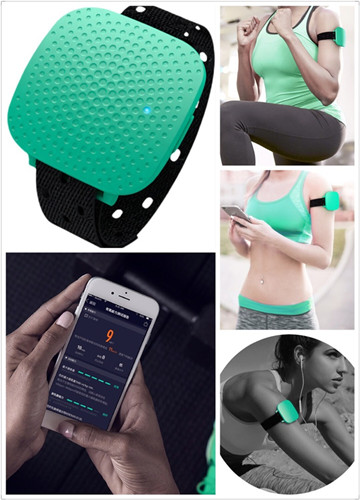
The Jiadong T1, developed by the company, is China's first wearable device for monitoring muscle oxygen saturation and assessing aerobic capacity. The product integratesNon-invasive Metabolic Testing Technology(patent) and artificial intelligence technologies. When users wear the Jiadong T1 during exercise, the T1 device detects muscle oxygen levels in real time and displays the data curves via the companion Ofit mobile app. After the workout, Ofit intelligently analyzes the data to generate an interpretation report, helping users gain a more intuitive understanding of their exercise intensity and aerobic capacity.
Meanwhile, it provides personalized exercise recommendations and plans based on the user’s physical condition, enabling more scientific exercise practices and reducing the risk of sports-related injuries. The product was unveiled at a press conference on July 27 this year and is scheduled for market launch in early September. It is currently undergoing FDA and NMPA certification processes, with FCC and CE certifications expected to be completed by September.
Compared to current wearable devices on the market, the greatest advantage of the Jiadong T1 is its more multidimensional measurement approach. It goes beyond simple heart rate monitoring by assessing changes in oxygen metabolism within peripheral blood circulation, thereby clearly indicating the impact of exercise on metabolism. Most importantly, upon completion of the detection, it provides a tailored solution, offering users actionable guidance on what steps to take next.
B2B2C Business Model: Product Sales + Co-built Health Management Centers
Furthermore, most wearable devices are consumer-grade products sold directly to end-users for self-managed health monitoring, with limited integration into professional industries. In contrast, Jiadong Health targets B-end clients such as medical institutions, health management organizations, fitness clubs, and military units, enabling them to serve consumers. Therefore, Jiadong Health adopts a B2B2C business model.
As for why such a market strategy was chosen, CEO Gong Yu stated, “Products directly targeting C-end consumers essentially require no consumer education, or the cost of such education is very low. However, medical exercise is an early-stage market that requires a period of market warming-up and a process to educate users. B-end clients, such as rehabilitation hospitals and fitness clubs, not only have a demand for user health management but can also assist us in educating users.”
Therefore, in addition to selling products to B-end clients, Jiadong Health collaborates with hospitals, health management institutions, fitness centers, and postpartum care centers to establish aerobic capacity testing centers. As the provider of branding, equipment, training, certification, and data services, Jiadong Health delivers precise exercise and health management solutions to these partners.
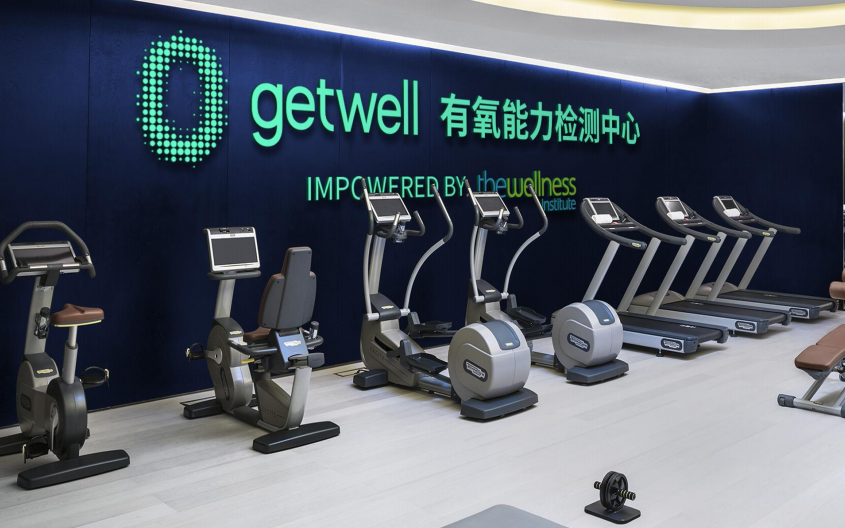
Jiadong Health and the Canadian Health Management Center have jointly established the Aerobic Capacity Testing Center. Based on cutting-edge international health indicators and advanced sports health management models, the center is integrated into gyms and community hospitals to provide comprehensive sports health services, including aerobic capacity assessment, health trend analysis, precision fitness training, exercise risk prevention, personalized program customization, and exercise intervention for chronic diseases.
Canadian Wellness Institute (CWI)As a world-leading authority in chronic disease management and exercise rehabilitation, it boasts over 20 years of successful clinical application experience, along with a mature and comprehensive theoretical framework and research achievements, and has been awarded the title of “Best Center for Chronic Disease Prevention and Control” by the World Health Organization. Through extensive case observations, CWI has identified a strong positive correlation between aerobic capacity and health status.
Over the past two decades, CWI has prevented more than 10,000 cases of heart disease through non-pharmacological interventions such as exercise and lifestyle prescriptions. Meanwhile, it has significantly reduced the incidence of chronic diseases including diabetes, cardiovascular disease, chronic kidney disease, hypertension, and cancer, effectively decreasing outpatient visits and conserving healthcare resources. By collaborating with over 100 community healthcare institutions, CWI provides non-pharmacological interventions and health management services for chronic diseases to 600,000 patient visits annually. In the area of chronic kidney disease management alone, this has saved the society CAD 400 million in medical expenditures.
Current Areas of Collaboration and Future Development Plans
VCBeat has learned that Jiadong Health is currently engaged in scientific research collaborations with several hospitals, medical institutions, and fitness organizations both in China and abroad, primarily focusing onDiabetesandPostpartum Depressiontreatment, and inPublic FitnessApplications in the field.
Jiadong Health, in collaboration with the Affiliated Hospital of Henan University of Science and Technology and the Canadian Health Center, has pioneered clinical research on muscle oxygen-guided exercise for patients with diabetes. In managing exercise health for diabetic patients, the team has adapted the Canadian diabetes management model, integrating Jiadong’s aerobic capacity monitoring system for application in Asian populations. The first phase has yielded favorable clinical outcomes, and the team will now expand this clinical collaboration to 14 hospitals across China.
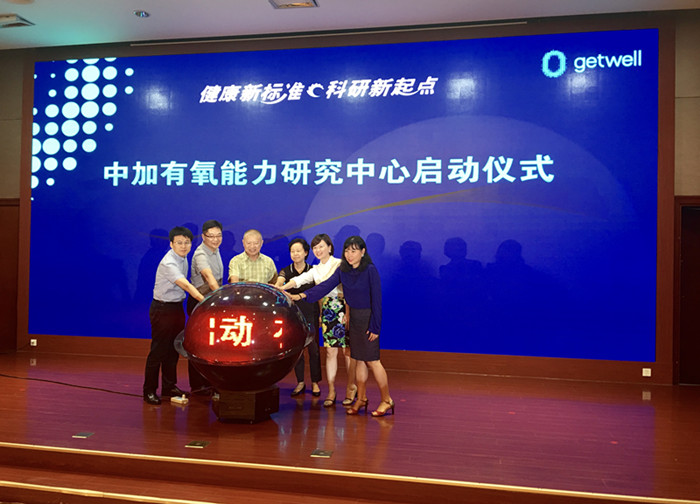
Launch Ceremony of the China-Canada Aerobic Capacity Research Center and Kick-off Meeting for the China-Canada International Cooperative Clinical Research Project
Gong Yu stated: “In the foreseeable future, we hope that through the efforts of Jiadong Health, patients can avoid diabetic complications as much as possible..” It is reported that Jiadong Health has obtained a patent for non-invasive blood glucose monitoring in the United States, and the company may launch a series of products for diabetes management in the future.
Another market direction for Jiadong Health is the mass fitness sector. The company has already signed agreements with leading domestic fitness training firms to develop an exercise training curriculum system based on metabolic management. It plans to train and certify 3,000 coaches within the next nine months and license the curriculum system to coaches and gyms, thereby facilitating the digital transformation of health management in the fitness industry.
Currently, China has 290 million patients with cardiovascular diseases (including 270 million with hypertension), 300 million individuals with diabetes or prediabetes, 90 million patients with depression, 400 million people who regularly engage in physical exercise, and 50 million professional fitness users. This indicates that the field of medical exercise holds immense potential for development. By integrating wearable technology with medical exercise, Jiadong Health has become the first mover in this space. We await to see what achievements it will attain in this new blue ocean market.