

China's Non-Invasive Prenatal Testing (NIPT) Market Landscape: Strategic Layouts of 20 Key Enterprises
In early 2015, the National Health and Family Planning Commission (NHFPC) issued the “Notice from the Department of Maternal and Child Health of the NHFPC on Launching Pilot Programs for the Clinical Application of High-Throughput Gene Sequencing in Prenatal Screening and Diagnosis by Prenatal Diagnostic Institutions,” which decisively marked the end of the regulatory freeze on non-invasive prenatal testing (NIPT). The removal of restrictions limiting pilots to 108 medical institutions signaled that NIPT had become an officially recognized component of clinical in vitro diagnostics.
Prior to the announcement of the pilot notice, many individuals sensed industry opportunities, leading to an influx of new market entrants. The NIPT sector, originally a niche within liquid biopsy, has grown into a multi-billion-dollar market. With the full implementation of the two-child policy, the proportion of advanced-age and high-risk pregnant women has increased significantly, driving further growth in NIPT market penetration. Should the market penetration rate reach 30%, the market size would expand to the tens of billions.
In 2017, Berry Genomics’ successful initial public offering (IPO) marked the formal establishment of this industry. In light of this, VCBeat has decided to conduct a comprehensive review of China’s non-invasive prenatal testing (NIPT) industry, examining the market landscape from the perspective of corporate development.
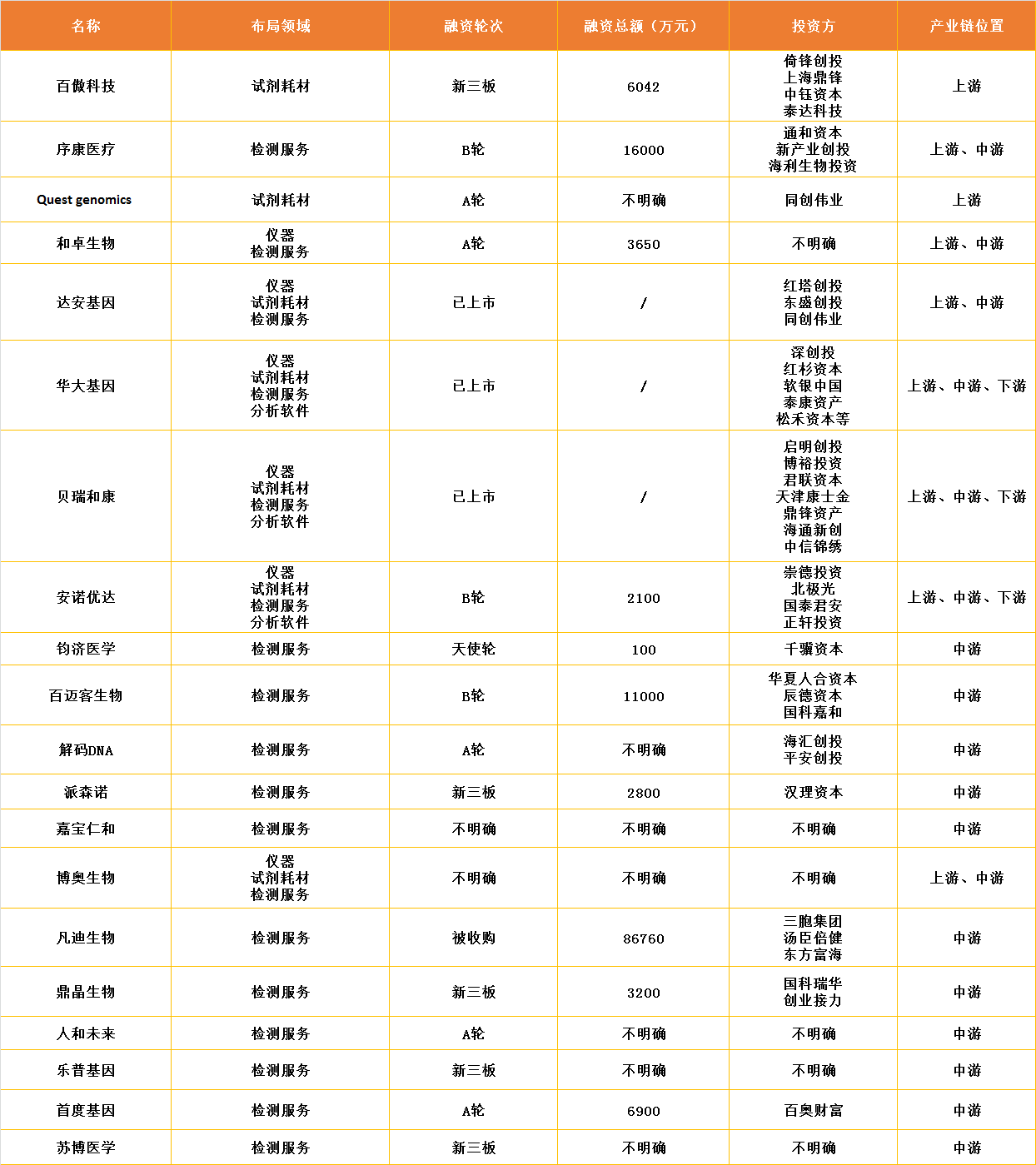
A total of 20 companies were collected and compiled, covering upstream instruments and reagent/consumables markets, midstream sequencing services, and downstream data analysis.
Following the introduction of relevant policies in 2014, all instruments and reagents used for non-invasive prenatal testing (NIPT) were required to obtain approval from the China Food and Drug Administration (CFDA). This compelled NIPT companies to expand their operations into the upstream market. BGI Genomics, Daan Gene, CapitalBio Technology, Berry Genomics, and Annoroad Gene Technology successively obtained CFDA certification for their instruments and associated reagents.
The midstream sector has the highest number of participating companies, totaling 18. With the cancellation of pilot programs, all hospitals and third-party clinical laboratories with relevant qualifications are now able to provide sequencing services. These enterprises only need to establish third-party medical laboratories to offer NIPT services, without having to submit instruments and reagents for approval to the CFDA as required in the upstream market. Therefore, the entry barriers in this segment are relatively lower and less challenging, leading more companies to choose to establish their presence here.
There are very few companies operating in the downstream market. This is because most genetic testing companies have bioinformatics departments, but these are generally used for internal purposes and rarely offered as commercial products. Furthermore, most commercially available data analysis products have broad applications, with few specifically designed for NIPT (Non-Invasive Prenatal Testing).
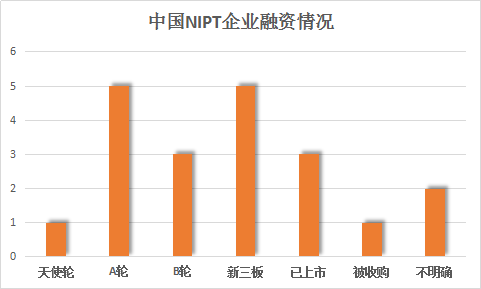
NIPT is the most maturely applied technology in the NGS industry, and companies in this field are also relatively mature, with a majority being at Series A or Series B funding stages.
In addition, companies originally engaged in in vitro diagnostic services, such as Daan Gene, Lepu Medical, and Subo Medicine, also anticipated the transformative impact of NIPT technology in the field of prenatal testing at an early stage and promptly established their presence in this sector.
Although the complete financing details of all companies are not accessible, these 20 companies all have recorded financing activities. According to publicly available data alone, the total disclosed financing amount reaches RMB 1.738 billion (excluding BGI Genomics); among them, Berry Genomics has accumulated RMB 330 million in financing, representing the highest amount.
Additionally, Vazyme Biotech was acquired by Sanpower Group in March 2017 for a transaction amount of RMB 680 million, marking the largest acquisition in China’s genetic testing sector to date.
CFDA’s Strict Regulation: Five Companies Enter the Instrument Market
As mentioned earlier, after the relevant policies were issued by the China Food and Drug Administration (CFDA) in 2014, all instruments and reagents used for non-invasive prenatal testing (NIPT) must obtain CFDA certification before they can be used.
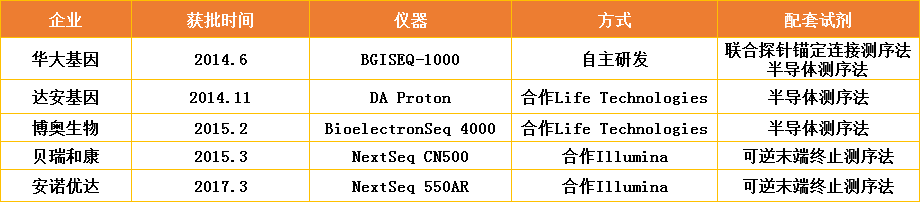
BGI Genomics was the first to obtain certification. In June 2014, the China Food and Drug Administration (CFDA) approved the medical device registration for BGI’s BGISEQ-1000 gene sequencer, as well as its fetal chromosomal aneuploidy (T21, T18, T13) detection kits using both the combined probe anchor ligation sequencing method and the semiconductor sequencing method. This marked the CFDA’s first approval of second-generation gene sequencing diagnostic products.
In November 2014, Da An Gene followed suit, also obtaining CFDA medical device registration for its sequencing instruments and fetal chromosome aneuploidy test kits (semiconductor sequencing method). Da An Gene’s DA Proton sequencer is a domestically produced instrument licensed from Life Technologies (which has been acquired by Thermo Fisher Scientific).
In February 2015, CapitalBio’s next-generation sequencing instrument, the BioelectronSeq 4000 Genetic Sequencer, and its Fetal Chromosomal Aneuploidy (T21, T18, T13) Detection Kit (semiconductor sequencing method) were also approved. The BioelectronSeq 4000 was co-manufactured by CapitalBio and Life Technologies.
In March 2015, Berry Genomics’ NextSeq CN500 gene sequencer and the fetal chromosome aneuploidy (T13/T18/T21) detection kit (reversible terminator sequencing method) received medical device product registration.
The NextSeq CN500 Gene Sequencer is a new high-throughput gene sequencer designed and manufactured by Berry Genomics in collaboration with Illumina (USA) to meet the clinical needs in China. The concurrently approved test kit for fetal chromosomal aneuploidy (T13/T18/T21) adopts Berry Genomics’ proprietary rapid PCR-free library preparation technology, allowing the entire experimental procedure to be completed with just two pipetting steps in a single reaction tube, thereby simplifying the operational workflow.
Although its approval came slightly later, Berry Genomics quickly demonstrated a competitive edge over rivals due to its rapid business model transformation and the well-established channel advantages built in the early stages. By 2016, Berry Genomics had achieved a 70% market coverage rate in the IVD market.
Following the successful commercial application of Berry Genomics’ IVD product model, multiple international organizations have planned to promote it globally.
In March 2017, Annoroad’s NextSeq 550AR gene sequencer and its fetal chromosomal aneuploidy (T13/T18/T21) detection kit (based on reversible terminator sequencing) also received medical device registration approval from the China Food and Drug Administration (CFDA), making Annoroad the fifth company to obtain such approval.
Unlike the cffDNA testing technology adopted by most companies, Hezhuo Biotech aims to achieve non-invasive prenatal testing by capturing cell-free fetal cells from maternal peripheral blood. The company’s UniCyte Cell Capture System can efficiently isolate circulating rare cells present at frequencies as low as one in a million from biological fluid samples (including blood, pleural effusion, ascites, urine, cerebrospinal fluid, etc.), such as circulating tumor cells (CTCs), stem cells, lymphocytes, circulating fetal cells (CFCs), rare leukocytes, and antigen-specific T cells.
The reagents mentioned above are all library preparation reagents, classified as Class III medical devices; purification and sequencing reagents fall under Class I medical devices. Since 2016, the China Food and Drug Administration (CFDA) has stipulated that equipment, test kits, and data analysis software used for non-invasive prenatal testing (NIPT) must comply with relevant regulations such as the Regulations on the Supervision and Administration of Medical Devices and the Measures for the Administration of Medical Device Registration Certificates, and must be approved and registered by the CFDA.
Midstream Segment: 18 companies have established a presence, with 17 setting up third-party medical laboratories.
In November 2016, the National Health and Family Planning Commission issued relevant documents again, abolishing previous regulations on pilot institutions for prenatal screening and diagnosis using high-throughput gene sequencing, and canceling the clinical pilots of 108 clinical pilot units and 9 medical laboratories.
The discontinuation of the pilot program signifies its success, allowing all qualified medical institutions and clinical laboratories to conduct non-invasive prenatal DNA screening and diagnosis. The nationwide rollout of testing services indicates that the market has matured and expanded.
In 2016, the National Health and Family Planning Commission issued the “Notice of the General Office of the National Health and Family Planning Commission on Standardizing the Orderly Conduct of Prenatal Screening and Diagnosis Using Cell-Free Fetal DNA from Maternal Peripheral Blood,” which clarified that prenatal screening institutions affiliated with prenatal diagnostic institutions may conduct non-invasive prenatal genetic testing. Therefore, pregnant women may undergo this testing at nearby hospitals qualified for prenatal screening or prenatal diagnosis.
This determines that non-invasive prenatal testing (NIPT) services are inextricably linked to the hospital segment.
Currently, the business models of companies operating in the midstream segment can be categorized into two types: the Laboratory Developed Tests (LDT) model and the In Vitro Diagnostics (IVD) model.
LDT models are widely adopted abroad, where companies typically partner with insurance providers to reach hospitals through their coverage networks. However, due to differing national conditions, LDT models in China generally enter hospitals via third-party agents, who share testing revenues with the hospitals.
Since the 2016 regulations, enterprises providing non-invasive prenatal testing (NIPT) services must be hospitals or third-party clinical laboratories with relevant qualifications. Therefore, if a company wishes to enter the market from the testing end, it must either establish a third-party clinical laboratory or even a hospital; otherwise, it can only operate as an agent.
Among the 18 companies engaged in testing services, 17 have established third-party clinical laboratories. Hezhuo Biology, which employs cell-free fetal DNA-based testing, is currently in the clinical trial phase and has not yet applied for a third-party medical laboratory license (although the company previously disclosed its intention to apply to VCBeat).
In other words, companies operating in the sequencing services sector have all adopted the LDT model to varying degrees.
Although the pilot program has been canceled, the document stipulates that related instruments and reagents must be approved or filed with the CFDA. For many enterprises that have not obtained certification for their instruments and products, they can only procure from qualified enterprises.
In this context, the IVD model emerged. First adopted by Berry Genomics and Kangsheng, this model primarily provides testing instruments, reagents, and consumables to hospitals and third-party clinical laboratories. Under this model, competition between companies of different scales has evolved into a dynamic of cooperation amidst competition and competition within cooperation.
It is reported that in 2016, Berry Genomics held a 70% market share in the IVD market, BGI accounted for 20%, and other companies made up the remaining 10%. In the overall market, BGI Genomics, Berry Genomics, Daan Gene, CapitalBio Technology, and Annoroad Gene Technology constitute the industry’s first tier.
Downstream Market: A Branch of the Gene Data Analysis Market, with Four Companies Establishing Their Presence
The downstream market refers specifically to the market for data analysis software for non-invasive prenatal testing (NIPT). Only four companies have established a presence in this sector: BGI Genomics, Berry Genomics, CapitalBio Technology, and Annoroad Gene Technology.
Data analysis software for non-invasive prenatal testing (NIPT) is essentially a branch of downstream data processing. A previous article noted that the pure bioinformatics industry is still in its early stages, and standalone data analysis products specifically designed for NIPT are exceedingly rare. Companies operating in this field are invariably those with deep strategic investments and relatively large scale.
There is a significant price disparity for this project between domestic and international markets. Internationally, testing prices range from $350 to $2,900, with an average of $874, whereas in China, prices range from RMB 855 to RMB 2,400. Domestic pricing primarily follows a government-regulated model, resulting in substantial regional variations.
As public health awareness grows and the advantages of testing technologies gain increasing recognition among healthcare professionals and the general public, governments across various regions have successively introduced price regulations for medical tests. With the declining cost of sequencing and advancements in testing technologies, the price of non-invasive prenatal genetic testing (NIPT) continues to trend downward.
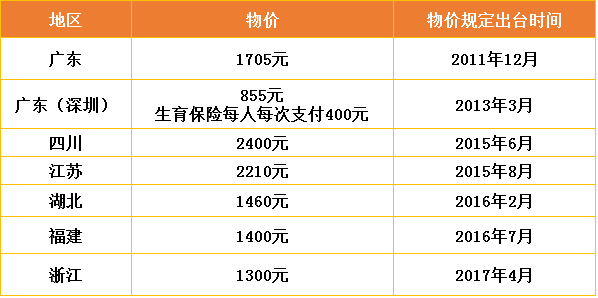
In August 2015, multiple departments in Jiangsu Province jointly issued the "Notice on Approving Prices for Certain Medical Service Items." Based on the "Administrative Measures for Pricing of Newly Added Medical Service Items in Jiangsu Province" and the "Notice on Adding and Improving Medical Service Price Items," and following cost audits, Jiangsu Province established and refined the items and prices for certain medical services. Among these, non-invasive prenatal testing (NIPT) for fetal chromosomal aneuploidy was classified as a Category C chargeable item, with a standardized fee of RMB 2,210 per test.
In the same month, Hunan Province also issued the "Notice on Several Policies for Promoting the Application of Genetic Testing Technology in Hunan Province (Trial Implementation)," which stipulates that such services shall be carried out and promoted through government procurement while adhering to the principles of informed consent, voluntariness, and confidentiality. For family planning households with special circumstances—specifically those who have previously given birth to a child with intellectual disability or where one spouse is affected by intellectual disability, and who currently have no living children—prenatal diagnostic services will be provided free of charge, jointly funded by a special provincial government fund and designated qualified medical institutions. However, the notice does not include provisions for incorporating non-invasive prenatal testing (NIPT) into medical insurance coverage.
In November 2015, Guizhou Province issued the “Policy Measures to Support the Application of Gene Testing Technology (Trial)” to promote the widespread adoption of gene sequencing. Under this policy, pregnant women of advanced maternal age who are eligible for the two-child policy as only children can access free genetic screening for birth defects such as Down syndrome. However, the notice did not regulate the price of non-invasive prenatal testing (NIPT) for all pregnant women.
In December 2015, multiple departments in Sichuan Province issued an approval in response to the “Request for Instructions on Charging for the Prenatal Screening and Diagnostic Technology Project Using High-Throughput Gene Sequencing” submitted by West China Second University Hospital of Sichuan University. They jointly promulgated the document “Reply on the Charging Standards for the ‘High-Throughput Gene Sequencing Prenatal Screening and Diagnostic Technology’ Project,” setting the charging standard for this technology at RMB 2,400 per test.
In January 2016, Shenzhen City in Guangdong Province took the lead in including non-invasive prenatal testing (NIPT) in its medical insurance coverage, incorporating NIPT for pregnant women, thalassemia genetic testing for pregnant women, and hereditary deafness genetic testing for newborns into the provincial medical insurance screening program. In fact, as early as 2013, the company had already included NIPT in Shenzhen’s social maternity insurance scheme. Under this arrangement, insured individuals paid only RMB 400 per test, while uninsured individuals paid RMB 855.
Hubei Province officially launched its non-invasive prenatal testing (NIPT) screening program in April 2016. The Hubei Provincial Price Bureau and the Provincial Health and Family Planning Commission jointly issued the “Notice on Pricing Issues Related to Fetal Chromosomal Aneuploidy Genetic Testing,” which set the fee standard at RMB 1,460 per test.
On July 14, 2016, the Fujian Provincial Health and Family Planning Commission issued the “Notice on Amending Certain ‘Medical Service Price Database Codes,’” which explicitly stipulated that the price for non-invasive prenatal testing (NIPT) services in Fujian Province was RMB 1,400.
Zhejiang Province officially released the pricing for non-invasive prenatal testing (NIPT) in April 2017, setting the price at RMB 1,300 per test. This makes Zhejiang the province with the lowest NIPT pricing to date, excluding provinces and cities that have included NIPT in their medical insurance coverage.
Additionally, Yubei District in Chongqing announced that it would provide non-invasive prenatal testing (NIPT) free of charge to Chongqing residents from March 2016 to February 2018, with the Yubei District Government covering the costs for eligible individuals.
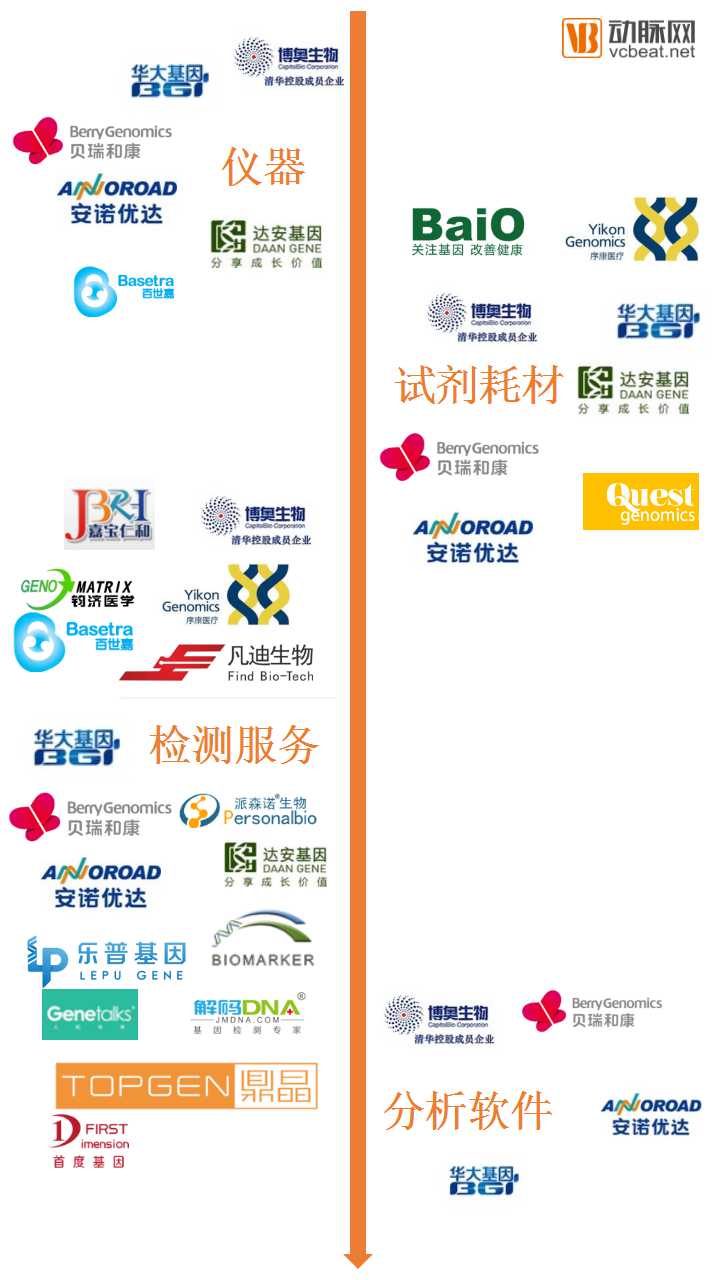
Looking at the industry landscape, the midstream sector still has the highest density of enterprises. Surprisingly, the downstream sector comprises only four companies, which happen to be those that have achieved full industrial chain integration.
Among these companies, BGI Genomics and Berry Oncology are already publicly listed; CapitalBio operates under a group structure, with its scale long comparable to that of listed companies; Annoroad Gene Technology is valued at approximately RMB 4 billion, close to the market capitalization of listed firms. These enterprises are all substantial in scale.
Among them, Berry Genomics was the first to introduce non-invasive prenatal testing (NIPT) technology to China in 2010 and the first enterprise to commercialize NIPT. Over the past eight years since its establishment, the company has devoted nearly all its efforts to NIPT. Berry Genomics has played a visible role in the emergence, marketization, and standardization of this technology. Undoubtedly, Berry Genomics is the most representative company in the NIPT field.
According to statistics from the consulting firm Transparency, the global market for NIPT was valued at USD 530 million in 2013, with a projected compound annual growth rate (CAGR) of 19.8% from 2014 to 2020, reaching USD 2 billion by 2020.
The global market is predominantly concentrated in North America, with leading companies including Sequenom (acquired by LabCorp in 2016), Natera, Verinata Health (acquired by Illumina in 2013), and Ariosa Diagnostics (acquired by Roche in 2015). Notably, Illumina, Progenity, Natera, Counsyl, and the specialty laboratory Integrated Genetics established the Coalition for Advanced Prenatal Screening (CAPS), aiming to enhance non-invasive prenatal screening through cell-free DNA (cfDNA)-based non-invasive prenatal testing (NIPT).
In China, Minsheng Securities mentioned in a report that the market size for non-invasive prenatal testing (NIPT) in the country was approximately RMB 2 billion in 2015. Currently, there are about 17 million pregnant women in China each year, and the market price for NIPT ranges from RMB 1,500 to RMB 2,500. If the penetration rate reaches 30%, the potential market for NIPT will exceed RMB 10 billion.
NIPT has evolved from a complete suspension by the CFDA to pilot programs, and finally to a largely unrestricted market, with the industry now taking shape. The midstream segment is relatively mature, and obtaining qualifications for third-party medical laboratories is a prerequisite for corporate entry. For larger companies intending to deepen their presence in this field, such as Berry Genomics, the next step may involve gradually expanding into the upstream sector.