

China's First Multidisciplinary Academic Platform for Chronic Pancreatitis Submits IPO Prospectus
Personalized Treatment for Chronic Pancreatitis
One day in 2007, Xiao Wang, a 16-year-old young man from Heilongjiang Province, came to Changhai Hospital. Although he was nearly 1.7 meters tall, his weight was less than 40 kilograms. After a careful review of his medical history, Dr. Li Zhaoshen, Director of the Department of Gastroenterology at Changhai Hospital, found that the patient had been diagnosed with chronic pancreatitis for three to four years. A pancreatic duct stone measuring up to 4 cm in length was lodged within his body. Due to recurrent and severe abdominal pain, Xiao Wang was unable to attend school regularly. Prior to visiting Changhai Hospital, he had sought treatment at major hospitals in Harbin, Beijing, and other cities; however, apart from surgical resection of part of the pancreas, no better therapeutic options were available.
In 2010, after two years of exploration, the Changhai Hospital Multidisciplinary Team for Pancreatic Diseases preliminarily established a treatment model for chronic pancreatitis comprising “pharmacotherapy–pancreatic duct lithotripsy–endoscopic therapy–surgical intervention.” Mr. Wang, who was treated at Changhai Hospital that year, became one of the earliest beneficiaries of this model.
Through the follow-up system for communication and appointment scheduling, Mr. Wang returned to Changhai Hospital for treatment in 2010. After condition assessment, multidisciplinary consultation, and prognosis evaluation, Changhai Hospital developed a personalized treatment plan. Following successful extracorporeal shock wave lithotripsy (ESWL) for pancreatic duct stones and endoscopic stone extraction, he was able to get out of bed and walk on the second postoperative day. The pancreatic duct stones, which had been present for many years, were successfully expelled using an endoscopic minimally invasive approach.
New Breakthroughs in the Diagnosis and Treatment of Chronic Pancreatitis
Due to the relatively late initiation of basic research and exploration of diagnosis and treatment models for chronic pancreatitis in China, there is a widespread lack of awareness among domestic physicians regarding standardized diagnosis and treatment protocols for this condition.
By integrating high-quality medical resources across various disciplines, Changhai Hospital established a Multidisciplinary Team (MDT) for pancreatic diseases, focusing on basic research and the exploration of diagnostic and therapeutic models for chronic pancreatitis, thereby gradually developing a highly distinctive “Changhai Model” for the treatment of chronic pancreatitis.
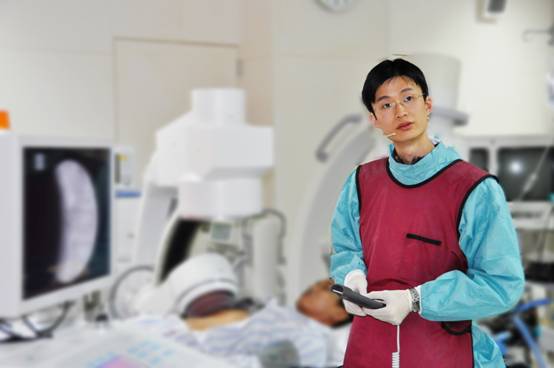
By 2017, Changhai Hospital had performed over 5,000 cases of extracorporeal shock wave lithotripsy (ESWL) for the treatment of chronic pancreatitis.
In 2010, Changhai Hospital pioneered pancreatic extracorporeal shock wave lithotripsy (P-ESWL) in China and established a novel MEES therapeutic system integrating “pharmacotherapy–pancreatic duct lithotripsy–endoscopic therapy–surgical intervention.” By 2017, the specialty team had performed P-ESWL for pancreatic duct stones in over 5,000 cases, achieving a stone fragmentation success rate of 98% and a complication rate of less than 5%, thereby significantly improving treatment outcomes and patients’ quality of life. The cost of traditional surgical management and subsequent follow-up typically ranges from 60,000 to 70,000 RMB, excluding expenses for secondary treatments due to complications; in contrast, minimally invasive diagnostic and therapeutic techniques such as ESWL cost only one-tenth of that amount.
Changhai Hospital has established a specialized outpatient clinic for chronic pancreatitis, with the number of visits exceeding 13,000 over the past five years. A green channel for pre-admission examinations has been opened to facilitate patient care. In 2017, the team was recognized as a Shanghai Medical Service Brand, providing services to patients with chronic pancreatitis from its base in Shanghai and extending its reach across China.
Establishment of the Chronic Pancreatitis Group under the Professional Committee on Pancreatic Diseases
On August 11, 2017, the inauguration ceremony of the Chronic Pancreatitis Group under the Pancreatic Disease Professional Committee of the Chinese Medical Doctor Association was held at the Shanghai International Convention Center. Professor Liao Zhuan from the Department of Gastroenterology at Shanghai Changhai Hospital was elected as the first head of the group.
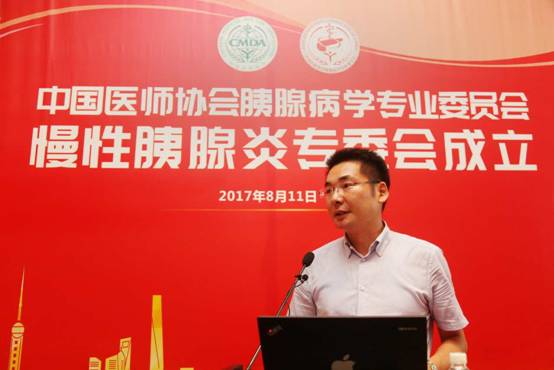
Liao Zhuan, Chairman of the Chronic Pancreatitis Study Group
The Chronic Pancreatitis Study Group is China’s first multidisciplinary academic platform for chronic pancreatitis. It integrates clinical and research resources across related fields in China, including gastroenterology, general surgery, pathology, and diagnostic imaging, with the aim of vigorously advancing basic research on chronic pancreatitis and comprehensively improving the quality of diagnosis and treatment services.
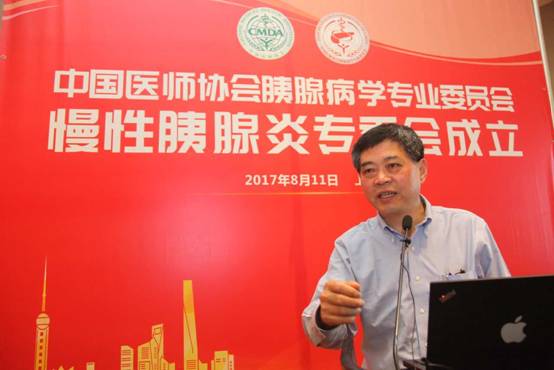
Li Zhaoshen, Chairman of the Pancreatic Disease Committee of the Chinese Medical Doctor Association
Professor Li Zhaoshen, Chairman of the Pancreatic Disease Professional Committee of the Chinese Medical Doctor Association, extended his congratulations and high hopes for the establishment of the study group. He pointed out that basic research and the exploration of diagnosis and treatment models for chronic pancreatitis started relatively late in China. The establishment of this study group has built a strong platform for communication and collaboration among medical professionals in related fields. It facilitates the bidirectional translation between clinical summarization and scientific innovation, promotes the organic integration of innovative concepts and process optimization, implements and advances standardized diagnosis and treatment, enhances the understanding of special types of this disease, and helps to further improve the level of diagnosis and treatment of chronic pancreatitis in China.