

XiShi Hetero Files IPO Prospectus: The AI Power Behind West China Hospital's Medical Intelligence Breakthrough
Hishi Isomer’s debut garnered significant attention.
On July 26, multiple media outlets, including CCTV-1, Xinhua News Agency, China News Service, People’s Daily Online, and Science and Technology Daily, reported on West China Hospital’s significant R&D advancements in medical artificial intelligence technology and the establishment of its R&D system.
West China Hospital and C-Data Technology have achieved breakthrough progress in the research and development of artificial intelligence technologies for digestive endoscopy imaging, with diagnostic accuracy for various diseases under digestive endoscopy reaching approximately 95%. The two parties have jointly established the West China–C-Data Medical Artificial Intelligence R&D Center to conduct collaborative research across multiple fields, including digestive endoscopy, pathology, CT, MRI, and ultrasound, thereby laying the groundwork for future smart healthcare.
The world’s first AI-powered endoscope, based on West China–Hillhouse digestive AI technology, is expected to be launched in China within the year.
As one of China’s premier medical institutions, West China Hospital’s recent information disclosure undoubtedly signals a major foray into AI-driven healthcare. So, what kind of company is Cisi Heterogeneous, West China Hospital’s partner? To earn the hospital’s favor, Cisi Heterogeneous must possess distinct advantages.
Currently, there are many medical AI startups in China.The field of medical AI has two key elements: “medical” and “AI.”If one can only use open-source platforms for limited data training, it cannot be considered true mastery of AI technology; if one fails to secure in-depth collaboration with top-tier medical institutions, it cannot be regarded as having access to legitimate, high-quality medical resources. Only by combining both elements can this endeavor be successfully executed.
Moreover, there is another more critical factor: entrepreneurs must truly understand the essence of the healthcare industry., it is essential to gain a clear understanding of the healthcare industry from multiple perspectives, ranging from business to technological application; otherwise, this endeavor cannot succeed.
As a former clinical physician and an entrepreneur with over two decades of senior management experience in the pharmaceutical and healthcare industries, Song Jie consistently emphasized the key industry factors of medical AI during the interview.
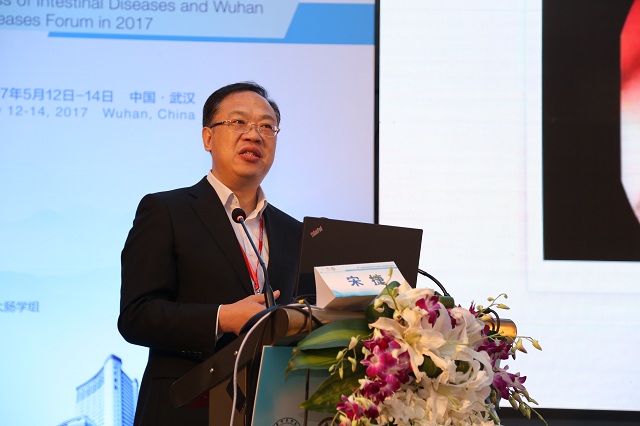
Founder: Song Jie
Song Jie, founder of Xishi Yigou, began his career as a licensed physician in clinical practice after graduating from medical school. He later transitioned into corporate management, pursuing graduate studies in business economics at the Chinese Academy of Social Sciences in the 1990s. Over a decade ago, he earned an EMBA degree from China Europe International Business School (CEIBS). He has previously held senior executive positions at numerous well-known enterprises and publicly listed companies.
“Over 20 years ago, I led the development of one of the earliest Hospital Information Systems (HIS) in China; 15 years ago, I served as Vice President at a well-known pharmaceutical company; 10 years ago, I entered the medical device sector starting from R&D, and the company I managed obtained the first National Class III Medical Device Certificate in this niche field; 5 years ago, I participated in several successful merger and acquisition projects involving tertiary hospitals.”
“Past experiences have taught me not to view the prospects and development trajectory of a medical technology in isolation.” Song Jie likely examines medical AI from multiple perspectives, including technological R&D, corporate growth, healthcare demands, and economic returns.。
In 2015, when the company was just established, Song Jie positioned his research focus on gastrointestinal endoscopy. He made this decision partly because digestive system tumors account for 43.5% of all malignant tumor incidences in China, indicating a high incidence rate and substantial medical demand.
Another contributing factor was the influence of his senior colleague, a leading authority in gastroenterology, who has consistently advocated for equipping primary care hospitals with gastrointestinal endoscopy capabilities. Endoscopic examination is the sole means of early diagnosis and treatment for early-stage gastrointestinal tumors. While early intervention yields an excellent prognosis, patients often present only after symptoms develop, by which time the optimal window for treatment has frequently passed. Therefore, enhancing endoscopic diagnostic capacity at the primary care level is a top priority in the advancement of gastroenterological technology.
However, the accumulation of clinical experience is by no means an overnight achievement; its greatest cost is time. Leveraging AI technology to address the shortage of physician resources was the initial reason why Xishi Yigou chose to enter the healthcare sector through the field of digestive endoscopy.
Fortunately, shortly after the company’s establishment, Dr. Wu Ren’s team of internationally renowned AI scientists from Heterogeneous Technology (NOVUMIND) joined through an equity partnership, enabling Cishi to acquire world-class artificial intelligence training technologies and ushering the company into a phase of rapid growth.
During the product development process, Song Jie has his own unique understanding: “I never believe that simply training on an open platform with medical data can yield truly valuable models (technologies). The direction of AI in medicine must not rely solely on human understanding of disease associations and characteristics to enable computers to make disease judgments. It is important to recognize that human knowledge of nature may only account for a few percent of its true essence.”If we use this fractional “experience” to “standardize” AI’s understanding of nature, AI will certainly not achieve breakthroughs in the future. We would rather have AI help us identify more associations among diseases that we have yet to recognize and determine optimal treatment pathways.。”
Song Jie’s remarks may seem somewhat perplexing, so he further explained: “Most peers engage medical experts to annotate specific disease features when conducting data research; we do not., we will feed as much information as possible into the computer for learning. Even if some data are not currently considered by human medical experts to be associated with the disease, we believe that only through this R&D approach can AI discover more unknown ‘entities.’ AI is, in essence, high-efficiency cognition, rather than a simple imitation of humans.”
Dr. Wu Ren, Director of Xishi Heterogeneous Computing and Chairman of its Expert Committee, is a world-class technology leader. He is one of the earliest experts to leverage GPUs for massive-scale data parsing, an internationally renowned specialist in computer game theory, and formerly served as a Senior Scientist at HP Labs and Principal Investigator at the CUDA Research Center. Subsequently, he joined AMD, where he led the R&D team for AMD’s heterogeneous systems and served as Chief Software Architect for AMD Heterogeneous Systems.
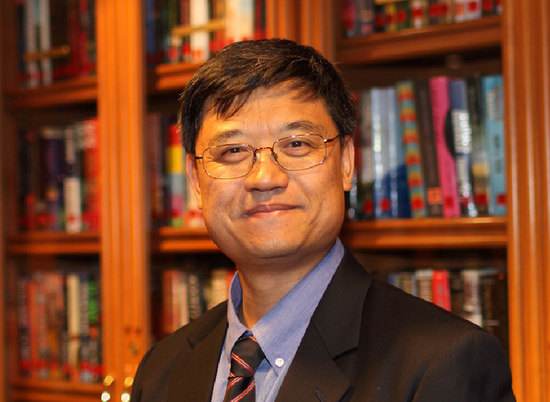
Dr. Ren Wu
In September 2013, Dr. Wu Ren left AMD and, at the invitation of Mr. Li Yanhong of Baidu, joined Baidu’s Institute of Deep Learning (IDL) as a “Distinguished Scientist.”
The addition of Dr. Wu Ren’s team has not only provided Xishi Heterogeneous with robust technical support from over 40 outstanding AI experts from both domestic and international backgrounds, but also endowed the company with exceptional computational capabilities.
As is well known, medical imaging data are massive in volume; for instance, a single digital pathology image can range from several gigabytes to tens of gigabytes. Confronted with such vast amounts of big data, the demand for computational power is exceptionally high.
Song Jie told VCBeat that although there are many institutions providing cloud computing services, such as Alibaba and Amazon, and manufacturers specializing in the development of supercomputers, such as NVIDIA, their platforms and products boast strong computational capabilities. However, they offer general-purpose services rather than being specifically designed to process particular types of data. It is often challenging to handle extremely large computational workloads using shared computing resources.
The supercomputer currently used by XiShi YiGou was designed by Dr. Wu Ren, said Song Jie.Compared to peers using cloud-based open computing platforms and commercially available high-performance computers on the market, the computational power utilized by Xishi Heterogeneous is several to tens of times greater.。
Dr. Wu Ren stated, “In essence, there is little difference among the various algorithms currently available; the disparities in AI technology they yield are merely at the percentage level. However, the gap created by ‘computing power’ is multiplicative. In the same amount of time, if you can complete only one round of AI data training while I have already completed many iterations, the superiority or inferiority of the technology becomes immediately apparent!”
It was precisely due to the technical and experiential advantages of the Hisense Heterogeneous Team that West China Hospital decided to collaborate with Hisense Heterogeneous. In 2017, attracted by the Sichuan Provincial Government’s policy prioritizing the development of the biomedical industry, Hisense Medical relocated to Sichuan. In March 2017, Sichuan Hisense Heterogeneous Medical Technology Co., Ltd. was established in Chengdu Medical City (Wenjiang).
Collaboration with West China Hospital has enabled Cishi Yigou to gain access to high-quality medical data and top-tier clinical expert resources.It is precisely based on West China Hospital data that Xi Shi Yi Gou was able to conduct model training without local annotation, ultimately achieving results endorsed by experts at West China Hospital.。
Song Jie believes, “The role of medical experts in the research and development of medical AI is by no means limited to merely providing data, let alone performing localized ‘annotation’ of images,”The true value lies in their approach to medical research, and even their intuition, as well as their ability to identify the real pain points in clinical practice, which directs the application of technology. In the field of medical AI, the importance of physicians even surpasses that of AI technical experts.”
Professor Tang Chengwei from the Department of Gastroenterology at West China Hospital, Sichuan University, stated: “The prompts and assessments generated by the West China–Cirs Endoscopic Imaging and Video Intelligence System for both static images and dynamic videos not only assist physicians at all levels in making rapid diagnoses to improve work efficiency, but more importantly, enable grassroots and early-career physicians to produce high-quality gastroscopic diagnostic results on a large scale and guide treatment.”
Li Weimin, President of West China Hospital, stated: “The West China–CIS Medical Artificial Intelligence R&D Center serves not only as a major technological translation platform for collaborative innovation in industry, academia, research, and clinical application at West China Hospital, Sichuan University, but also as a significant testament to the hospital’s commitment to openness and the sharing of its resources.”
The collaboration with West China Hospital has provided an excellent channel for the application of AI technologies.It is easy to imagine that the “marriage” between Huaxi and Hisense has deeply imprinted the “Huaxi” brand onto its AI technology. West China Hospital itself boasts a massive scale, with an even more extensive network of affiliated medical consortiums. Thus, the primary application scenario for this technology once it matures seems self-evident, not to mention the significant influence Huaxi wields within the healthcare industry.。
It is reported that West China Hospital and C-Shape Heterogeneous have begun submitting applications for multiple major provincial and national-level projects.。
In terms of commercialization, Xi Shi Heterogeneous has already made preparations in two aspects,First, medical equipment; second, medical services.。
For medical devices, the company has launched two products:The first approach is to collaborate with digestive endoscope manufacturers through technology licensing., for every AI endoscopy device sold by the manufacturer, Xishi Heterogeneous Computing generates revenue.
The company has confirmed its first partner—Shanghai Chengyun Medical Equipment Co., Ltd.—with whom it will jointly launch an AI-powered digestive endoscope within the year, which is highly likely to be the world’s first artificial intelligence digestive endoscope.
This endoscope is a technologically upgraded product based on equipment that has already obtained national regulatory approval, thereby exempting it from the complex approval process required for new Class III medical devices. It is expected to receive market authorization next year. This collaborative model is applicable to both traditional gastrointestinal endoscopes and capsule endoscopes.
The second type is for digestive endoscopes already in use at medical institutions., Xishi Yigou has developed a digestive endoscopy assessment device that can be integrated with digestive endoscopes to assist physicians in making clinical judgments. CFDA Class II medical device certification is expected to be obtained within six months.
For Healthcare Services,XiShi Yigou has initiated collaborations with top-tier medical institutions to jointly launch asset-light third-party medical diagnostic center services.“We serve healthcare institutions at all levels, including physical examination centers, by combining AI technology with top-tier clinical experts. You can choose from different service options, ranging from highly affordable AI-driven services to diagnostic services provided by renowned experts. We provide high-level medical support exclusively to healthcare institutions, enabling them to rapidly launch services that were previously difficult to implement smoothly. We do not directly interact with patients, which may encourage more hospitals to collaborate with us.”
“Charging the equivalent of half a grassroots hospital doctor’s salary for our unlimited AI technical services is our pricing standard. We believe many hospitals would be willing to pay this price.” Speaking about medical services, Song Jie said.
From philosophy to medical and technical teams, from computing power to training data, and from partners to commercialization strategies, Xishi Heterogeneous possesses unique advantages—this is the foundation that empowers Xishi Heterogeneous to dare to be different.
Regarding engagement with capital, Song Jie stated,Xishi has only completed one round of financing during its angel stage and is now planning a new round, with the funds primarily allocated to the following areas:: Enhance gastrointestinal AI, including the launch of two major product lines—equipment and services; achieve breakthroughs in pathology and imaging by year-end; establish asset-light third-party diagnostic centers operating on an “AI + expert” model.
August 31, Thursday at 8:00 PM,We have invited Mr. Song Jie to join the VB Interview for a live broadcast toSharing New Attempts and Breakthroughs in the Field of Medical Imaging; Various Correlations in the Development of Medical AI; Introduction to the Collaboration with West China Hospital.
PleaseClick the blue text, read the full article to get free registration information.