

China's Health Industry: Five Major Transformations Over the Past Decade and Five Key Trends Shaping the Next Ten Years
2008In that year, the nation sounded the clarion call for new healthcare reforms, marking a decade of development for China’s health industry. This decade witnessed dramatic shifts in the industrial landscape and signaled the end of traditional business models. 2017 coincided with the 10th anniversary of the Westphalia Conference (Xipu Hui). Themed “Blueprinting the Future: Market Awakening Driven by Demand Focus,” the conference reviewed the trajectory of the industry over the past ten years.Exploring the Development of the Industry in the New Decade. As a media partner of the Xipu Conference, VCBeat (WeChat ID: vcbeat) reported on these changes and trends at the earliest opportunity.

On-site at the West China Pharmaceutical Conference
Five Major Transformations in the Industry Over the Past Decade
On August 17, Wu Han, President of Sinohealth Information, provided an overview of the theme and discussion directions for the 2017 West Lake Summit (Xipu Hui) prior to its opening ceremony. He pointed out that since the Chinese government initiated the new healthcare reform in 2008, China’s health industry has completed a full decade of development. This decade was marked by drastic changes in the industrial landscape and the demise of traditional business models, signifying the official dawn of a new era for China’s health industry ecosystem.
By reviewing the industry’s development over the past decade, Sinohealth Information has identified five key markers of industrial transformation.
First, the health industry has achieved rapid growth driven primarily by policy-related dividends, but its growth rate has now returned to a rational level; meanwhile, the retail sector’s market position has risen rapidly, establishing it as a mainstream force within the industry.
According to Wu Han, from the clarification of guiding principles for healthcare reform at the 17th National Congress of the Communist Party of China in 2007 to the formal implementation of the new healthcare reform, the industry has entered a new stage of development. Although the process was marked by the global financial crisis, data monitored by Sinohealth CMH indicates that the industry’s resilience enabled it to maintain a compound annual growth rate (CAGR) of 15%. The market size at the terminal level grew from RMB 483.5 billion at the beginning of the period to RMB 1.4909 trillion last year. This period witnessed both a high growth rate of 20%, driven primarily by policy dividends, and a rational regression to 7%–8% towards the end of the period. Notably, according to Sinohealth CMH data, the market size of retail terminals reached RMB 337.7 billion in 2016, emerging as a significant force within the industry. However, Sinohealth CMH also predicts that the growth rate of the terminal pharmaceutical market will further decline to 5.8% in 2017.
Second, the internet and big data are continuously penetrating the health industry.
Tech giants, leveraging their advantages in internet and big data technologies, have begun to enter the healthcare sector, competing with traditional industry service providers for consumers and introducing greater uncertainty into the future trajectory of the industry.
Third, the industry’s unchecked expansion is no longer sustainable; compliance, innovation, and adaptation to the new ecosystem will be the key to future survival.
Analysis by Sinohealth Info indicates that the decade-long new healthcare reform has subjected the entire industry to a roller-coaster ride. During the initial phase, which emphasized strengthening primary care and increasing investment, the market boomed, achieving medication usage growth of over 17% for five consecutive years, with the growth rate reaching as high as 20% in 2010. However, as healthcare reform entered the stage of cost containment and efficiency improvement, particularly in the past two years as reforms have moved into deeper waters, multidimensional new policies have left the industry feeling the “chill of winter.” Since 2015, the annual growth rate has consistently fallen to single digits. With China’s accession to the International Council for Harmonisation of Technical Requirements for Pharmaceuticals for Human Use (ICH) and the implementation of Diagnosis-Related Groups (DRG), Chinese pharmaceutical companies will face even greater challenges.
Fourth, changes in medication structure and expansion of industrial margins.
On one hand, changes in demographic structure and the disease spectrum have altered China’s medication consumption patterns. Anti-tumor drugs have seen rapid growth, becoming a focal point for pharmaceutical companies. The total market size of cardiovascular and cerebrovascular medications has surpassed that of anti-infective drugs to take the top spot. The maternal, infant, and child care category has resumed its growth trajectory. Medication usage in counties and towns has improved, narrowing the urban-rural gap. On the other hand, consumer health demands are becoming increasingly diverse and personalized. Mere “medical treatment” and “pharmaceuticals” can no longer comprehensively meet these needs. Consequently, the “health industry” has replaced the “pharmaceutical industry” as a more precise descriptor for this sector, with expanding industrial boundaries. Moreover, with increasing information transparency and technological advancements, consumer sovereignty continues to strengthen.
Fifth, capital has become a powerful driving force behind changes in the industrial landscape.
With the establishment of China’s multi-tiered capital market system and growing investor interest in the health industry, capital instruments are being widely utilized within the sector to optimize resource allocation, enhance industrial concentration, drive innovation, and reshape the industrial structure.
Five Major Trends in the Blueprint for Future Industries
If the traditional model has reached its end, how can future industries find their direction and construct an industrial blueprint? This was precisely the core theme of the 2017 XiPu Conference.
Zhongkang Information’s analysis suggests that 2017 marks a watershed moment for industry development, driven by the implementation and performance evaluation of key new healthcare reform policies, the growing influence of capital in reshaping industrial structure, the comprehensive penetration of technological innovation, and the accelerated pace of cross-sector integration. Five major trends are expected to emerge in the future:
Trend 1: The Fragmentation of Industrial Leadership and the Gradual Formation of a “Dual Market” Structure
As healthcare payment methods evolve, commercial insurance gains strength, physicians’ bargaining power rises with multi-site practice, the middle class expands, information transparency improves, and technology provides empowerment, industry dominance will shift toward consumers. Consequently, consumer advocates—commercial insurance institutions and related health service providers—will gain greater influence and emerge as a dominant force. This trend will foster the formation of a “dual-market” structure: one is a foundational market led by the government, characterized by relative structural stability and broad basic coverage; the other is a dynamic consumer market driven by commercial insurance and health management institutions, catering to the diverse needs of middle- and high-income populations. Analysis by Sinohealth Information indicates that competition models differ significantly across these markets, making it essential for pharmaceutical companies to define their positioning in line with their own characteristics.
Trend 2: Shift in the Growth Poles of the Health Industry
In the past, driven by relatively homogeneous demand and the “drug-revenue-dependent” healthcare model, the pharmaceutical market served as a major growth engine for the industry. With the diversification of health needs, reforms to the drug-revenue-dependent system, and changes in payment mechanisms, the pharmaceutical market is expected to maintain moderate-to-low growth rates for an extended period. Companies lacking core competitiveness will be rapidly squeezed out of the market. The medical and health services sector will become the primary contributor to growth in the health industry, shifting the industry’s growth focus from products to services.
Trend 3: Changes in the Structure of the Industrial Service Supply Chain
With technological advancements, shifting demand patterns, and the evolution of social organizational structures, a supply chain structure that continuously shortens the distance to consumers while integrating specialized division of labor with systematic services is gradually taking shape. This trend imposes higher requirements on brand building and precise positioning for enterprises and various service institutions. Meanwhile, the market has a strong demand for service providers with specialized linkage capabilities to better coordinate the supply resources of various professional institutions and systematically meet consumers’ health needs.
Trend 4: Data Application Capability Will Become an Essential Foundational Competency for Corporate Development
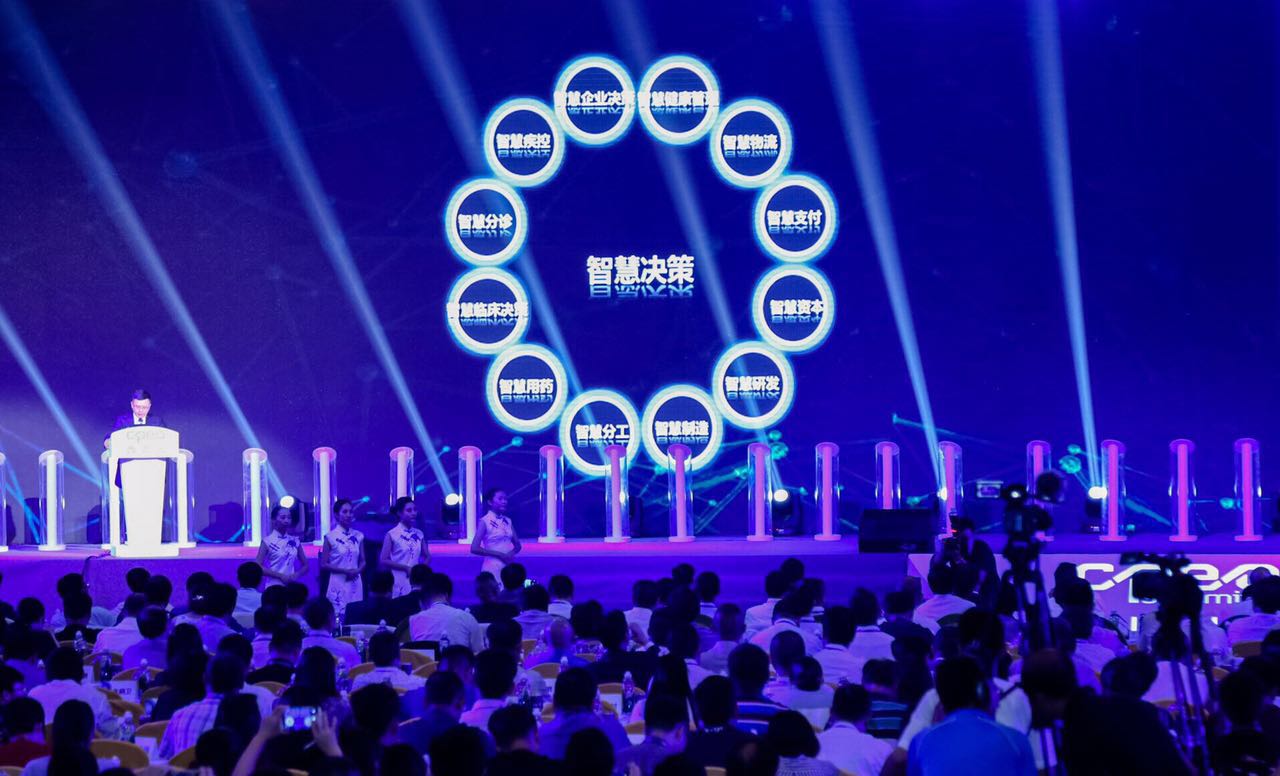
Data will have broader application scenarios in the health industry, encompassing all aspects including corporate decision-making, medical services, pharmaceutical R&D and manufacturing, distribution and usage, and payment. Meanwhile, a prevailing perception about data needs to be shifted: while data is an energy source, Zhongkang Info emphasizes that data is not oil—it is solar energy. It cannot be monopolized, and its value is realized only through application. The trend toward data sharing and the breaking down of information silos is inevitable.
Trend 5: The Widespread Application of Internet Technology and Artificial Intelligence
The extensive application of the internet in healthcare processes, along with the value created by artificial intelligence in the fields of medical care and health management, will fully unleash the productivity of healthcare providers, represented by physicians. This will enable the fulfillment of greater demand, serving as a driving force for market expansion while enhancing efficiency.