

Clinical AI Diagnostic System: Empowering Primary Care with Intelligent Workflow, Seven Core Features, and Dual Monetization Models
By Che Feilun, General Manager of Shenzhen Kehengli Computer Software Co., Ltd.
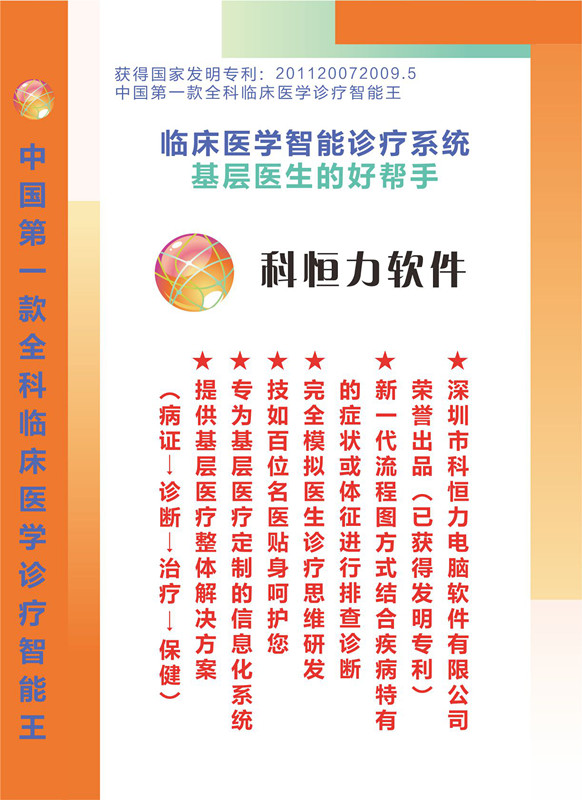
China boasts a vast territory, yet its medical resources are limited. Currently, there is a scarcity of highly skilled physicians, who are predominantly concentrated in a few major hospitals in central cities. The number of specialists across various disciplines remains limited in small and medium-sized institutions as well as in primary care facilities in remote areas. Medical diagnosis is significantly influenced by subjective factors, and diagnostic outcomes are closely tied to the clinical competence of primary care physicians. This has led to elevated misdiagnosis rates for certain diseases, frequently resulting in inadequate treatment of serious conditions, delays in optimal therapeutic windows, and even life-threatening consequences for patients.
As a primary care physician, my greatest aspiration is to promptly establish an accurate diagnosis for patients’ conditions in settings lacking advanced medical equipment, because the adage “no correct diagnosis, no correct treatment” has become a maxim among medical practitioners.
Many primary care physicians frequently encounter two major challenges: failing to recall all possible diagnoses when presented with symptoms (if you cannot think of it, you will never diagnose it), and struggling to differentiate among several potential diagnoses once they are identified. The future relationship between primary care physicians and intelligent diagnostic and treatment systems can be described as follows: Intelligent diagnostic and treatment systems serve as the physician’s stethoscope—an effective tool that assists doctors in making accurate and effortless diagnoses. These systems support physicians in reaching diagnostic decisions, which then guide the formulation of corresponding treatment plans for patients.
Therefore, it is imperative to develop intelligent diagnostic and treatment systems suitable for primary care settings to compensate for human limitations, thereby enabling timely and accurate diagnosis, treatment, and triage. In response to this need, a new generation of expert systems—the Intelligent Clinical Diagnostic and Treatment System—has emerged.
“Intelligent Clinical Diagnosis and Treatment System” Empowers Primary Care Physicians
Developing intelligent diagnostic and therapeutic products must be grounded in the six-character principle of “essential needs,” “pain points,” and “high frequency.” This means the product must be indispensable to physicians’ clinical workflows, effectively address the pain points and challenges they encounter during diagnosis and treatment, and be utilized frequently in their daily practice.
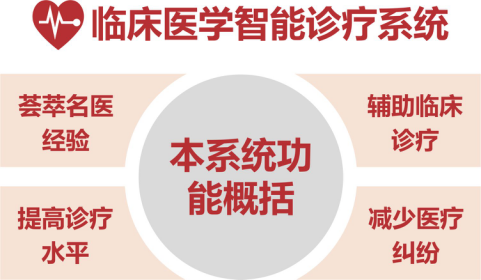
Intelligent Clinical Diagnosis and Treatment SystemCentered on a massive, comprehensive, accurate, and scientifically structured knowledge base of general practice in both Traditional Chinese Medicine (TCM) and Western medicine, the Intelligent Clinical Diagnosis and Treatment System standardizes services at primary healthcare institutions through computational intelligence, providing timely guidance and assistance to primary care physicians. During clinical practice, it offers comprehensive, real-time support throughout the diagnostic and treatment process, functioning equivalently to hundreds of knowledgeable medical experts. For educational purposes, it serves as a training tool that enables physicians to rapidly enhance their clinical competence, acting as a vast medical library filled with extensive information.
This system is custom-designed for primary care institutions and general practitioners, featuring a simple and user-friendly interface. Its mission is to empower primary care physicians to become competent general practitioners through human-AI collaboration, thereby facilitating the implementation of tiered diagnosis and treatment.
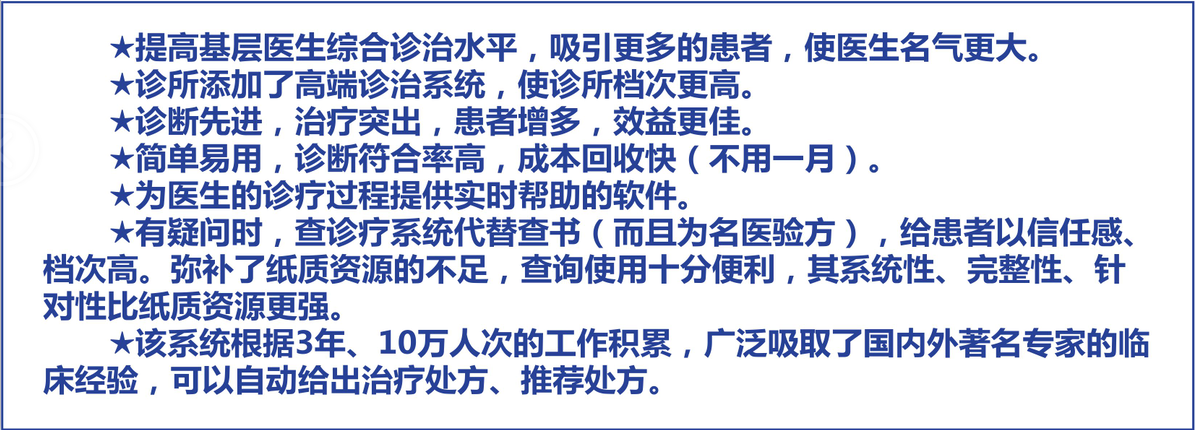
7 Key Features of the Intelligent Clinical Diagnosis and Treatment System
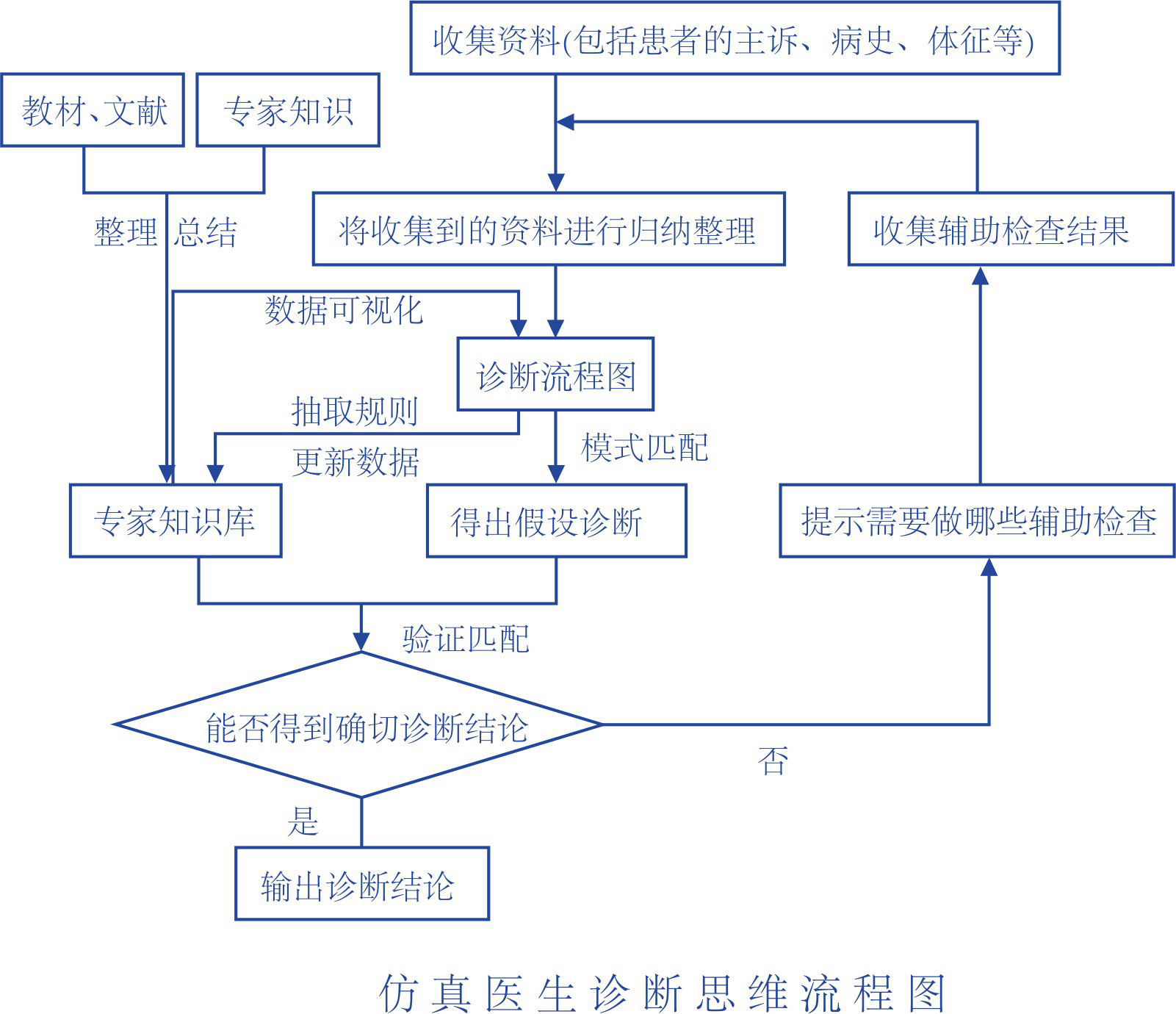
In a nutshell, the Intelligent Clinical Diagnosis and Treatment System can be summarized as: comprehensive simulation of the physician's diagnostic and therapeutic process.
Simulation begins by mimicking how physicians initiate clinical encounters, either through symptom categorization or by associating chief complaints, thereby assisting in the collection of clinical information such as patient symptoms and signs. It then emulates clinical reasoning to analyze the collected symptoms and generate hypothetical diagnoses. When physicians are uncertain about the relationship between a disease and certain diagnostic elements, the system facilitates iterative reasoning between diagnostic criteria and disease hypotheses, prompting the acquisition of additional evidence from the patient for verification. Differential diagnosis can also be performed to further refine the diagnosis. Once a diagnosis is confirmed, the system leverages intelligent clinical diagnosis and treatment platforms to provide curated data derived from extensive authoritative knowledge and experience summarized by medical experts—including prescriptions, medication regimens, and relevant literature. This supports physicians in clinical decision-making for diagnosis and treatment, truly serving as an “extension of memory” and a “physician’s assistant.”
Because artificial intelligence does not yet possess consciousness or natural language understanding capabilities, breakthroughs are limited to artificially endowing intelligent diagnostic and treatment systems with enhanced logical reasoning abilities. Diagnostic and therapeutic activities involve a variety of thinking modes. As an intelligent simulation of physicians’ clinical practice, intelligent clinical diagnostic and treatment systems should accordingly integrate the multiple reasoning approaches (forward reasoning, backward reasoning, hybrid reasoning, deterministic reasoning, and uncertain reasoning) and diverse cognitive methods (comprehensive thorough thinking, procedural deduction, pattern recognition, hypothetical-deductive method, direct diagnosis, exclusionary diagnosis, differential diagnosis, etc.) employed by physicians during the diagnostic and treatment process. This technology is distinct from knowledge graphs based on Bayesian networks and represents an inevitable pathway for simulating physicians’ diagnostic thinking.
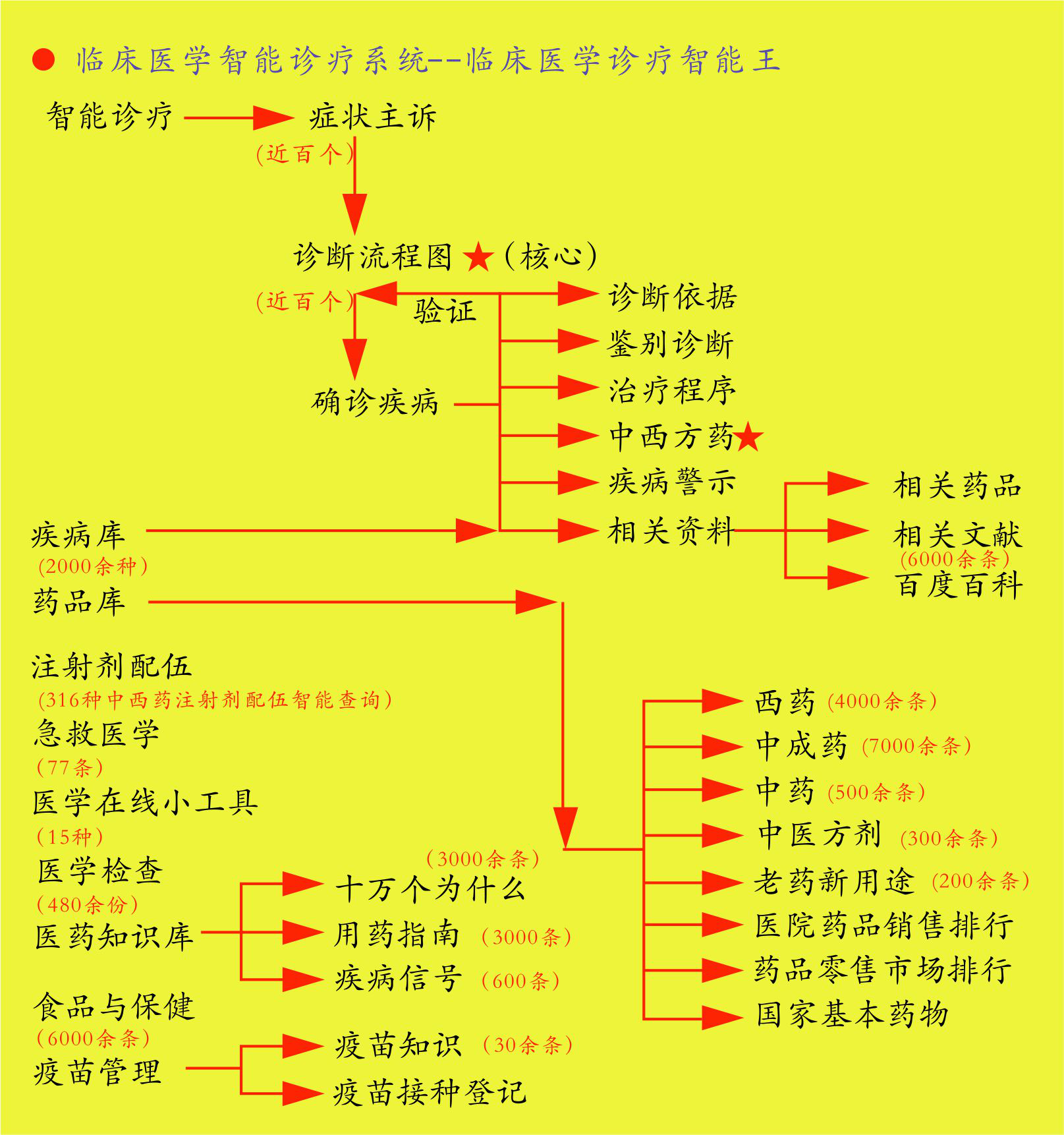
Integrate key clinical data and reasoning methodologies into the proposed diagnostic flowchart, embedding the technology in the background to provide physicians with a simple application interface for “pattern recognition” and completion of the diagnostic process. The new generation of intelligent flowcharts differs from those found in diagnostic textbooks by incorporating physicians’ clinical thinking and reasoning, thereby overcoming the limitations of traditional flowcharts, such as rigidity, inflexibility, and susceptibility to omissions and biases. (The detailed core architecture of the new-generation flowchart will be elaborated in the 60,000-word book Intelligent Healthcare at the Primary Care Level, which will be published one month after its serialization in the primary healthcare macro-system.)
Many physicians have reported that the primary challenge in the application of general clinical diagnosis and treatment systems is human-computer interaction. To date, no medical diagnostic and therapeutic system has been truly implemented in actual clinical practice, precisely because of the question: Can the system adapt to physicians, and can its operation suit clinical workflows? Clinical diagnosis and treatment systems should prioritize performance speed, embedding technology in the background while providing clear and concise interface designs. The goal is to minimize keystrokes and mouse clicks, thereby facilitating ease of use for physicians.
In the diagnostic reasoning module, the intelligent clinical diagnosis and treatment system employs visual flowcharts and pattern recognition methods to make diagnoses clear at a glance, achieving a “what you see is what you get” experience. By bypassing the yes-or-no questioning process characteristic of intelligent systems such as Kangfuzi and Meile Yi, the diagnostic and therapeutic workflow can be completed with just two or three mouse clicks, thereby advancing the system into the stage of practical application.
Western medicine and Traditional Chinese Medicine (TCM) are currently the two most widely applied medical theoretical systems in the world, guiding our daily medical practice. The formation and development of these two theoretical systems are based on different philosophical foundations, each with its own advantages and limitations. By organically integrating the two and developing integrative medicine, we can combine the strengths of both TCM and Western medicine, achieve complementary advantages, and improve clinical efficacy.
The essence of Traditional Chinese Medicine (TCM) lies in "syndrome differentiation and treatment." Many primary care physicians regard this approach as an elusive concept of "personalized prescriptions for each individual," believing that TCM experience can only be intuitively grasped but is difficult to articulate explicitly. They consider it challenging to standardize TCM treatments, and note that primary care physicians, often having lower educational qualifications, struggle to apply these principles flexibly. Developing computer-based systems for clinical decision-making that integrate Traditional Chinese and Western medicine is a significant challenge; to date, no intelligent diagnostic and therapeutic system combining both medical paradigms has been successfully implemented in clinical practice.
It is neither feasible nor necessary for primary care practitioners to perform syndrome differentiation and treatment exactly as TCM specialists do. The most suitable integrative approach for primary care should be a “disease-syndrome combination” model that prioritizes Western medicine followed by TCM: first establish a Western medical diagnosis, then limit TCM symptoms, syndromes, therapeutic principles, formulas, and herbs to a few limited pattern types (with fewer patterns, combined with verified and secret formulas, and the use of Chinese herbs in a Western-medical manner). This clarity facilitates reference, selection, and proficient application by primary care physicians. Such an approach tailors syndrome differentiation and treatment to the specificities of different diseases, combining standardization with individualization, which better ensures efficacy and promotes learning and dissemination. As Zhang Xichun stated, “Western medicines treat the manifestations, while Chinese medicines address the root cause; treating both the manifestations and the root together yields rapid results.”
Specialization in a single discipline amounts to a fragmentation of holistic general practice, representing the most fatal weakness of traditional “expert systems”: their structural capacity is extremely limited, and the system fails to function properly with even minor deviations beyond its defined scope. Primary care physicians require broad and comprehensive coverage of disease domains, as the human body is an organic whole in which organs and systems are interconnected and inseparable. While medical practitioners may be categorized into internal medicine, surgery, obstetrics and gynecology, and pediatrics, diseases do not develop according to these disciplinary boundaries. Internal medicine conditions can present with surgical complications, and surgical conditions often require internal medicine management; diseases across all specialties are interrelated and can transform into one another.
The Intelligent Clinical Diagnosis and Treatment System is an "Intelligent General Practitioner-Assisted Diagnostic and Treatment System" that includes disease information across internal medicine, surgery, obstetrics and gynecology, pediatrics, and other specialties. It breaks through the limitations of expert systems confined to single disease domains, aligning instead with a holistic general practice mindset. The system features a fully Chinese-language interface with excellent usability and a unique human-computer interaction design. It has broad applicability and is suitable for medical professionals of all levels, particularly primary care general practitioners.
In medicine, there are significant differences between children and adults, with greater disparities observed at younger ages. When performing differential diagnosis and treatment of symptoms and signs in pediatric patients, the following issues should be noted: Diagnosing pediatric diseases is more challenging than diagnosing adult diseases because sick children or their parents often cannot provide detailed complaints of symptoms. Therefore, primary clinical diagnostic information relies more heavily on objective physical examination findings. This requires clinicians to possess not only comprehensive theoretical knowledge but also extensive clinical experience.
The Intelligent Clinical Diagnosis and Treatment System is centered on symptoms and signs, follows the clinical reasoning process, and integrates pediatric-specific characteristics to develop a series of rapid diagnostic flowcharts tailored for children and distinct from those for adults, thereby assisting primary care physicians with limited clinical experience in making accurate diagnoses.
A wealth of scientific facts and empirical evidence demonstrates that correct methods enable individuals to achieve twice the results with half the effort and attain swift success, whereas incorrect methods lead one astray, resulting in futile labor. To scale the heights of medical diagnosis and treatment, it is imperative to be guided by scientific methodologies.
Intelligent Clinical Diagnosis and Treatment System not only simulates the collection of patient information and doctors' thinking processes, assisting physicians in making accurate diagnoses and treatments, but also continuously accumulates experience, thereby achieving the goal of "teaching one how to fish rather than giving them a fish": it both imparts knowledge (accumulating medical expertise) and fosters sound diagnostic and therapeutic reasoning.
Transforming Visualized Medical Data into Clinical Expertise: Embedding education to facilitate explanation, learning, and the acquisition of experiential skills during assisted diagnosis, enabling physicians to reproduce these insights independently of the system. This approach allows clinical expertise to be intuitively recalled whenever encountering diseases, achieving long-term empowerment rather than short-term support. This distinguishes it from current intelligent diagnostic systems, which offer recommendations without providing underlying rationale.
Implications for Medical Education: By eliminating the need for rote memorization of disease diagnosis and treatment, this approach frees up time for foundational and quality-oriented education, while also providing a new model for textbook development. In the traditional medical education sector, physician training involves a prolonged cycle. Intelligent diagnostic and treatment systems can help primary care physicians—particularly the million rural doctors in China—become competent general practitioners in just 2–5 years, rather than the usual 5–10 years.
Smart Diagnosis and Treatment System Business Model: Free vs. Paid
In the healthcare sector, the entrepreneurial focus has shifted from mobile health to artificial intelligence, with major companies actively expanding their presence; for instance, Baidu has reoriented its Mobile Healthcare Division toward medical AI.
For entrepreneurs, it is particularly crucial to design a business model tailored for artificial intelligence before the next major trend emerges. Only those who can seize trends and opportunities, identify the right entrepreneurial platforms, and leverage existing momentum will be able to carve out their own niche.
In fact, the business model of intelligent diagnosis and treatment systems is straightforward, comprising two types: a fee-based model and a free-of-charge model.
Regarding the pricing model, if we calculate based on the 638,000 village clinics nationwide in China, with each set of the Intelligent Clinical Diagnosis and Treatment System priced at a relatively low rate of RMB 2,000, the market size would reach RMB 1.276 billion. This figure does not yet include markets such as township health centers, community health service centers, clinics (medical rooms), medical students, pharmacies, or subsequent commercial expansions within the ecosystem chain.
The free-to-use model is similar to that of 360 Free Antivirus. Leveraging an intelligent diagnostic and treatment system characterized by “high fixed costs and low marginal costs,” it serves as a free tool to attract users. Combined with complimentary training services (covering professional and marketing techniques), it converts primary-care physicians into loyal advocates. This strategy facilitates the integration of paid products that address “essential needs,” “pain points,” and “high-frequency” usage scenarios, such as the Thermal Pulse Moxibustion Patch. This product is a novel transdermal patch representing an upgraded generation of Chinese moxibustion therapies. Comparable products include Yabao Pharmaceutical’s Swelling-Relief and Analgesic Patch and Lingrui Pharmaceutical’s Nuanyangyang series, which is under development with an investment of RMB 160 million.
The advantages of this product are shown in the figure: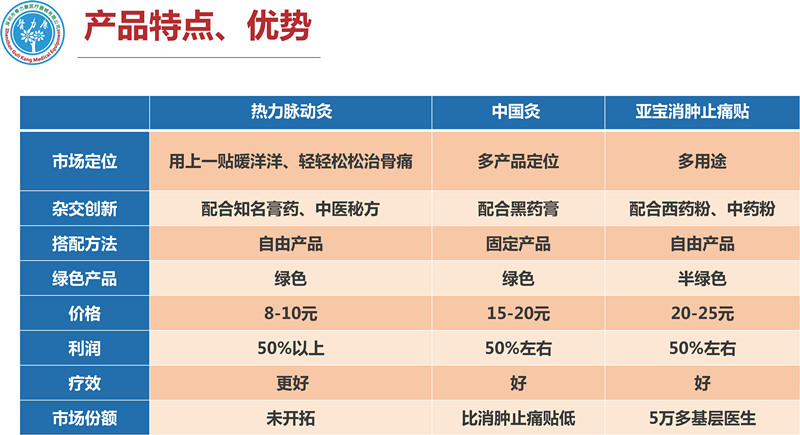
Adopting the controlled sales model (with a 10% penetration rate among the 638,000 village clinics, totaling 60,000 clinics), and assuming a minimum average daily usage of 10 patches per clinic at a price of RMB 4 per patch, the annual sales revenue is calculated as 60,000 × 10 × 4 × 365 = RMB 876,000,000 (RMB 876 million).
Which business model is more suitable for entrepreneurs? With a vast market, how can one achieve goals amidst formidable competitors? There are numerous operational details here that still await market validation.
Stay tuned for the next article: Learning and Training in the Primary Healthcare System