Maternity Care Centers Ride the New Maternity Market Boom: Rapid Expansion and IPO Filing Signal Industry Transformation

1
# The Most Watched Sub-sectors This Week
# Postpartum Care Center#
Follow-upWith the relaxation of China’s two-child policy, new demographic dividends in the maternal and infant market are driving the rapid development of the postpartum care sector. Although still in its early stages, industry insiders remain highly optimistic about the prospects of postpartum care centers.
Perspective
1. Wang Qingbin:Branded postpartum meals naturally enjoy higher market acceptance.
Wang Qingbin discussed the differences between traditional catering and postpartum meal services, highlighting two key aspects: facility requirements and operational processes. During the conversation, he asked the reporter, “A high-quality kitchen must be equipped with air conditioning, right?” He then added with a touch of pride, “All our postpartum meal kitchens are air-conditioned. This ensures that chefs can work in comfort while maintaining the freshness of the ingredients, ultimately resulting in better-tasting postpartum meals.”
In fact, for Zijintang, during the service provision process, wellness consultants conduct thorough consultations with clients to pair exclusive wellness products with dietary menus. The company then delivers meals to postpartum mothers’ homes at scheduled times each day. This refined service model is what Wang Qingbin considers the competitive advantage in the confinement meal market.
“For postpartum care centers, their processes and meal provisions are largely standardized, with little customization based on mothers’ actual needs, such as phased recuperation. In many cases, individuals simply eat whatever is served to the group that day.” In contrast, Zijintang’s postpartum meals are delivered to clients’ homes based on individual constitution test results and diet plans formulated by nutritionists, and also include additional services such as lactation duct clearance.
Wang Qingbin believes that there is demand in the postpartum meal market, as some mothers have already embraced the concept of postpartum recuperation and health maintenance. Once this mindset becomes widely adopted, the market will naturally flourish.
2、Xu Yun:Building a Full Industry Chain Platform and Brand Through Direct Operations and Franchising
Postpartum care centers rarely provide medical services; over 95% of their offerings are nursing care. The fundamental aspects of this care revolve around the mother’s and newborn’s daily living needs, including diet, accommodation, and maternal-infant care.
“The clients we serve are individuals who have just been discharged from the hospital after childbirth. As their care may involve certain medical issues, it is necessary to have professional medical staff on hand. However, since postpartum care centers are not classified as medical institutions, therapeutic services cannot be provided within the facility. We can only conduct limited observations and offer recommendations, providing risk alerts or referrals for further medical evaluation,” Xu Yun first explained to reporters regarding the nature of postpartum care centers.
Currently, the physical models of postpartum care centers in China are mainly limited to several types: hotel-based, standalone buildings, hospital-affiliated, and community-based.
Community-based models, which resemble guesthouses, emerged during the nascent stage of postpartum care centers. “With only 3–5 rooms, these facilities offer limited privacy and lack professional-grade equipment and infrastructure. As postpartum care centers become increasingly widespread across China, such models are finding it difficult to survive,” said Xu Yun.
Among the other three models, hotel- and serviced apartment-style facilities are the most prevalent, with 70%–80% of postpartum care centers on the market located within hotels. Hospital-affiliated centers and standalone villa-type centers each account for roughly half of the remainder, representing approximately 10%–15% respectively.
Xu Yun is confident about the future chain development of postpartum care centers, stating, “For a new industry, it must undergo a transition from initial disorder and chaos to government-driven regulation and standardization, ultimately forming standardized systems and industrial structures.”
By analogy, this mirrors the hotel industry, where family-run guesthouses have been entirely replaced by branded chain budget hotels and boutique hotels. Similarly, postpartum care centers will evolve toward standardization, regulation, and branding.
3、Xiang Hua: Building a Youth-Oriented Ecosystem for Maternal and Child Health Services
As national living standards and consumer spending power have risen significantly, traditional postpartum practices have quietly shifted in the maternal and infant market, now dominated by mothers born in the 1980s and 1990s. The concept of “scientific confinement” has gained widespread acceptance among new-generation mothers, driving the rising popularity of postpartum care centers that offer evidence-based postpartum recovery services and professional newborn care. Market projections indicate that the size of China’s postpartum care center market will reach RMB 15 billion in 2019.
Xiang Hua, the founder of Saint Bella, aims to transform the service experience across the entire maternal and infant care industry. In light of the physical toll childbirth takes on women, combined with his professional insights into the sector, he believes that current postpartum care centers in the market lack professionalism and standardization. Through Saint Bella, he seeks to change the status quo of the postpartum care industry.
In terms of talent management, Saint Bella employs an in-house professional nursing team to mitigate safety risks associated with caregivers lacking proper qualifications. “Our nursing academy is dedicated to training and supplying specialized talent. In the future, we will also open enrollment to institutions across China that have such needs,” said Xiang Hua. He believes that nursing education can significantly address issues related to the professional competence of caregiving staff.
Report
Zhuang Yiqiang: Numerous Issues Surrounding Overseas Childbirth
2
Don’t Miss This Week’s Top Stories
Author: Gao Kangping
IPO Market Rebounds: 25 Pharmaceutical Companies List in H1, Raising Over RMB 10 Billion with a Combined Market Capitalization Exceeding RMB 150 BillionAs a “perennial sunrise industry,” the pharmaceutical sector is highly favored by capital markets due to its high growth potential and counter-cyclical resilience. Post-listing stock performance has been robust, with maximum gains exceeding 800%.
VCBeat (WeChat ID: vcbeat) scanned pharmaceutical companies that entered the capital market in the first half of the year, compared the data with that of previous years, and provided an overview of their performance in the capital market.
Data shows that pharmaceutical companies have been actively pursuing initial public offerings (IPOs) since 2012. In 2012, 11 pharmaceutical companies successfully completed their IPOs. In 2013, the China Securities Regulatory Commission (CSRC) conducted stringent financial reviews of IPO applicants, leading to a temporary suspension of IPO activities. From 2014 to 2016, IPOs resumed, with pharmaceutical companies once again lining up for CSRC review, and the number of IPOs saw a slight rebound. This year, as of July alone, 25 pharmaceutical companies have successfully gone public, far exceeding the annual average of previous years.
According to previous statistics by VCBeat, as of mid-May this year, the number of healthcare and medical companies in the IPO queue reached 56. Based on the review status of the China Securities Regulatory Commission (CSRC), it is expected that more than 40 healthcare and medical companies will list on the capital market this year, setting a new record for the highest number of such listings in history.
WorkAuthor: Yang Juan
For the treatment of chronic diseases, the most conventional methods are oral administration and intravenous drug delivery; however, both approaches have their respective drawbacks. Oral administration results in a slow rate of drug entry into the bloodstream, while intravenous injection, apart from causing pain, may also pose a risk of infection to patients. Consequently, in recent years, patients and physicians have increasingly favored rapid and painless drug delivery methods, such as transdermal drug delivery systems.
Transdermal Drug Delivery Systems (TDDS) refer to a novel approach in which drugs are administered on the skin surface, allowing them to penetrate through the skin at a constant (or near-constant) rate into the systemic circulation to exert systemic or local therapeutic effects. Although transdermal delivery presents challenges, it offers significant advantages over oral, intravenous, or intestinal routes of administration.
Transdermal drug delivery is an emerging novel drug delivery system. Given its more patient-friendly therapeutic characteristics and the continuous advancement of transdermal technologies, it has become one of the fastest-growing sectors in the pharmaceutical industry. According to a new report by Grand View Research, the global transdermal drug delivery systems market is projected to reach $81.4 billion by 2024.
Author: Zhou Mengya
With the successive public listings of BGI Genomics and Berry Oncology, the door to initial public offerings in China’s next-generation sequencing (NGS) industry has officially opened. Moreover, NGS-related stocks in the capital market rose during this period. Rongzhi Lian hit its daily upper limit on the day BGI Genomics was listed, while Zhongyuan Union Cell & Gene Engineering and Daan Gene also saw significant stock price increases. If 2014 marked the first year of large-scale adoption of genetic testing, then 2017 undoubtedly heralded the first year of capitalization for sequencing companies.
From the perspectives of corporate scale and IPO intent, Novogene and Annoroad Gene Technology are more likely to become the next companies to go public. Additionally, subsidiaries of CapitalBio Corporation, including CapitalBio Jingdian, CapitalBio Yihe, and CapitalBio Muhua, all have plans for independent listings. Among them, CapitalBio Jingdian is the largest of the five subsidiaries and is most likely to list first.
3
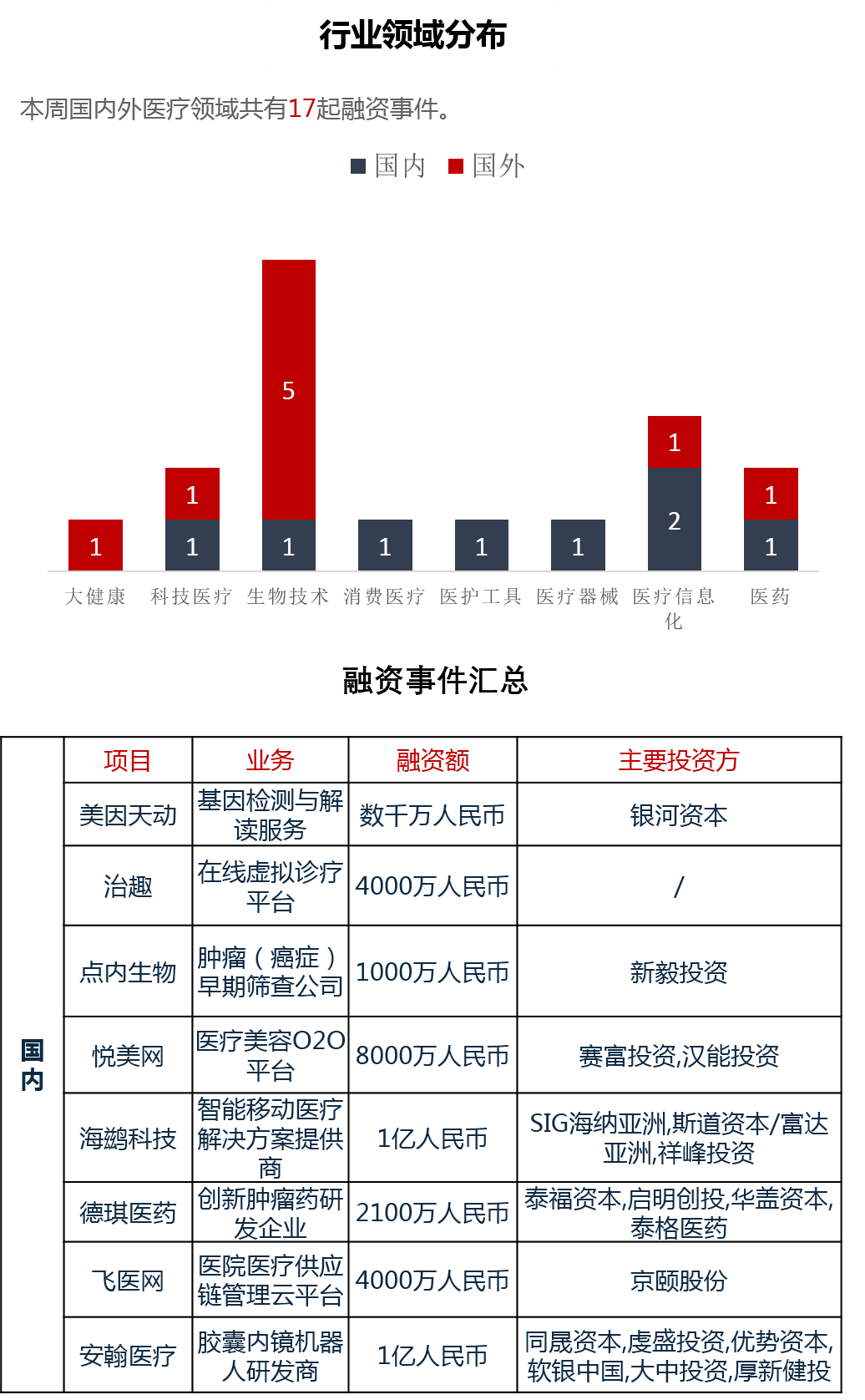
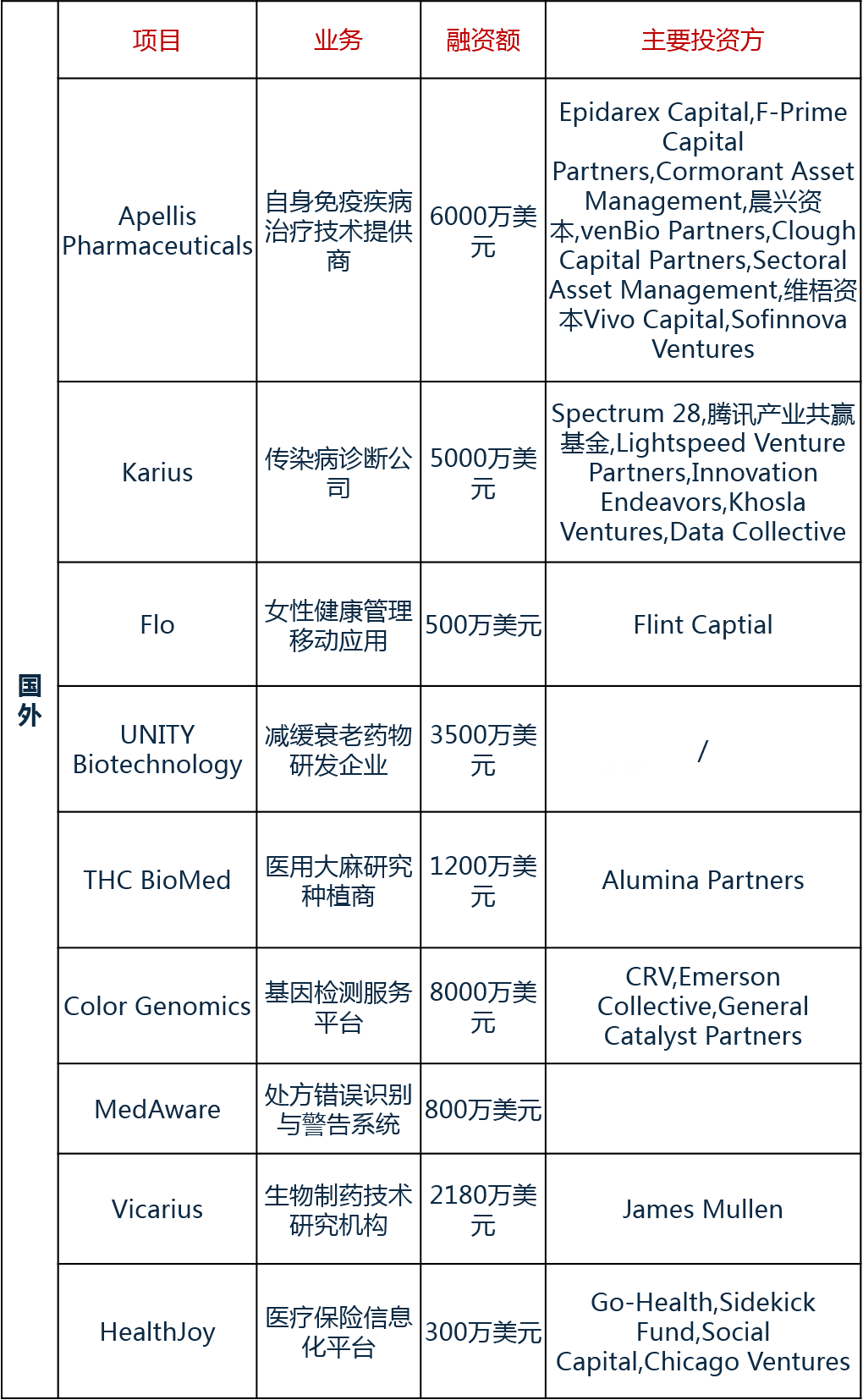
This Week’s Financing Events in the Healthcare Sector
4
This Week’s Healthcare Industry Activity Updates

5
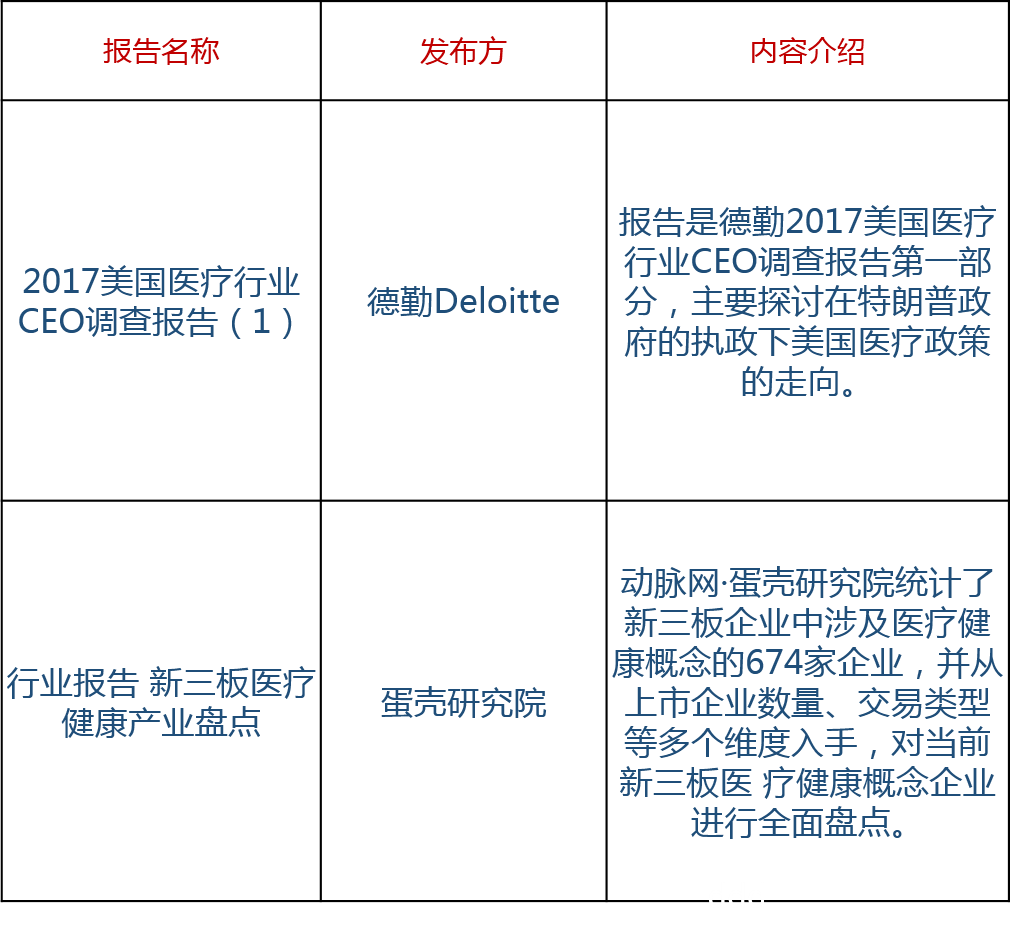
This Week's In-Depth Report
For more content, please visit the VCBeat knowledge base!