

Nine Star Chairmen Share Insights on a Decade of Pharmaceutical Industry Transformation: Shifts in Growth Drivers and the Early Stage of Market Consolidation
Over the past decade, the total size of the pharmaceutical end-user market has grown three- to fourfold, increasing from over RMB 300 billion to RMB 1.5 trillion, while retail pharmacy sales have risen from more than RMB 100 billion to RMB 350 billion. However, industry concentration remains low, with neither pharmaceutical manufacturers nor retailers having emerged as truly “large” companies. Taking pharmaceutical retail as an example, no single company holds a market share exceeding 2% of the industry.
The pharmaceutical industry urgently needs to increase its level of consolidation. While continuously expanding the overall market size, it is also essential to adjust the industry structure and cultivate companies with genuine market “dominance.” In the process of transformation and upgrading, what experiences can be drawn upon, and what are the specific implementation pathways?
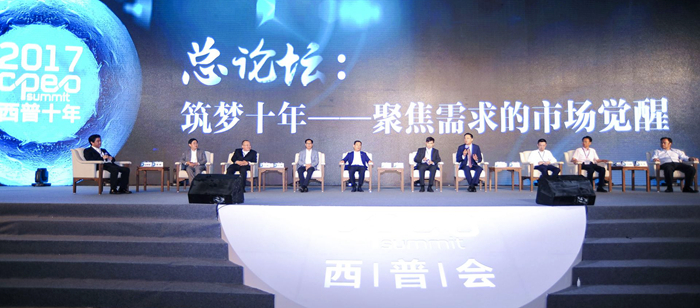
At the “2017 West China Pharmaceutical Conference” held recently, entrepreneurs from China’s pharmaceutical manufacturing and retail sectors gathered to summarize the industry’s experiences over the past decade and look ahead to the next. VCBeat (WeChat ID: vcbeat) has compiled their insightful remarks.
Guest Introduction:
Hu Jiqiang, Chairman of Conba Group Co., Ltd.
Gao Yi, Chairman of Yifeng Pharmacy Chain Co., Ltd.
Ke Yunfeng, Chairman of Dashenlin Pharmaceutical Group Co., Ltd.
Fu Gang, Chairman of Baiyang Pharmaceutical Group Co., Ltd.
Yi Bin, Chairman of Beijing Siliang Pharmaceutical Co., Ltd.
Ruan Hongxian, Chairman of Yunnan Hongxiang Yixintang Co., Ltd.
Wang Yuhui, Chairman of Chengda Fangyuan Pharmaceutical Chain Investment Co., Ltd.
Xie Zilong, Chairman of Laobaixing Pharmacy Chain Co., Ltd.
Yu Rong, Chairman of Meinian Onehealth Healthcare Holdings Co., Ltd.
A Decade in Review: The Pharmaceutical Industry
As the moderator of the sub-forum “A Decade in the Industry: Past, Present, and Future,” Hu Jiqiang provided a phased summary of the pharmaceutical industry’s development over the past ten years. He stated that over the last decade, the pharmaceutical industry was primarily shaped by policy influences, gradually forming today’s landscape—characterized by continuous expansion in scale, ongoing structural adjustments, and significant potential for future growth. However, the specific pathways for development still require joint exploration by various enterprises. After setting the tone for the sub-forum, he handed over the discussion to the participating entrepreneur guests.
Looking back on the past decade, Ruan Hongxian stated that when he entered the industry ten years ago, he observed its high growth potential and viewed it as a blue ocean with significant untapped opportunities. Over the course of these ten years of operations, there have been both joys and hardships. In the next decade, the road ahead remains long, the tasks more arduous, and greater responsibility and commitment will be required.
Xie Zilong believes that the past decade has been the most prosperous and opportunity-rich period for the entire pharmaceutical industry. From the perspective of growth rate, double-digit growth was observed annually. Although the pace has slowed in recent years, the industry’s growth potential remains substantial. The coming decade will bring significant uncertainties; factors such as healthcare reform and the influence of capital will drive rapid industry consolidation, giving rise to companies with sales and market capitalizations each reaching hundreds of billions. Enterprises should strengthen their core competencies and solidify their foundations to meet new challenges.
Ke Yunfeng stated that the development of pharmaceutical retail in the past could be described as having occurred at an opportune time. When Dashenlin initially opened stores in Shanghai, it required seven different ID cards to open seven separate locations. It was only after 2000, when policies were relaxed to allow social capital into the sector, that the industry truly seized its opportunity for growth. Following its recent IPO, Dashenlin has achieved growth through mergers and acquisitions; however, if the market is to move toward consolidation, the company will need to maintain an even higher growth rate.
Fu Gang stated that the growth over the past decade has been driven by China’s overall rapid economic expansion, including the swift increase in total national social security expenditures and rising resident health demands. However, the industry also faces numerous irregularities, such as inadequate policies and issues with drug pricing mechanisms. Under new regulatory trends, the industry will become increasingly standardized, and horizontal consolidation is just beginning.
Gao Yi stated that the past decade in pharmaceutical retail has been one of transformation, with business models shifting from low-price strategies to diversified approaches, and now entering a phase of transition toward service-oriented models. During this period, the industry also navigated two rounds of healthcare reforms, making it a decade marked by constant change.
The Next Decade: Market-Led or Government-Led?
Hu Jiqiang’s second question was who should lead the pharmaceutical industry over the next decade. He stated that the healthcare market is influenced by various government policies, soThe past decade was primarily a market driven by the government and hospitals.But will this landscape change in the future? How exactly will it evolve over the next decade: Will it be market-driven, continue to be government-led, or see market forces and government guidance coexist on equal footing?
Gao Yi believes that,The pharmaceutical retail market should gradually transition from being government- and hospital-led to a dual-led model driven by both the government and the market.Historically, the majority of retail market share was concentrated in hospitals, with government bodies and hospitals determining market distribution. As prescription outflow increases in the future, the retail sector’s market share is expected to gradually expand.
Meanwhile, the emerging middle class is expanding, and consumption upgrades will drive diverse and personalized demands. This includes common areas such as health management, rehabilitation and nursing care, dietary supplementation for wellness, and exercise-based wellness, all of which will contribute to the expansion of this industry’s market capacity.As the market size expands, the sales share of general health products will also increase, and the market share of pharmacies will gradually grow, leading to the gradual formation of a dualistic market.
Fu Gang believes that the market should remain the primary driving force, both in the past and in the future, with the government serving the market. If the government excessively intervenes in the market and uses coercive power to distort demand, it is acting irresponsibly. Genuine healthcare needs cannot be dictated by government planning; therefore, the government’s role should be one of service provision. Reform in pharmaceutical retail is imperative: the significance of hospital channels will diminish, while pharmacies will assume greater social responsibility.
Xie Zilong stated that the entire healthcare industry is undoubtedly a policy-driven market. Why is this the case? Looking back at our past development, all achievements have been made under policy guidance. The most direct example is why Beijing and Shanghai do not have large retail enterprises; due to restrictions on store location distances, they failed to develop. In other regions, where policies were more lenient, these areas moved ahead. Over the next decade, the pharmaceutical market will continue to operate under policy guidance. If policies are favorable, they will determine the pace of industry development.
What Will the Landscape of the Pharmaceutical Manufacturing and Distribution Industries Look Like in the Next Decade?
We have previously discussed whether the pharmaceutical market is government-led or market-driven. The conclusion is that, since the pharmaceutical industry is directly related to public health and medication safety, restrictive and regulatory laws will undoubtedly remain in place. However, during the development process, another approach has emerged: relevant enterprises offer advice and recommendations to policymakers to influence policy formulation, thereby achieving the goal of letting the market determine policy.
The above discussion focused on the pharmaceutical sales market. So, what will the landscape look like over the next decade for the pharmaceutical manufacturing industry, pharmaceutical distribution, and even the entire broader health market?
Yu Rong stated that, from the perspective of his own health checkup business, the integration among various enterprises across the entire big health industry chain will continue to improve, making the continuum from diagnostic examination to pharmaceutical treatment more comprehensive. He cited as an example,Meinian is currently researching the early detection of Alzheimer's disease,In practice, the linkage among examination, diagnosis, and subsequent treatment has become increasingly tight. Additionally, among the 20 million individuals undergoing health check-ups annually, 30% are newly diagnosed with diabetes at an early stage, creating substantial demand for pharmaceuticals and health supplements, which signifies future demand for end-user products. In the future, health check-up services will integrate effectively with industrial and retail sectors, with such convergence representing a major trend.
Wang Yuhui stated that he personally views the pharmaceutical and healthcare sector as a long-term “sunrise industry.” Particularly under the influence of accelerating population aging, rising incomes, and shifting consumer demands, the future health industry will offer broad opportunities for companies operating in this field.
Yi Bin noted that the “Healthy China 2030” plan, previously issued by the State Council, places specific emphasis on the elderly and maternal populations, including detailed recommendations for folic acid intake. This development is highly favorable for the folic acid industry. Moreover, demand from these demographic groups is expected to rise alongside improvements in quality of life, ensuring sustained positive momentum for the sector. Industry players should formulate strategic plans, rapidly optimize their product portfolios, and strive to surpass their current performance benchmarks.
Xie Zilong said,The trend of the entire industry in the next decade can be summarized as “the strong get stronger, and oligopolies become more concentrated.”. This trend will not be limited to retail enterprises; it will encompass the entire pharmaceutical industry, including manufacturers, distributors, and retailers. Over the past years, the industry has undergone a transition from extensive growth to refined development. This shift is evidenced by the continuous listing of industry players on capital markets, which has accelerated industry consolidation. In the future, it is highly likely that four to five companies will emerge with either market capitalizations or annual sales revenues reaching hundreds of billions of yuan.
Hu Jiqiang concluded by stating that the public’s pursuit of health is the ultimate goal for pharmaceutical and broader healthcare enterprises. The industry must clearly identify where the public’s health needs lie and prepare in advance. If companies can truly understand and interpret the needs of consumers and customers, the development of the big health industry will hold great promise, and those that seize these opportunities will grow stronger and larger.