

Leading Healthcare AI and Big Data Companies Innovate Around Six Key Electronic Medical Record Application Scenarios
In the previous article "A Detailed Analysis of Electronic Medical Records Across Five Dimensions: Their Standardization Is the Cornerstone for the Implementation of Artificial Intelligence and Healthcare Big Data!In the previous article, VCBeat provided an in-depth analysis of the five major standardization frameworks for electronic medical records (EMRs). In this article, we will review the innovative EMR applications developed by leading domestic medical big data and AI companies.
From a market perspective, there are currently six major challenges in the clinical use of electronic medical records:
1. Electronic Medical Record (EMR) Systems Are Difficult to SatisfySpecialized needs by disease type, particularly physicians’ personalized demands for clinical data in the field of major diseases.
2、Electronic medical record systems are cumbersome to operate, inevitably leading to physician burnout during data entry, which significantly compromises the authenticity of the recorded data.
3. Interconnectivity of Electronic Medical Record (EMR) Data. This encompasses two aspects: first, the integration of EMRs with other Hospital Information Systems (HIS) within hospitals; second, government-led regional sharing platforms, whose primary tasks are data extraction and facilitating information interoperability among hospitals. Throughout both processes, more advanced and comprehensive technologies must be employed to ensure the security of data storage and sharing.
4. Deploying big data platforms based on electronic medical records (EMRs) within hospitals for research or clinical applications requires software vendors behind each hospital’s software systems to open their data interfaces. However, these companies often demand exorbitant fees, exhibit passive cooperation, and repeatedly delay progress. Without an effective platform for the centralized storage of large-scale, multi-source, heterogeneous medical data, data mining can only be conducted in a fragmented, manual manner.
5. Due to the lack of structured data entry in electronic medical records (EMRs) by physicians in the past, documentation was predominantly recorded in narrative text format, resulting in highly formulaic content. Similar to writing reports in Microsoft Word, hospital EMR systems have historically retained extensive blocks of natural language paragraphs. This has madeHospitals face difficulties in areas such as quality control and data utilization.Therefore, accurately structuring these existing data sets remains a major challenge at the current stage.
6. Due to a lack of experience, primary care general practitioners frequently make misdiagnoses or miss diagnoses, leading to serious doctor-patient crises. Meanwhile, the clinical value of electronic health records (EHRs) in large hospitals has not yet been systematically exploited. Furthermore, given the heavy workloads of physicians in these major hospitals, it is difficult to effectively transfer advanced diagnostic and treatment expertise to the primary care level. Therefore, clinical decision support systems based on EHR data from large hospitals have become a key direction for future development.
It is precisely because of these challenges that new AI and big data companies have been presented with development opportunities.According to VCBeat's observations, they are currently generally inServices are provided in the following six scenarios:
1、Disease-Specific Specialized Platform
2、Smart Voice Entry
3. Blockchain Technology
4、Multi-source Heterogeneous Data Mining
5、Natural Language Recognition
6. Clinical Decision Support
1. Specialized Disease Platform, Source Innovation in Medical Big Data — Boshi Medical Cloud
In China, the field of disease diagnosis and treatment has evolved to a point where there is a significant shortage of specialized tools for specific diseases. The more niche the domain, the greater the lack of effective data tools. As the primary platform for clinical data in hospitals, current electronic medical record (EMR) systems are outdated in both design philosophy and usability, making it difficult to meet physicians’ rapidly changing data needs in the management of major diseases.
For instance, when physicians conduct research, retrospective data collection is the first step. Due to limitations in existing systems regarding data dimensions and disease-specific expertise, many doctors still rely on primitive Excel spreadsheets for medical record entry. To break down data into specific research topics—such as examining the correlation between pathological subtypes and medication efficacy—physicians must strip away all irrelevant information and create new tables to analyze the useful data. In this process, doctors often collect data from hundreds or even thousands of patients, spending 80% of the entire research cycle on data preparation, while only 20% of the time is devoted to actual output generation.
Boshi Medical Cloud, built on standardized structures and unified terminology, meets the accelerating iterative demands of hospital clinical data. By leveraging Boshi Medical Cloud, physicians can retrieve desired information for each case based on varying input fields. Tailored to different disease categories, it enables hospitals to achieve personalized yet standardized data integration, ultimately bridging the gap between patient health data and clinical care data to establish true healthcare big data.
Taking Boshi Medical Cloud’s thoracic surgery forms as an example, the most complex form contains over 2,700 fields. This means that physicians using this form can select from more than 2,700 data dimensions to focus on. Achieving this from a technical and product perspective requires long-term, in-depth needs analysis and close collaboration between the development team and end users.
The reason why Boshi Medical Cloud encompasses such a wide range of dimensions is that, in the clinical field, big data and small data are equally important. Special case data, referred to as outliers in statistics, are excluded because they affect the statistical calculations of big data.However, from a scientific research perspective, individual rare cases hold unique significance. They possess substantial clinical research value in helping physicians understand specific patients and thereby develop innovative concepts and methodologies. Only by specializing patient data according to disease types, and even tailoring it to specific departments and individual physicians, is it possible to simultaneously leverage both big data and small data.
Secondly, by leveraging specialized disease-specific support, the Boshi Medical Cloud enables multidisciplinary team (MDT) consultations across dozens of hospitals, involving hundreds of physicians and thousands of medical records. Cross-validation and complementarity among different departments, physicians, and medical record forms maximize the value of MDT from multiple dimensions.
Furthermore, the development foundation and long-term optimization of artificial intelligence require high-quality, continuous data. Due to historical factors, data within traditional Hospital Information Systems (HIS) often suffer from insufficient quality and limited dimensions, making AI models trained on such data difficult to deploy in clinical practice with adequate accuracy and generalizability.
Therefore, only by ensuring the professional quality, structured integration, and multidimensional diversity of raw data can we make it possible to develop artificial intelligence with authenticity and accuracy in the future. Boshi Medical Cloud has made in-depth strategic investments in this direction and will launch several intelligent auxiliary diagnosis platforms for major specialized diseases through its Joint Laboratory for Medical Big Data, established in collaboration with the Data Science Center of the Chinese Academy of Sciences.
Currently, Boshi Medical Cloud covers nearly all major disease areas, including oncology, hematology, orthopedics, neurology, neurosurgery, psychiatry, and respiratory diseases. It has been implemented in over 3,000 clinical departments across more than 400 Grade A tertiary hospitals nationwide, with over 1,400 of these departments specializing in oncology (including hematologic malignancies).
2. Intelligent Voice Input, Freeing Doctors’ Hands — Unisound
Unisound is a company dedicated to providing AI services for the Internet of Things (IoT). Leveraging its machine learning platform—encompassing deep learning, reinforcement learning, and Bayesian learning—the company has established a leading core technology system in fields such as speech technology, language technology, knowledge computing, and big data analytics. Together, these technologies form Unisound’s comprehensive AI technology landscape. At the application level, three major solutions—AI Chip, AIUI, and AI Service—facilitate the deployment and realization of Unisound’s core technologies.
Unisound Intelligent Medical Voice Entry System is built upon Unisound’s professional, high-performance speech recognition engine tailored for the healthcare sector, complemented by Philips handheld peripheral input devices. These devices enable seamless integration with various hospital systems, facilitating efficient processing of large-volume text entry through voice commands. Users can interact with hospital information systems such as HIS and PCS via voice input and function keys on the handheld devices.
In addition, Unisound has developed China’s first speech recognition engine for the medical field, implementing extensive model optimizations tailored to medical databases (comprising millions of specialized medical terms, thousands of hours of accumulated corpus data, and extremely complex Chinese-English code-switching patterns).
To enable precise recognition, Unisound has also implemented deep customization for hospitals. The deeply customized medical speech recognition model analyzes complete medical record data across different departments and disease types to extract key phrases and corpus, providing scenario-specific support for over 40 clinical and medical technology departments.
It is particularly effective in departments with a high volume of complex and refractory cases, such as neurology, immunology, hematology, and general internal medicine. Currently, the speech recognition accuracy exceeds 95%, with certain departments achieving rates even above 98%. Furthermore, with the assistance of cloud-based semantic correction technology, the overall recognition rate approaches 100%.
By adopting voice input, physicians not only improve work efficiency but also effectively avoid copy-and-paste operations, standardize medical record documentation, and enhance the security of medical record entry. Currently, this system can save physicians more than 38% of their time.
Since the launch of its comprehensive healthcare solutions, Unisound has officially gone live in more than 20 representative large tertiary Grade A general hospitals across China. These hospitals are located in Central, North, and South China, as well as Western China, and include Peking Union Medical College Hospital, Peking University People’s Hospital, Xijing Hospital of the Fourth Military Medical University, and The University of Hong Kong-Shenzhen Hospital, among others. Additionally, approximately 40 other hospitals are currently in the pilot trial phase.
3. Blockchain Technology to Address Data Sharing and Security Issues in Electronic Medical Records—Alibaba Health
The concept of blockchain is not complex; it primarily consists of three components: a widely distributed network, a shared ledger with validated identity access, and digital transactions.
In the healthcare sector, the primary application of blockchain is the preservation of personal medical records, which can be understood as electronic health records (EHRs) stored on a blockchain. If medical records are conceptualized as a ledger, they were traditionally held by individual hospitals rather than by patients themselves. Consequently, patients lacked access to their own medical histories, creating significant challenges in seeking medical care, as physicians were unable to obtain a comprehensive understanding of their patients’ medical backgrounds.
However, if blockchain technology is used for storage, personal historical medical data becomes available. Whether for clinical consultations or personal health planning, this historical data can be leveraged, with the patient—not any specific hospital or third-party institution—being the true owner of the data.
On August 17, 2017, Alibaba Health announced the launch of its “Medical Consortium + Blockchain” pilot project in collaboration with Changzhou City. According to the announcement, blockchain technology has been integrated into the underlying technical architecture of the Changzhou Medical Consortium, enabling secure and controlled data interoperability among certain local medical institutions.
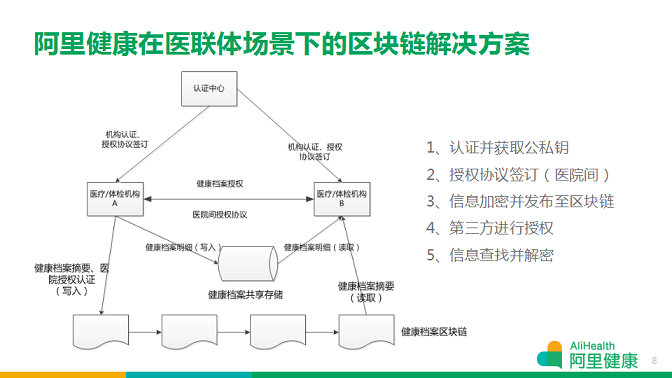
It is reported that the Zhenglu Town Health Center in Changzhou is a community hospital providing primary healthcare services to a population of 140,000, with approximately 30,000 patient visits per month. According to Zhang Zhihong, the hospital’s director, vast amounts of data from each medical institution previously had to be transmitted separately to the municipal medical information platform. However, due to the lack of interoperability among medical institutions, many operational needs could not be met. Furthermore, ensuring the security of personal health information during circulation and storage posed a significant challenge for the original platform.
The application of blockchain technology can effectively address the challenges of interoperability among healthcare institutions and the security of information storage.
Taking the healthcare experience under a tiered diagnosis and treatment system as an example: Residents undergo physical examinations at nearby community health centers. Through blockchain-based analysis of examination reports, high-risk patients with chronic cardiovascular and cerebrovascular diseases are identified. Approximately 5% of patients requiring referral can have their medical records authorized and transferred to higher-level hospitals by community physicians via blockchain. Upon authorization, specialists at these higher-level institutions can rapidly access the patients’ historical medical data and examination results, eliminating the need for redundant basic tests. This enables patients to receive comprehensive, "concierge-style" medical services from physicians across all levels within the medical consortium, thereby achieving early detection and intervention in line with the preventive healthcare philosophy of "treating disease before it arises."
Alibaba Health’s blockchain technology leverages legacy IT equipment and systems to interconnect information, offering lower integration costs and enhanced security compared to traditional informatization approaches.
4. Multi-source Heterogeneous Data Mining: Breaking Down Hospital Information Silos – Dashu Yida
Due to historical reasons, hospitals in China operate more than one hundred healthcare information systems simultaneously. These multi-source, heterogeneous systems are fragmented from one another, leaving medical data trapped in silos and preventing its effective utilization. Moreover,Information technology vendors often charge high fees for API access.
Dashu Yida collaborates with hospitals,No integration with the original system is required. By leveraging big data technologies, multi-source structured and unstructured data can be cleaned, de-identified, structured, and standardized. This enables hospitals to consolidate previously fragmented medical data into an interconnected medical big data platform, laying the data foundation for big data processing and analysis.
For a single hospital, Dashu Yida can even mine data spanning nearly 20 years.
Dashu Yida integrates medical records of oncology patients scattered across hospital systems such as HIS, EMR, LIS, and PACS, presenting outpatient and inpatient medical record information for each patient through a timeline-based integrated view.
Previously, a company developing Hospital Information Systems (HIS) seeking to compile patient statistics had to either collect data independently or collaborate with other systems by opening data interfaces for extraction. Now, partnering solely with Dashu Yida significantly reduces the workload associated with secondary development.
Additionally, Dashu Yida can also achieveRapid Retrieval of Medical Data,Provide intelligent medical record retrieval services based on the medical big data platform. ThroughApplying internet search technologies, such as those used by Baidu and Google, to medical record retrieval enables physicians to quickly search through vast volumes of patient records. For instance, a physician can retrieve all patient records with pathological reports confirming “breast cancer” or showing “carcinoembryonic antigen (CEA) levels greater than 5” within one second.
In addition to interoperability, Grade A tertiary hospitals also have certain management and statistical requirements. For instance, the primary responsibility of the Hospital Statistics Department is to collect and organize various information generated during daily medical care and management processes. It applies statistical theories and methods to scientifically process, organize, monitor, and analyze operational data, thereby completing the compilation, summarization, and statistical analysis of various data reports.
Hospital administrators often need to understand the causes behind abnormal indicators, such as unusually high drug-to-revenue ratios for specific departments or diseases. This requires the Statistics Department to perform data queries based on the Hospital Information System (HIS). With a big data platform in place, the Statistics Department can easily accomplish this task.
Building on its big data platform, Dashu Yida has also developed an AI physician assistant. By leveraging deep learning on vast amounts of medical record data, it has extracted an intelligent diagnostic model to assist physicians in clinical diagnosis and teaching.
For example, diagnostic models can intelligently recommend a list of differential diagnoses with corresponding probabilities based on patient information provided by physicians, including chief complaints, medical history, laboratory tests, and examinations, while also providing statistical data from similar cases for clinical reference.
5. Natural Language Recognition for Post-Documentation Structuring of Medical Records — Senyi Intelligence
Senyi Intelligence is a medical artificial intelligence company focused on leveraging AI for the automated analysis and secondary application of medical texts, directly addressing the challenge of utilizing unstructured data within healthcare big data.
The company has independently developed natural language processing (NLP) technology for Chinese medical texts, enabling the post-structuralization and standardization of massive volumes of unstructured clinical electronic data, including inpatient records, outpatient records, imaging reports, pathology reports, and health examination reports. It aims to replace manual reading and analysis of medical texts with artificial intelligence methods, thereby eliminating the waste of medical data. By developing and promoting AI-driven healthcare products, the company seeks to enhance medical productivity and safety, helping to alleviate China’s healthcare challenges.
As a professional provider of medical AI technologies, Senyi Intelligence has developed a mature Chinese medical natural language processing (NLP) pipeline system. This system allows flexible configuration of attributes such as granularity and offers open semantic APIs for Chinese medical records, providing customers with pluggable modules for seamless integration with diverse platforms and systems.
Senyi Intelligence’s artificial intelligence system functions like an experienced physician, accurately and comprehensively interpreting the meaning conveyed in medical records while resolving any ambiguities. Leveraging natural language processing technology, the system deeply mines and analyzes information within medical texts. It can rapidly extract data from medical records in bulk to generate a structured database, reducing a process that would otherwise take physicians months to just a few seconds.
Currently, the system achieves an overall accuracy rate of 92% across all departments. It can identify 13 major categories of clinical variables and recognize linguistic associations among 19 types of variables, enabling the fully automated generation of structured databases. More importantly, Senyi’s natural language processing does not rely on any manual rules. When confronted with new disease types or medical records, it completes model building entirely through machine learning, thereby allowing the product to achieve flexible customization and rapid iteration across different scenarios.
Precisely because of its high speed and accuracy, Synyi AI can rapidly structure the data required by clients—including those in chronic disease management, health platforms, insurance companies, Hospital Information Systems (HIS), and pharmaceutical companies—despite the lack of standardization across current hospital IT systems. This capability enables the creation of compelling, evidence-based case studies that drive industry advancement.
Currently, Senyi Intelligence serves multiple departments in over ten renowned Grade A tertiary hospitals in China, as well as more than ten medical IT and medical data enterprises. Its services involve structuring and visualizing electronic medical records based on the needs of B-end clients such as hospitals, medical IT companies, insurance providers, and pharmaceutical companies. The processed data is then applied to clinical research, health insurance cost control, drug development, and clinical decision support.
6. Clinical Decision Support System to Assist General Practitioners — LinkDoc Technology
Data from the "China Health and Family Planning Statistical Yearbook 2016" show that there were approximately 188,649 general practitioners in China, with only 1.37 general practitioners per 10,000 population, indicating a severe shortage of general practitioners in China at present.

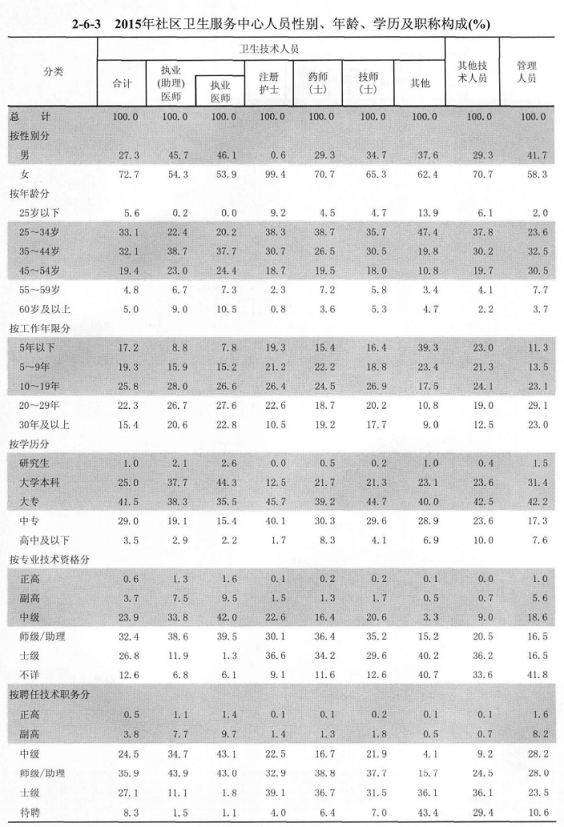
Furthermore, an analysis of the educational qualifications of personnel in China’s community health centers reveals that 41.5% hold associate degrees, while only 1% possess postgraduate degrees. This indicates that the clinical competence of primary care physicians is generally suboptimal.
Medical big data is sourced from large hospitals and simultaneously implemented at the grassroots level. LinkDoc Technology’s HUBBLE medical big data clinical decision support system conducts in-depth mining and learning on massive volumes of medical records, distilling expert experience into AI model algorithms to serve general practitioners. This enhances their clinical workflow efficiency and helps alleviate the shortage of medical resources at primary care institutions.
Clinical practice imposes stringent requirements on auxiliary diagnosis. In the context of medical data and computer-aided diagnostic scenarios, there is a rigorous demand for the interpretability of conclusions, particularly regarding the causal inference chain. Consequently, applications and product designs commonly employed in big data analytics that rely on correlation-based conclusions are not suitable for the specialized field of medicine.
Therefore, it is essential to adopt a unified standard and leverage deep learning to build auxiliary diagnostic models. This approach aims to minimize physicians’ workload while providing objective and impartial third-party diagnostic and treatment recommendations. Consequently, it can help prevent misdiagnoses and missed diagnoses among primary care general practitioners due to lack of experience.
In terms of assisting physicians in clinical decision-making, HUBBLE, the medical big data-powered clinical decision support system under LinkDoc Technology, is currently the flagship product. It primarily delivers the following capabilities:
1. Supporting Management Decision-Making: HUBBLE intelligently "diagnoses" potential issues in hospital quality management for partner hospitals and departments through the Dean’s Dashboard and business reports. It visually presents findings via six major modules, including patient analysis, medical quality analysis, and operational efficiency analysis, thereby providing data-driven support for hospital management decisions;
2. HUBBLE leverages vast amounts of clinical medical record and imaging data, combined with precise sample annotations by medical experts, to enable machines to effectively learn expert knowledge through artificial intelligence technologies. It provides intelligent auxiliary diagnosis and imaging diagnostic services, helping primary care physicians detect and diagnose diseases while improving diagnostic and treatment efficiency.
The core operational mechanism of the HUBBLE Medical Big Data Clinical Decision Support System is built upon vast amounts of medical big data, while also integrating the expertise of specialists across various disciplines. Technical professionals leverage advanced IT technologies and deep learning algorithms to develop specialized customizations for the oncology field, thereby providing physicians with visualized, scenario-based, and intelligent system solutions. Furthermore, feedback from physicians during clinical use continuously optimizes the system, enhancing its accuracy.
Currently, the HUBBLE Medical Big Data Clinical Decision Support System has been implemented at the First Affiliated Hospital of Hainan Medical University, Anyang Cancer Hospital, Henan Cancer Hospital, and Tianjin Cancer Hospital.
Six Major Application Scenarios Spanning the Pre-, Mid-, and Post-Stages of Electronic Medical Record Data Generation
Six Major Application Scenarios of Electronic Medical Records: A Three-Stage Framework Based on Data GenerationThe six major application scenarios of electronic medical records (EMRs) can be categorized into three stages based on the data lifecycle: pre-generation, during generation, and post-generation. Platforms such as Boshi Medical Cloud, which specializes in disease-specific solutions, and Unisound’s intelligent voice-based EMR entry system, are examples of applications used prior to data generation. Disease-specialized tools and blockchain technology represent applications employed during data generation, encompassing data sharing, storage, and security. Meanwhile, natural language processing, structured mining of multi-source heterogeneous data, and clinical decision support systems are applications utilized after data generation, focusing on post-structuralization of data, interoperability, and assisted diagnosis.
Thus, it is evident that as electronic medical records (EMRs) serve as one of the foundational databases for healthcare big data, there are significant market opportunities for innovations introduced by enterprises at any stage of the EMR lifecycle. Furthermore, this once again underscores the central role that EMRs will play in the future landscape of artificial intelligence and big data.