

Xi Yue Ge Files IPO Prospectus: Premium Maternity Care Chain with Over RMB 100 Million Revenue per Flagship Center
Annual revenue exceeding RMB 100 million—this is the yearly turnover of Xi Yue Ge’s single Beijing location. Such a figure is exceptionally rare in the postpartum care center industry.
Headquartered in Beijing, it is currently strengthening its presence and strategic layout in the Yangtze River Delta region, with plans to replicate this model nationwide. As a postpartum care center under Amcare, Xiyuege has pioneered a fully direct-operated premium postpartum care model.
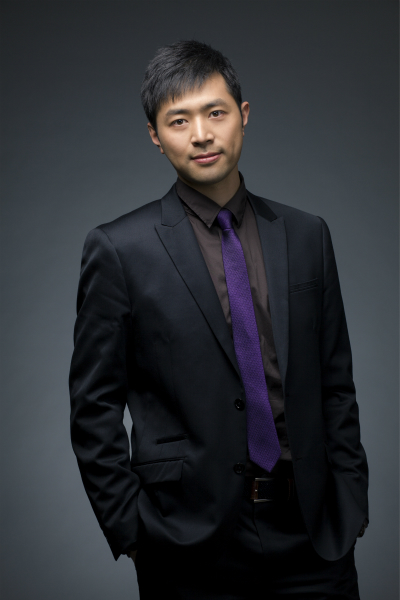
Yue Zhao, Founder of Xiyue Pavilion
However, since postpartum care services target vulnerable populations—pregnant women and newborns—and industry standards are lacking, risks persist. Moreover, the influx of various capital investors and practitioners without industry experience has accelerated disorderly competition, introducing uncertainties to future development.
Xiyue Pavilion currently offers professional services including prenatal guidance, postpartum confinement care for mothers, postpartum rehabilitation guidance, newborn care, early childhood education for infants, and infant care guidance. By leveraging medical-grade service standards and management systems, it has established a robust competitive moat.
How Xiyuege Builds a Medical-Grade Postpartum Care Center: How Is the Asset-Heavy Model Driving Growth? VCBeat (WeChat ID: vcbeat) interviewed Yue Zhao, founder of Xiyuege, to find out.
Asset-Heavy Direct-Operation Model: Single-Store Revenue Exceeds 100 Million Yuan
The postpartum care industry, in general, still carries certain risks. Since it involves caring for pregnant women and newborns—populations highly susceptible to infection—it must comply with specific medical-grade standards for healthcare-associated infection control and caregiving requirements.
Currently, the prevalent operational models in the postpartum care center industry are renting hotel spaces or operating “small and beautiful” direct-sale stores with 20 to 30 rooms.
For startups, keeping the number of rooms to around 20–30 and adopting an asset-light operational model offers certain advantages in terms of economies of scale and cost control, making it easier to achieve profitability. “However, this does not mean it is the only direction for industry development,” said Yue Zhao.
It has been reported that the annual revenue of a single Xi Yue Ge facility in Beijing exceeds RMB 100 million. Therefore, concerns among industry insiders that large-scale institutions with heavy upfront asset investments cannot be profitable are clearly unfounded.
From the outset, Xi Yue Ge has adopted a capital-intensive, direct-operated business model, with each facility averaging more than 60 rooms and requiring an investment of over RMB 70 million for a 10,000-square-meter site. Naturally, its pricing is higher than that of ordinary postpartum care centers. For instance, the Wangjing branch of Xi Yue Ge offers four package options: the Standard Recovery Plan at RMB 89,600, the Sunshine Standard Recovery Plan at RMB 103,600, the Deluxe Recovery Plan at RMB 119,000, and the VIP Premium Recovery Plan at RMB 198,800.
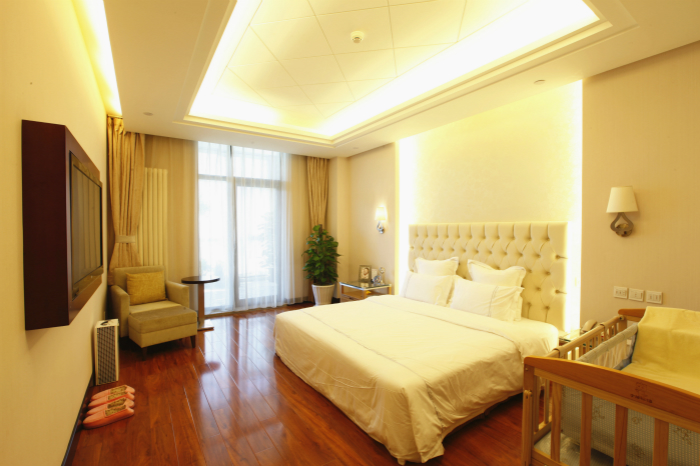
Independent Clubhouse, Hotel-Style Management, Hospital-Grade Infection Control
All properties initially acquired by Xiyue Pavilion were in a bare-shell condition. Through a series of redesigns and spatial renovations, they have been tailored to meet the professional care requirements during the postpartum confinement period.
Yue Zhao told reporters, “Direct operation does require a relatively higher initial investment, including fixed assets, renovation, and equipment. However, if postpartum care centers aim to develop in a standardized and branded manner, the asset-heavy model is more appropriate.”
He believes that, similar to medical institutions for elderly care and rehabilitation, if one chooses a venue fundamentally unsuitable for postpartum recovery and confinement care—such as merely renting a few hotel rooms—it is difficult to ensure professional standards.
Regarding the hotel leasing model, Yue Zhao stated, “The asset-light approach naturally requires a smaller capital investment, making it easier to launch a postpartum care center during the startup phase. Particularly in the current immature market, where public awareness of postpartum care remains insufficient, consumers may be attracted by the luxurious decor and amenities of hotels. However, these are not the most critical needs during the postpartum confinement period, nor are they conducive to long-term development.”
The market still needs to be educated, with a focus on consolidating nursing and home care needs.
In 2010, when Xiyue Pavilion first opened its postpartum care center in Beijing, there were few large-scale, well-established brands in the local market.
In just seven years, the current number has reached at least one hundred. Even in third- and fourth-tier cities, postpartum care centers of all sizes have emerged in clusters. This industry is developing rapidly, with keen-eyed entrepreneurs flocking to join this trend.
Prior to entering the postpartum care industry, Yue Zhao also conducted a market assessment, concluding that with consumption upgrades, domestic demand for postpartum care was on the verge of explosive growth.
“However, when I actually spoke with practitioners at the time, and even with heads of obstetrics and gynecology departments at some hospitals, I discovered that they surprisingly believed there was no need for professional institutions to address postpartum care issues, considering in-home confinement nannies to be quite adequate.”
After truly entering the industry, Yue Zhao believes that the market still requires continuous education. It is necessary to guide consumers to genuinely understand and appreciate the importance of this special period, while also helping them recognize which services offer true value.
Xiyue Pavilion is consolidating postpartum and family needs onto a single platform, offering diversified services to meet professional care requirements.
“Xi Yue Ge employs exclusively certified nurses, with no postpartum care aides (yuesao). It is staffed with dedicated neonatologists, pediatricians, and obstetricians—a level of professional staffing that few institutions in the current market can match.”
Although postpartum care centers are not medical institutions, they must promptly identify and address any issues that arise, providing professional advice and solutions. As an affiliate of Amcare Women’s and Children’s Hospital, Xiyuege enjoys inherent advantages in access to physician and nursing resources.
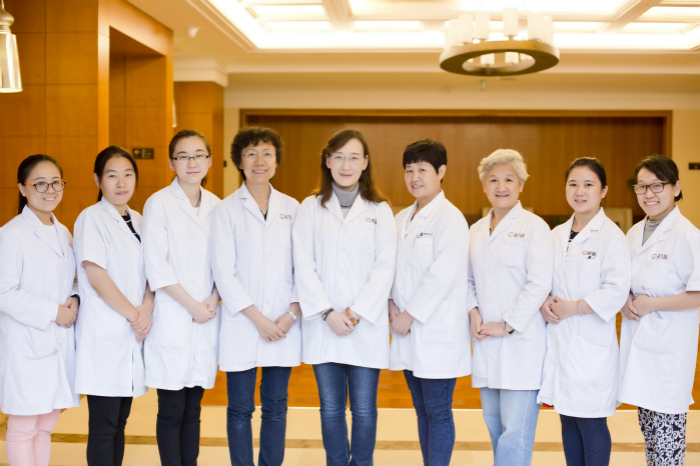
Xiyue Pavilion boasts a team of senior obstetricians, gynecologists, and pediatricians.
“Newborns, in particular, require professional physician rounds and care services. The Xi Yue Ge Wangjing branch boasts over 70 rooms, a full-time staff of 240–250 employees, nearly 100 nurses, and five to six full-time physicians—a level of staffing that few competitors in the industry can match. Currently, most postpartum care centers rely on visiting physicians from hospitals for temporary consultations.”
Additionally, Yue Zhao also mentioned postpartum meals and housekeeping services. “It is not unfeasible to entrust management to the hotel’s housekeeping staff; however, hotel guest rooms often fail to meet the specific needs of susceptible populations.”
For instance, carpets in hotels are breeding grounds for bacteria and cannot be effectively disinfected. However, independent postpartum care centers can generally avoid all such issues. The property management must be specifically tailored to serve the postpartum care center industry.
Postpartum meals cannot be prepared in hotel kitchens either. “Salt and oil content in postpartum meals must be strictly controlled, requiring dedicated kitchen facilities and chefs.”
“If we want to integrate various services into a single platform, we need to consolidate professional expertise from all sectors. After all, specialized resources within the industry, including talent, remain relatively scarce. Ultimately, the industry’s development will inevitably converge onto a unified platform,” summarized Yue Zhao.
Professional Operations and Management System
Reporters learned that Xiyue Pavilion features facilities such as baby swimming and bathing rooms, sunlit nurseries, beauty therapy rooms, a prenatal and postnatal beauty management center, and a yoga and fitness studio. The layout is strictly designed according to maternal and infant care zones, with ample space in each area and rigorous access control systems implemented throughout.
Even for visits by family members, they are only permitted to officially enter the convalescent area after completing steps such as putting on shoe covers, having their temperature taken, performing hand disinfection, and wearing masks.
Similar to functional zoning, the internal operations at Xiyue Pavilion are highly systematized and staffed by dedicated personnel. This includes back-office support teams responsible for housekeeping logistics, as well as frontline departments handling nursing, catering, training, beauty and body care services, along with patient education and engagement.
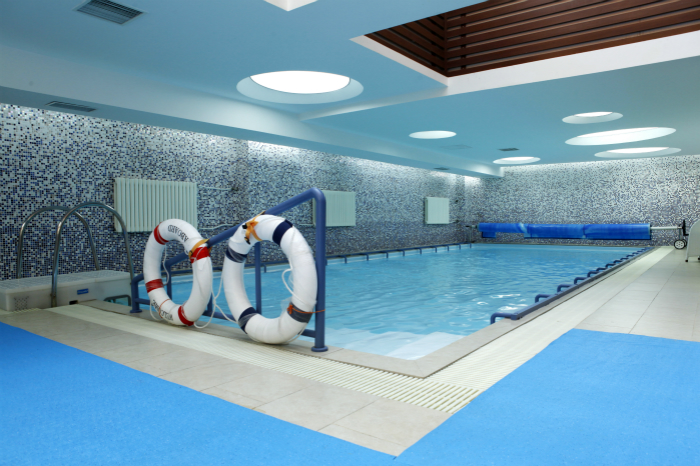
Xiyue Pavilion's Signature Aquatic Fitness Program
According to Yue Zhao, “The management of postpartum care center systems is essentially a typical service-industry management model. Departments are highly specialized, with relatively clear responsibilities and strong demands for professional expertise. Meanwhile, risk control must be maintained throughout nursing care.”
“All of these tasks require professionals to complete, necessitating time for learning and training; therefore, expansion cannot be too rapid, and strict quality control and safety measures must be ensured. ‘This is not like product sales, where capturing a market and rolling out distribution channels can be achieved in a very short period,’ said Yue Zhao.”
The postpartum care and confinement center industry continues to face numerous challenges in its development, primarily due to a lack of regulatory oversight, which has resulted in uneven quality across the sector.
In contrast, Taiwan’s postpartum care centers have developed into a more mature industry. Moreover, the postpartum care sector in Taiwan is regulated by health authorities, ensuring greater standardization and compliance.
However, labor costs in Taiwan are high; with only about 15 nurses assigned to 30 rooms and stringent cost controls, this staffing model does not align with the demands of consumers in mainland China.
“Taiwanese consumers also have different perceptions of the industry, being able to accept that family members do not visit or disturb them during the postpartum confinement period. This concept is only gradually taking shape in mainland China.”Yue Zhao stated that while Taiwan’s postpartum care centers have a relatively mature development, some centers in Beijing are currently promoting the concept of “Taiwan-style” postpartum care. However, there remain significant differences in actual management practices, so consumers should exercise careful discernment when making their choices.
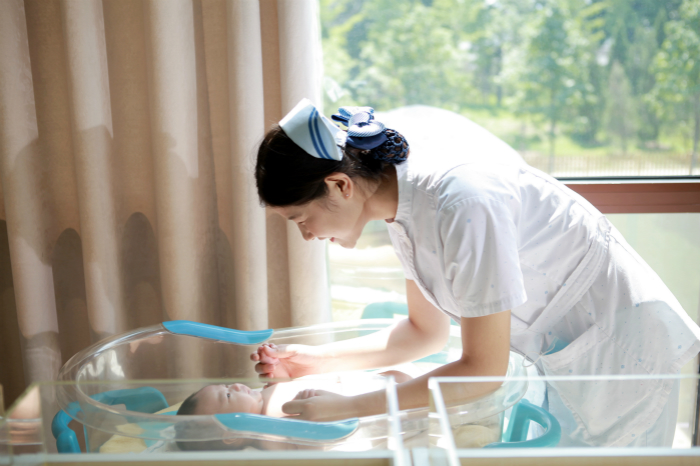
Professional Nurses Provide Neonatal Care
During the postpartum confinement period, visits from friends and relatives can easily lead to excessive contact with the newborn, posing certain risks. These risks are minimal in Taiwan, where mothers clearly understand what is important during confinement, what deserves attention, and where to allocate their spending. “Taiwanese women are more rational, which reflects a mature market and is worth learning from.”
Standards are indispensable; no industry can develop without standardization and normalization. “Currently, there is strong demand for services in postpartum care centers, including catering, postpartum body shaping and recovery, as well as psychological health and communication support during the confinement period. Mental health is an area that is often overlooked. Xi Yue Ge is accelerating its expansion in this field, as consumers need support to successfully transition into their new roles as first-time parents.”
Integrate Upstream and Downstream Resources in the Industrial Chain
Customer acquisition is a persistent challenge that every postpartum care center must address. As part of the Amcare Medical Group, Xiyuege enjoys a natural advantage in this regard.
Amcare operates three hospitals and one comprehensive outpatient clinic in Beijing, along with two Xiyuege Postpartum Care Centers. “Compared with other postpartum care providers, our customer acquisition costs are relatively lower. With upstream obstetric hospitals delivering 500–600 births per month, we can achieve seamless integration of prenatal and postnatal services throughout the entire journey—from pregnancy through the postpartum period—resulting in a highly complete industry chain.”
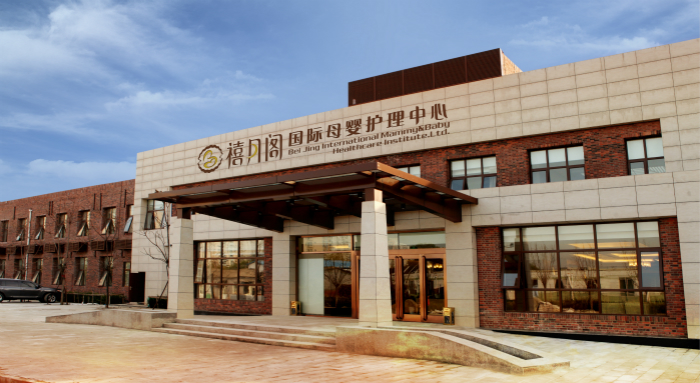
Xiyue Pavilion Wangjing Store
“In addition to patient acquisition, ‘from the perspective of the industry chain, it is the management model that yields deeper competitive advantages through collaboration with specialized hospitals,’ said Yue Zhao.”
For instance, postpartum care has not yet been incorporated into the national medical management system, and confinement centers are strictly prohibited from using medical devices. “This is a red line.”
However, the barrier to entry in this industry is not particularly high; even some private business owners with modest capital can simply invest a small amount to establish a postpartum care center. From a professional management perspective, their understanding of safety controls is inevitably superficial.
"Xiyuege has drawn on management practices from many hospital systems, effectively enhancing the professionalism and safety of its postpartum recovery services, which constitutes its core competitive advantage in the market."
“From the internal management system, including division of labor and responsibilities, to subsequent oversight, including supply chain and quality control, our systemic framework is aligned with the best healthcare systems.” Yue Zhao stated that this is the competitive advantage on which Xiyue Pavilion relies for its survival.
Currently, Xiyue Ge has established a presence in both Beijing and the Yangtze River Delta region. “In the initial phase, our focus remains on developed cities in eastern China; as the industry evolves, we will progressively expand our nationwide footprint.” Pricing will also be appropriately differentiated based on local conditions and actual purchasing power.
Additionally, many postpartum care centers have begun engaging in price wars, mostly adopting an asset-light model with monthly fees ranging from 40,000 to 50,000 yuan. Yue Zhao commented on this type of disordered competition based on outdated tactics: “The overall market potential is substantial, but it ultimately depends on whether standardized development can be achieved.”
By eschewing franchising and strictly controlling service quality and safety, Xi Yue Ge has keenly captured the substantial market demand and potential in the postpartum care industry, thereby carving out a differentiated path as a premium maternal and infant care brand.