

How Eight Leading Medical Device Companies Are Embracing Artificial Intelligence Through Intelligent Transformation
Since 2016, nearly one hundred medical artificial intelligence startups have emerged in China, aiming to seize the opportunities presented by healthcare reform and grow into major corporations. Meanwhile, medical device companies are also reluctant to miss this opportunity; they are actively investing resources in the research and development of AI-driven medical products, or seeking partnerships to enhance the intelligence of their devices and improve product competitiveness.
VCBeat (WeChat ID: vcbeat) has analyzed the AI strategies of eight medical device companies to examine how traditional technologies are being integrated with artificial intelligence. Additionally, VCBeat interviewed six medical AI companies to explore how emerging medical AI startups are collaborating with traditional device manufacturers to penetrate the market.
The Intelligence of Medical Devices is a Trend
As the tiered diagnosis and treatment system is gradually implemented and domestically produced medical devices continue to rise, medical device companies are striving to capture a share of the primary healthcare market and maintain a competitive edge over rival products. In addition to prioritizing hardware quality, they are increasingly emphasizing device intelligence, particularly integrated auxiliary diagnosis and screening systems, which hold particular appeal for primary healthcare institutions facing a shortage of skilled physicians.
To this end, major medical device companies are making their hardware devices intelligent through either independent research and development or collaboration with other companies:
GE’s AI strategy can be divided into two parts: medical imaging and healthcare.
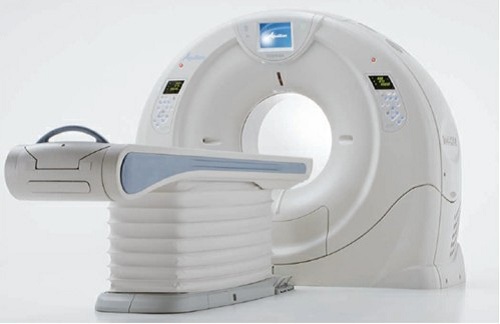
In the field of medical imaging, GE’s low-dose CT lung cancer screening protocol is the first in the industry to receive certification from the U.S. Food and Drug Administration (FDA). Building on low-dose CT equipment, GE’s solution for early screening and diagnosis of lung cancer delivers precise imaging, enabling the early detection of minute nodules. By automatically flagging hard-to-identify pulmonary nodules, it assists physicians in conducting rapid and accurate screenings.
In May 2017, GE showcased its pulmonary nodule detection technology to the public at the CMEF exhibition in Shanghai.
In the healthcare sector, GE is involved in a wide range of areas. Dr. Michael Dahlweid, Chief Medical Officer of GE Healthcare’s Digital Solutions, stated that GE is currently leveraging deep learning to pilot various tasks. These include:
Identifying Different Types of Cancer Tissue Cells
Determining the Most Effective Treatment Regimens for Patients in the Intensive Care Unit
Predicting the Likelihood of Sepsis or Infection Complications in ICU Patients
Using Ultrasound to Assess Cardiac Issues in Patients
Predicting Disease Onset
Dahlweid stated that artificial intelligence also assists physicians in decision-making and managing vast amounts of healthcare information.
In January 2016, Medtronic and IBM collaborated to launch a diabetes monitoring app, dedicated to improving care for the 415 million adults worldwide living with type 1 or type 2 diabetes.
Medtronic CEO Omar Ishrak and IBM CEO Ginni Rometty, in introducing the app, stated that Medtronic and IBM conducted a pilot project involving 600 anonymized patients. By analyzing data from these patients collected via Medtronic’s diabetes monitoring devices (insulin pumps and blood glucose monitors), they identified predictive indicators of hypoglycemia. Through this data analysis, IBM’s Watson system can predict hypoglycemic events up to three hours before they occur. This lead time allows for preventive measures, thereby enhancing users’ quality of life.
Also at this year’s CMEF exhibition, Wanli Cloud unveiled its AI-powered precision medicine platform—i Imaging. Currently, the i Imaging platform has launched DR screening and CT detection functionalities. According to official sources, i Imaging can reduce missed diagnoses of small pulmonary nodules by more than 50%, achieving a detection accuracy rate exceeding 95%. However, Dr. Yan Ziye from Wanli Cloud’s Imaging Platform stated, “The intelligent imaging platform is merely a tool; what we provide is a comprehensive solution.” In addition to offering cloud-based imaging services, Wanli Cloud places greater emphasis on intelligent processing and the development of quality control systems.
On April 20 this year, Anhan Medical signed an agreement with IBM China Research Laboratory to launch exploratory collaboration in the field of capsule endoscopy medical imaging, aiming to explore the feasibility of applying IBM’s cognitive imaging technologies to enhance early and precise screening for digestive tract diseases.
AnHan Medical’s cutting-edge, precision-controlled capsule gastroscopy system utilizes a capsule endoscopy robot to acquire medical imaging data, enabling more efficient and less invasive collection of gastric examination information. However, the approximately 20,000 images generated per examination pose new challenges for physicians in terms of data processing and achieving precise analysis.
In clinical practice, it is difficult to rapidly diagnose conditions by manually reviewing these massive volumes of imaging data. IBM’s cognitive imaging technology may provide the key to solving this challenge. The early-stage research collaboration between IBM Research China and Anhan aims to demonstrate how intelligent lesion detection technology can help Anhan process the billions of images generated annually, thereby enhancing the accuracy and feasibility of disease screening.
In March 2015, Johnson & Johnson announced that its surgery-focused subsidiary, Ethicon, would collaborate with Google on a robotic surgery project. The partnership aims to share expertise and intellectual property to create a robot-assisted surgical platform and develop new robotic tools and capabilities.
The surgical procedure should involve the robot autonomously picking up the scalpel, with the surgeon performing remote operations via a computer screen.
Johnson & Johnson stated that this technology enables delicate surgical procedures in areas that are difficult for surgeons to access manually, providing better intraoperative control and accessibility while ensuring precision, thereby minimizing trauma and scarring for patients.
This partnership represents a powerful alliance between two industry leaders. Ethicon excels in medical devices, while Google boasts extensive expertise in robotics, big data analytics, and wearable technology. In addition to jointly developing a robot-assisted surgical platform, the platform may also be utilized to collect and analyze data related to surgical procedures.
Siemens’ strategic initiatives in the field of artificial intelligence also focus on medical imaging. According to VCBeat, Siemens Healthineers offers an AI-powered imaging solution called syngo.via. Built upon a vast repository of medical literature and clinical cases, syngo.via establishes a big data-driven knowledge base of clinical conditions. It then structures tasks across the entire workflow—including image acquisition, processing, and reporting—in accordance with established standards and guidelines.
syngo.via then simulates physicians’ processing workflows and knowledge retrieval to create corresponding image processing pipelines, thereby enabling “intelligent pre-processing” and “processing-as-reporting.” In other words, before a physician opens a case, syngo.via can automatically initiate parallel multi-software processing in accordance with relevant guidelines and consensus statements.
Upon opening a case file, standardized and accurate diagnostic results are automatically displayed, integrating processing outputs from multiple software platforms into a single report that includes options for disease staging and grading. These technologies enable the generation of comprehensive reports featuring complete clinical findings, graphical visualizations, and even staging and grading classifications, all without increasing—and potentially reducing—physicians’ workload.
Siemens Healthineers and IBM have joined forces to sign a “Five-Year Global Strategic Development Plan.” IBM aims to leverage Siemens’ global sales network, distribution channels, and professional connections in the medical device sector to make significant inroads into the commercial applications within the global healthcare and wellness industries.
Their collaboration will also help Siemens’ CT or MRI equipment undergo a transformation from quantitative change to qualitative leap. For instance, this could involve integrating IBM Watson’s intelligent system into Siemens’ CT or MRI devices.
Fujifilm and Olympus of Japan will collaborate with medical societies comprising physicians and other experts to develop AI technology that automatically identifies suspicious conditions, such as gastric cancer, during endoscopic examinations, with the aim of launching practical applications as early as 2020.
Fujifilm and Olympus are major global medical device companies. The Japanese specialist society for endoscopists specializing in gastric and colorectal diagnosis will participate in the empirical study to be implemented starting in fiscal year 2017.
According to available data, by the end of fiscal year 2017, they will have collected 300,000 imaging datasets from 32 hospitals nationwide, including university-affiliated hospitals in Japan, to serve as the foundation for AI-based assessments. This dataset will be gradually expanded over time, with additional information such as physicians’ diagnostic results and patients’ medical histories also being incorporated. The AI learning technologies will be developed and managed by institutions including the University of Tokyo.
In addition to developing artificial intelligence systems independently or through collaborative efforts, partnering with medical AI companies is also a strategy currently adopted by most firms.
Medical Device Companies and AI Firms Serve as Each Other’s “Agents”

For traditional medical device companies, establishing a new department to develop products involves a complex process. However, by partnering with artificial intelligence (AI) companies, they can avoid the significant investment of time, financial resources, and effort required for such an endeavor. Through collaboration, AI systems can be integrated into medical devices for sale, thereby enhancing the competitiveness of these devices.
For medical AI companies, collaborating with device manufacturers after product development offers two key benefits: on one hand, it allows for the validation of the product’s actual clinical efficacy through scientific research partnerships.
On the other hand, most medical AI companies are currently seeking viable business models. However, due to the stringent nature of healthcare, there are no specific certification standards for AI products yet. As a result, companies typically follow the regulatory pathway for medical devices, obtaining certification as Class II or Class III medical devices.
Prior to obtaining certification, many companies partner with medical device manufacturers to integrate their systems into the devices. The device manufacturers are only required to file a record with the provincial-level Food and Drug Administration, without the need for re-certification, allowing the products to be marketed and sold. The resulting sales profits are then shared between the parties according to a pre-agreed ratio.
Furthermore, during this process, AI companies are also regarded as agents of medical device manufacturers. If a hospital approaches an AI company to evaluate or use its AI-powered products, the revenue from medical devices sold through the AI company will be shared according to a different commission structure.
For example, the collaboration between Hisi Yigou and Shanghai Chengyun Medical Equipment Co., Ltd. Hisi Yigou cooperates with Shanghai Chengyun through technology licensing, and they plan to launch the world’s first AI-powered gastrointestinal endoscope within the year. For each AI endoscopy device sold by Shanghai Chengyun, Hisi Yigou receives a share of the revenue.
This endoscope is a technologically upgraded product based on equipment that has long obtained national approval, and it does not need to undergo the complex approval process for new Class III medical devices. It is expected to be approved for market launch next year.