

DARMA Founder Hu Junhao, Who Entered College at 16 and Earned a PhD by 24, Gains Fame with Medical-Grade Smart Mattress on 'The Future Is Now' and Files IPO Prospectus
Recently, domestic variety shows have undergone a dramatic shift in style, moving from down-to-earth reality programs focused on daily necessities like clothing, food, housing, and transportation to high-end, sophisticated technology-themed competitions. This transition has sparked a wave of technological enthusiasm across China. From “Go! Towards the Future” to “Future Architects” and “I Am the Future,” a series of science and technology variety shows have provided audiences with an immensely satisfying viewing experience.
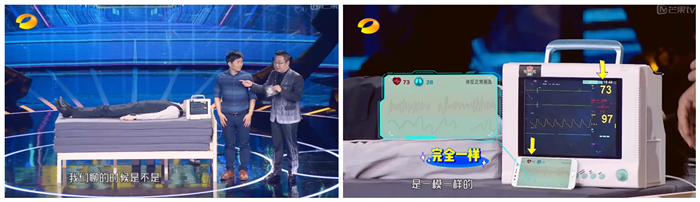
On the evening of Sunday, August 20, Hunan Satellite TV aired China’s first top-tier original technology showcase program, “I Am the Future.” In the show, a “smart mattress” so impressive it left audiences eager to take one home immediately was featured. We saw that this cutting-edge product can measure users’ vital signs through a four-layer mattress (40 cm thick), with accuracy fully equivalent to that of medical-grade patient monitors.
It is important to note that such high sensitivity and accuracy are currently far beyond the reach of many smart wearable devices or non-contact vital signs monitoring equipment.
Started college at 16, earned a Ph.D. at 24—no explanation needed for such an extraordinary life.
What is most astonishing is that this high-tech device was created by a genius scientist who is only 29 years old—Hu Junhao, a true source of national pride! VCBeat interviewed this young scientist at the earliest opportunity to explore how he forged his extraordinary life.
Hu Junhao
After graduation, Hu Junhao successfully joined the Institute for Infocomm Research (I2R) of the Agency for Science, Technology and Research (A*STAR) in Singapore as a scientist. His primary research focuses on visible light communication and fiber-optic sensors for detecting human vital signs. He has participated in the completion of several key research projects and published multiple academic papers. Perhaps due to his years of work with light, colleagues affectionately refer to him as"Children of Light"。
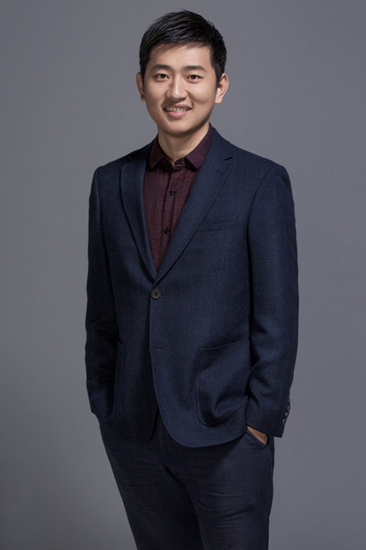
Hu Junhao, Founder and CEO of DARMA
To outsiders, this was undoubtedly a glamorous and stable job. Yet, in Hu Junhao’s mind, a seed of “restlessness” had long been sown. “Most of my PhD peers eventually became professors. But I felt that conducting research and writing papers every day held no meaning for me, no matter how many publications I produced, because it did not fulfill my sense of life’s value. Trained in technology, I wanted to develop products—truly useful ones that address real pain points.” Therefore, over those years, Hu Junhao continually pondered how to turn this vision into reality by applying his expertise to practical, everyday applications.
Venturing alone into Silicon Valley to start a business, overcoming obstacles every step of the way
According to Hu Junhao, his mother began experiencing health issues during his studies abroad, suffering from severe insomnia that lasted throughout the night. To avoid causing him worry, his family kept this information from him. Upon learning the truth, he felt not only sorrow but also profound guilt, blaming himself for not being by his mother’s side to provide proper care. Consequently, he resolved at that time to develop a health-related product capable of remotely monitoring the physical condition of family members.
Thus, in April 2014, Hu Junhao resolutely resigned from his position at the research institute and ventured alone to Silicon Valley in the United States to start a business, establishing Darma Inc. (Daerma Technology), dedicated to bringingApplication of High-Precision Fiber Optic Sensing Technology in Vital Signs MonitoringThe company leverages globally leading fiber-optic sensing technology to precisely monitor human vital signs and behavioral patterns, integrating big data management for health and disease status analysis. It continuously provides technical solutions for smart caregiving devices used in nursing homes, rehabilitation centers, and chronic disease management institutions.
2014 could be described as the prelude to the explosion of smart hardware, with most hardware entrepreneurs choosing to develop wearable devices. However, Hu Junhao took a contrary approach, opting to create“Non-wearable”Product. He believes that wearable devices actually require an adaptation period for many people; without the habit of wearing them, they become purely a burden. Moreover, most wearable devices on the market at the time could only monitor data such as exercise and sleep, which were not very accurate, did not constitute a rigid demand, and held limited significance.
So, how should one approach non-wearable devices, and what products should be developed? Through market research, Hu Junhao discovered that “prolonged sitting causes health problems” is an international issue. Back pain caused by poor sitting posture is, surprisingly, one of the reasons why many Americans undergo surgery. This pain point inspired Hu Junhao, leading him to develop his first product:DARMA Smart Cushion。
This smart cushion integrates DARMA’s patented fiber-optic sensors and proprietary algorithms to accurately measure the user’s heart rate and respiratory rate, and calculate their stress levels. Most importantly, in addition to providing monitoring data, it offers actionable recommendations on how users can improve their physical health.
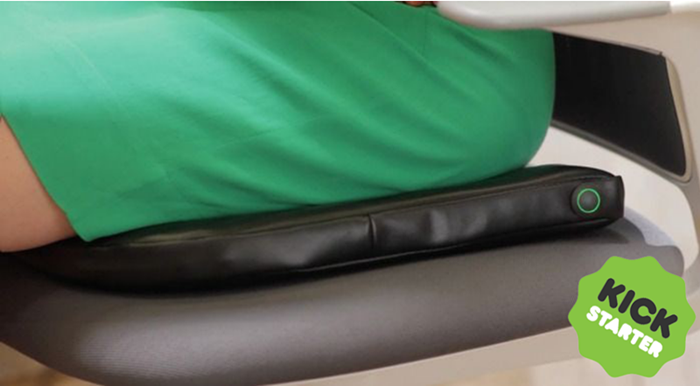
In October 2014, the DARMA Smart Cushion launched on a U.S. crowdfunding platformKickstarterLaunched a pre-sale. The crowdfunding campaign was a huge success, raising nearly $230,000 within 45 days,Set a record for the highest crowdfunding amount raised by Chinese individuals at the time. DARMA quickly garnered attention from multiple U.S. media outlets and investors. As a result, Hu Junhao gained access to more local resources in the United States,Favored by internationally renowned companies such as Google, Apple, and Antna, flocked to collaborate with it. By 2016, its products had been sold to dozens of countries, including the United States, the United Kingdom, Poland, Singapore, Japan, and South Korea.
Returning with a Triumph, Unveiling the Vital Signs Monitoring Device—DARMA Smart Mattress
In January 2015, driven by the wave of returning to China to start businesses, Hu Junhao decided to lead his team back to China for development, relocating DARMA’s headquarters from Silicon Valley, USA, to Shenzhen, the “Hardware Capital,” and establishingShenzhen Daerma Technology Co., Ltd.. In the same year, DARMA completed the development of its vital signs monitoring mat and launchedDARMA Smart Mattress. With its exceptionally high sensitivity andMedical-Grade Accuracy, garnering significant attention in the healthcare sector and securing thousands of orders in its inaugural year of development. In 2016, DARMA raised tens of millions in Series A financing from Shunwei Capital and Mingshi Capital, completing its market layout in the medical and health fields.
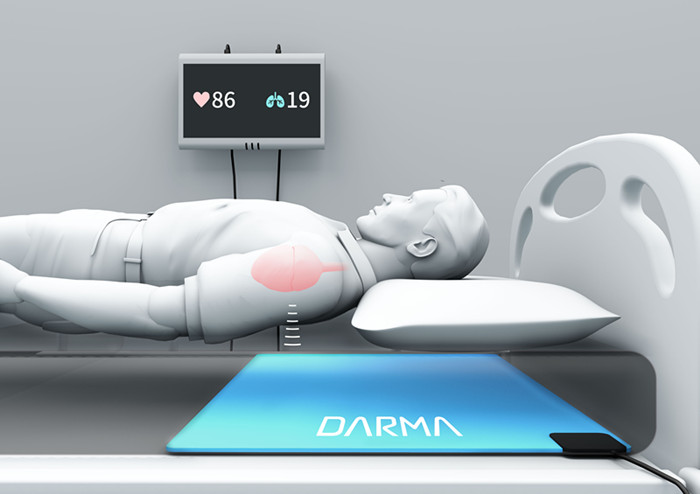
The DARMA Smart Mattress utilizes advanced fiber-optic sensing technology and is specifically designed to provide vital signs monitoring and health data analysis services for the elderly and high-risk populations. By placing the 2mm-thick DARMA Vital Signs Monitoring Pad beneath the mattress, it can real-time monitor vital signs such as respiration and heart rate, as well as sleep quality. All data can be uploaded via Bluetooth or Wi-Fi to a mobile app or website, allowing users and their families to access the information at any time. Additionally, DARMA establishes long-term personal health databases and leverages big data management to provide disease early warning alerts.
Additionally,For the elderly, nighttime sleep is a high-risk period for accidents. The DARMA smart mattress offers 20-second anomaly detection and off-bed alerts, continuously monitoring the user’s movements during sleep to provide peace of mind for both seniors and their caregivers.
According to Hu Junhao, the DARMA smart mattress is currently primarily targeted at B2B clients such as rehabilitation centers and nursing homes. To date, DARMA has established partnerships with well-known elderly care institutions including Ankangtong, Sankai Technology, and Maimai Yanglao. Meanwhile, the company has forged in-depth collaborations with several prestigious hospitals and academic institutions, such as Harvard College, Massachusetts General Hospital, the U.S. Department of Veterans Affairs Health System, Tongji Medical College of Huazhong University of Science and Technology, Guangdong Provincial People’s Hospital, Zhongnan Hospital of Wuhan University, and The First Affiliated Hospital of Sun Yat-sen University, aiming to “"Sensors + Healthcare + Big Data"model, providing users with professional medical-grade services.
DARMA vs. EarlySense: Whose Smart Mattress Is Superior?
In fact, DARMA was not the pioneer of smart mattresses. The smart mattress launched by Early Sense, an Israeli company previously covered by VCBeat, has also received widespread acclaim. So, what advantages does the DARMA smart mattress have compared to Early Sense?
When discussing competitors, Hu Junhao did not hesitate to tell reporters: “I believe the only company that can be considered a competitor to DARMA is Early Sense, but I am confident in our products—I think ours are superior!” What gives Hu Junhao such confidence? VCBeat attempted a brief comparative analysis of the two companies’ products.
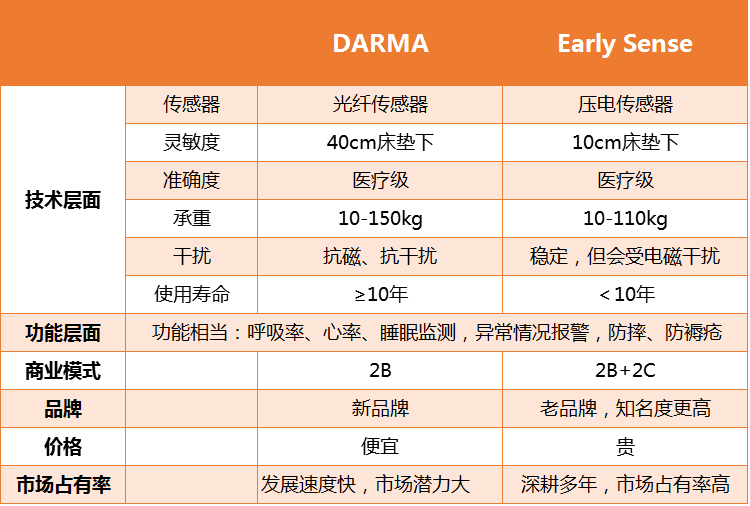
Through comparative analysis, it is evident that DARMA holds a distinct technological advantage by virtue of its fiber-optic sensing technology. Compared to conventional piezoelectric or acceleration sensors, fiber-optic sensors offer superior sensitivity, higher accuracy, and a longer service life. Furthermore, they exhibit greater load-bearing capacity, withstanding up to 150 kg of force, whereas piezoelectric sensors can support a maximum of 110 kg. Additionally, fiber-optic sensing technology supports simultaneous monitoring of multiple individuals; even when two people share the same bed, their monitoring data remain free from mutual interference.
Most practically, DARMA is significantly more affordable than Early Sense, making it more accessible to consumers. It is reported that, in the field of vital signs monitoring, compared to similar products,The fiber-optic sensors used in the DARMA smart mattress have reduced production costs by 500 times.. Fiber-optic sensors are highly sensitive and have historically been predominantly applied in industrial sectors such as bridge safety monitoring, oil leak detection, and communication engineering. However, due to high costs and manufacturing challenges, their adoption in the consumer market has been limited. The team led by Hu Junhao is the first research group worldwide to apply high-precision fiber-optic sensing technology to vital signs monitoring.
However, as an established player with over a decade of industry experience, Early Sense has developed a mature business model and market strategy. Its data accumulation and brand advantages are currently difficult for DARMA to match. In this regard, Hu Junhao stated, “We are currently in a phase of learning from Early Sense, hoping to draw on their successful experiences to explore an operational model suited to DARMA.”
“When discussing future plans, Hu Junhao stated that they will launch an experiential version of a smart mattress for consumer-end (C-end) users this October. From a long-term development perspective, they aim to transform all sofas and chairs into smart products capable of monitoring physical health.”"As the Internet of Things (IoT) continues to develop, many are building basic information platforms; however, transforming these into a Health IoT ecosystem would create significantly greater value!"“VCBeat believes that this is not only Hu Junhao’s vision, but also the aspiration of all consumers.”
Long-press the image to purchase a membership and read the full version of 《Frontier Report — Applications of Innovative Sensors in Healthcare》。