

Wildflower Health Files IPO to Expand Its Interactive and Clinically Integrated Maternal Health Platform Covering Preconception, Pregnancy, and Parenting
Some say that a woman’s life is not complete until she has her own child. Regardless of the validity of this statement, for most women, carrying new life is indeed a miraculous and wonderful experience.
Meanwhile, this process is fraught with uncertainty and often entails substantial costs, a hardship that only mothers can truly appreciate.
VCBeat (WeChat: vcbeat) will introduce a healthcare startup named Wildflower Health, which is dedicated to building a mobile health platform for pregnant women. The platform aims to help them manage their health conditions independently, improve the quality of care, reduce medical costs, and alleviate the anxiety and unease experienced by first-time mothers.
Targeting the Pregnant Women Market, Completes Series B Financing
Wildflower Health (hereinafter referred to as “Wildflower”) was founded by Leah Sparks in October 2012 and is headquartered in San Francisco, USA. At its inception, Wildflower secured only $100,000 in seed funding from Rock Health; however, as its business expanded, the company has raised a total of $6.81 million in investment.
The Series A financing round in 2013 was led by Cambia Health Solutions and KMG Capital Partners, with a total funding amount of $1.71 million. The Series B financing round in 2015 was led by Easton Capital, with continued participation from Cambia Health Solutions, along with additional investments from three other venture capital firms, raising $5 million.

Leah Sparks, Founder of Wildflower Health
When discussing her original motivation for starting the company, Leah Sparks stated that during her first pregnancy in 2012, she realized that uncertainties surrounding health insurance coverage, hospital services, and specialist consultation scheduling were gradually turning the prenatal care journey into a headache.
She also recognized that pregnancy is a period when most young women are highly concerned about the quality, accessibility, and safety of medical services, presenting an excellent opportunity to educate women on leveraging smart technologies to access healthcare.
“I have worked in the healthcare industry for over a decade, but it was not until I became pregnant that I experienced this industry firsthand as a patient. It was precisely this experience that revealed to me the gap between available resources and risks. When I first presented the concept of Wildflower to venture capital firms, they responded by noting that women constitute half of the total population and that pregnancy accounts for a significant portion of annual healthcare spending, making it a niche market.”
Wildflower Health leverages a mobile app as its entry point to build a mobile platform, striving to reduce women’s clinical visit times and provide remote health management tools, such as those that can assist pregnant womenTrack key milestones throughout pregnancy until the expected due date, and analyze risk factors at different stages., and provide personalized recommendations.
Additionally, this platform can assist pregnant women and their families.Managing Cumbersome Medical Documentation, such as health insurance and specialist consultation appointments, to minimize pregnant women's unease and anxiety.
The significance of Wildflower extends even further, as it helps elevate women’s status in the workplace. As is well known, childbirth is widely regarded as a stumbling block to career advancement. For many employers, lengthy maternity leaves appear economically unviable, leaving many women of childbearing age struggling to balance work and childcare responsibilities.
Such discrimination against pregnant women and women of childbearing age continues to exacerbate gender issues in the workplace, so tools like Wildflower will help women achieve professional success.
“Any tool that helps women manage health issues in the workplace becomes an asset to them. I myself have debunked the myth that ‘you can’t be both a mother and a company founder.’ In fact, many companies also need such technologies. With intense competition for talent, employers are eager to enable their female employees to work happily and healthily,” said Leah Sparks.
Wildflower reduces complications and visit times, directly addressing their pain points. With the introduction of the ACA, healthcare is shifting toward consumerization; at this inflection point, it is time to launch such a maternal healthcare engagement platform.
Product Portfolio: From Pregnancy to Family Health Management
Wildflower has currently launched two mobile apps and established an enterprise cloud-based big data platform.
Due Date Plus is Wildflower’s flagship and inaugural app, empowering women to understand various pregnancy-related risks on their mobile devices and develop appropriate, actionable prenatal care plans based on their insurance coverage and local hospital resources.
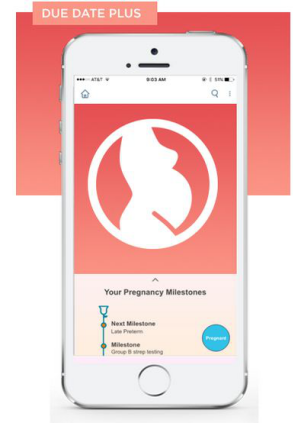
In fact, the medical expenses for pregnant women are mainly wasted on unnecessary complications, which can be avoided through education and early intervention.Due Date PlusUnlike most pregnancy management software on the market, it intervenes in pregnancy management from the early stages of pregnancy, effectively connecting pregnant women into the medical network.Manage and schedule routine prenatal checkups with just a few easy taps on the mobile app.。
Information provided by users can be shared with physicians to better manage prenatal care. Additionally, the 24/7 “click-to-call” feature enables users to contact local nurses for home visits at any time.
In addition, throughWildflowerdata-driven platform that can help pregnant women identify high-risk activities during pregnancy. For instance, timely smoking cessation contributes to fetal development, which is particularly important for low-income pregnant women, as statistics show that approximately 30% of adults living below the poverty line are smokers.
By integrating daily reminders, weekly push content, educational videos, and user interactions, Due Date Plus ensures that pregnant women effectively adhere to their prenatal care plans. The app also stores fetal ultrasound videos, allowing mothers to review various stages of fetal development. Additionally, its feature for tracking fetal kick counts enhances maternal well-being, thereby boosting the engagement and motivation of expectant mothers.
Due Date Plus also offers significant benefits to health insurance providers, including government healthcare agencies and commercial insurers, by enabling them to better predict and intervene in high-risk pregnancies, thereby reducing medical costs. Wildflower currently serves over 2 million insured members across the United States.
Due Date Plus now supports English and Spanish interfaces, with data analytics and reporting services fully compliant with HIPAA standards, and provides enterprise-grade software support and maintenance.Currently, Due Date Plus’s revenue model also relies on payments from insurers, allowing users to access the service for free and thereby achieving a win-win-win outcome for all three parties.
According to data from the Wyoming State Government’s Medicaid agency, users of Due Date Plus experienced a 75% reduction in the likelihood of delivering low-birth-weight infants and a 122% increase in the timeliness of prenatal care compared to other users. Dr. James Bush of the Wyoming Medicaid Center commented, “The most effective aspect of this app is its interactivity, which allows us to assess pregnant women’s health status in unprecedented ways and enhances their own engagement.”
After 2014, Wildflower Health shifted its focus to commercialization and expanding its user base, launching its second application, GROW.
This is an app designed with a pediatric focus that extends to comprehensive family care. As a user-centric medical collaboration tool, it helps users track their family members' health status, maximize the utilization of existing medical resources, and set reminders for vaccinations and pediatric consultations.
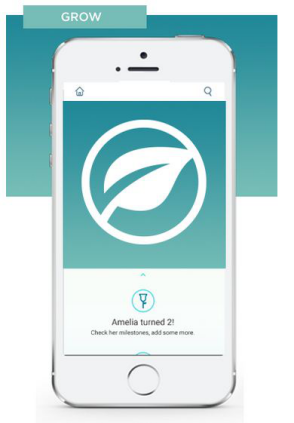
On the specific interaction interface, GROW provides each family member with an independent information storage page to create exclusive health profiles and record health milestones that are highly correlated with gender and age. The health information that can be recorded is also quite practical, ranging from family members' height and weight to vaccination schedules. When users share GROW with their families, their information and schedules can be synchronized and shared.
Regarding key milestones in family health, GROW also provides targeted recommendations, such as when to transition a baby from a crib to a toddler bed. To help children adapt more happily to changes in their sleep environment, GROW advises parents to read bedtime stories to their children and praise them for their bravery in adjusting to sleeping in a new bed. These are practical suggestions that are closely aligned with users’ daily lives and their family members’ specific circumstances.
In addition, users can also use GROW to look up information and news about local hospitals, andAn online tool connecting healthcare institutions to enable functions such as appointment scheduling and consultations.。
Wildflower stated that it would also add many new features to GROW, such as personalized health status tools and the integration of more health data and content.
Corporate employers, healthcare institutions, and health insurance companies are Wildflower’s key clients, for whom it provides comprehensive technical frameworks to meet rapidly growing healthcare demands, swiftly evolving interactivity requirements, and the need for real-time content updates.
WildflowerThe enterprise platform is built on cloud-based data, integrating existing information resources to minimize costs. End users can seamlessly access enterprise functions such as point-to-point care, healthcare institution search, medical risk assessment, and clinical protocol recommendations. Wildflower aggregates user feedback data to deliver targeted enterprise information directly to users.
Wildflower’s enterprise customer base continues to grow, with its services now reaching over 14 million users in the United States.
Wildflower’s Continuously Growing Customer Base
Faced with the lucrative maternal and infant healthcare market, entrepreneurs other than Wildflower are naturally unwilling to cede ground; the uterus has effectively become a hotbed for technological innovation.
Currently, a variety of innovative products are emerging in this market, with over 1,000 pregnancy-related apps available on Google Play and the App Store. VCBeat will introduce some of the most notable ones.
Bellabeat is a Y Combinator-backed startup. Unlike Wildflower, which built a mobile platform, Bellabeat focuses on “activity quantification.” Its product is an external device priced at $129 that connects to a mobile app, forming a mobile monitoring system.
Pregnant women can use this product to track and share their baby’s heartbeat, fetal movements, and other activities in the womb, while also monitoring and analyzing weight gain during pregnancy, organizing prenatal care, and calculating key milestones throughout the entire gestational period. Notably, Bellabeat is currently the only product on the market capable of recording fetal heartbeats.
Sandro Mur, co-founder of the company, explained its business model as follows: “The new generation of young parents are avid users of social networks and have emerging needs to share and analyze data with friends and family. We are committed to providing them with a more engaging and socially interactive pregnancy experience, enabling them to track and share their entire pregnancy journey at any time.”
Bellabeat has also established its own social platform, enabling expectant mothers to interact, share experiences and information, with their uploaded data compiled into visual infographics. Mothers’ anxieties do not dissipate with the birth of their children, as numerous troubling issues arise throughout their children’s growth and development.
CellScope targets the infant and toddler market with a wearable device that, when connected to a smartphone, captures images of the middle ear and transmits them remotely to physicians, significantly reducing diagnostic time for pediatric ear infections. With 25 million annual visits for ear infections in the United States, this condition is one of the most common ailments among infants and young children, underscoring the substantial market potential.
Such excellent products are too numerous to list. BabyBump can track various symptoms that occur during pregnancy; Sprout provides expectant mothers with 3D interactive images of the fetus, including facial features, limbs, and organs; while My Pregnancy Today and I’m Pregnant focus on providing weekly guidance to expectant mothers.
These products are designed to reduce the time pregnant women spend on clinical medical care, enabling them to manage their health conditions at home or in the workplace, minimize pregnancy-related anxiety to the greatest extent, and support fetal health.
Reference URL:
1.https://venturebeat.com/2013/05/21/mom-knows-best-why-health-technology-need-a-womans-touch/
2.https://www.crunchbase.com/organization/wildflower-health#/entity
3.http://medcitynews.com/2014/03/san-fran-startup-aims-connect-mom-health-system-earlier-smartphone/?rf=1
4.https://venturebeat.com/2014/02/13/bellabeats-device-lets-women-track-and-analyze-their-pregnancy-from-home/
Related Reading: