

Gushengtang Raises Over RMB 1.7 Billion in Four Rounds Within Three Years to Scale Grassroots TCM Clinics
With the four diagnostic methods of inspection, auscultation and olfaction, inquiry, and palpation, along with syndrome differentiation and treatment, a single consultation room, an experienced traditional Chinese medicine (TCM) practitioner, and a TCM clinic are all it takes to get started. From an investment perspective, TCM clinics require relatively light asset investment, with minimal need for expensive equipment. However, in the increasingly booming TCM market, scaling TCM outpatient services into a chain operation is by no means an easy task.
Gushengtang stands out as a leading player in strengthening and expanding the traditional Chinese medicine (TCM) sector. To date, Gushengtang operates 31 TCM outpatient clinics across 13 cities in China, with its service coverage extending to 56 cities nationwide. By leveraging an integrated online-to-offline healthcare platform, a comprehensive TCM ecosystem, abundant resources of renowned TCM experts, sustained inheritance of technical expertise, and prudent investment strategies, Gushengtang has grown within just seven years from a single TCM clinic based in Beijing into China’s largest chain group providing primary TCM outpatient services. In doing so, it has offered valuable insights for promoting the “chain-based operation, large-scale expansion, group-based management, brand building, and internationalization” of TCM.
Founded in 2010, the company commenced its Series A financing round in 2014. Over a span of three years, it completed four rounds of financing, raising more than RMB 1.7 billion in total. Each round set a new record for the largest single financing transaction in China’s traditional Chinese medicine (TCM) sector at the time. In an interview, Tu Zhiliang stated that Gushengtang would open over 100 clinics nationwide within three years, quadrupling its current number of locations. The company’s workforce is projected to grow from the current 1,500 employees to nearly 3,000 by the end of this year. Reportedly, Gushengtang plans to go public in the United States next year.
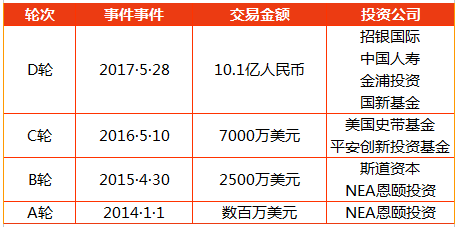
VCBeat reviews the chain development model of Gushengtang TCM, thereby providing new insights for the development of traditional Chinese medicine.ideas and insights.
Insight 1: A Founding Team Blending Veteran and New Talent, Integrating TCM Specialization with Modern Capital and Markets
Among Gushengtang’s founding team are renowned veteran practitioners of Traditional Chinese Medicine (TCM), marketing experts, and executives from Fortune 500 companies. This composition has imbued Gushengtang with a DNA that blends the professionalization of traditional TCM with integration into modern capital markets.
Tu Zhiliang, currently the Chairman and President of Gushengtang, a chain of traditional Chinese medicine clinics, was one of the pioneers in health management value-added services within China’s financial industry. At the age of 26, he joined iKang. Over the following six years, he progressed from overseeing sales to helping establish the company, serving in roles ranging from leadership positions at the Guangzhou and Shenzhen branches to Assistant to the Group President and Vice President for East China. He was directly involved in the integration of iKang and Guobin, as well as the establishment of the group’s marketing center. This professional experience has given him a deeper understanding of the market and marketing dynamics in the healthcare industry.
Another founder is Li Zhengmu, the father-in-law of Tu Zhiliang. As a professor of formula science at Guangzhou University of Chinese Medicine, he has profound expertise in the theoretical foundations of traditional Chinese medicine (TCM) and extensive clinical experience. Gushengtang originally began as a TCM clinic established by Li Zhengmu in Beijing. During its expansion into a chain model, Professor Li leveraged his professional background in TCM to serve as Vice President of Health Services.
Tu Zhiliang also brought in his longtime friend, Wang Rongguang, a well-known high-tech entrepreneur from Taiwan, to serve as the CEO of Gushengtang. With many years of management experience at Fortune 500 companies, Mr. Wang previously served as the President of Elo Touch (a Tyco subsidiary) for the Asia-Pacific region. As one of Gushengtang’s early investors, he is responsible for overseeing the company’s overall strategic direction.
Currently, Gushengtang’s board of directors comprises investors with international fund backgrounds, such as Fidelity Asia Ventures and NEA, while its professional operations management team includes IT system directors from Tencent and JD.com, an accounting affairs director formerly with PwC, and an operations director from KFC. The infusion of international capital and the establishment of a specialized team have rendered Gushengtang’s operational philosophy, mindset, and vision more internationalized and modernized, laying a solid foundation for its rapid expansion.
Insight 2: The Partnership Model Attracts Renowned Physicians Talent Governance Structure Applies to Grassroots Individual Outpatient Clinics
Prominent physicians are the core resources of Gushengtang. Positioning itself as a “TCM agent,” Gushengtang has established “partnership” relationships with renowned TCM practitioners. Specifically, it invites senior TCM doctors from Grade A tertiary hospitals who are nearing retirement or already retired, as well as descendants of hereditary famous physicians, to establish “Renowned Physician Studios.” Under a single-clinic model, physicians hold equity stakes, with Gushengtang retaining a 70% share and physicians holding 30%. Gushengtang is responsible for operational management, providing one-stop services including clinic layout planning, hard and soft decoration, IT system implementation, and pharmaceutical supply chain support, while physicians are responsible for clinical consultations.
In terms of income distribution, physicians are compensated on a per-visit basis, receiving 80% of the consultation fee for each encounter—a rate higher than that of Grade A tertiary public hospitals. With virtually no kickbacks or sponsorships from pharmaceutical sales, doctors can focus more on treatment efficacy and professional reputation, rather than allowing drug-revenue incentives to influence clinical prescribing practices, thereby increasing patient return visit rates.
In addition, physicians receive revenue shares from their exclusive studios, profit-sharing from experiential prescription products, discounted equity in the group, and free stock option plans, thereby enabling experts to achieve a comprehensive annual income exceeding one million yuan.
It is reported that Gushengtang has established special safeguards for affiliated physicians, guaranteeing them a minimum return upon exit at any time, regardless of the clinic’s profitability. Additionally, equity stakes can be liquidated at any time, with dividends distributed in proportion to the clinic’s revenue.
To effectively mitigate physicians’ practice risks, Gushengtang has established a “safety” net for multi-site practice through medical insurance. In October 2016, Gushengtang partnered with Ping An Insurance to purchase medical liability insurance for practicing physicians nationwide.
Through this mutually beneficial model with renowned physicians, Gushengtang has recruited more than 1,500 TCM experts. According to Tu Zhiliang, the number of TCM experts is expected to reach nearly 3,000 by the end of this year.
Insight 3: Establishing a Complete Ecosystem for Traditional Chinese Medicine
Herbal medicine sales constitute Gushengtang’s primary source of profit. However, given the vast diversity and complex supply chain of traditional Chinese medicinal materials, along with the stringent requirements for authenticity, Gushengtang implements a centralized procurement system for all its affiliated clinics. The company has established a rigorous quality control framework, conducting regular on-site inspections of pharmaceutical manufacturers and warehouses, and engaging licensed pharmacists with extensive expertise in the authentication of traditional Chinese medicinal materials to oversee overall quality assurance.
In Beijing’s Daxing District, Gushengtang partners with the largest supplier of medicinal materials. Every stage—from Good Agricultural Practice (GAP) for designated cultivation of medicinal herbs, through Good Manufacturing Practice (GMP) for standardized pharmaceutical production, to Good Supply Practice (GSP) for regulated distribution—is strictly conducted under the supervision and guidance of the National Medical Products Administration (NMPA) to ensure superior product quality.
Driven by capital investment, Gushengtang launched a quality assurance system for TCM decoction pieces in 2015, participated in establishing GMP-certified herbal material processing plants, and took equity stakes in large-scale GAP-certified cultivation bases for major TCM varieties. This enabled the company to provide one-stop services spanning herbal cultivation, processing, sales, and home delivery, effectively covering the entire journey from TCM cultivation to patient consumption. By integrating the TCM industry supply chain and establishing a robust quality assurance system for decoction pieces, Gushengtang aims to ultimately create a complete TCM ecosystem.
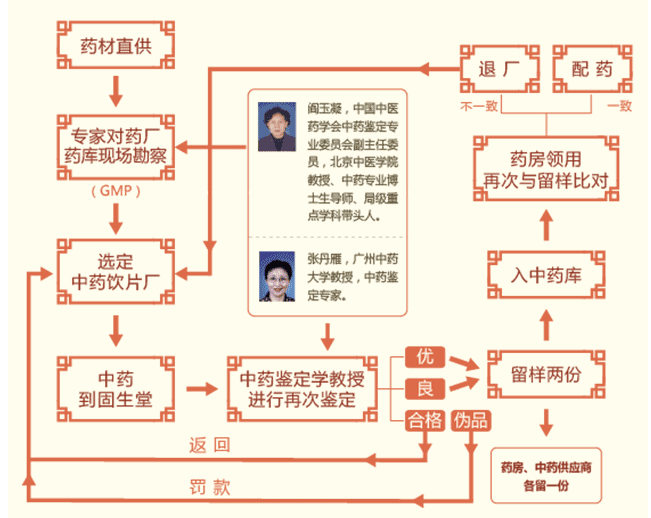
Building on the rapid expansion of its chain network, Gushengtang will intensify its efforts in traditional Chinese medicine (TCM) research and development. According to Tu Zhiliang, Gushengtang will leverage its group-wide Hospital Information System (HIS) and patient tracking management system to establish a framework for monitoring the clinical efficacy of expert prescriptions. By conducting big data analytics and mining, the company aims to carry out modern clinical studies on pharmaceuticals, thereby accelerating the R&D of new TCM drugs and cultivating blockbuster TCM products.
Insight 4: Collaborate with Financial and Insurance Institutions Provide value-added services to accumulate initial customers
Gushengtang’s initial customer base was derived from value-added services offered through its partnerships with financial and insurance institutions. Specifically, Gushengtang bundled traditional Chinese medicine (TCM) services and sold them to banks, which then provided these services free of charge to their premium clients. For instance, if you held a platinum card at a partner bank, you would be entitled to one or two complimentary consultations at Gushengtang.
In 2012, Ping An Bank announced the launch of a new customer benefits system, under which premium clients holding both debit and credit cards could enjoy corresponding privileges based on their tier levels. One such benefit was access to traditional Chinese medicine (TCM) services provided by Gushengtang. Financial institutions, including Ping An Bank, China CITIC Bank, China Construction Bank, and various insurance companies, are all clients of Gushengtang. Currently, 5.3 million individuals are eligible for these complimentary services, representing a potential base of recurring patients for Gushengtang.
In addition, in more than 50 cities across China, Gushengtang partners with local institutions to provide services such as dental care, health check-ups, TCM physiotherapy, SPA, foot baths, and telephone-based private doctor services, allowing customers to consult on health issues at any time. If prescription medications are required for treatment, the costs shall be settled separately by the customers. When customers require these services, they book through Gushengtang and then pay the local institutions directly.
Insight 5: Inclusion in the National Medical Insurance System Provides advantages for its entry into grassroots communities
A major appeal of Gushengtang’s inclusion in the medical insurance system lies in the preferential reimbursement policies available at its affiliated clinics. Currently, nearly all of Gushengtang’s medical centers are designated as approved providers for basic medical insurance, with some also qualified to serve patients under provincial and municipal public-funded healthcare programs. Its rapid expansion has enabled Gushengtang to secure a large number of such designated insurance provider statuses, thereby enhancing its attractiveness to patients.
As a designated primary care provider under the national medical insurance scheme, Gushengtang benefits from preferential reimbursement policies, allowing patients to claim 80% of their medical expenses—approximately 30 percentage points higher than the reimbursement rate at Grade A tertiary hospitals.
In fact, practice licenses and medical insurance accreditation for healthcare institutions in China are non-transferable and cannot be leased. To rapidly capture market share, Gushengtang opted to acquire equity stakes in companies, thereby securing substantial offline resources for brand expansion.
Insight 6: Leverage Local Large Hospitals Launch Medical Consortiums and Specialty Alliances
The “Development Plan for Traditional Chinese Medicine (2015–2020),” issued by the General Office of the State Council, put forward specific requirements for accelerating the development of TCM medical services: “Support TCM hospitals in exporting management expertise, technologies, standards, and service products; form medical consortia with primary healthcare institutions; promote the standardized construction and chain-based development of TCM outpatient departments, TCM clinics, and TCM in-pharmacy clinics; support socially run medical institutions in strengthening the development of key specialties, introducing and cultivating talent, and enhancing their academic standing; and accelerate the achievement of interconnectivity among information systems of medical insurance agencies, public medical institutions, and other relevant entities.”
In 2015, Gushengtang pioneered the model of Medical Consortiums and Specialty Alliances. By fully leveraging the advantages of traditional Chinese medicine (TCM) hospitals across various regions in management, technology, standards, talent, and service offerings, we jointly established medical consortiums. Combining the strengths of all parties and grounded in market demand and the development of TCM, these consortiums have promoted the healthy growth of grassroots TCM outpatient clinics within regional chains. This approach has further revitalized existing medical resources, maximized the advantages of healthcare institutions nationwide, and achieved vertical integration, resource sharing, and coordinated development.
This is achieved primarily through two pathways. First, by establishing official collaborations with Grade 3A public traditional Chinese medicine (TCM) hospitals and TCM hospital chains to create a model of specialized disease and department cooperation, signing agreements for the joint development of specialized departments within medical consortia, and building a medical consortium system alongside a multi-site practice framework. Second, by leveraging the existing clinical capabilities and faculty resources of TCM universities to co-establish National Medicine Halls, thereby introducing top-tier clinical professors from these universities into grassroots communities to meet the primary care demand for TCM diagnosis and treatment.
Insight 7: Building an Internet Closed Loop
“Internet Plus Healthcare” is gaining significant momentum, with capital inflows into “Internet Plus Traditional Chinese Medicine (TCM)” enterprises emerging as a major trend in the development of TCM. Gushengtang is also exploring the “Internet Plus TCM” model. Currently, Gushengtang is building an online closed-loop ecosystem by establishing smart TCM clinics. Services ranging from appointment scheduling and payment to lightweight online consultations and continuous doctor-patient communication are delivered through online platforms such as WeChat and its proprietary app. The platform currently boasts a patient retention rate of 51%.
In terms of reputation management, Gushengtang has established a review platform for clinic physicians. Patients can evaluate the effectiveness of their consultations on the platform, providing comprehensive feedback on aspects such as therapeutic efficacy and service quality. This offers future patients a reference for selecting physicians and helps drive improvements in the level of medical services provided.
In addition to digitizing prescription data from various clinics, Gushengtang also digitizes patient information to provide differentiated and personalized insights for patients’ conditions. Given that Traditional Chinese Medicine (TCM) emphasizes therapeutic efficacy, follow-up visit rates are particularly critical. By enhancing data-driven operations and analyzing the follow-up visit rates of individual physicians at each clinic, the company can gain deeper insights into treatment outcomes and strengthen its brand.
Insight 8:IT Systems Help Standardize Operations, Enabling the Expansion of TCM Chains
In terms of horizontal expansion, Gushengtang has standardized its supply chain, IT management system, and patient operations system, while leveraging renowned physician studios and the Academy of Traditional Chinese Medicine to cultivate talent.
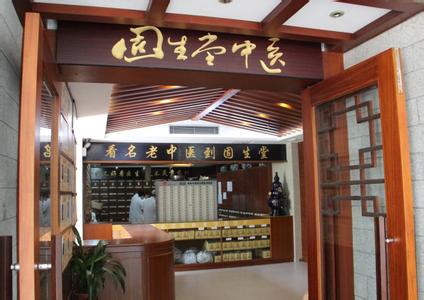
Tu Zhiliang stated in an interview, “Medical resources are regional; cross-regional expansion is only possible after standardization, which relies on IT systems to achieve.”
Gushengtang has recruited IT and operational management talent from brands such as JD.com, KFC, and Walmart to standardize its operational management. It has established an IT-supported operational system tailored to the characteristics of grassroots traditional Chinese medicine (TCM) services, designed a rigorous and detailed centralized procurement and quality control system for TCM materials, and built a unified and efficient customer service center.
IT systems support TCM chains by: first, standardizing operational management to provide managerial support for the chain; second, managing users and communities, including online light consultations and communications, as well as offline data collection such as follow-up visit rates and diagnosis confirmation rates; third, connecting health management and follow-up visits to online platforms.
As of now, Gushengtang boasts over 1,500 TCM experts, with an annual outpatient volume reaching 3 million visits in 2016. It has gradually established a chain service network comprising 31 TCM clinics and primary hospitals across 13 cities, including Beijing, Guangzhou, Shenzhen, and Shanghai, extending its service coverage to 56 cities nationwide.