

How 'Small, Chaotic, and Poor-Quality' Clinics Can Transform: A Standardized, Transparent, and Tech-Enabled Path to Trust
/This article is contributed by Ping An Wanjia Medical.
In recent years, the Chinese government has proposed building a multi-tiered and diversified medical service system and introduced a series of measures to encourage private investment in healthcare institutions. As a result, private medical institutions have sprung up across cities and towns. Yet why do patients still hesitate to visit clinics, preferring instead to flock to overcrowded large hospitals?
The author believes that this is a lack of trust, most obviously manifested as “worry”—
① The quality of clinics varies significantly, raising concerns about encountering those with insufficient medical expertise;
② Unclear medical service pricing, absence of a price list, and concerns about arbitrary charges and indiscriminate prescribing by clinics;
③ Lack of humanistic care; after the consultation, patients are unable to seek further advice or engage in any interaction.
④ Clinics that do not accept medical insurance reimbursement—are they very expensive? There is concern about excessive out-of-pocket costs;
⑤ I want to undergo a medical examination, but I am concerned that the clinic may lack the necessary medical equipment or that the test results may be inaccurate.……
For a long time, primary care clinics in China have been widely characterized by their small scale, disorganization, and poor conditions, while also encountering development bottlenecks marked by deficiencies in technology, brand recognition, distinctive features, marketing, safeguards, support, and institutional backing.We all know that the trust crisis is the biggest Achilles' heel of clinics.
How to Resolve This Trust Crisis? In the author’s view, for clinics, adherence to standardized practices, clear and transparent pricing, openness and transparency, compliance with laws and regulations, and voluntary acceptance of public oversight are, at least in the short term, essential prerequisites for earning public trust.
Standardized Operation and Management of Clinics Is Particularly Important
As is well known, primary care clinics today are characterized by uneven quality and widespread irregularities, encompassing both trustworthy and untrustworthy providers, which makes it difficult for patients to distinguish between them. Therefore, clinics must adopt standardized and normalized practices to facilitate patient identification. Key indicators include the clinic’s location, a comfortable and tidy environment, the organized display of various medications, and the professional attire of medical staff.
Among these, standardized and regulated clinic management is of greater importance. Digitalization has created numerous opportunities for clinics; driven by digital technologies and mobile internet, patient experience and clinic service efficiency can be continuously enhanced. In this context, it is essential for clinics to adopt a new mobile internet-based operational model.
Wanjia Cloud Clinic is a professional clinic workflow platform operating on a SaaS model, enabling standardized and normalized end-to-end patient care. It provides one-stop management for the entire process, including appointment registration, front-desk reception, physician consultations, electronic medical records (EMR), prescription dispensing, and billing and payment.
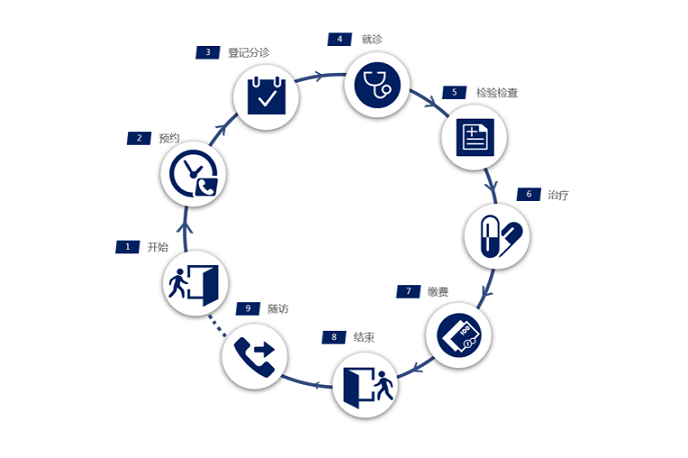
From the external appearance to the entire patient journey, patients can tangibly perceive the clinic’s standardization, which naturally enhances their favorability toward the practice. Congratulations—you have taken the first step toward earning their trust!
The clinic has a clear positioning, earning trust through therapeutic efficacy.
Clinic positioning should be clear. Whether it is general practice, traditional Chinese medicine, or dentistry, each specialty must have its own distinct positioning and unique characteristics. Deceptive practices such as false advertising, exaggerating patients’ conditions, and overtreatment must be strictly avoided. If there is a significant gap between patient expectations and actual experience, it will invite skepticism; even a single instance of doubt can result in the loss of a substantial number of patients.
From the perspective of clinic operations, the customers are patients, and the product being sold is health. What the public cares about most is health; without robust medical expertise to deliver satisfactory therapeutic outcomes, patients will not endorse the clinic either.
Efficient Operations, Optimal Well-being of Medical Staff
Upon close observation of some outstanding clinics, you will find that a sense of trust emerges from the moment you step inside, as their operations are efficient and well-organized. The demeanor of the medical staff stands in marked contrast to that of large hospitals—characterized by focus, orderliness, and enthusiasm.
Generally speaking, apart from seeking medical care, patients spend most of their time interacting with healthcare professionals. Patients are, first and foremost, ordinary individuals, and secondly, patients with specific needs. Therefore, by allocating sufficient time for diagnosis and treatment, healthcare professionals can prevent patients from feeling as though the clinic is a battlefield where doctors are merely rushing to complete tasks. This approach helps alleviate patient anxiety, build trust, and establish a strong professional reputation.
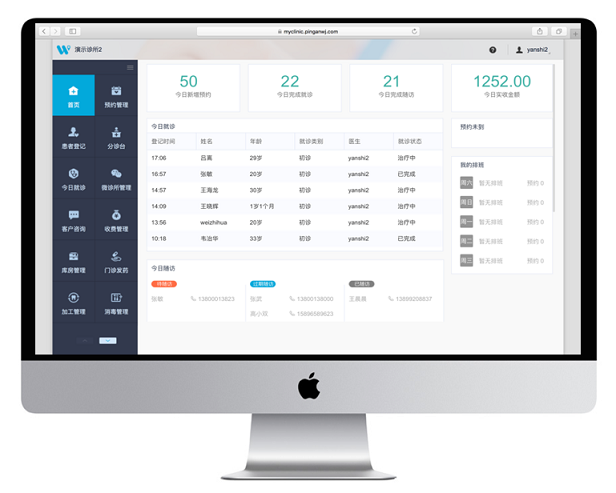
At this point, efficient and orderly work by medical staff can significantly enhance a clinic’s reputation. Wanjia Cloud Clinic provides services covering clinical operations, general administration, medical technology and supply chain management, as well as performance management within clinics. Serving as a workplace platform for clinic personnel, it helps medical staff improve their work efficiency and assists clinics in enhancing internal management effectiveness.
Transparent Pricing, Persuasive with Reason
During the course of diagnosis and treatment, uncertainties regarding therapeutic plans and medical costs can give rise to significant patient concerns. These concerns may remain unvoiced or may even lead to abrupt discontinuation of care. In such instances, physicians should proactively engage in communication by clearly explaining the rationale behind prescribed treatments, the necessity of specific surgical interventions, and the reasons for recommended diagnostic and therapeutic procedures. By providing clear justification, physicians can foster patient trust and facilitate informed acceptance of the proposed treatment plan.
Price Transparency: It is advisable to adopt the practice employed by some outpatient clinics of modularizing diagnostic and treatment services, clearly outlining clinical pathways, treatment methods, and medication regimens for specific diseases, while confirming standard care processes and estimated costs. This approach enables patients to anticipate approximate expenses and procedures prior to receiving care. On one hand, it helps rationally manage patient expectations and enhance trust; on the other hand, it facilitates the productization of medical services.
Finally, personally hand the patient’s itemized bill to them to ensure they understand exactly where their money was spent. Many clinics still rely on paper-based medical records and prescription slips, which further confuses patients due to unclear medical charges. Adopting information systems has now become a trend. Wanjiayun Clinic requires no installation or maintenance; users can access basic platform features for free simply by visiting the website, helping clinics advance into the digital era.
Timely, On-Demand, and Effective Doctor-Patient Communication
Communication during the diagnostic and treatment process is crucial, a point well understood by peers and thus not elaborated further here. What deserves emphasis is that doctor-patient communication does not truly end after the completion of diagnosis and treatment. Maintaining ongoing contact with patients can significantly enhance patient retention and increase follow-up visit rates.
Wanjia Cloud Clinic enables automatic archiving of patient visit records through health management, helping clinics better manage user health. By integrating member and follow-up management, it consolidates user information, enhances customer relationships, standardizes efficient follow-up plans, and improves patient retention. Supporting multi-platform messaging interactions and online consultations via chat, voice, and video, it facilitates doctor-patient communication, enhances the medical experience, and ensures patients’ peace of mind before and after consultations.
Conclusion
Patients’ distrust of clinics does not emerge overnight, nor can it be resolved in a short time. Medical practice should never be treated as a one-off transaction; otherwise, the “bad money drives out good” effect will become more pronounced, and the entire private healthcare sector will remain mired in a state of public mistrust.
How Patients Can Trust Clinics: It Depends More on the Clinic’s Sincerity in Entering the Market and Its Own Efforts. Building trust requires attention to many details, such as strengthening core competencies, specializing and excelling in distinctive services, delivering high-quality care, and ensuring strict compliance with standards, among other measures.