

Qingsong Club's Inaugural Masterclass: Investment Directions and Timing in the Context of Deep Innovation
By VCBeat(Transcribed from audio recording)
The 3rd Session of the Qingsong Club Medical Innovation Camp kicked off with great enthusiasm on August 11, 2017. On August 12–13, mentors Si Tingyou, Zheng Yufen, Hu Min, Wang Wenhua, Xu Qian, and Su Zhenbo engaged in a unique and interactive exchange with Qingsong Club participants.
“Global Healthcare Industry Logic and Future Opportunities from an Investment and Entrepreneurship Perspective,” “Business Plans and Fundraising,” “Life Sciences and Healthcare Insights,” “Investment Trends and Current Landscape of the Healthcare Industry from a Consulting Firm’s Perspective”... The mentors’ teaching sessions were filled with highlights. Let’s take a look back at their brilliant insights!

Si Tingyou
(General Manager of Buchang Asset Management Center, Managing Partner of HT Investment, President of Fuyu Asia Investment)
1. Scientists or department managers handle matters five kilometers deep; CEOs must cover a breadth of five kilometers while simultaneously expanding the depth of every department; investors compress both breadth and depth into a single point—a project. In reality, investors need to extend their reach across market segments, horizontal industry landscapes, and future development trends. Their work spans more than ten kilometers in breadth, with depths reaching three to even five kilometers;
2. There are three typical milestones in the investment project process: first, proof of concept; second, difficulty in scaling product commercialization with self-funded capital; third, sales expansion.
3. For startup ventures, it is essential to raise capital when funds are available and always maintain reserves to “weather the winter.”
4. Everyone has limits to their knowledge, experience, and resources. Several key factors determine whether entrepreneurs or investors can achieve success: first, magnanimity; second, positive thinking and a mindset oriented toward accomplishment; third, personal qualities.
5. VCs can be categorized into Investor VCs and Operator VCs. Operator VCs must meet several criteria: first, they originate from the industry; second, they possess a deep understanding of both China and the international landscape; third, they are proficient in investment; and fourth, they can leverage industry resources to facilitate the growth of entrepreneurs.
6. As a senior executive, there are several key points in management: first, enhance team consensus; second, maintain control to prevent it from slipping out of hand; third, management has no fixed formula and should be adapted to local conditions and changing circumstances.
7. Regarding medical AI and precision medicine, investors and entrepreneurs should first remove the terms “AI” or “precision” and compare the offering with conventional medical practices to determine whether it is merely hype.

Zheng Yufen
(Master’s degree from the School of Economics and Management, Tsinghua University; CEO of Yueyin Medical Fund; formerly Investment Director of Healthcare at Qiming Venture Partners and Partner at Zero2IPO Capital)
1. The four key concerns of investors: First, the market sector; Second, the team; Third, the product and product development experience; Fourth, the product sales model;
2. Before seeking financing, clearly consider several key questions: Why are you raising funds? What are your fundraising goals? When should you raise capital? How will you structure the fundraising process? By thoroughly preparing all aspects beforehand, you can significantly increase your success rate when negotiating with venture capitalists (VCs) and partners;
3. The most profitable endeavor lies in grasping and judging the overarching market trends; fundraising should be conducted with a sense of rhythm, ensuring well-timed execution.
4. When seeking investors, one point is crucial: fit. There must be alignment at a deeper level, particularly in terms of personality, values, and expectations. A strong investor relationship is characterized by candor, openness, and interaction;
5. Content to be included in the fundraising business plan:
(1) Investment Highlights. Summarize the key highlights in two to three sentences to create a sense of surprise for investors;
(2) Project Overview. First, list the industry, company size, year of establishment, product and product line introductions, financial status, etc., and then elaborate. The company's characteristics and advantages should be highlighted to capture investors' attention and spark their interest in the shortest possible time;
(3) Performance Forecasting. Performance forecasts must be made with caution; providing conservative figures to investors allows actual results to exceed expectations, thereby gradually building trust.
(4) Return Analysis. Provide investors with detailed return analysis to reduce their workload and build goodwill;
(5) Strategic Planning. Corporate layout and strategy are highly valued by prominent investors;
(6) Organizational Structure;
(7) Product Introduction and Competitive Analysis. Demonstrate an understanding of the industry and competitors to showcase the entrepreneur’s strategic vision;
(8) Core Team. Team members should possess complementary strengths. Those who jointly meet with investors must have qualities that add value to the team, such as an outstanding educational background;
(9) Structural Analysis of Human Resources. Workforce alignment can reflect strategic planning;
(10) Shareholding Structure. Highlight shareholders and funds that add value to the enterprise whenever possible;
(11) Data Analysis. Content includes analysis of actual financial data and precise future forecasting;
(12) Analysis of Changes in AR;
(13) Risk Assessment.
6. When healthcare companies list on the A-share market or get quoted on the New Third Board, they are no longer purely healthcare enterprises but rather semi-financial entities. At this stage, it is essential to have concepts, knowledge, and talent in financial capital operations.
7. Three Disadvantages of Being Listed on the New Third Board:
(1) Publicly available data can be quickly acquired by competitors;
(2) Additional corporate costs are incurred due to the need to engage auditors, lawyers, and other professionals;
(3) Facing greater investments and bigger dreams, pressure is increasing.

Hu Min
(Lead Partner, Audit & Assurance Services for Life Sciences and Healthcare Industry, Deloitte China; Project Leader, “Deloitte China Pharmaceutical and Healthcare Rising Stars”)
1. Healthcare consumption and real estate consumption share significant similarities: first, both represent essential needs; second, both are subject to continuous upgrading, with demand steadily rising. The key difference lies in the payment structure: the majority of healthcare costs are covered by the state, whereas most real estate expenses are borne by individuals. This distinction has led to substantial variations in industrial policies and profit models.
2. Following the introduction of the consistency evaluation, numerous opportunities for consolidated mergers and acquisitions (M&A) among small domestic pharmaceutical manufacturers have emerged, including M&A between listed companies, between non-listed companies, and by listed companies acquiring non-listed ones. After the implementation of the Two-Invoice System, Alibaba operates within the healthcare sector, while most other transactions involve pharmaceutical companies acquiring other pharmaceutical companies. The rationale is straightforward: to enhance pharmaceutical quality, with high-quality firms acquiring those with inferior quality control. This trend is expected to continue.
3. Key Focus Areas in the Current Pharmaceutical and Healthcare Industry: First, infrastructure development, where current healthcare initiatives primarily revolve around big data and sharing models, with the latter comprising both online and offline components; second, monetization capabilities; and third, industry resources, among which high-quality physicians constitute the most valuable asset.

Wang Wenhua
(Executive Director at CIC Consulting, responsible for IPO advisory, commercial due diligence for investment and financing, and strategic management consulting in the healthcare industry)
1. Within the health industry, innovative drugs—particularly oncology-targeted innovative drugs—along with healthcare services and biotechnology, are areas of significant interest to capital investors;
2. Precision medicine is divided into three tiers: the foundational tier, comprising precision diagnostics centered on genetic testing and precision therapeutics centered on targeted therapy; the intermediate tier, encompassing cell therapy, specifically immunotherapy; and the advanced tier, involving gene editing.
3. The market for precision diagnostics is substantial; however, in practice, precision medicine remains in a relatively early stage due to limited clinical evidence demonstrating strong correlations at the disease and genetic levels. With the application of big data and artificial intelligence in healthcare, precision medicine holds significant potential for expansion.
4. The primary drivers of precision medicine are diseases with high incidence and mortality rates, such as various types of malignant tumors. This is mainly based on two factors: first, the large population base; second, the high mortality rate associated with these diseases and the lack of effective drugs and other treatment options.
5. Hospital Management Systems: This category encompasses Hospital Information Systems (HIS) and Clinical Information Systems (CIS), including Electronic Medical Records (EMR), Picture Archiving and Communication Systems (PACS), and Laboratory Information Systems (LIS). In terms of penetration rate, HIS adoption is relatively high, whereas the penetration of CIS in clinical departments remains modest; thus, future growth will primarily stem from this segment.
6. The number of approved pharmaceutical e-commerce platforms has grown rapidly in recent years, accompanied by widespread irregularities and issues that prompted the government to impose a policy moratorium. Nevertheless, the sector’s long-term trajectory remains upward. At the policy level, new guidelines have yet to be issued to address the practical challenges encountered during the implementation of pharmaceutical e-commerce; resolving these issues will lay the foundation for future growth.
7. The primary obstacle to explosive growth in the smart wearables sector: First, the range of measurable personal physiological parameters is relatively narrow. After users are presented with large volumes of physiological data, ordinary consumers are unable to accurately interpret the results, let alone derive clinical recommendations, due to a lack of follow-up authoritative medical guidance. To address this issue and strengthen the industry chain, it is essential to align with specific user needs and achieve deeper integration with healthcare services.
8. Three Key Points for Big Data: First, the availability of big data; second, the capability to process big data; and third, practical implementation at the application level.
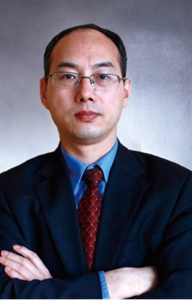
Xu Qian
(Partner and General Manager, Beijing Office, DT Capital Partners; formerly Deputy General Manager of the Investment Headquarters at Fosun Pharma)
1. There is widespread discussion that the second half of development for mobile health and internet-based healthcare may undergo significant changes. The specific outcome will depend on how internet hospitals are implemented, with a key factor being whether they can truly generate revenue and profit;
2. Healthcare is a heavily regulated industry, with policies changing rapidly; designing innovative models is extremely challenging and requires continuous experimentation and exploration;
3. The development of the entire information technology industry is not limited to the internet, which itself still faces numerous challenges. However, with the rise of artificial intelligence and the growing adoption of AI-integrated health insurance payment systems, new concepts and opportunities are expected to emerge in the future.
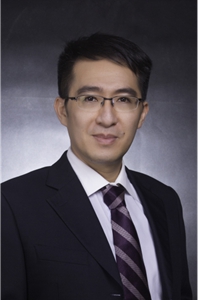
Su Zhenbo
(Partner at Shenzhen Sharing Investment, MD+JD, Vice Chairman of the Medical Industry Alliance)
1. Every investor is searching for their own “home run”: a project that can recoup the entire fund’s investment, typically delivering returns of more than 10x;
2. Differences in mindset between corporate investors and specialized VC investors: Specialized VC investors prioritize valuation and returns, facing pressure to deliver returns to their limited partners (LPs), whereas corporate investors place greater emphasis on strategic industry layout.
3. Sharing Investment Logic: First, a promising sector; second, top-tier products and appropriate timing; third, a core founding team;
4. Investors have expectations when making investments, and whether a company can meet these expectations is a crucial issue. Therefore, companies should choose professional investment institutions for financing, as their expectations tend to be more reasonable;
5. Investors hold two perspectives on enterprises: the first category involves investing with the expectation that the company will become an acquisition target; the second category involves investing with the aim of building it into a platform company within a specific niche, such as Johnson & Johnson and Mindray. For the second category, investors commit greater resources and impose higher requirements on founders.
6. Lessons Learned from Investment:
(1) The essence of investment is investing in people: entrusting capital to the right individuals at the right time and at an appropriate valuation (cost), enabling them to do the right things.
(2) Leadership training is equally important for venture capitalists and entrepreneurs;
(3) Profit distribution and equity governance structure are very important;
(4) Beware of team integration pitfalls arising from differing perspectives;
(5) Always pay attention to risk management;
(6) There is no fixed formula for success; there will always be a 20% exception rate;
(7) The industrial environment is constantly evolving; do not allow your mindset to become rigid.
7. Two Core Values and Capabilities of Medical Enterprises: First, R&D and manufacturing capabilities; second, sales channel development and brand-building capabilities.

Introduction to Qingsong Club
Qingsong Club is a professional community focused on the healthcare industry, founded by a group of senior investors in China’s healthcare investment sector, healthcare entrepreneurs, and medical experts. Starting with entrepreneurial mentoring and investment training, it now boasts hundreds of active members from the healthcare industry, including leading academic experts, government regulators, healthcare companies, investors, and entrepreneurs. We are committed to building a vibrant community for healthcare entrepreneurship and investment, integrating industry resources, and helping healthcare professionals improve their success rates, “making healthcare entrepreneurship and investment easier.”