Medical AI Firm Highlights Dual Core Elements of 'Medicine' and 'AI' in IPO Filing
1
# This Week's Hot Topics
#Medical AI#
There are currently numerous medical AI startups in China. The field of medical AI hinges on two key elements: “healthcare” and “AI.” Merely conducting limited data training on open platforms does not constitute true mastery of AI technology, and failing to secure deep collaborations with top-tier medical institutions means one lacks access to legitimate, high-quality healthcare resources. Only by combining both elements can success in this endeavor be achieved.
Perspective
1. Song Jie: Do not view the prospects and development trajectory of a medical technology in isolation; instead,Viewing Medical AI from Multiple Perspectives: Enabling AI to Uncover More Unknown Associations of Diseases
West China Hospital and C-Data Intelligence Have Achieved Breakthrough Progress in AI Technology Research and Development for Digestive Endoscopy Imaging, with an Accuracy Rate of Approximately 95% in Diagnosing Various Diseases Under Digestive Endoscopy. West China Hospital and C-Data Intelligence Have Jointly Established the West China-C-Data Medical Artificial Intelligence R&D Center to Conduct Collaborative Research Across Multiple Fields, Including Digestive Endoscopy, Pathology, CT, MRI, and Ultrasound, Strategically Positioning Themselves for the Future of Smart Healthcare.
During the product development process, Song Jie, founder of Xishi Heterogeneous Computing, offered his unique perspective: “I have never believed that training on an open platform using medical data alone can yield truly valuable models (technologies). The direction of medical AI should not rely solely on human understanding of disease associations and characteristics to enable computers to make diagnostic judgments. It is important to recognize that human knowledge of nature may represent only a few percent of its true essence. If we use this limited ‘experience’ to ‘standardize’ AI’s understanding of nature, AI will certainly fail to achieve breakthroughs in the future. Instead, we hope AI can help us uncover additional disease associations and optimal treatment pathways that remain beyond our current understanding.”
2. Gu Beini: Insights from HealthMir, an Indian Startup, Offer Key Recommendations for Grassroots AI + Healthcare Entrepreneurs
HealthMir, an Indian startup that recently secured seed funding, leverages AI technology to deliver health services to consumers through a chatbot interface. Although still a small company in its early stages, it offers several insights worth deeper consideration.
1. Don’t take on porcelain work if you don’t have a diamond drill. Without top-tier AI technical capabilities and a background in clinical medicine, do not attempt to tackle high-difficulty problems such as AI-assisted diagnosis. The stronger the clinical relevance, the higher the barrier to entry. At this stage, applying AI technology to healthcare—particularly in deep clinical domains—entails multiple significant barriers: technological, industry-specific, talent-related, and more. What chances of success do grassroots medical and health entrepreneurs truly have?
2. Non-clinical needs also warrant attention. Clinical needs require a medical professional background, resulting in higher industry entry barriers. Non-clinical needs may involve pain points in healthcare operational processes or issues related to the allocation of medical resources, among others. There are still many non-clinical needs in the healthcare sector that urgently need to be addressed.
3. AI Can Deliver a Superior User Experience. AI has the potential to create enhanced user experiences, giving rise to the notion that “AI is the new UI.” Viewed from another perspective, AI can be leveraged solely to improve the experience without altering the core service offerings. In other words, users continue to access existing services—such as healthcare information, triage guidance, and patient communities—but enjoy them through a more refined and intuitive experience.
Report
AI Healthcare Startups: Smart Diagnosis Is Not the Only Keyword—Three Insights from India’s HealthMir
2016 AI + Healthcare Innovation Trends Report I: Tech Giants’ AI Strategies
2016 AI + Healthcare Innovation Trends Report V: What Can AI Do in Healthcare? (Part 2)
2
This Week's Headlines
The Pharmacy Informatics Market Is a Red Ocean: How Are These Leading Companies Strategizing for the Next 3–5 Years?
Author: Gao Kangping
“New retail in the pharmaceutical sector is now a widely discussed topic. The key difference between traditional and new retail lies in their core focus: the traditional retail system centers on ‘products’ and ‘physical stores,’ whereas new retail places ‘people’ at its core, leveraging various digital tools and data analytics to better serve consumers. This is what defines new retail.”
“For retail pharmacies at different stages of development, their needs for informatization vary. The role of IT service providers is to accurately identify these needs and deliver tailored solutions, often understanding the pharmacies’ requirements even better than they do themselves.”
The aforementioned remarks were made by Yang Jun, co-founder of Haidian Software, and Qin Gang, General Manager of Qianfang Baiji Co., Ltd. As leading enterprises in the pharmaceutical informatization industry, they have designed various informational tools and products tailored to the needs of pharmacies, helping them enhance management and marketing efforts.
Pharmaceutical IT companies, represented by Haidian and Qianfang Baiji, have played an irreplaceable role in the evolution of the pharmaceutical retail market. In the new market environment, these companies are also undergoing significant transformations. VCBeat (WeChat ID: vcbeat) has reviewed the current state of China’s pharmaceutical IT industry and conducted interviews with several representative enterprises to examine, from a media perspective, the development paths of pharmaceutical distribution and retail IT companies amid emerging technologies and trends.。
China's NIPT Market Industry Landscape: How Do These 20 Companies Strategize?
WorkAuthor: Zhou Mengya
In early 2015, the National Health and Family Planning Commission (NHFPC) issued the "Notice from the Department of Maternal and Child Health of the NHFPC on Launching Pilot Programs for the Clinical Application of High-Throughput Gene Sequencing in Prenatal Screening and Diagnosis by Prenatal Diagnostic Institutions," which effectively declared an end to the regulatory freeze on non-invasive prenatal testing (NIPT). The removal of restrictions limiting NIPT pilots to 108 medical institutions marked NIPT’s formal integration into mainstream clinical in vitro diagnostics.
Prior to the announcement of the pilot notice, many individuals sensed industry opportunities, leading to an influx of new market entrants. The NIPT sector, originally a niche within liquid biopsy, has grown into a multi-billion-dollar market. With the full implementation of the two-child policy, the proportion of advanced maternal age and high-risk pregnancies has increased significantly, driving continued growth in NIPT market penetration. If NIPT market penetration reaches 30%, the market size will expand to the tens of billions.
In 2017, Berry Genomics’ successful initial public offering (IPO) marked the formal establishment of this industry. In light of this, VCBeat has decided to conduct a comprehensive review of China’s non-invasive prenatal testing (NIPT) industry, analyzing the market landscape from the perspective of corporate development.
The Most Comprehensive Scan of the B2B Pharmaceutical E-commerce Industry: A Full Overview of Policy Evolution, Current Market Status, and Development Trends
Author: Gao Kangping
In 2005, the China Food and Drug Administration issued the Interim Provisions on the Approval of Internet Drug Transaction Services, marking the official emergence of the term “pharmaceutical e-commerce.” This regulation provided detailed stipulations on the classification, implementing entities, and operational procedures of pharmaceutical e-commerce. However, for a long period, the concept of pharmaceutical e-commerce was largely synonymous with “online pharmacies,” primarily due to their large numbers and extensive brand promotion, which significantly boosted their visibility. In contrast, B2B pharmaceutical e-commerce, or pharmaceutical distribution based on internet platforms, remained much more low-profile, akin to “a treasure hidden away, unknown to the world.”
However, according to the “2016 Statistical Analysis Report on the Pharmaceutical Distribution Industry” issued by the Ministry of Commerce, the total sales revenue of pharmaceutical e-commerce enterprises that submitted direct reports reached RMB 61.2 billion in 2016. Among this, B2B (business-to-business) transactions accounted for RMB 57.6 billion, representing 94.2% of the total pharmaceutical e-commerce sales; B2C (business-to-consumer) transactions amounted to RMB 3.6 billion, accounting for only 5.8% of the total.
Large Market Size, Low Profile: Why Is This the Case for B2B Pharmaceutical E-commerce? In response to this phenomenon, VCBeat (WeChat ID: vcbeat) conducted a comprehensive scan of the B2B pharmaceutical e-commerce industry and engaged in discussions with senior executives from multiple B2B pharmaceutical e-commerce companies. The article provides a thorough analysis of the industry from various perspectives, including driving factors, current market status, challenges, and development trends, offering an insightful look into an industry undergoing rapid transformation.
3
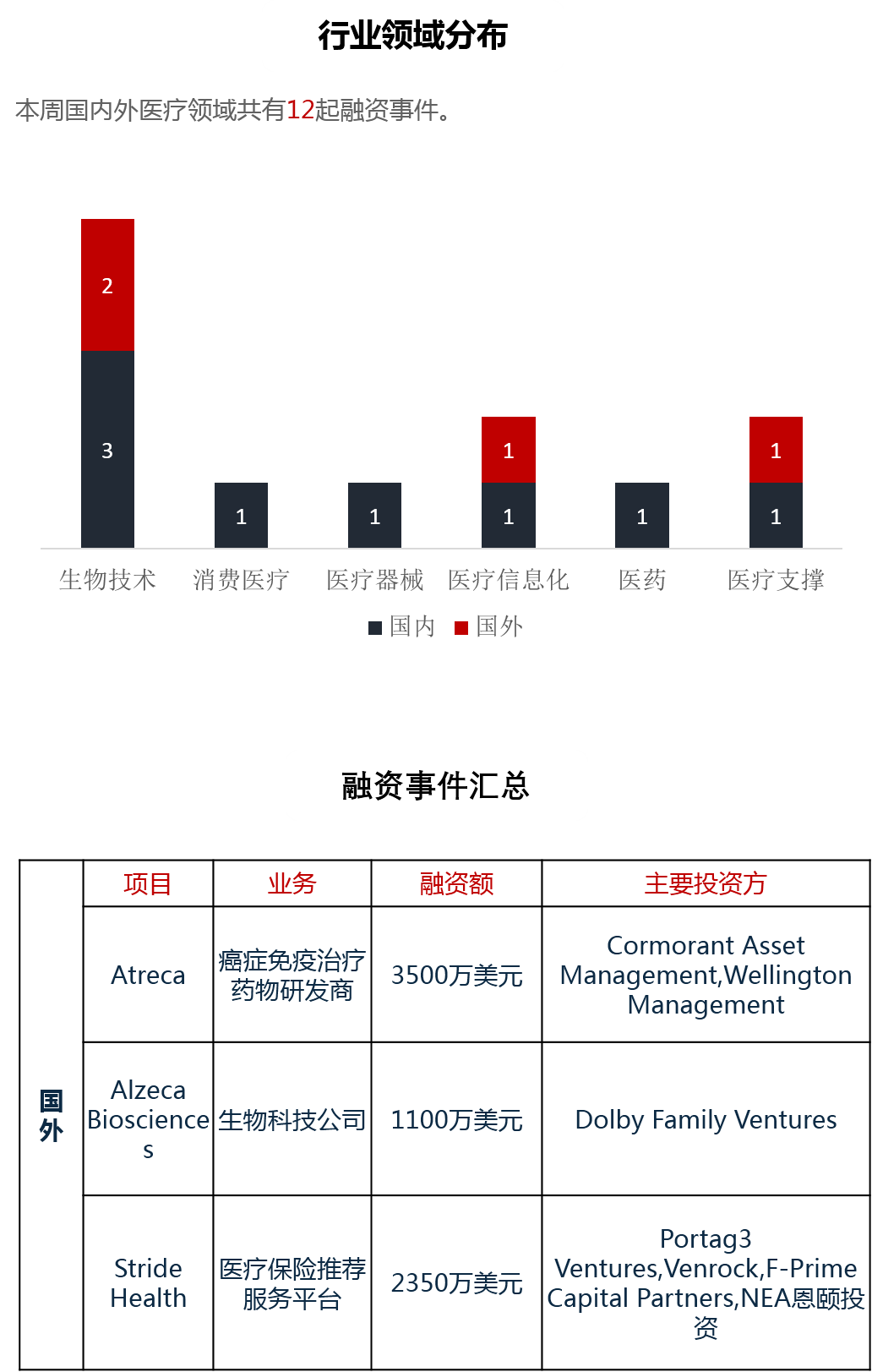
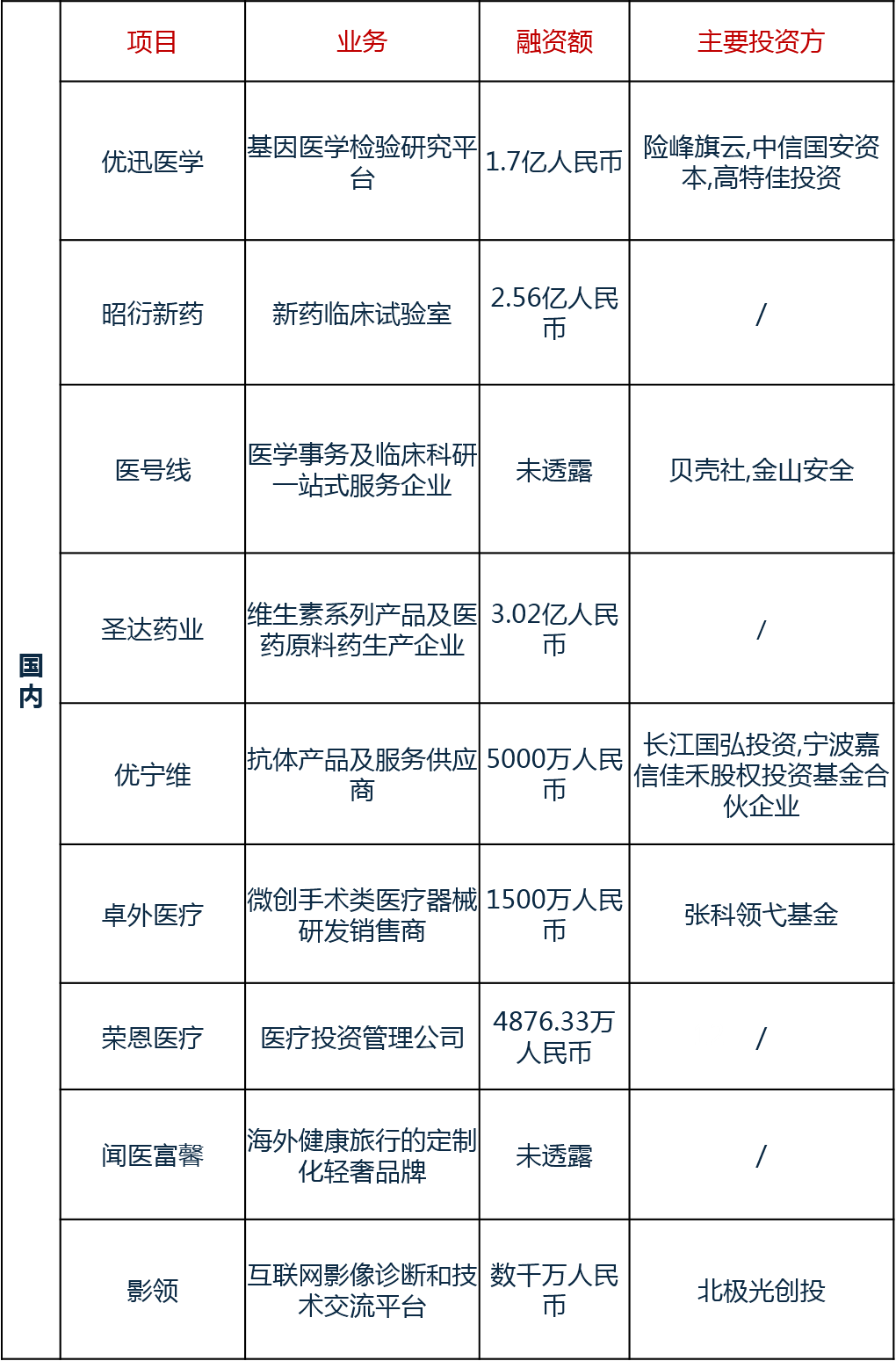
This Week's Financing Events in the Healthcare Sector
4
# This Week's Healthcare Industry Activity Updates

5
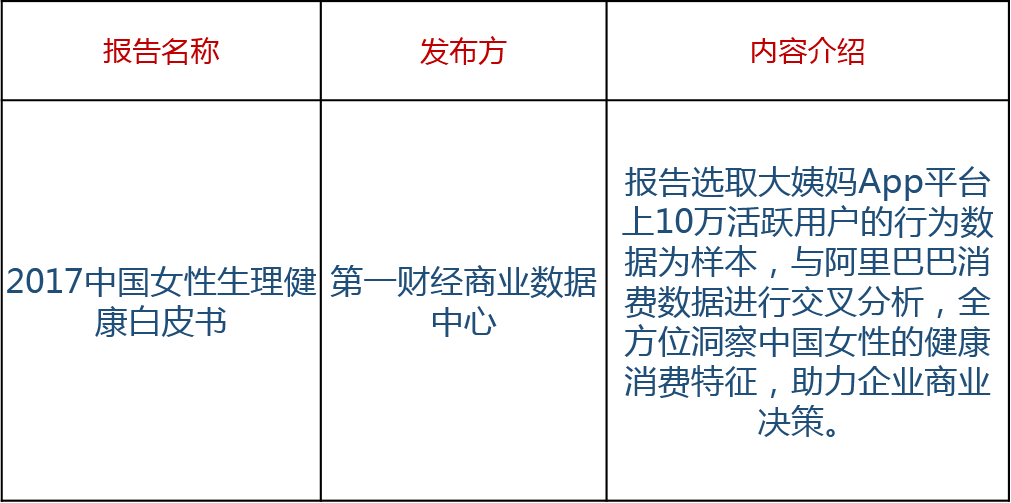
This Week's In-Depth Report
For more content, please visit the VCBeat knowledge base!