

The Expansive Potential of Next-Generation AI-Powered Medical Imaging in the Era of Artificial Intelligence
On July 8, 2017, the State Council issued Document No. 35 of the year—"New Generation Artificial Intelligence Development Plan", it put forward the guiding principles, strategic objectives, key tasks, and safeguard measures for the development of China’s new generation of artificial intelligence toward 2030, deploying initiatives to build China’s first-mover advantage in AI development and accelerate the construction of an innovative nation and a world-leading science and technology power.
The State Council has issued a dedicated document for a specific technology—a highly rare occurrence. This underscores the nation’s emphasis on the development of artificial intelligence technology.
Globally, the healthcare industry ranks among the top three sectors where artificial intelligence technology has achieved its earliest breakthroughs in application.
In Shenzhen, the pioneering window city of China’s reform and opening-up, pioneers in the healthcare industry are focusing on the changes brought by artificial intelligence to the medical sector.
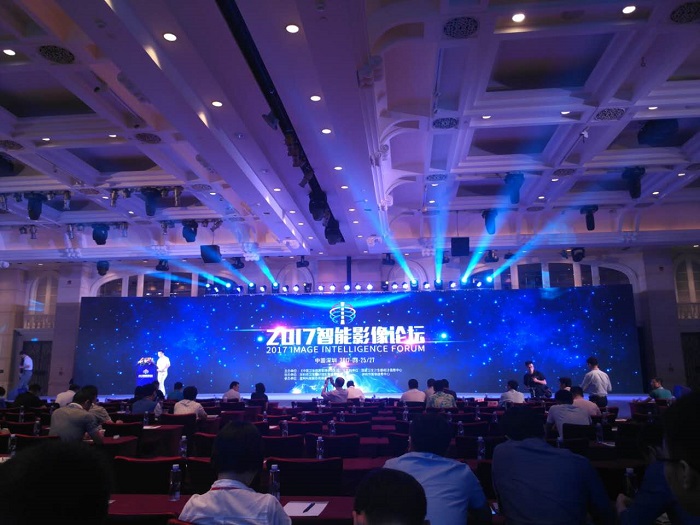
On August 26, hosted by the Editorial Office of Chinese Journal of Health Informatics and Management, co-organized by Shenzhen Health and Family Planning Information Association, supported by the Statistical Information Center of the National Health and Family Planning Commission and Shenzhen Medical Information Center, and undertaken by Lanwang Technology Co., Ltd.2017 Intelligent Imaging ForumThe event was officially held, with leaders from the Information Center of the National Health and Family Planning Commission and the Shenzhen Health and Family Planning Commission in attendance, delivering speeches.
The theme of this forum also closely revolves around“AI + Medical Imaging”Expand, PassRegional Imaging Center Construction, Clinical Application in Diagnosis and Treatment, Equipment Management, Information Technology (IT) Infrastructure (Hardware and Software), Standards and Specifications, and SecurityConducted a detailed and in-depth discussion.
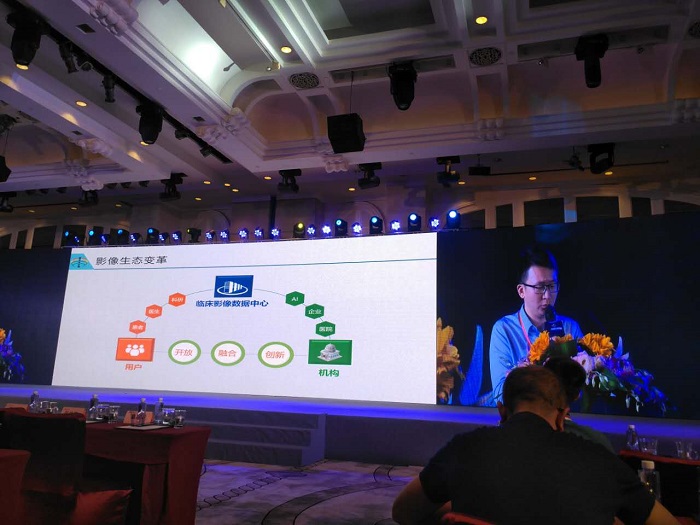
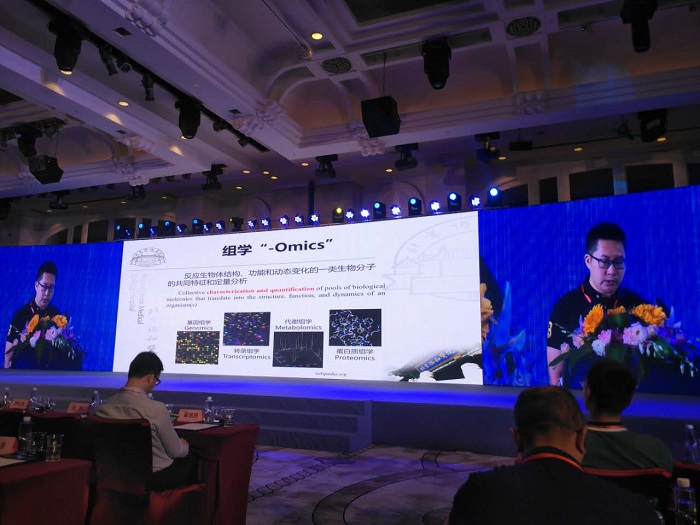
Below, VCBeat (WeChat: vcbeat) reporters on the scene will present the insightful perspectives of the guest speakers.
“Shenzhen to Launch Dedicated Fiber-Optic Network Project for Health and Medical Data
“Invest 600 million yuan in the construction of national health informatization over the next 3-5 years”
— Zheng Jing, Deputy Director of the Medical Information Center, Shenzhen Municipal Health and Family Planning Commission
According to the recently released "Shenzhen 13th Five-Year Plan for National Health Informatization (2017-2020)," also known as the "12361 Project," the plan outlines: one support system for the citywide population health informatization; two guarantee systems: informatization management and informatization standards; three core databases: population, health records, and electronic medical records; six major business application information systems; and one integrated application system supporting convenient and beneficial services for the public.
Among these, the Imaging Cloud is a crucial component of Shenzhen’s population health informatization system. Shenzhen will vigorously expand the functional applications of the Imaging Cloud to enable cross-referencing and data sharing among the population health information platform, public health management systems, and medical service institutions. It will also provide query and access capabilities for municipal and district-level medical imaging centers, community health centers, and other facilities, thereby implementing advanced applications such as cloud computing.
Given the large volume of imaging data and the high security requirements, a key component of the Shenzhen Medical Imaging Cloud Platform is to establish a dedicated dark fiber network for health and family planning services in accordance with the standard of “10-Gigabit connectivity to the central hub and Gigabit connectivity to individual institutions.” This network will cover institutions directly under the Shenzhen Municipal Health and Family Planning Commission, health and family planning administrative departments in all districts (including new districts), public hospitals, public health institutions, and family planning service agencies across the city, community health service centers, as well as privately operated medical and health institutions. Efforts will be made to complete the review of the project’s feasibility study report by the end of the year.
Over the next 3–5 years, Shenzhen will invest RMB 600 million in the construction of health informatics infrastructure for its entire population.
"Six Changes AI Brings to Radiology Work;"
"Coexistence of Artificial Intelligence and Physicians"
— Sun Hao, Associate Professor, Department of Radiology, Peking Union Medical College Hospital
Artificial intelligence has demonstrated its value in clinical applications, research, and education. First, it distinguishes between pathological and non-pathological findings through deep learning, such as reducing false positives in computer-aided detection (CAD) for pulmonary nodules and CT colonography (convolutional neural networks [CNNs] reduce the false positive rate for pulmonary nodules by 55% while maintaining the true positive rate). Second, it improves lesion detection, for example, by enhancing lesion imaging to increase the detection rate of pulmonary nodules on CT scans. Third, it differentiates between bone and soft tissue in chest radiographs; one study indicated that 82–95% of lung cancers missed on chest radiographs were due to obscuration by bony structures. Fourth, it enhances efficiency in the segmentation and delineation of lesions or organs in medical images. Fifth, it assists in transforming radiology workflows, thereby changing the current state of radiology management. Sixth, it identifies imaging data imperceptible to the naked eye, thereby augmenting the value of radiologists; for instance, spectral imaging enables physicians to reinterpret modern diagnostic imaging through the lens of radiomics.
Artificial intelligence liberates radiologists from repetitive tasks, shifting their role increasingly toward observing the nature of lesions and making judgments based on multidimensional information.
The challenge facing artificial intelligence in the field of medical imaging is the lack of extensive literature support. Currently, it cannot generate electronic medical records, images, or imaging reports, and ensuring the consistency of diagnostic and therapeutic data used for AI training remains difficult. Information security and privacy protection are two critical issues.
Furthermore, the application of artificial intelligence will transform the education of radiology residents and fellows. Initially, this may increase the demand for radiologists to identify false positives and false negatives. Ultimately, however, it will reduce the number of radiologists, particularly those in junior positions.
“Medical imaging cloud technology has gradually matured.”
“Two Major Challenges Plaguing the Development of Imaging Cloud”
— Chen Deji, Deputy Director of the Department of Medical Imaging, Guangzhou Medical University
The Four Prerequisites for Medical Imaging Cloud Technology Are Already in Place:
First, the infrastructure of cloud computing has matured. Technologies such as distributed PB-scale cloud storage, cloud computing and high-performance computing clusters, cloud databases, and cloud security technologies are now mature. Meanwhile, the data承载 capacity, network quality, and coverage accessibility of networks have met the current requirements for hospital informatization, internet-based healthcare, and mobile internet healthcare applications. Second, the penetration rate of smart terminals is very high. The processing and display capabilities of smart terminals are fully mature, and the diversity of terminals meets the needs of medical big data. Third, full digitization of imaging equipment has been achieved. Currently, full digitization of imaging equipment has been realized in hospitals at the county level and above, with 100% direct network connectivity. In medium and large hospitals, the generation of big data has become a norm in medical practice, with approximately 90% of data in medical institutions originating from imaging equipment. Fourth, the standardization of DICOM for medical images is being progressively advanced. Advances in image post-processing engine technology and high-performance computing, along with the deepening implementation of DICOM standards, have laid a solid technical foundation for imaging clouds.
The two current challenges are:
First, the relevant laws and regulations are imperfect. If data is stored in the cloud, who should grant authorization? How can patient privacy be protected? How can data usage rights be safeguarded? How can data be shared and accessed across systems? Should fees be charged for providing data?
Second, industry practices urgently need standardization. How can the transition from local area networks to the cloud be addressed? Who will establish interoperability standards for cloud-to-endpoint connectivity? If physicians access medical images across broader geographic regions and information leaks occur, who will safeguard patients’ interests?
“Medical Imaging Exhibits a ‘Two-Hot, Two-Cold’ Phenomenon”
"Integrated management of equipment operational data and resources should be prioritized."
—Zhu Chen, former Director of the Information Equipment Department at Children's Hospital of Soochow University
Medical imaging exhibits a “two hot, two cold” phenomenon: the two “hot” areas are AI-driven imaging data analytics and fixed asset management processes; the two “cold” areas are equipment operational data and integrated resource management.
Securing high-quality imaging data involves controlling the sources of imaging equipment data and standardizing imaging protocols. For instance, exposure times for imaging equipment vary across hospitals, as do staffing-to-equipment ratios. It is also essential to determine staffing configurations based on outpatient volume and to implement refined management practices within radiology departments.
From the perspective of data from imaging equipment, current manufacturers have not fully opened up their systems. In terms of the usage of imaging equipment, there is a coexistence of overloading and underutilization, with medical devices lacking sources of early warning data.
It is recommended to carry out work in four aspects: first, departmental management, using an intelligent scheduling system to solve problems; second, business management, strengthening process quality control; third, resource management, establishing a rule engine that includes rules for multiple factors such as medical practices, examinations, time, and environment, as well as data monitoring of equipment operation; fourth, data analysis, conducted through comprehensive analytical methods, including quality analysis of reports.
“Building a New Generation Clinical Imaging Data Center”
"Realize Comprehensive Analysis and Utilization of Resources"
— Zhang Guosheng, Director of the Marketing Center at Lanwang Technology
How to promote current healthcare system reforms, such as tiered diagnosis and treatment and the establishment of medical consortiums? The most critical step is to achieve mutual recognition of results and resource sharing among healthcare institutions, ultimately enabling the mining and utilization of imaging data through artificial intelligence technologies.
The overall architecture of a new-generation clinical imaging data center should comprise four layers: the data layer, access layer, management layer, and application layer. It should enable functionalities such as computer-aided diagnosis, intelligent analysis, imaging knowledge base, panoramic imaging, cloud-based consultation, and remote image interpretation, while establishing two data repositories: a diagnostic and treatment process archive and an archived imaging database.
Following the deployment of an imaging data center, it becomes possible to achieve integrated visualization of in-hospital imaging data, facilitating imaging collaboration between large and small medical institutions and enabling scheduling management throughout the coordination process. Once a substantial volume of medical imaging data has been accumulated, resources can be integrated, analyzed, and utilized according to the following framework: data analysis to identify issues, process analysis to determine root causes, decision simulation to alter the status quo, and decision execution to resolve problems. This approach enables the rational allocation of diagnostic tasks among radiology experts, refined management of large-scale medical equipment, and optimal distribution of patient resources within the medical technology examination workflow.
"Promoting Compliance Assessment of Medical Digital Imaging Standards"
“Ensuring the consistency of imaging data from the foundational level”
— Gao Zhongjun, Secretary of the Chinese Committee for International DICOM Standards
The current state of medical digital imaging standards and conformity assessment is concerning. There is no specific organization to coordinate and carry out assessment work, nor are there appropriate testing tools available; only declarations of conformity are provided. Moreover, the DICOM standard is complex and extensive, while relevant personnel in domestic hospitals have an insufficient understanding of the DICOM standard, rely excessively on vendors, and lack specialized professionals.
AI based on imaging data requires ensuring the accuracy and consistency of the data. In the next phase, the China Committee of the International DICOM Standards will focus on promoting the establishment of a quantitative evaluation technology system for information standardization applications, achieving composite evaluation of DICOM standards, ensuring accurate and reliable exchange of imaging information between imaging systems and devices, thereby realizing cross-institutional and cross-regional information sharing and business collaboration, as well as cross-institutional and cross-regional data exchange and integration.
Entities subject to DICOM conformance assessment include healthcare institutions at all levels, as well as manufacturers of medical imaging equipment and related software. For healthcare institutions, the assessment primarily focuses on standardization, maturity, and application effectiveness. The evaluation covers DICOM standard basic communication service classes, Chinese encapsulation and communication specifications for medical digital image communication, basic data sets for medical digital image communication, and other related content.
This assessment establishes the correlation between radiation dose and image quality in medical imaging equipment, while also ensuring technical consistency in image display.
DICOM standard compliance assessment has been piloted in Sichuan Province. The next step is to establish a tiered assessment center system based on the provincial information center, and gradually expand the program to Sichuan, Chongqing, Shenzhen, Qinghai, Guangxi, Shaanxi, and other provinces and cities.
“Research on Interoperability Theory
"Regional Imaging Interconnectivity"
——Zhou Yi, Associate Professor, Department of Biomedical Engineering, Zhongshan School of Medicine, Sun Yat-sen University
Eighty percent of the objective data used by clinicians for diagnosis comes from imaging and laboratory reports. The sharing of examination and test data is directly related to the control of medical costs. In terms of the equipment that generates the data, it is relatively standardized, and the standards for imaging examinations are also relatively consistent.
Interoperability refers to the exchange of information between two or more systems or components, as well as the ability to utilize the exchanged information. Interoperability is characterized by its support for information exchange among independent systems under non-unified management frameworks, and it also enables systems to understand and use the exchanged information. Interoperability addresses issues through standards, which encompass the standardization of information content and exchange formats, as well as standards for roles, entities, processes, and comprehensive sets of standards. Interoperability includes the semantic layer, syntactic layer, and foundational layer, with foundational standards including HL7, DICOM, and others.
Research on interoperability will provide a practical and comprehensive solution for sharing imaging examination results.
“Hospital Data Transitioning from Closed Networks to Open Networks”
"Complete Deconstruction of Holographic Data on Life Processes"
—— Huang Hao, Deputy Director of the Information Center, Daping Hospital, Army Medical University
With the advent of the Internet era, patients’ demand for anytime, anywhere access to data has inevitably driven hospital data systems from closed networks toward open networks. In this transition, medical information security has become a critical responsibility of hospital IT departments. Under the new circumstances, it is essential to strengthen infrastructure construction, achieve comprehensive situational awareness, conduct thorough security assessments (in accordance with ITIL, ISO/IEC 27001, and China’s Classified Protection of Cybersecurity Level 3), foster cybersecurity awareness, and establish institutional standards and specifications for network security.
With the advent of the big data era, diverse datasets may converge to form a comprehensive deconstruction of holographic data and programmatic combinations underlying life processes, termed the “Holographic Human.” These data encompass the exposome, epigenome, microbiome, metabolome, proteome, transcriptome, sequencing and genome, as well as imaging and anatomical profiles. Furthermore, lifecycle-wide data integration and intelligence may serve as a key lever in addressing national health and healthcare challenges.
“A Three-Tiered Understanding of Medical Data
“Different levels address different data needs”
——Yin Yiqing, Director of the Computer Network Center at Zhongshan Hospital, Fudan University; General Manager of Shanghai Zhongshan Medical Technology Development Co., Ltd.
The composition of medical data is relatively complex, encompassing textual information such as voice recordings, clinical notes, imaging reports, operative records, laboratory test reports, and physician order execution logs; imaging data from radiology, ultrasound, pathology, endoscopy, electrophysiology, nuclear medicine, and radiation therapy; as well as data from biobanks, including genomic samples.
Real-world medical data is isolated from the metric sets used to interpret such data, creating a barrier between raw data and the specific metrics of interpreted data. The significant value of these metric sets lies in their accumulation of years of human medical experience, serving as the fundamental basis for disease diagnosis.
The utilization of indicator sets, including retrieval, statistics, analysis, and visualization, may become an important direction for the application of medical artificial intelligence.
“Objectives of Radiology Department Management”
"lies in ensuring the orderly development of the department"
——Qiu Weijia, Director of the Department of Radiology, Affiliated Hospital of Guilin Medical University
Refined management entails the implementation of managerial responsibilities by making them specific and explicit. It requires every manager to be fully present and diligent in fulfilling their duties. Work must be executed correctly from the outset, with daily clearance and settlement of tasks. Daily reviews of operational conditions are mandatory to promptly identify, rectify, and address any issues that arise.
The management of the radiology department encompasses the administration of technologists, nursing services, physicians, and departmental funding. Information technology is leveraged to render management processes procedural, standardized, and digitalized.
Centralized Imaging Diagnosis involves uploading various imaging data from township hospitals to an imaging data center, where radiologists at higher-level hospitals perform centralized interpretations. This approach addresses the issue of township health centers having imaging equipment but lacking sufficient diagnostic expertise.
Conclusion
From the initial phase of “hearing voices but seeing no one descend,” to the later boom of “a bustling marketplace with noisy traffic,” the “AI + Medical Imaging” sector has experienced significant ups and downs in its industrial development, particularly following AlphaGo’s victory over Ke Jie. Ultimately, however, finding the ideal path for medical imaging requires healthcare professionals to gain a deep understanding of the role and value of artificial intelligence, meticulously map out application scenarios across various stages of the industry chain, and carefully analyze the interest dynamics among all stakeholders.