

Why the 'Hangzhou Model' of Family Doctor Contract Services Is Gaining National Attention
With the continuous advancement of the tiered diagnosis and treatment system, key tasks in health planning have included strengthening and improving the healthcare service system, enhancing primary healthcare delivery capacity, and guiding public healthcare-seeking behavior in a scientific and rational manner. From August 24 to 25, 2017, under the guidance of the Department of Primary Healthcare of the National Health and Family Planning Commission, China’s first ““Training Course on Promoting Best Practices and Experience in Family Doctor Contract Services”Held in Hangzhou.
This conference aims to strengthen the overall capacity of primary healthcare services, effectively promote Hangzhou’s excellent practices and experiences in community-based family doctor contract management to other regions, draw on the “Hangzhou Model,” and provide an in-depth analysis and interpretation of best practices in family doctor contracting and the development of tiered diagnosis and treatment platforms in Hangzhou.
On August 24, the trainees visited Hangzhou Third People’s Hospital, the Zhalingkou Subdistrict Community Health Service Center in Jianggan District, and Hangzhou Zhuojian Information Technology Co., Ltd. in multiple batches.
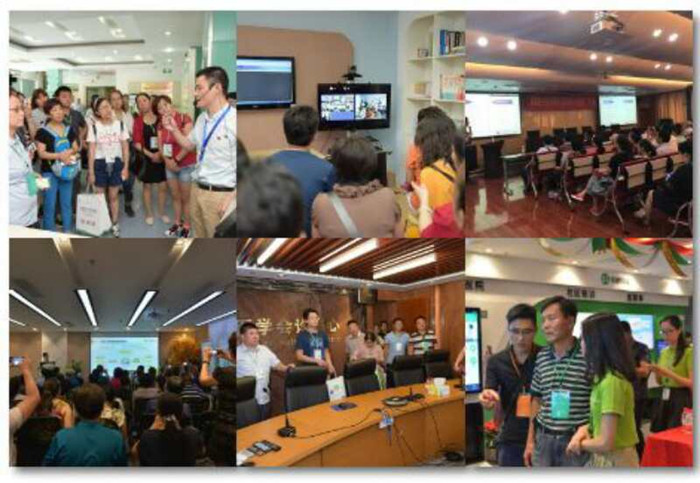
On August 25, the training course featured a one-day session of expert lectures.
Gathering of Industry Leaders: Charting a Bright Blueprint for the Era of Family Medicine
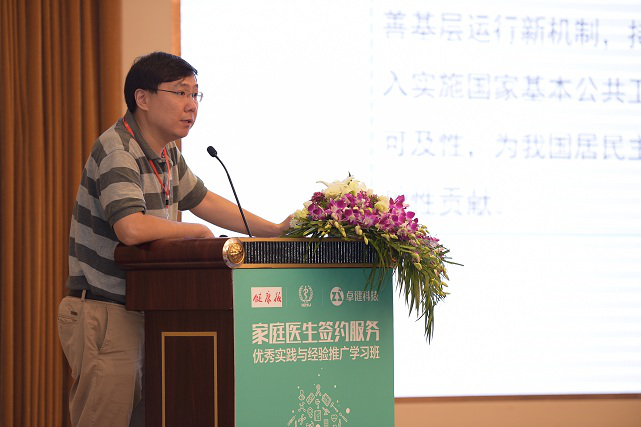
Huang Lei, Director of the General Affairs Division, Department of Primary Healthcare, National Health and Family Planning Commission
At the conference, Huang Lei, Director of the General Affairs Division under the Department of Primary Health Care of the National Health and Family Planning Commission, delivered an insightful speech on “The Role and Key Components of Information Technology Application in Advancing Primary Healthcare Services.”
Huang Lei stated that the development of primary-level information platforms mainly involves two aspects: first, promoting resource integration and data sharing among existing operational systems at the primary level by strengthening top-level design and communication, studying interconnection solutions and indicator systems between various business systems in primary healthcare institutions, and advancing resource sharing and business collaboration across these systems.
Second, establish a national-level platform. Within the National Health Information Security Project, achieve vertical connectivity and data exchange between the national platform and provincial primary healthcare information systems. Promote the development of a comprehensive information management system that covers basic medical care, basic public health services, family doctor contract services, resident health records, and operational services of primary healthcare institutions.
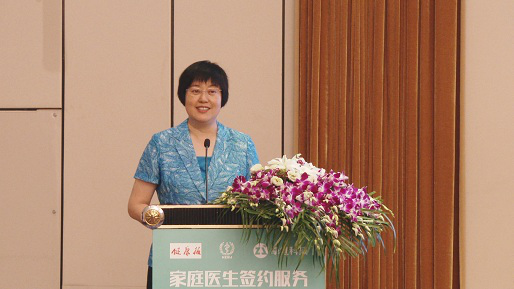
Hu Ling, Director of the Primary Health Care Division, Zhejiang Provincial Health and Family Planning Commission
Hu Ling, Director of the Primary Health Care Division of the Zhejiang Provincial Health and Family Planning Commission, delivered a keynote speech on “Contracted Services and Informatization.” Hu Ling believes that there are three principles for informatization centered around contracted services:
1. Business First, Technology as Support
We should first establish a robust workflow for contracted services. The business department must define the product requirements—specifically, what kind of IT solutions are needed to support these contracted services. We must take ownership of gathering these requirements; only then can our technical team design and develop comprehensive software.
2. Process Optimization
If health information technology makes service processes more cumbersome and operations less convenient, it is certainly unacceptable. Prevention and treatment were historically separate; therefore, their integration must be a core principle in the design of health IT systems.
3. Meet Current Needs, Look to the Future
Designs must meet current requirements while accounting for future scalability.
Pioneering Tiered Diagnosis and Treatment in Hangzhou: Implementing the “2+3” Best-Practice Model
As one of the 13 typical cases of deepening healthcare reform nationwide in 2016, Hangzhou was the first in Zhejiang Province to promote the construction of an information system for tiered diagnosis and treatment, advancing tiered diagnosis and treatment primarily through family doctor contracting. It was recognized as one of the four role models in the “Notice on Advancing Ten Key Aspects of Tiered Diagnosis and Treatment” issued by the National Health and Family Planning Commission.
So, what exactly makes the Hangzhou Model so effective?
Hangzhou Smart Medical Services refer to a health service model that leverages information technology and integrates departmental resources. Built upon the foundation of delivering medical, nursing, and rehabilitation services to households, it expands the scope of day-care and institutional elderly care health services. Tailored to local conditions and residents’ diverse needs, it provides a technologically enabled, continuous, comprehensive, effective, and personalized integrated model combining medical care, elderly care, and nursing.
Currently, China’s aging population is steadily increasing, with individuals aged 60 and above accounting for 19.35% of the total population—9.35 percentage points above the international threshold. As population aging places higher demands on healthcare services, and given the objective reality that over 90% of elderly individuals will receive eldercare at home in the future, providing high-quality, efficient, convenient, and cost-effective healthcare services through contracted family doctor services has become the primary approach adopted by Hangzhou’s smart healthcare service model.
In 2014, Hangzhou City deployed a tiered diagnosis and treatment service system using the “2+3” model. In collaboration with Zhuojian Technology, it built an integrated information platform for contracted referral services, featuring functions such as family physician contracting, outpatient appointment scheduling, examination appointment scheduling, patient information upload, feedback of diagnosis and treatment information, and analytical statistics. The platform was interconnected with the municipal medical insurance system, electronic health records, the Citizen Card, community Hospital Information Systems (HIS), and the HIS of higher-level hospitals, enabling seamless interoperability of diagnosis and treatment data within the platform.
Hangzhou has innovatively implemented a general practitioner contract service with local characteristics, using it as a vehicle to gradually establish a scientific tiered diagnosis and treatment system. In 2016, over 700,000 residents contracted family doctor services, achieving comprehensive, whole-person, and continuous health management.
Currently, the platform has successfully integrated with Yuhang District, Lin’an City, Xiaoshan District, Chun’an County, Fuyang District, Tonglu County, and Jiande City. It covers 55 community health centers and over 300 health stations in Hangzhou’s main urban areas, as well as one private health center and five private health stations. The total number of registered residents in Hangzhou has reached 1.5 million. Among them, the number of registered residents in the main urban areas increased from 520,000 in 2015 to over 800,000 in 2017, with a coverage rate of 64.19% for key populations and 1,180 general practitioners participating in the registration program.
Empowering China's Primary Care Physicians to Advance the Family Doctor Contract Service 2.0
Informatization is the guarantee for the rapid development and leapfrog advancement of primary healthcare. Against the backdrop of national policies, it is essential to rely on informatization and internet technology applications to effectively implement family doctor contract services. Under the guidance of the Department of Primary Health Care of the National Health and Family Planning Commission, China Health News has built and operates a national information platform for family doctor contract services.
China’s Family Doctor Contract Service Platform is the national portal for primary healthcare services across China. It establishes a free, one-stop digital infrastructure for family doctor contract services in all regions, facilitating convenient service connections among primary healthcare institutions, primary care physicians, and residents. The platform promotes family doctor contracting, empowers China’s primary care physicians, and serves hundreds of millions of household residents.
The China Family Doctor Contracted Service Information Platform provides local health and family planning administrative agencies with a data visualization management system. By leveraging a framework of over ten indicators across four dimensions, the platform enables health administrative authorities to conduct routine supervision and management of contracted service delivery and compliance.
As one of the founding members of the Family Doctor Platform Cooperation Alliance, Zhuojian Technology has proudly launched the "Family Good Doctor" Service Platform. This platform is a one-stop solution tailored for primary care institutions, integrating contract signing and service delivery into a unified system.
Its newly upgraded Home Doctor Service Platform features rapid deployment, seamless integration with business systems, interoperable data exchange, unified account authentication, independent operational management, visualized and efficient operations, multi-terminal connectivity, comprehensive information display, a customizable statistical engine, support from a professional knowledge base, and efficient customer service. These enhancements continuously improve residents’ healthcare experience and facilitate the implementation of the “National Tiered Diagnosis and Treatment Policy.”