

Rehab Home Enters Medical Device Retail 2.0: Channel-Centric Strategy Drives Expansion Beyond Products
In 2016, the sales volume of China's medical device market was approximately RMB 370 billion. According to the *Blue Book on the Development of China's Pharmaceutical and Medical Device Industry (2016)*, the home-use medical device market exceeded RMB 100 billion for the first time, reaching approximately RMB 101 billion. Among the large population requiring home-based elderly care and long-term nursing, home-use medical devices have become an essential necessity.
“The businesses of Family of Health are like individual pearls; what we need to do is string them together properly.” Throughout the narrative by Bai Yu, CEO of Family of Health, the concept of steady and solid progress is consistently emphasized. Over his 19-year entrepreneurial journey, from delivering beds on a tricycle in Beijing to establishing the current Family of Health Healthcare Management Group, his success has not come from opportunism or shortcuts, but from step-by-step perseverance.
In what Boyu calls a “blue ocean within a blue ocean,” how has Family of Health leveraged its distribution channels to become the leading retailer of home medical devices, while focusing on future health management?VCBeat (WeChat: vcbeat)The reporter conducted an exclusive interview with Bai Yu.

Bai Yu, CEO of Family of Health
After Caring for Bedridden Elderly, He Opened His Store at the Hospital Entrance
Previously, Bai Yu expressed the following view in a media interview: China currently has 153 million people aged 60 and above, with this population growing rapidly at an annual rate of 3.2%. Unlike Western societies, Chinese cultural norms favor aging in place over institutional care in nursing homes. Consequently, a large number of households will purchase home healthcare equipment and supplies—such as oxygen concentrators, blood glucose meters, wheelchairs, hospital beds, and therapeutic devices—representing a significant business opportunity.
In 1993, Bai Yu was still a teenager. When he left his hometown in Xushui, Baoding, Hebei Province, for Beijing to pursue career opportunities, he held a firm belief: he would carve out his own path to success. In 1998, by chance, Bai Yu became the head of the Beijing office of Hebei Pukang, the largest manufacturer of medical beds in China, where he was responsible for selling nursing beds and operated on a profit-and-loss basis. Although he held a managerial position, he still needed to deliver beds by bicycle, marking his first entrepreneurial venture.
"After delivering and installing nursing beds for hundreds of elderly individuals with paralysis, and gaining access to both customer and supply sources, Bai Yu realized that there was an urgent demand among the elderly for home-based care equipment. 'At that time, there was no dedicated place where one could purchase a full range of home medical devices, so I decided to open a store.'"
In 2004, Bai Yu used RMB 40,000 in wedding gift money to rent the first store in Beijing, with an area of only 30 square meters, marking the opening of China’s first specialty store for home medical devices; in 2005, the second store of Family of Health opened at the entrance of Beijing Anzhen Hospital, with an area of less than 100 square meters; by 2007, the number of Family of Health stores had expanded to 10.
Optimize upstream supply chain layout starting from the customer-facing end
Back in 2009, when Family of Health had expanded to more than 30 stores, it secured tens of millions of RMB in Series A financing. Just two years later, the number of stores doubled to over 70, and the company completed its Series B financing round.
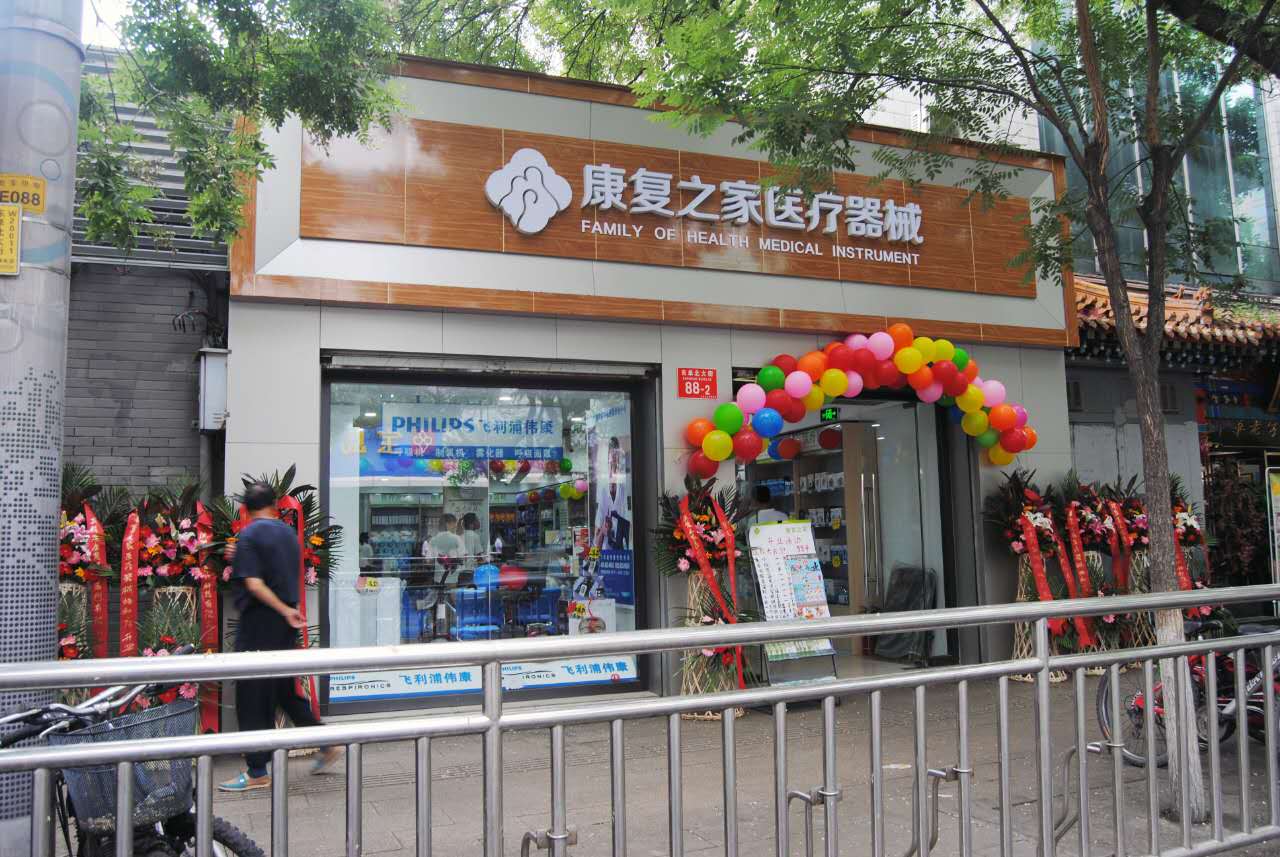
Bai Yu told reporters that all of Family of Health’s stores are located at hospital entrances, drawing in customers from the closest possible point. “Patients pass by when they come for medical consultations, and if they have a need, they make a purchase.” This seemingly simple customer-acquisition strategy has enabled Family of Health to become China’s largest retail chain for home-use medical devices.
At its peak, Family of Health operated 300 chain stores, and with sales soaring, the company was on the path to an initial public offering. However, a wave of store closures triggered by the rise of e-commerce in 2012 forced Family of Health to slow its expansion and begin exploring strategic transformation.
Initially, Bai Yu’s vision was to build a medical device chain that would become the Gome and Suning of the medical device industry. However, this concept evolved after Family of Health expanded to more than 100 stores. In 2016, Bai Yu delivered a speech titled “Transformation: When Traditional Pharmaceutical Retailers Meet Internet Thinking,” marking “deep integration with the internet sector” as one of the key development paths for Family of Health.
“Survive first, then transform,” said Bai Yu when discussing the dilemmas previously faced by Family of Health. Since 2012, the pharmaceutical e-commerce sector has entered a period of rapid development, with the convenience of online shopping leading to growing acceptance of purchasing home medical devices such as glucose meters and wheelchairs via the internet. Meanwhile, policies in many provinces and cities across China that allowed pharmacies but not medical device stores to accept health insurance card payments dealt a significant blow to Family of Health’s retail outlets.
The launch of the Tmall Health Pavilion presented Bai Yu with a strategic opportunity, as the primary sales channel for portable electronic medical devices was shifting from offline to online. Bai Yu told reporters, “While pharmaceutical e-commerce platforms are permitted to sell medical devices online, specialized websites dedicated to direct-to-consumer sales of medical devices have not been issued the relevant licenses, which has constrained the e-commerce growth of Family of Health. In response to these challenges, we bought time for transformation by adjusting our product mix and business philosophy.” In 2014, Family of Health entered the pharmaceutical e-commerce sector by acquiring Dekai Pharmacy. With the integration of its online and offline channels, the advantages of its previously established upstream supply chain began to materialize.
"Taking the e-commerce route as an 'indirect strategy,' Family of Health spent three years on its online layout."
Medical Device Shared Leasing: Incubating the Independent Brand “Jianzubao”
After years of medical device sales, Bai Yu discovered that customers were reluctant to purchase certain high-unit-price, short-lifecycle products with inelastic demand, finding them more suitable for rental use. In 2015, Family of Health decided to spin off its long-researched medical device leasing business as an independent operation.
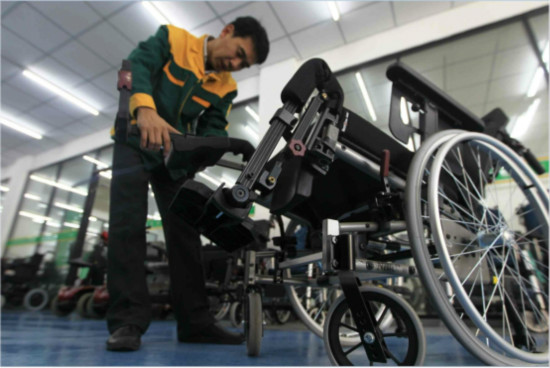
“We found that customers actually had a demand for leasing when purchasing products. Based on this, we established a dedicated leasing department to operate medical device rentals. After running the department for one year, it was spun off as an independent company and gradually became a leader in the industry.” This is the growth path of Jianzubao.
To address disinfection concerns, Family of Health has introduced the disassembly and sterilization system from Japan’s most advanced rehabilitation assistive device rental service provider, enabling products to be cleaned, disinfected, and reused, thereby meeting customers’ requirements for the safety and hygiene of rented items.
Jianzubao’s core business focuses on the rental of rehabilitation assistive devices and the sale of idle equipment, along with new initiatives such as interior design for elderly care stations and home modifications for aging-friendly accessibility. In January 2017, Jianzubao secured RMB 11 million in angel investment. According to Bai Yu, the project achieved profitability this June.
From Products to Services: Strategizing in the Health Management Market
From Medical Device Sales to Strategic Expansion in Health Management, Bai Yu Outlined Two Core Motivations:
First, in his view, sales is not a mere process of “moving goods.” If it merely involves transporting products from the store to the customer’s home, such service holds little value. In the healthcare industry, establishing long-term service relationships with customers after closing a transaction is critically important.
After completing its omnichannel layout, Family of Health began to focus on the sales of smart hardware. “We aim to build strong customer relationships through our products, as products serve as the entry point and data as the connector,” Bai Yu told reporters. The deployment of smart hardware is intended to capture more user data, transform products into services, and enhance user stickiness.
He cited a straightforward example: “For instance, when customers purchase a blood glucose meter, their goal is not merely to acquire the device itself, but to monitor and thereby manage their blood glucose levels.” By understanding customer needs, Beijing Family of Health Medical Treatment Devices Chain Business Co., Ltd. can focus on developing comprehensive diabetes management solutions. Initiatives such as establishing Letang Technology are aimed at delivering targeted solutions for this specific condition, helping customers in post-operative rehabilitation, diagnosis, prevention, and chronic disease management. This approach fosters strong customer relationships and facilitates the transition from product sales to service provision.
Second, from the perspective of long-term customer service, pure sales represent the outcome of a one-time transaction, focusing on average transaction value and cross-selling. “If we only sell once, the customer acquisition cost is too high; however, if we can serve customers multiple times in the future through a single transaction, thereby increasing the repurchase rate, the customer acquisition cost will be correspondingly reduced.”
“There are many product sellers but few service providers. We aim to be the best in service among product vendors—this is the strategy of Family of Health,” said Bai Yu.
Focusing on Rehabilitation Needs, Tackling Key Business Areas One by One
In addition to the aforementioned operations, Beijing Shi'en Traditional Chinese Medicine Hospital and Baishi Food Safety play significant roles within the business portfolio of Family of Health Group. In fact, by integrating medical device sales, medical device leasing, and pharmaceutical e-commerce, Family of Health has established a closed-loop service ecosystem tailored to individuals with rehabilitation needs, particularly the elderly and those recovering from chronic diseases.
If rehabilitation equipment is needed, patients can choose to purchase directly from Beijing Family of Health Medical Treatment Devices Chain Business Co., Ltd. (Rehabilitation Home) or lease through Jianzubao. Dekai Pharmacy provides comprehensive medication management solutions for the elderly; through various insurance partnerships, it enables patients to obtain medications at the lowest possible cost and addresses issues of poor medication adherence by guiding rational drug use. Offline hospitals are responsible for rehabilitation training, offering both home-based guidance and on-site services. Finally, dietary supplement companies provide the food and nutritional support required by patients during the recovery period.
Through these five steps, customers can receive a comprehensive suite of services at Family of Health after being discharged from the hospital.
“We are not expanding blindly or spreading our efforts too thin; the channels of Family of Health are interconnected. We will continue to maintain a leading position across all channels and strive to become the market leader in every niche segment.” Channel–Product–Data–Health Management: this is Family of Health’s strategy for the next 3 to 9 years.
When asked whether Family of Health had any plans to expand into new areas, Bai Yu gave a grounded response: “Our immediate goal is to excel in the business lines we have already developed. What matters most right now is subtraction, not addition.”