

NeuroDoc Targets the $800 Billion Alzheimer's Market with AI-Powered Screening and Diagnostic Platform
“As a surgeon, my father used to be so high-spirited, but now he can’t even take care of himself.”
When Mr. Han spoke of his father, he couldn’t help but let out a sigh. Ever since the elderly man developed Alzheimer’s disease (commonly known as senile dementia), the illness has acted like an eraser, gradually wiping away his memories and abilities bit by bit. The old man used to be a heavy smoker, but now, even if you hand him a cigarette, he doesn’t know how to smoke it; he merely stares vacantly at the rising smoke or falls asleep with the cigarette still in his hand.
Alzheimer's disease, a common neurodegenerative disorder of unknown etiology, has severely impacted the physical and mental health of the elderly in modern society. Its clinical manifestations include progressive decline in cognitive and memory functions, gradual impairment of activities of daily living, and various psychiatric symptoms and behavioral disturbances.
Data released by Alzheimer's Disease International shows:In 2013, the global number of people with dementia was 44 million, of whom 50%–75% had Alzheimer’s disease. In 2015, there were 9.9 million new cases of dementia worldwide, equivalent to one new case every three seconds on average.Globally, the total cost of caring for individuals with dementia in 2015 was estimated at $818 billion, an increase of $214 billion compared with 2010.
Currently, China has the largest number of Alzheimer’s disease patients in the world. Survey data from 2014 showed that 90% of Alzheimer’s patients in China had not been diagnosed or treated.
Although there is currently no method to halt the progression of Alzheimer’s disease in its late stages, evidence suggests that if detected early, the condition can be managed and controlled through pharmacological treatment. This approach can help patients improve cognitive function and delay the clinical course of the disease by 10–15 years.。
In developed countries, the average annual cost per Alzheimer’s disease patient is $33,000. Early diagnosis and diagnostic intervention can significantly delay patients’ admission to long-term care facilities, resulting in an average net annual savings of $10,000.。
Currently, memory disorder clinics in the departments of neurology, psychiatry, and geriatrics at major hospitals across China are capable of diagnosing Alzheimer’s disease. The standard diagnostic procedure includes a review of medical history, physical examination, dementia screening tests (scale assessments), neurological examination, and laboratory tests (such as blood biochemistry and brain imaging studies including CT, MRI, and PET/SPECT scans).
These methods are useful for disease diagnosis, but they require experienced physicians and are not suitable for large-scale early screening.
In response to this situation, Dr. Wang Silun founded Yiwai Medical Technology Co., Ltd. (with its flagship product being the Brain Doctor Intelligent Diagnostic Cloud Platform System), leveraging AI technology for the early screening and diagnosis of Alzheimer's disease,Clinical trials have already been conducted at multiple Grade A tertiary hospitals, achieving an accuracy rate of 85%. Within a few months of returning to China, the company secured millions in angel-round financing, led by Youdao Tongqinghui, with participation from IResearch Capital and Shanghai Shengxi.How does Brain Doctor achieve this?
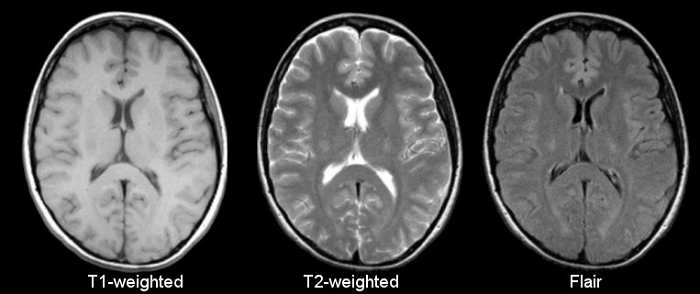
MRI Images for Physician Diagnosis
In current medical institutions, after obtaining patients' MRI scans, physicians often rely on clinical experience to assess whether brain atrophy is present. Due to the significant variability inherent in subjective judgment, missed diagnoses frequently occur.
The cloud-based workflow of Brain Doctor operates as follows: physicians upload subject data, and Brain Doctor quantifies and standardizes clinical expertise through image processing, big data computation, and statistical analysis, ultimately generating precise diagnostic reports.。
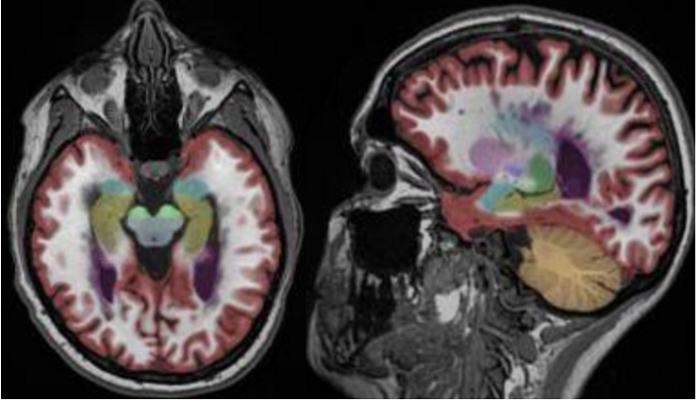
Images Annotated by the Brain Doctor System
As shown in the figure above, the red area represents the gray matter of the cerebral cortex,Atrophy in this region is a key early diagnostic indicator for Alzheimer’s disease. The Brain Doctor system evaluates the subject’s condition by automatically labeling the volumes of critical brain structures and comparing them against normative metrics.。
Wang Silun stated,At present, the final diagnostic report issued by brain specialists is akin to a routine complete blood count (CBC) test result for a common cold.: Total white blood cell count 12.2 (normal range 5–12), neutrophils 8.6 (normal range 2–7.8), lymphocyte percentage 17.9% (normal range 20–40%)... The diagnostic report includes data on critical brain structures, such as gray and white matter volumes, hippocampal structures, and metrics for 45 key whole-brain regions, enabling physicians to quickly interpret the findings and draw conclusions. After obtaining CFDA certification,Brain Doctor will release diagnostic reports with conclusions for physicians' reference.。
Feedback from physicians who have used the system indicates that the Brain Doctor System offers three primary advantages:
First,User-Friendly System Settings, Simple OperationThis is attributable to Dr. Wang’s many years of clinical experience; he aims to ensure that physicians find the product comfortable to use, thereby minimizing their workload to the greatest extent possible.
Second,Clear and Comprehensive DataThe data generated by the Brain Doctor system holds significant reference value for central nervous system disorders, such as Alzheimer's disease, Parkinson's disease, epilepsy, multiple sclerosis, and brain injury. The presentation of multi-parametric data assists physicians in making comprehensive diagnoses, thereby enhancing the specificity and scientific rigor of diagnostic practices in radiology and neurology.
Third,Research AssistanceDue to limitations in computational capacity and data, clinicians often face constraints in computer operations and data analysis when conducting brain science research. Brain Doctor provides a one-stop platform that is highly suitable for standardized data collection and case organization, thereby facilitating clinical research.
Brain Doctor was founded in September 2016. After earning his bachelor’s degree from Sun Yat-sen University of Medical Sciences, Dr. Wang Silun worked as a radiologist at a Peking University-affiliated hospital for three years. He subsequently pursued graduate and doctoral studies in the Department of Radiology at The University of Hong Kong, followed by postdoctoral research at Johns Hopkins University School of Medicine and a senior fellowship at Emory University.
Since his master’s studies, Dr. Wang has been engaged in research on central nervous system imaging, molecular imaging, and oncologic imaging. In 2013, he was named a Young Fellow of the International Society for Magnetic Resonance in Medicine. In 2014, he received the Molecular Imaging Excellence in Research Award from the Radiological Society of North America and was honored with the Best Research Award at Johns Hopkins University.
Dr. Wang spent nearly two years preparing for this entrepreneurial venture. During this period, deep learning technologies in artificial intelligence advanced rapidly, laying the foundation for medical image processing and opening up new directions for the future of medicine. Additionally, during his ten years working in the United States, he witnessed the substantial efforts made to prevent and mitigate Alzheimer’s disease, as well as their profound impact on society.
During the research phase, he recognized the vast market potential driven by China’s accelerating population aging and the gap between China and the United States in Alzheimer’s disease prevention and treatment. As there were no domestic startups focused on this area, he resolved to found Brain Doctor.
Currently, the Brain Doctor project is fully leveraging its international background to vigorously integrate both international and domestic resources. Its core AI technology team has extensive experience in data processing, model building, and algorithm development overseas. Meanwhile, its domestic team is well-versed in the operations and promotion of the Chinese market. Dr. Wang Silun stated, “Only by fully integrating domestic and international resources and vigorously advancing R&D and implementation can we achieve true commercial success.”
In addition to building a team of AI technical talent, Dr. Wang has also assembled a multidisciplinary team comprising experts from fields such as medicine, IT, cloud computing, statistics, and big data. Most of these professionals graduated from prestigious universities both in China and abroad, including MIT, the University of Oxford, UC Berkeley, and Stanford. In Dr. Wang’s view, medical AI is an interdisciplinary field that requires the collaborative efforts of experts from various industries to achieve success.
In clinical practice, various imaging modalities such as CT, MRI, and PET/SPECT can be used to diagnose Alzheimer’s disease. Through comparison, Brain Doctor initially selected MRI images as the breakthrough point.
Wang Silun stated: “MRI images offer numerous advantages: First, MRI acquisition involves no ionizing radiation exposure to the human body. Second, structural MRI scans are widely used in clinical practice and are readily accessible. Third, they are low-cost and time-efficient; typically, the cost of an MRI scan for a patient is only a few hundred yuan, significantly cheaper than PET/CT. Additionally, the short scanning time minimizes disruption to clinical workflows. Therefore, the American College of Radiology also recommends structural MRI as the optimal imaging modality for diagnosing Alzheimer’s disease (AD).。
Brain Doctor’s databases, to be precise, consist of two:One is a database of human brain gray matter volume, cortical thickness, white matter volume, and hippocampal structure based on the normal population. The other is a database of human brain gray matter volume, cortical thickness, white matter volume, and hippocampal structure based on patients with Alzheimer's disease (AD).。
Dr. Wang Silun’s team leveraged these two databases to train artificial intelligence models.
In terms of business,Wang Silun stated that the company expects to obtain CFDA certification next year.。Prior to this, the company will collaborate with 5–8 key regional Grade A tertiary hospitals to implement its user, pricing, and promotion models.。
Furthermore, Brain Doctor will collaborate with pharmaceutical companies. Currently, there are more than 100 drugs for neurodegenerative diseases under development in China; Brain Doctor will engage in extensive cooperation with pharmaceutical companies and become a standardized testing method.
Furthermore, the Brain Doctor project boasts extensive clinical applicability and significant clinical value, making it highly suitable for large-scale population screening for Alzheimer's disease.
In terms of financing, Brain Doctor has secured millions in angel-round funding, led by DaoTong QingHui, with participation from iResearch Capital and Shanghai Shengxi. Dr. Wang stated that the Series A financing round is currently underway.
In addition to China, other research teams around the world are also engaged in such work.
In June this year, scientists from the Korea Advanced Institute of Science and Technology (KAIST) and the Cheonan Public Health Center developed a deep learning-based technology capable of identifying potential patients who may develop Alzheimer’s disease within the next three years with an accuracy exceeding 84%.
Their approach is somewhat similar to that of neurologists. In recent years, Alzheimer’s disease researchers around the world have been building a database of brain images from healthy individuals and patients with Alzheimer’s disease,They used brain PET scan images instead of MRI images.. Researchers used this database to train convolutional neural networks and, on this basis, to identify the distinctions among them.
The dataset comprises brain images from 182 healthy individuals in their 70s and 139 patients of similar age with confirmed Alzheimer’s disease. Through training, the machine software system quickly learned to identify differences, achieving an accuracy of nearly 90%.。
Another case comes from Europe, where researchers from the University of Malaga and the University of Granada collaborated to publish a short article titled “Combination of Deep Learning Architectures for Early Diagnosis of Alzheimer’s Disease” in the renowned journal International Journal of Neural Systems this March. This study proposes a method for diagnosing Alzheimer’s disease by leveraging deep learning techniques to fuse functional and structural images.
This artificial intelligence technology is designed to model high-level data abstractions, enabling computers to learn to distinguish between the brains of healthy individuals and patients by automatically identifying the regions of interest. According to the researchers, “This study leverages deep learning techniques to compute brain function prediction methods and magnetic resonance imaging (MRI) for the prevention of Alzheimer's disease.“To achieve this goal, we employed different neural networks to model each region of the brain and then integrated them.” They have not yet disclosed the accuracy rate.