

Wangnian Yuedong Targets 50 Million Mild-to-Moderate Disabled Seniors with Innovative Geriatric Exercise Rehabilitation Model
After leaving the hospital and medical device companies, Xiao Xiang became the founder of an elderly sports rehabilitation project called "Wangnian Yuedong." In his social media circle, there is a sentence: "I still can't get used to the title 'founder.' I am still myself; it's just that in middle age, I no longer wish to waste time." It is clear that he is someone who refuses to be held back by time. He has also said that how one ages is entirely up to oneself. Therefore, what he does is not about having the elderly cared for, but helping them regain their abilities.
In the field of rehabilitation, there is a niche branch known as sports rehabilitation. For the general public, sports rehabilitation appears to be a domain primarily relevant to athletes plagued by injuries. Limited capital investment and low visibility are the first impressions many industry observers have of this sector.
However, in another "red ocean"—the elderly care sector, which boasts a larger market—Wangnian Yuedong targets seniors with mild to moderate functional impairments. By establishing a structured curriculum, the company enables these individuals to restore physical function through exercise. Under the "exercise rehabilitation + elderly care" model, how can Wangnian Yuedong break through the competitive landscape?VCBeat (WeChat ID: vcbeat)The reporter conducted an exclusive interview with Xiao Xiang.
Rehabilitation System under the Influence of Traditional Chinese Medicine and Japanese Rehabilitation Medicine
Wangnian Yuedong is a subsidiary of Yiteng Health Management Consulting (Shanghai) Co., Ltd. Currently, it focuses on promoting the concept of exercise rehabilitation for the elderly, integrating Traditional Chinese Medicine principles with Japan’s “care prevention” philosophy. It is committed to developing comprehensive exercise systems and standardized exercise rehabilitation training courses tailored for older adults in China.
Helping the elderly restore their functions through scientific and rational methods, and eliminating the side effects caused by blind exercise for seniors with mild to moderate disabilities, is the original intention of Xiao Xiang, the founder of Wangnian Yuedong.
Xiao Xiang served as an orthopedic and traumatologist at Shuguang Hospital, affiliated with Shanghai University of Traditional Chinese Medicine, for four years, and later worked as a department manager at a U.S.-owned medical device company. Another co-founder, Xu Feng, is an inheritor of the “Shi’s Orthopedics and Traumatology,” a national intangible cultural heritage practice in traditional Chinese medicine. With 17 years of study and clinical experience in Japan, he is an expert in sports rehabilitation and previously served as a professional sports rehabilitation therapist for the Toyota Verblitz rugby team in Japan.
Xiao Xiang believes that currently, 20% of the elderly population in China are in a state of mild to moderate disability, amounting to 50 million people. Wangnian Yuedong has developed this current curriculum system by integrating Traditional Chinese Medicine with exercise rehabilitation concepts from countries such as Japan.
“This concept is indeed a first in China. Abroad, the philosophy and systems that promote active, reasonable exercise to enhance overall functional capacity and improve disability status have been widely implemented. What we do is to guide and supervise the elderly in engaging in active and reasonable exercise.”
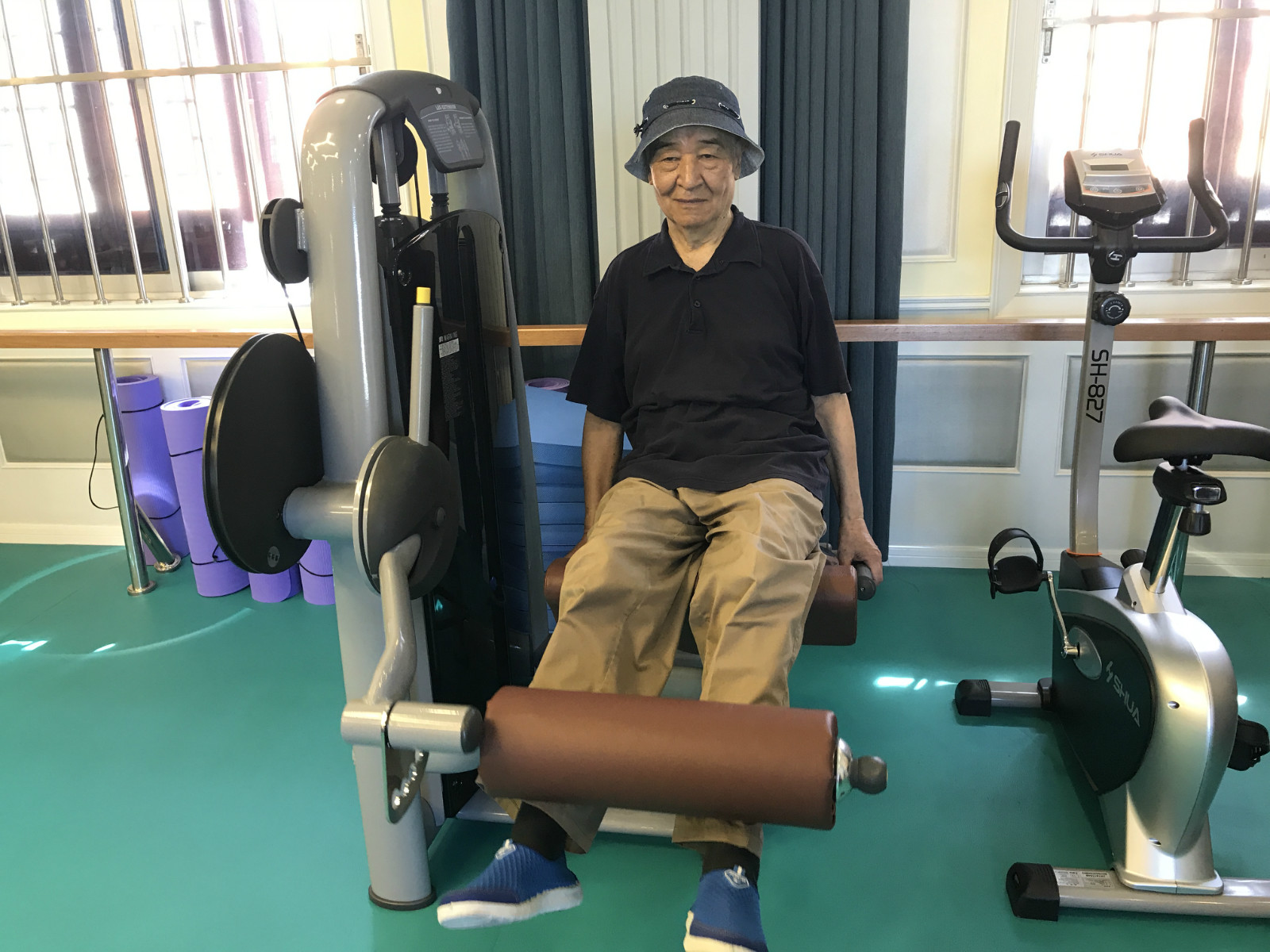
An elderly person is undergoing equipment-based training at the Wangnian Yuedong Rehabilitation Center.
Three-Step Strategy for Geriatric Sports Rehabilitation: Establishing Offline Courses, Rehabilitation Clinics, and Talent Development Systems
Wangnian Yuedong's business model consists of three segments.
First, there are daytime rehabilitation training centers. The operational models for these centers include company-operated sites and partnered sites. Under the company-operated model, the focus is on establishing a presence within communities and creating rehabilitation scenarios by leasing venues independently to offer courses, thereby serving the surrounding population. The partnered model involves collaborating with selected elderly care and rehabilitation institutions, or partnering with consumer-facing entities such as universities and state-owned enterprises, to integrate courses into their facilities.
Core curriculum offerings include: Foundational Vitality Courses; Vitality Enhancement Courses—Fall Prevention Training, Hip and Knee Reconstruction Program, Lower Back Strengthening Exercises; and Functional Independence Courses—Anti-Parkinson’s Training, Hemiplegia Rehabilitation Training, Cognitive Stimulation Training.
Each daytime rehabilitation training site is staffed with one exercise instructor and one rehabilitation therapist. Strict risk control measures are implemented: prior to enrollment, participants are screened using criteria for assessing disability status in the elderly; those who do not meet the required physical fitness standards are excluded from the program. During sessions, participants wear electronic wristbands to monitor blood pressure and heart rate in real time, with immediate intervention if abnormalities are detected. Follow-up assessments are conducted six months after course completion to evaluate outcomes.
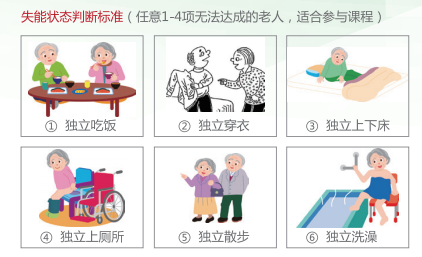
Disability Assessment Criteria Prior to Course Participation
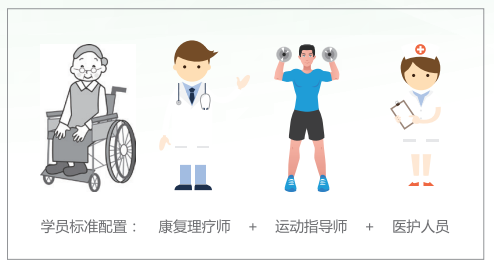
Participation in Curriculum Standards Staffing
Second, rehabilitation clinics. Clinics specializing in neuromuscular disorders are established around training centers and communities to provide rehabilitative physiotherapy for various neuromuscular conditions affecting individuals from adolescents to the elderly, based on Shi’s Orthopedic Theory.
Third, it serves as a training base for rehabilitation professionals. It primarily cultivates and supplies specialized talent in geriatric sports rehabilitation and elderly care rehabilitation. By collaborating with vocational training institutions specializing in elderly care rehabilitation, the base develops standardized curricula and assessment criteria. It provides training and conducts evaluations for individuals with foundational skills in the community, issuing certification for professional practice upon successful completion. Furthermore, it facilitates the placement of qualified personnel into elderly care institutions, caregiving centers, and rehabilitation training facilities based on their needs.
In addition, Wangnian Yuedong is collaborating with Shanghai University of Traditional Chinese Medicine on a research project, aiming to evaluate the efficacy of exercise rehabilitation in restoring physical function among the elderly through data collection during their rehabilitation period.
A Replicable Asset-Light Model for Low-Cost Rollout of Rehabilitation Pilot Programs
According to the financial model presented by Xiao Xiang, the primary operational costs stem from venue rentals. For instance, a rehabilitation center in Shanghai requires approximately 100 square meters of space, along with the recruitment of rehabilitation therapists and medical staff, as well as facility setup. He informed reporters that the pricing model is still under exploration. “The basic courses are currently being piloted at a rate of 50 yuan per session, resulting in an average monthly expenditure of around 400 yuan.”
Wangnian Yuedong is currently in its pilot phase. It segments users into low, medium, and high tiers to distinguish among older adults with normal mobility, those with mild disabilities, and those with moderate disabilities, providing targeted training. The introductory courses focus on basic exercises, while the intermediate and advanced courses are more medically oriented.
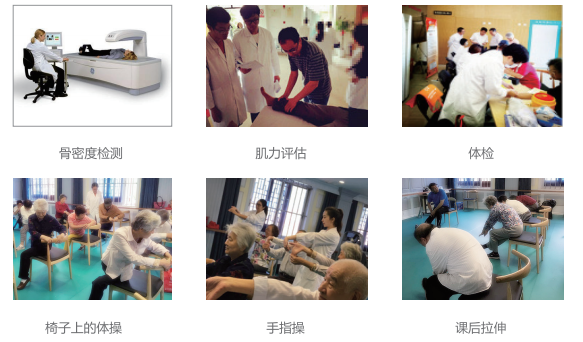
Selected Rehabilitation Courses from Wangnian Yuedong
Regarding the curriculum system, Xiao Xiang has absolute confidence. According to him, this is the first comprehensive geriatric exercise rehabilitation program in China. Leveraging the medical backgrounds of its two founders, the curriculum possesses strong medical rigor and is primarily based on "Shi's Traumatology" to deliver scientifically grounded exercise rehabilitation for the elderly.
“In Wangnian Yuedong’s asset-light operational model, venue rent constitutes the largest expense; therefore, embedding services within communities has emerged as the ideal operational approach,” Xiao Xiang told reporters. He added that once a certain scale of rehabilitation training centers is established, corresponding rehabilitation clinics will be introduced to support them, thereby realizing the concept of one-stop rehabilitation services.
He candidly stated that the biggest challenge currently faced is that elderly individuals are required to pay out-of-pocket due to the inadequacies of China’s long-term care insurance system. According to statistics from pilot programs, approximately one-third of the elderly participants receiving training demonstrate a willingness to pay.
In terms of customer acquisition, in addition to traditional offline promotion, Wangnian Yuedong adopts a community collaboration model. By offering free trials, it seeks endorsement from community opinion leaders and building managers, thereby acquiring customers through word-of-mouth marketing. Furthermore, the company partners with B-side clients such as large banks and insurance companies to launch customized courses, with prospective clients including China Merchants Bank.
Five-Year Plan: Establish 400 rehabilitation training centers for the elderly, covering a population of 1 million seniors
In Xiao Xiang’s five-year plan, the following targets are set: establish 400 elderly sports rehabilitation training centers across China; train 1,000 exercise instructors and rehabilitation therapists; achieve a cumulative total of 1 million elderly participants in exercise programs over five years; and open 10 affiliated community rehabilitation clinics. In the field of elderly sports rehabilitation, he aims to comprehensively expand the network of training centers.
Wangnian Yuedong has currently established five training and rehabilitation centers. Regarding its expansion plans, Xiao Xiang stated, “What we are confident in at present is the course curriculum itself. Expansion requires integrating the courses with resource channels, and we will only begin to scale up after achieving profitability.” In his vision, Wangnian Yuedong aims to secure additional financing by 2018 to expand its operations.
“Will you continue to be the one who buries their head in the mud, muddling through life? Or will you break free from your cage and roar at the sky? It is time to make a choice.” Such poignant words abound in Xiao Xiang’s WeChat Moments. Rather than merely giving a man a fish, he teaches him how to fish. Perhaps, in front of this artistic and passionate founder, what he has built is not just a company, but a mission dedicated to helping seniors live with greater ease and dignity.