

MeinGenome Files IPO Prospectus: Focusing on User Needs to Deliver 'Small but Beautiful' Consumer Genomics Products
In August 2017, genetic testing service provider Meiin Tiandong announced that it had secured tens of millions of RMB in Pre-A round financing, with investors including Legend Star, Galaxy Capital, and others.
Meiin focuses on the field of mass-market health consumer testing, currently providing comprehensive solutions primarily in the areas of sports, obesity, genetic diseases, and cancer screening.
A Serial Entrepreneur in Constant Exploration
Wu Shaohong, the founder of Meiin Dynamics, is a serial entrepreneur. In 2012, Wu joined BGI Group, a leading enterprise in China, where he served as the Head of the Denmark/Sweden Market at the BGI Research Institute.
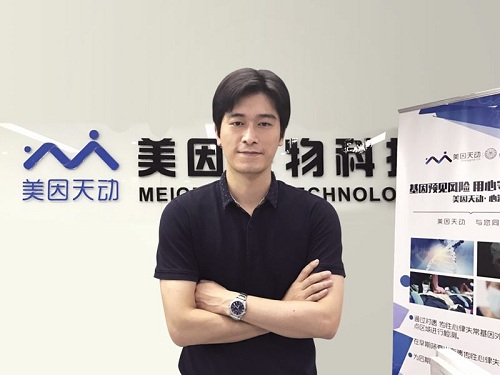
Wu Shaohong, Founder and CEO of Meiin Biotech
During his university years, Wu Shaohong began to consider entrepreneurship. With a background in biology and extensive contacts within the industry, he naturally chose to venture into the field of biotechnology.
He co-founded his first company with a senior alumnus from the same university. Unlike Xiamen Meiin Biotechnology, this venture did not provide consumer-grade testing services; instead, it specialized in offering customized fluorescent quantitative PCR kits for companies and research projects with specific needs. Through this process, Wu Shaohong recognized the value of genetic testing technology and its potential to address many clinical challenges in the future. This entrepreneurial experience allowed him to see the market prospects in this field and further sparked his interest in it.
However, the company provides customized services, with each project requiring a minimum cycle of six months. During this period, the company must commit substantial R&D resources. Yet, the technological advantages gained from one project are not sustainable, as the scope of the next project differs entirely. Therefore, every new project presents a fresh technical challenge.
“The number of projects the team can handle is limited,” said Wu Shaohong. He decided to focus on the consumer-oriented market, refining his technology into a premium product to serve more people.
Subsequently, the company began to transition from a behind-the-scenes service provider to the consumer market. The company adopts a fluorescence variable PCR platform and has launched a series of compact yet high-quality products. Compared with high-throughput sequencing, fluorescence variable PCR offers faster sequencing speed and lower costs.
However, Wu Shaohong believes that, from an industry perspective, the genomics sector requires more data to support its development. Therefore, this industry still relies on the data support provided by high-throughput sequencing.
In 2015, Wu Shaohong reunited with his former colleagues from BGI Research to co-found Meiin Tiandong, aiming to build a high-throughput sequencing platform that would not only meet the demands of the current consumer market but also provide data support for the future development of the industry.
Model Exploration: Starting with “Genes + Services”
The company was established in April 2015, and throughout that year, Wu Shaohong was engaged in exploring its business model.
The first model that came to his mind was a gene-focused APP Store similar to Helix. However, after putting it into practice, Wu Shaohong’s biggest takeaway was: “This is a huge pitfall!”
At the time, the company had just been established, and there was a complete lack of internet-savvy talent within the team. Wu Shaohong revealed to VCBeat that he was utterly unable to manage the product’s development progress: “I couldn’t understand it at all, let alone control the product’s timeline.” Furthermore, given the immaturity of the market at that time, the APP Store model was ultimately rejected.
“Let professionals handle professional matters. If I were to adopt this model in the future, I would certainly appoint dedicated specialists to oversee it,” said Wu Shaohong.
After much deliberation, he ultimately decided to start with “Genetics + Services.”
The consumer market is a vast one, yet it remains highly controversial. Many products on the market merely provide users with a thick stack of reports, but few can offer clear answers as to what users can actually do with these reports and how they might benefit their future lives.
Wu Shaohong has chosen to collaborate with downstream application providers, such as fitness and beauty institutions, to help users leverage their genetic data through partnerships with these downstream enterprises.
In theory, this model appears flawless. However, the downstream application end-users are not researchers in the life sciences; inevitably viewing matters from their own perspective, they seek to leverage the novelty of genetic testing to attract more members and secure greater business volume. In more egregious cases, some even use genetic test results to intimidate customers into purchasing their products.
To avoid such issues, Meiin has divided its products into two lines: medical products and consumer products. Medical products are offered in direct collaboration with hospitals, while products partnered with gyms and beauty salons completely exclude health-related testing.
Wu Shaohong stated, “For consumer-oriented products, the purpose of our testing is to advise them on how to improve.”
Create "Small and Beautiful" Products
Several consumer genomics companies emerged in 2008, some of which achieved high sales volumes by hyping concepts. As sequencing costs subsequently declined, the prices of genetic testing products also decreased.
There are also some products on the market that are affordable and provide a wealth of information. But do users really need all this data? Not necessarily. “Users may only need information on one or two specific aspects of a product, but because the testing scope is too broad, the amount of information provided for those one or two points ends up being very limited,” Wu Shaohong told VCBeat.
Take obesity-related genetic testing as an example. Do users truly seek only to determine their predisposition to weight gain? Users are results-oriented; what many actually wish to understand is how to maintain their physique and achieve healthy, effective weight loss, particularly among individuals with obesity.
Wu Shaohong emphasized that Meiin’s positioning is to deliver products of genuine value to users. Therefore, the development process for each of the company’s products involves extensive research, validation, and comprehensive literature reviews to clarify the associations of each gene.
“Our philosophy is to refine our products based on user needs,” stated Wu Shaohong. “By leveraging genetic testing to identify the root causes of obesity and determine personalized weight-loss strategies, we can deliver what users truly need.” Achieving this requires extensive data and rigorous experimentation.
Avoid Overhyping Products: Rational Marketing Is the Path to Long-Term Success
When asked about his marketing strategy, Wu Shaohong replied with two words: “Rationality.”
He told VCBeat that the company would clearly inform users about which product they are using, what services they will receive, and what impacts to expect. “We provide all this information to users in a transparent manner, without exaggerating our products,” Wu Shaohong told VCBeat. “Only when the service meets their needs will users be satisfied with the product and willing to spread the word.”
He also stated that Xiamen Meiin Biotechnology Co., Ltd. would not establish an extensive sales network through agency channels, but rather collaborate with leading institutions by starting from the service end and refining its products through partners to achieve excellence.
“We aim to achieve excellence in our niche sector, so that we will have a competitive edge in future competition,” emphasized Wu Shaohong.
Sports-related products currently constitute the company’s core business. However, Wu Shaohong revealed that he does not intend for the company to serve the market solely through the B2B channel. “We aim to leverage our collaborations with B2B partners to establish a service interface, gradually expanding from the B2B sector into the B2C market,” he stated. “But first, we need to build a strong team and streamline our service processes.”
The company has already established partnerships with more than ten national chain beauty brands, and its application for qualification as a third-party medical laboratory is currently underway. Wu Shaohong further revealed that the company plans to obtain the third-party medical laboratory qualification within six months, thereby formally entering the healthcare services market.
According to VCBeat, the company has raised a total of over RMB 18 million in funding to date. Following the completion of this round, the company will increase its investment in technology to continuously drive product upgrades and iterations as well as new product development, while also actively expanding its market presence and channel network.