

Eleven Key Trajectories of China's Health Industry Over the Past Decade: A Comprehensive Blueprint for Strategic Growth
The health industry is currently a major hotspot, with the prospect of an RMB 8 trillion market attracting numerous capital investors and enterprises. At the recent 2017 Xipu Decade Summit, Sinohealth Information, as the leader in data management and commercial applications across the entire health industry, released the "Eleven Development Trajectories of China's Health Industry." This systematic review of the industry, using ten-year intervals as milestones, facilitates rational reflection on industrial development for all those interested in or engaged in the health sector.
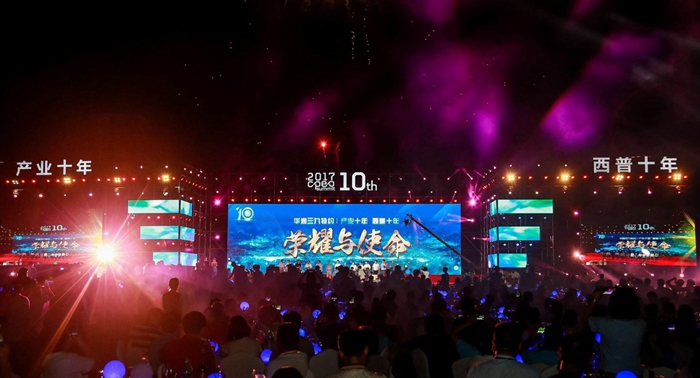
Zhongkang Information Releases 11 Major Trends in the Health Industry Development at the “Glory and Mission” Gala Dinner of the Xipu Conference
I. The New Healthcare Reform Comprehensively Rewrites Market Rules
The new healthcare reform, initially conceived in 2007, has gradually become systematized after a decade of exploration and practice, entering a critical phase with its comprehensive impact on the industry becoming increasingly prominent. The first phase of the new healthcare reform focused on increasing investment and strengthening primary care, gradually developing in depth. The current phase emphasizes supply-side reform, cost control, and efficiency improvement. With the rapid implementation of policies such as the two-invoice system, consistency evaluation, zero markup on drugs, and medical insurance cost containment, the “three-medical linkage” (medical care, health insurance, and pharmaceuticals), which is being advanced in a multi-dimensional, systematic, and all-encompassing manner, is comprehensively reshaping the landscape of the health industry.
II. Cross-Industry Disruption Upends Traditional Competitive Models
Driven by the combined impact of policy, technology, and capital, profound changes in the commercial rules and ecosystem of the health industry have brought unprecedented opportunities as well as new participants. Leveraging their established technological strengths and consumer-facing entry points, these new entrants have accelerated the dismantling of old models and the establishment of new ones. Traditional peer-to-peer competition is giving way to multi-sided, ecosystem-based competition, further driving cost reduction and efficiency gains across the sector and fostering more diverse development models for the industry.
III. The Rise of Retail Ushers in a New Era
Since 2008, the market size of China’s pharmaceutical retail sector has grown from RMB 143 billion to RMB 337.7 billion, while the chain affiliation rate of retail pharmacies has increased from 35.4% to 49.4%. The sector has made significant contributions to breaking drug price monopolies and enhancing the accessibility and convenience of medications. Today, the retail industry has entered a stage of development characterized by scale, branding, and capitalization. In the future, as the business model evolves from merely serving as a distribution channel to focusing on service delivery and value creation, the pharmaceutical retail industry will become a pillar of China’s healthcare system, playing an increasingly important role in meeting consumers’ diverse health needs and reducing total societal healthcare costs.
IV. End of Unregulated Growth, Shift in Development Path
As macroeconomic tailwinds such as rapid economic growth and the expansion of medical insurance coverage gradually fade, a wave of new healthcare reform policies—including comprehensive zero-markup pricing for drugs, reduced drug revenue ratios, and generic drug consistency evaluations—has been intensively introduced. Risks associated with non-compliant operations and low-end redundant construction are mounting, signaling the end of the era of unchecked expansion and marking the entry of China’s health industry into a “new normal” of growth. In the future, the health industry will usher in a new chapter of competition through a survival-of-the-fittest consolidation process, driven by new development pathways characterized by institutionalized management, standardized operations, scientific production, and specialized services.
V. “Internet+” Reconstructs All Connections
The internet, cloud computing, and big data technologies are increasingly permeating the entire pharmaceutical value chain, encompassing drug research and development, manufacturing, distribution, and usage. Rapid growth in mobile payments, internet hospitals, and pharmaceutical e-commerce has swiftly disrupted the traditional vertical linear structure, giving rise to a networked ecosystem centered on consumers, characterized by direct and diversified interactions between consumers and all segments of the industry chain.
The unique logic of the health industry has made “Internet Plus” versus “Plus Internet” a focal point of debate within the sector, with exploration still ongoing.
VI. Strengthening Medication Safety Has Become a Social Consensus
Medication safety is vital to the health and lives of the public and serves as a cornerstone of the “Healthy China” initiative. The Chinese government has consistently prioritized medication safety, aiming for “zero loopholes, zero barriers, and zero tolerance.” Regulatory authorities at both national and local levels have implemented multiple measures to continuously strengthen the medication safety monitoring system.In recent years, the primary stakeholders concerned with medication safety have expanded from regulatory authorities to encompass the entire industry chain and all sectors of society. The active role of media and public opinion has led to the exposure and accountability of major medication safety incidents, prompting profound reflection and significantly raising societal awareness of medication safety.
VII. Changes in Population Structure and Disease Spectrum Drive Shifts in Demand
Driven by demographic shifts—including the accelerating pace of population aging, the new demographic dividend unleashed by the comprehensive relaxation of the two-child policy, and changes in the urban-rural population ratio resulting from new-type urbanization—the health industry is experiencing a consumption upgrade trend characterized by diversification, personalization, and specialization.
Furthermore, factors such as environmental pollution and unhealthy lifestyles have led to a high incidence and younger onset of chronic diseases, represented by cardiovascular and cerebrovascular diseases and malignant tumors, exerting significant influence on drug utilization patterns, directions for new drug research and development, and chronic disease management services.
VIII. Innovation Leads Future Competition
As competition in the pharmaceutical market intensifies and industrial upgrading is driven by the comprehensive deepening of the new healthcare reforms, innovation capability has gradually become the foundation of corporate development. Its significant role in enhancing core competitiveness has prompted relevant stakeholders to increase their investment in innovation, striving to secure a commanding position in future competition.
Driven by national policy support and the continuous influx of innovative capital, achievements in product innovation, technological innovation, and business model innovation continue to emerge.Amid the ongoing advancement of mass entrepreneurship and innovation, as well as supply-side structural reform, China’s health industry is turning a new page by moving beyond the low-level, repetitive competition of the past.
IX. Expansion of Industry Margins and Surge in Market Space
With economic development and rising health awareness, public health demands have undergone a significant shift: from treatment to prevention, from products to services, and from physical well-being to holistic mind-body health. The pursuit of a high-quality healthy lifestyle has become the societal mainstream. Traditional “medical care” and “pharmaceuticals” alone can no longer meet consumers’ rapidly growing health needs, making the “health industry” a more precise term for this sector’s future orientation. Industrial boundaries are continuously expanding, and the service chain is extending in an increasingly multi-dimensional manner. As emerging business models—such as health check-ups, wellness and healthcare, leisure fitness, home-based elderly care, and genetic testing—continue to emerge, the industry’s diversified development trend is becoming increasingly evident. With its scale steadily growing, the sector demonstrates the vibrant vitality characteristic of a sunrise industry.
X. The Awakening of Consumer Power as a Driving Force for Changing Business Models
Rising per capita disposable income, heightened health awareness, and the continuous increase in per capita healthcare expenditure have fueled an unstoppable trend toward youthful, optimized, and high-quality health consumption. This shift is particularly driven by the post-80s and post-90s generations—who are becoming the mainstream consumer base with higher education levels and distinct personalized needs.
The widespread adoption of mobile internet and the advent of the omni-media era have empowered an increasing number of ordinary citizens to independently engage in information sharing and public expression as individuals, with the opportunity to become focal points of public opinion. The “Era of Consumer Voice” has arrived with great momentum.
XI. Capital Reshapes Industrial Structure
As industrial capital becomes more active and a significant influx of external capital pours into the health industry, the power of capital has been greatly strengthened, becoming one of the dominant forces driving industry development.
Active capital has increased the concentration of the pharmaceutical manufacturing and commercial sectors through diverse capital operations, including investments and mergers and acquisitions, asset restructuring, and equity issuance. This has fostered the rise of emerging fields such as innovative drug R&D, high-end medical devices, and internet healthcare, driven industrial segmentation, and thereby significantly improved resource allocation efficiency while upgrading and optimizing the industrial structure.