

Technology vs. Service: How Domestic High-Throughput Sequencing Companies Fired the First Shot in Their Comeback Battle
BGI
Scientific and Technological Service Provider and Precision Medical Service Operator
In August 2017, MGI Tech entered into collaborations with iGeneTech and LC-Bio, marking the first such partnership among upstream manufacturers of instruments, reagents, and consumables in China’s next-generation sequencing (NGS) industry.
Throughout the NGS industry chain, the upstream sequencer market is indisputably the core. BGI is the leader in the field of high-throughput sequencing, while MGI Tech has taken over its sequencer R&D and manufacturing. The cooperation in the upstream instrument and reagent/consumables market also signifies the initial formation of an independent innovation ecosystem within the industry. Equipment as the "Belt" and supporting reagents have opened up the "Road" for independent innovation in China's NGS sector. As Hang Xingyi, Founder and CEO of iGeneTech, stated: "This marks the launch of the 'Belt and Road' initiative for Made-in-China in the NGS industry."
Seven or eight years ago, Chinese-made smartphones seemed synonymous with knockoffs, and the vast majority of consumers revered foreign brands such as Apple and Samsung. However, with the rise of domestic brands like Huawei, Xiaomi, OPPO, and Vivo, Chinese smartphone brands have gradually gained a voice in both the domestic and international mobile phone markets.
Similar to the mobile phone market, after more than a decade of development in China, the NGS industry is seeing Chinese brands begin to foster a movement of independent innovation.
Historical Landscape
In 2007, the first second-generation sequencer entered China, marking the beginning of China's NGS industry.
Due to the high barriers to entry in the market for high-throughput sequencing instruments and reagents, the presence of already well-established foreign companies, and the immediate cash flow generated by China’s vast market, early domestic practitioners did not focus on upstream products. Instead, most practitioners conducted cutting-edge scientific research or application development based on foreign instruments, reagents, and even technologies.
Such historical reasons have led to a long-term foreign monopoly over the instrument and reagent markets within the industry. Imported equipment, reagents, and consumables from companies such as Illumina, Life Technologies, Roche, and Affymetrix occupy the vast majority of the market share.
However, as the market matures and applications proliferate, there is a growing demand to replace long-standing high-priced imported products. With market demand, talent development, and technological reserves becoming increasingly robust, the industry will inevitably embark on a path of independent innovation once it reaches a certain stage of development.
Innovators in the NGS Era
In March 2013, BGI announced the completion of its full acquisition of Complete Genomics, a U.S. company listed on the NASDAQ, for $117.6 million. This marked the first time a Chinese next-generation sequencing (NGS) enterprise had acquired an upstream foreign company, enabling BGI to fill its gap in the instrument market.
BGI’s acquisition of Complete Genomics (CG) was largely a move of last resort. After acquiring the UK-based genetic variation sequencing service provider Blue Genome, upstream giant Illumina entered the midstream sequencing market. The company subsequently acquired its competitor Verinata Health and Myraqa, an in vitro diagnostics (IVD) consulting firm.
Illumina’s entry into the clinical market shattered the previous non-competitive landscape with its customers. As the world’s largest sequencing center at the time, BGI inevitably faced pressure from upstream market players.
The primary objective of acquiring CG was to secure its core technologies and patents. BGI invested billions in R&D costs in this area, launching its proprietary sequencers, the BGISEQ-1000, BGISEQ-500, and BGISEQ-50, between 2014 and 2016. Among these, the BGISEQ-1000 and BGISEQ-500 have received approval from the China Food and Drug Administration (CFDA).
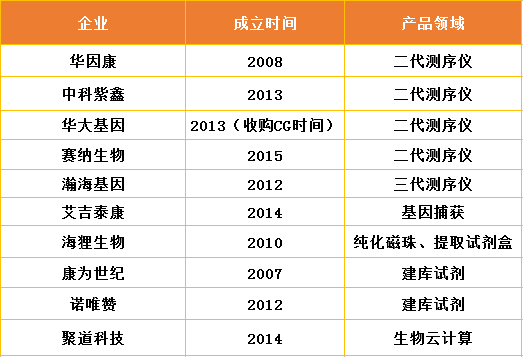
Of course, BGI was not the first Chinese enterprise to position itself in the upstream instrumentation market. In 2008, Sheng Sitong resigned from his position at the University of Virginia and returned to Shenzhen to found HybriBio Genomics Technology Co., Ltd. HybriBio is a high-tech enterprise engaged in the production and sales of high-throughput gene sequencing instruments, as well as biological reagents and analytical software.
Huayinkang launched the new-generation high-throughput gene sequencing system, SeqExpert-IIIA, in 2012, which is currently known as the earliest domestically produced sequencing equipment to be released.
Subsequently, the company launched its flagship Pstar-II series sequencing systems, which are designed for clinical sequencing. This product received Class III medical device registration certification from the CFDA in December 2014.
Additionally, in 2013, Zixin Pharmaceutical and the Beijing Genomics Institute of the Chinese Academy of Sciences jointly established Zhongke Zixin, with the aim of collaboratively developing China’s domestically manufactured second-generation high-throughput sequencing system. In 2015, Zhongke Zixin announced the completion of the development of its second-generation sequencing system, the BIGIS-I system.
For BGI, independent innovation in the upstream market is driven by market incentives and is also a move of last resort.
Jiang Hui, Vice President of MGI Tech, stated in an interview with VCBeat: “In 2012, BGI’s medical testing services took shape, and we were well aware that corresponding regulatory standards would inevitably be introduced in the future.” She revealed to VCBeat that at the time, the company had hoped to make breakthroughs in the upstream market; however, due to insufficient bargaining power, BGI had no choice but to pursue development independently.
Subsequently, the China Food and Drug Administration (CFDA) issued regulations on non-invasive prenatal testing (NIPT), leading to the successive launch of several sequencers, whether through independent innovation or collaborative applications. It must be acknowledged that the regulations imposed by the National Health and Family Planning Commission and the CFDA have, to some extent, stimulated growth in the upstream market.
Having discussed the instrument market, let us now turn to reagents and consumables. From a technical workflow perspective, sequencing services are highly likely to utilize gene capture and library preparation reagents. Currently, the mainstream genomic DNA capture technologies are liquid-phase hybridization capture and multiplex PCR-based targeted amplification.
Previously, these capture kit products were also almost entirely monopolized by foreign companies, including Illumina, Life Technologies, Agilent Technologies, and IDT.
In 2014, Dr. Hang Xingyi and his partners founded a research-and-development-focused biotechnology company in Beijing—iGeneTechTM). This startup, based in Zhongguancun, Beijing, initially set its sights on developing China-made gene capture technology.
“Around 2014, the technology service businesses of companies like BGI and Novogene had already achieved scale, making it difficult to surpass them,” Hang Xingyi revealed to VCBeat. “At that time, we had accumulated substantial technical expertise in gene capture. After reviewing the entire industry chain, we decided to strategically enter this niche segment of gene capture, aiming to achieve domestic manufacturing in the library preparation and capture stages.”
In 2015, with the official launch of TargetSeq, a liquid-phase chip capture kit independently designed and developed by iGeneTechTMand MultipSeq multiplex PCR targeted amplification kitTM, gene capture products made in China have begun to gain momentum in the market. Through an integrated online and offline marketing strategy, iGeneTech has provided design, development, and testing services for genetic testing products to hundreds of clients. Additionally, the company’s extended core technologies encompass fields such as synthetic biology and genome editing.
In addition to the monopoly in the upstream market, downstream data exports were previously dominated by overseas cloud platforms such as Amazon and Google. With the entry of Huawei Cloud and Alibaba Cloud’s PaaS platforms, the downstream bioinformatics cloud market has also seen the emergence of bioinformatics cloud service providers like Judo Technology.
Talent and Market: Challenges Faced by Independently Innovative Enterprises
When asked about the greatest challenge in the innovation process, Jiang Hui and Hang Xingyi gave surprisingly consistent answers.
1. Talent
Innovation, at its core, requires technology, and technology stems from talent. Therefore, in the process of going from 0 to 1, the primary challenge faced is the shortage of talent.
“Technical challenges can all be resolved with time; the most difficult part is building the team,” said Jiang Hui.
Previously, domestic products in this field relied mainly on imports, with most players acting as users rather than developers. Consequently, it was indeed difficult for China to cultivate such technical talent in the early stages.
After acquiring CG, BGI fully retained its R&D team. Meanwhile, the company encouraged sequencing technicians to engage in upstream R&D and recruited substantial talent from other industries. Through close interaction between China and the United States, it gradually built up the team.
“The early stages were quite challenging, given the lack of personnel. However, as the team begins to take shape, things will become increasingly smooth,” said Jiang Hui.
2. Market
After entering the market, the product faces two challenges: first, market skepticism. Given that no domestic entity has previously developed such a product, concerns about its maturity are inevitable.
When BGI’s sequencers were first launched, it was inevitable that questions would arise: Roche 454 and Helicos, once highly popular products, have both been discontinued; can a product developed by a company with no prior experience in manufacturing sequencers truly be accurate?
In the face of skepticism, the first step is to present data that serves as evidence, letting the data speak for itself. After launching its sequencers, BGI published a series of papers. With authentic data in hand, the market gradually came to believe that domestically produced instruments could meet international standards, and stakeholders increasingly gained confidence in the quality of the data generated.
Second, competition with foreign products: having accumulated years of market presence and established brand recognition, foreign products hold advantages in both product quality and sales. Given this backdrop, how can we capture market share?
When iGeneTech’s products first entered the market, they faced a similar situation. The industry had become accustomed to using foreign-made products; much like how long-standing dietary habits are formed over time, users had already grown familiar with established brands and their operational workflows.
The rigid business models, conventional response speeds, and limited market service resources of foreign companies present opportunities for domestic enterprises to catch up and surpass them. iGeneTech advocates a philosophy of lean precision and prioritizes quality, while its advantages in flexible services and reasonable pricing are increasingly evident. The path of Chinese manufacturing is becoming ever broader. Currently, in addition to the Chinese market, iGeneTech has expanded globally and gained acceptance in the international market.
“People are becoming increasingly accepting of domestically developed innovative products. For enterprises, having a domestic alternative supplier that offers both high efficiency and cost-effectiveness is something they are very willing to embrace,” said Hang Xingyi.
Breaking the Impasse: Technology as the Foundation, Service as the Advantage
Independent innovation is not confined to a single industry; sectors such as mobile phones and online gaming have already achieved remarkable turnarounds. The core of independent innovation lies in technical specifications. If domestic products can match the performance of foreign counterparts, they will hold a distinct advantage in the Chinese market under comparable conditions.
Compared with foreign products, domestically produced products offer a better user experience and hold a clear advantage in this regard. Reagents and consumables are often customized, and domestic manufacturers provide faster delivery. In the instrument market, foreign companies primarily deploy limited sales personnel in China. Consequently, when equipment issues arise, they cannot dispatch professional technicians for repair and maintenance as quickly as domestic enterprises can.
In contrast, the service resources supporting domestically produced products are far more abundant than those for foreign products.
Another significant advantage lies in pricing. Foreign products have long monopolized the market, and under such circumstances, they are bound to reap
to secure substantial profits. Furthermore, even if these companies were to maintain profit margins equivalent to those of domestic enterprises (assuming they are willing to do so), the final product price would still remain higher than that of domestically produced alternatives, after accounting for costs incurred in transportation, taxation, and distributor channels.
“Ensuring that product quality matches or even surpasses that of foreign counterparts is fundamental,” emphasized Hang Xingyi.
For domestic companies, the most challenging phase is early-stage R&D. If a company holds itself to international standards during the development process, ensuring that product quality and user experience meet requirements, the path ahead will become progressively easier.
Innovation Ecosystem: Talent, Technology, and Policy
An innovative environment encompasses talent development, technological reserves, and the policy landscape.
“The product has been launched, indicating that the technology is in place; the subsequent development path will inevitably involve import substitution,” Hang Xingyi told VCBeat.
The alignment of talent with technical capabilities, coupled with the influx of numerous domestic experts and overseas returnees into the market in recent years, has narrowed the technological gap between China’s NGS industry and its international counterparts.
Not to mention the favorable policy environment, which applies not only to NGS but to the entire field of technological innovation. Unlike the fragmented regulatory landscape in Europe, China’s environment for independent innovation has become unprecedentedly favorable, driven by the rollout of a series of initiatives such as the Belt and Road Initiative and Made in China 2025.
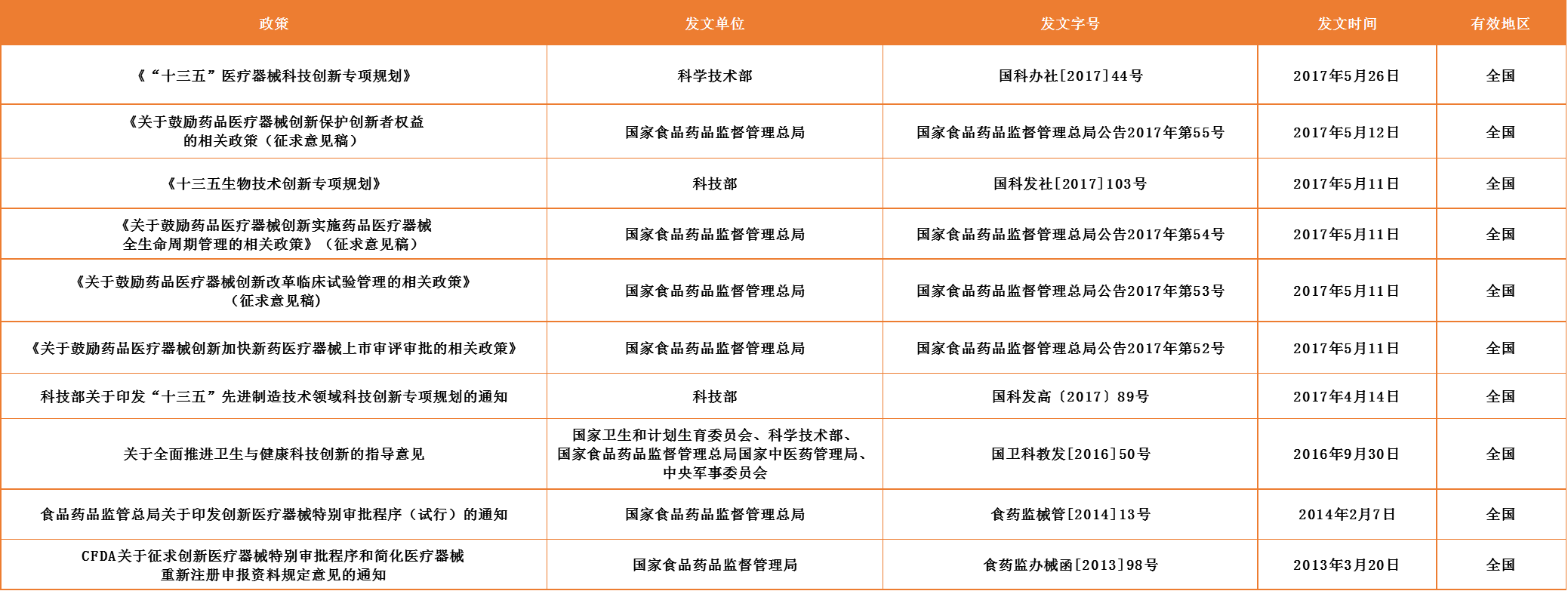
The fulfillment of all three conditions lays the foundational basis for the next stage of industry development.
For enterprises pursuing independent innovation, business model innovation and marketing are not the primary challenges, as the customer base is already present. The most critical aspect of independent innovation lies in originality. Over the past few years, the number of companies in the next-generation sequencing (NGS) industry has grown rapidly, yet there is a certain degree of homogeneity among them. However, companies lacking core technologies will ultimately struggle to survive in the industry over the long term.
Technological innovation is the first step, while the second step involves building a comprehensive system. Jiang Hui told VCBeat that products ranging from sample capture and library preparation to sequencers, and further to downstream sequencing and data analysis clouds, are not standalone entities. Independent innovations in next-generation sequencing (NGS) are all technology platforms, which means that beyond technological breakthroughs, a robust system is required. In addition to technological innovation, there must also be a high-quality production system.
“Such a production system ensures the stability and feasibility of the product,” said Jiang Hui.
On the other hand, compared with other industries, the NGS industry is still very new and in its early stages of development. Regardless of the type of enterprise, upfront R&D investment is inevitably substantial. At this stage, government and capital support remain indispensable for the industry’s protection and growth.
China is a vast market, yet also a discerning one. Across the entire NGS industry, although most companies remain focused on midstream operations, there is a noticeable trend of firms gradually moving upstream, with independently innovative enterprises flourishing. As products from BGI and iGeneTech enter the market, upstream independent innovation has begun to take shape. The midstream sector needs little elaboration. In the downstream segment, cloud computing service providers such as Judo Technology are thriving. Moreover, given the optimism of major cloud service providers like Huawei Cloud and Alibaba Cloud toward the gene technology industry, several more such downstream enterprises are likely to emerge.
As previously mentioned, large-scale or high-tech enterprises are striving to establish comprehensive industry-wide layouts. With market expansion and maturation, alongside the gradual accumulation of talent and technological reserves, it is believed that an increasing number of pioneering innovators will emerge in the NGS market. We look forward to a near future where these outstanding enterprises not only foster greater collaboration within the domestic market but also establish a strong presence in overseas markets.