

China's Top 40 Medical Equipment Financial Leasing Companies: A Promising Sector Amid Challenges
As the primary hardware infrastructure for hospital operations, the importance of medical equipment is self-evident. But do hospitals need to purchase all these devices outright, ranging from small IV poles to large-scale CT scanners and MRI machines? No—there is another option: leasing! Medical equipment leasing is not an unusual practice; rather, it is a product of the development of China’s healthcare industry.
The acceleration of population aging and the growing demand for medical services are driving rapid development across the entire healthcare industry. Consequently, competition in the medical market is becoming increasingly intense, prompting major healthcare institutions to continuously upgrade their medical equipment, particularly by introducing advanced large-scale medical devices, to enhance their comprehensive capabilities and diagnostic proficiency.
However, high-end medical equipment requires substantial capital investment. The high procurement costs of such equipment not only increase the financial burden on hospitals but also impose significant healthcare expenses on patients. Therefore, reducing the procurement costs of medical equipment has become an urgent challenge for healthcare institutions.
Generally, healthcare institutions have three channels to secure funding for equipment procurement: internal hospital funds, government allocations, and external financing. The new healthcare reform proposes the comprehensive elimination of markups on drugs and consumables, posing significant profitability challenges for many hospitals. Without profits, it is virtually impossible for hospitals to allocate substantial capital for purchasing medical equipment. Consequently, hospital construction and renovation often rely on government support; however, limited government fiscal capacity makes it difficult to meet the demand for medical equipment across all hospitals.
Finally, with both hospitals and the government unable to provide adequate support, medical equipment financial leasing—a method capable of rapidly supplying funds to healthcare institutions—has gained development opportunities.
What Is Medical Equipment Financial Leasing? What Are the Operational Models?
Financial leasing of medical equipment refers to a arrangement wherein, after a hospital has identified the specific medical equipment and its supplier (manufacturer) and completed the requisite approval procedures for introducing the equipment, a leasing company purchases the selected equipment in accordance with the hospital’s requirements and delivers it to the hospital for use. During the lease term, the hospital makes periodic rental payments to secure the right to use and derive benefits from the equipment. Upon expiration of the lease term, the hospital may acquire ownership of the equipment by paying a nominal residual value.
Financial leasing of medical equipment is primarily concentrated in high-tech imaging and radiotherapy devices, such as MRI, CT, PET, and Gamma Knife systems, as well as certain large-scale pharmaceutical manufacturing equipment. There are four main models for the financial leasing of large-scale medical equipment:
Simple Financial Leasing
Simple Financial LeasingSimple financial leasing, referring to financial leasing in its original sense, involves three parties: medical equipment manufacturers, leasing companies, and healthcare institutions. Throughout the lease term, the healthcare institution is responsible for equipment maintenance and routine upkeep, as well as for any risks associated with the equipment. Upon expiration of the lease term, the healthcare institution acquires ownership of the equipment at a price negotiated in the contract. The advantages of this approach lie in its operational simplicity and ease of management; therefore, most healthcare institutions prefer this method.
Manufacturer Leasing
Vendor leasing refers to a financial leasing method provided by equipment manufacturers themselves to boost product sales. In such a leasing arrangement, the manufacturer acts as both the seller and the lessor (assuming the role of a leasing company). When acquiring equipment, medical institutions need only make regular, timely rental payments to obtain the right to use the equipment. This leasing model is predominantly adopted by manufacturers of high-cost equipment with rapid technological upgrades. It is currently the most common leasing model in the Chinese market.
Sale-Leaseback
Sale-and-leaseback refers to a transaction in which a healthcare institution sells its owned equipment to a leasing company at an agreed price and then leases the same equipment back from the leasing company through installment payments. This is a financing method that combines financial leasing with sales. Through sale-and-leaseback, healthcare institutions can convert their fixed assets into urgently needed working capital, thereby revitalizing their asset base. Meanwhile, leasing companies can secure a relatively stable cash flow stream through this arrangement, and risks can be effectively mitigated when the equipment serves as collateral. This model is widely applied in the financial leasing of medical equipment.
Leveraged Lease
Leverage leasing is typically applicable to large-scale projects, such as infrastructure development and offshore oil drilling platforms. It involves a leasing company acting as the lead or primary lessor, which collaborates with other funders (such as banks or securities investors) to jointly finance a financial leasing project. The primary lessor generally contributes 20%–40% of the capital, while the other funders provide non-recourse loans for the remaining 60%–80%. This leasing model not only offers after-tax benefits but also delivers strong overall returns and secure capital recovery. However, due to the involvement of multiple stakeholder groups, this leasing structure is uncommon in China’s medical equipment financial leasing industry and is rarely seen except in projects requiring substantial capital investment.
Analysis of the Competitive Landscape in the Medical Equipment Financial Leasing Market
In recent years, the level of specialization in China’s financial leasing industry has continued to rise, with gradual expansion into emerging business areas and strengthened deep-dive layouts in niche sectors. As a key niche segment within the financial leasing industry, healthcare is witnessing increasingly robust growth momentum.
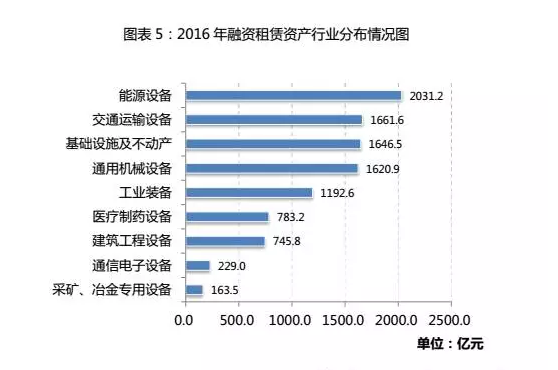
Data Source: Ministry of Commerce
According to the recent release by the Ministry of Commerce"China Financial Leasing Industry Development Report (2016-2017)"Data shows that in 2016, the value of financial leasing assets for medical and pharmaceutical equipment in China reached RMB 78.32 billion. Healthcare leasing has become a new growth driver for the financial leasing industry.
With the development of the medical equipment financial leasing market, corporate competitiveness has continued to strengthen, giving rise to a cohort of leading enterprises with prominent professional advantages, advanced management philosophies, and international competitive edges.VCBeat (WeChat ID: vcbeat)Based on registered capital, we have compiled a list of the top 40 medical equipment financial leasing companies in China (supplements are welcome for any omissions). We hope to gain insights into the current competitive landscape of China’s medical equipment market through an analysis of these companies.
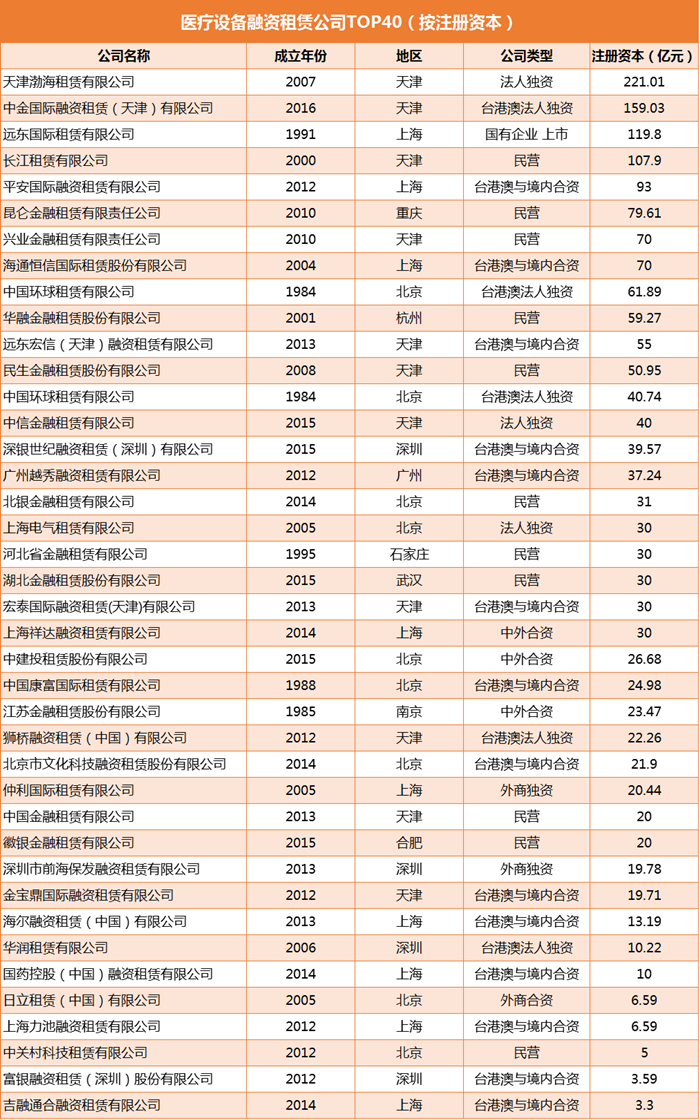
First, in terms of geographic distribution, Tianjin, Beijing, and Shanghai are far ahead of other cities, with Tianjin having 11 companies, while Beijing and Shanghai each have 9. Additionally, Shenzhen has 4 companies, showing a trend of gradually catching up. This distribution is largely consistent with the overall situation in the financial leasing industry.
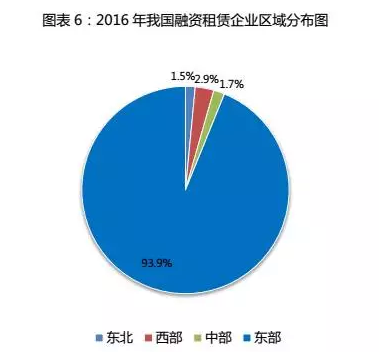
Data Source: Ministry of Commerce
According to data released by the Ministry of Commerce, the financial leasing industry is predominantly concentrated in the eastern and northeastern regions of China in terms of the number of enterprises, registered capital, and total assets. The advantages of Shanghai, Tianjin, and Shenzhen as hubs for the financial leasing industry continue to strengthen, primarily driven by the geographic and policy benefits of their respective Free Trade Zones.
In terms of registration year, leasing companies entering the medical equipment financial leasing business have grown rapidly since 2012. This is mainly due to national policy support for the medical equipment financial leasing industry in recent years.
On September 10, 2015, the General Office of the State Council issued the “Guiding Opinions on Accelerating the Development of the Financial Leasing Industry” (Guo Ban Fa [2015] No. 68), which stated that “in light of the characteristics of financial leasing, facilities shall be provided for financial leasing companies to apply for medical device operation permits or complete record-filing procedures.”
On March 11, 2016, the General Office of the State Council issued the “Guiding Opinions on Promoting the Healthy Development of the Pharmaceutical Industry” (Guo Ban Fa [2016] No. 11), which explicitly stated: “Explore cooperation between medical device manufacturers and financial leasing companies or financing lease companies to provide installment payment services for the procurement of large-scale medical equipment by medical institutions of all ownership types.”
The two opinions issued by the State Council affirm the positive role of financial leasing in the procurement of large-scale medical equipment by medical institutions of all ownership types, support cooperation among medical equipment manufacturers, medical institutions, and leasing companies, and aim to promote the healthy and rapid development of the medical equipment financial leasing industry.
In terms of corporate structure, the majority of enterprises have foreign investment involvement, including wholly Chinese-owned or Sino-foreign joint ventures, joint ventures between Taiwan/Hong Kong/Macau and mainland entities, and wholly foreign-owned enterprises. Only a few financial leasing companies are purely domestically funded. Additionally, an increasing number of commercial banks are entering the financial leasing industry; Industrial Bank, China CITIC Bank, and Minsheng Bank, among others, have successively established financial leasing subsidiaries to engage in the medical equipment financial leasing business.
Analysis of the Business Models of Three Typical Enterprises
The Chinese financial leasing industry has developed to a stage where a number of highly competitive and representative leading enterprises have emerged, such as Far East Horizon and Bohai Financial Holdings. In July 2016, both Far East Horizon and Bohai Financial Holdings were selected for the first time into the 2016 edition of Fortune (Chinese Edition)."China Top 500 Enterprises"the list, becoming the first financial leasing company to be included.
Far East Horizon’s subsidiary, Far East International Leasing Co., Ltd., has a registered capital of approximately USD 1.82 billion and demonstrates prominent strengths in multiple foundational sectors, including healthcare, printing, shipping, construction, industrial equipment, education, and information networks. As of the end of 2016, Far East Horizon’s total assets exceeded RMB 166 billion, with operating revenue reaching approximately RMB 13.9 billion in 2016, representing a year-on-year increase of about 18%.
Far East Horizon is one of the largest third-party financial leasing companies in China and a leader in financial leasing within the healthcare, education, and printing subsectors, which are characterized by relatively lower risk. Its business model can be simply described as follows: leveraging an integrated “finance + industry” approach, it purchases equipment on behalf of lessees and then leases it to them, collecting regular payments comprising principal and rent (equivalent to interest), along with additional consulting service fees.
Bohai Leasing, as the only leasing company listed on China’s A-share market with both domestic and international platforms, has established branches or sales channels in more than 80 countries and regions across six continents, forming a globalized leasing industry layout with parallel domestic and overseas operations. In recent years, through cross-border mergers and acquisitions, it has become the world’s third-largest aircraft leasing company and the second-largest container leasing company globally. As of the end of 2016, Bohai Leasing’s total assets amounted to RMB 216.63 billion, representing a year-on-year increase of 64.2%; it achieved operating revenue of RMB 24.26 billion, up 146.9% year on year; and recorded an operating profit of RMB 3 billion, a 57.9% year-on-year increase.
Tianjin Bohai Leasing Co., Ltd., a subsidiary of Bohai Financial Holdings, is one of the fifth batch of domestic financial leasing companies approved by the Ministry of Commerce and the State Administration of Taxation. As one of the earliest leasing enterprises established in the Tianjin Free Trade Zone, Tianjin Bohai Leasing has participated in and witnessed the rapid development of the financial leasing industry in Tianjin and across China. To date, the company has grown into the largest leasing company in China, with a registered capital exceeding RMB 22 billion, and has developed competitive strengths in key business sectors including infrastructure, commercial real estate, large-scale equipment, and civil aviation aircraft.
Another representative enterprise that cannot be overlooked is China Universal Leasing Co., Ltd., a subsidiary of Universal Medical. As one of Universal Medical’s core businesses, Universal Leasing operates on a business model that involves borrowing funds from banks to purchase medical equipment and lease it to hospitals in need. Leveraging its accumulated expertise in medical technology and financial strength, the company also provides hospitals with related extended services.
Universal Medical’s financial leasing business can be broadly compared to traditional bank lending focused on hospital clients. The healthcare services sector provides a scarce pool of high-quality clients with minimal risk of bad debts, with the non-performing loan ratio remaining around 0.8% in recent years. Since 2007, the company has provided billions of yuan in funding support to nearly 1,000 enterprises and institutions across China, leveraging its extensive industry experience and leading market position.
Major Risks in Medical Equipment Financial Leasing
Financial leasing is a complex business activity. On one hand, it involves finance, international trade, accounting, insurance, and other sectors; on the other hand, due to long lease terms and large financing amounts, there are many unpredictable factors during the investment recovery period, making the associated risks relatively complex. VCBeat will analyze the primary risks of medical equipment financial leasing from the following aspects.
First,Credit Risk. Credit risk, also known as default risk, refers to the possibility that the lessor (leasing company) or the lessee (hospital) in medical equipment leasing may be unwilling or unable to fulfill contractual obligations due to various reasons, thereby causing losses to the counterparty. It is a major risk faced by financial leasing, often manifested as the lessee's failure to repay rent on time.
Secondly,Legal RisksTo date, China still lacks a dedicated regulatory framework for the financial leasing industry. As asset scales continue to expand, the absence of comprehensive legislation has led to frequent cases where the legitimate rights and interests of transaction parties are infringed upon, severely hindering the development of the financial leasing sector. Inadequate regulations and an imperfect investment environment in the medical equipment financial leasing industry have resulted in a lack of unified legal standards for the conduct of transaction parties, making it difficult to define the nature of their actions and thereby creating significant risks.
Third,Risk of Equipment Damage or Depreciation. If the leased medical equipment suffers significant depreciation, with its value falling substantially below the rent payable by the hospital, the hospital shall have the right to default and refuse to continue paying rent. In such a case, even if the leasing company repossesses the equipment, the hospital can replace it at a cost that remains lower than the expense of continuing the lease.
Fourth,Interest Rate and Exchange Rate Risk. From the inception to the completion of a lease agreement, a considerable period of time generally elapses. During this period, fluctuations in market interest rates will affect the lessee’s financing costs and also impact the lessor’s economic benefits. Additionally, the procurement of medical equipment often involves importing devices from abroad. In international financial transactions, sharp fluctuations in exchange rates may either generate foreign exchange gains for the leasing company or result in substantial losses.
Bright Prospects for the Financial Leasing of Medical Equipment
Although medical equipment financial leasing carries these risks, it cannot halt the industry's development.
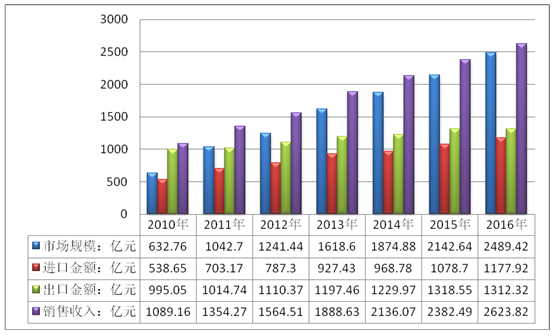
Supply-Demand Balance of Medical Equipment in China, 2010–2016 (Data Source: China Industry Information Network)
In 2015, the sales volume of medical equipment in China reached RMB 214.264 billion, with financial leasing amounting to RMB 62.8 billion, resulting in a penetration rate of 29.3%. In 2016, the market size of medical equipment in China reached RMB 248.942 billion, representing a year-on-year growth of 16.18%. The financial leasing volume for medical equipment in 2016 was RMB 85.8 billion, with a penetration rate of 34.5%. With the continued development of financial leasing services, the penetration rate of financial leasing in the medical equipment industry is expected to increase further.
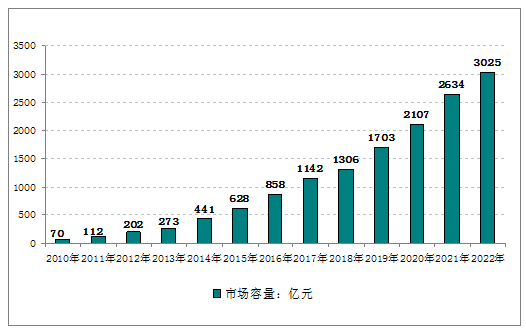
Forecast of the Market Size for Financial Leasing in the Medical Equipment Sector, 2010–2022 (Data Source: China Industry Information Network)
Regardless of whether viewed from the perspective of medical market demand or policy, the future market prospects for financial leasing of medical equipment are very broad, with enormous development potential. Research institutions predict that by 2022, the market size of China's medical equipment financial leasing will reach 302.5 billion yuan.