

Yitu Healthcare's AI Diagnostic System Assists in Diagnosing 17,000 Patients and Integrates into Clinical Workflow
“As one of the first partner hospitals of Yitu Healthcare, Zhejiang Provincial People's Hospital has utilized its AI system to assist physicians in reviewing medical images for 17,000 patients since its launch. The adoption rate of the AI-generated reports reached 90%. The 10% of reports that were not adopted were primarily generated during the early phase, when the system was still in its initial stages and had room for improvement.”
Recently, at the 2017 Annual Conference of Radiologists of the Chinese Medical Doctor Association, Dr. Fang Cong, Vice President of Yitu Healthcare, introduced to VCBeat the clinical data associated with Yitu Healthcare’s intelligent imaging-assisted diagnostic system. Additionally, during this conference, Yitu Healthcare publicly launched its “AI + Healthcare” full-chain medical R&D platform for the first time, covering areas such as chest CT, electronic medical records (EMR), mammography/ultrasound, neurological MRI, clinical decision support platforms, and research assistance platforms.
Yitu Healthcare, established just over a year ago, has developed a full-suite medical product covering both imaging and text data, and integrated it into clinical workflows—a rarity in the medical AI industry. As such, VCBeat has conducted follow-up reporting on the company.
Easy to Develop Products, Hard to Integrate into Medical Workflows
Currently, many medical AI companies in China use accuracy as a key metric to highlight their product achievements in external communications, often citing figures such as 90% or even 100%. When artificial intelligence first entered the public spotlight, this accuracy metric provided an intuitive way for people to grasp the impressive capabilities of AI.
However, while the concept of artificial intelligence has become widely recognized, its accuracy metrics in certain contexts merely reflect a company’s strong research and development capabilities, rather than indicating that the product is ready for rapid clinical deployment. Clinical adoption hinges on the source of the data used by the company. If the data are derived from clinical settings, validated in clinical practice, and corroborated across multiple hospitals—given the lack of unified standards for medical imaging data in China, validation at a single institution is insufficient—then the reported accuracy holds meaningful reference value.
If the data source is a public dataset and the training is conducted in-house, the accuracy will be significantly compromised in actual clinical applications. This is the challenge faced by most medical AI companies—Developing products is easy, but entering the medical workflow is difficult., let us take the Yitu Chest CT Intelligent Auxiliary Diagnosis System as an example to examine why it can be integrated into clinical workflows.
Ni Hao, President of Yitu Healthcare, stated that the company’s chest CT product was trained on clinical data from multiple hospitals. The dataset underwent expert annotation before model training commenced. After the initial product was developed, it was validated in clinical settings and, upon gaining hospital approval, was ultimately integrated into medical workflows.
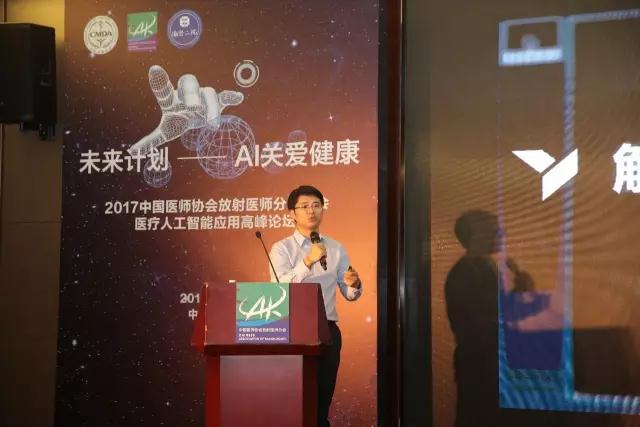
Ni Hao, President of Yitu Healthcare
According to Gong Xiangyang, Director of the Department of Radiology at Zhejiang Provincial People's Hospital, the sensitivity of the Yitu Imaging-Assisted Diagnostic System reached 96% in March this year. He further noted that it is generally difficult to achieve both high sensitivity and high specificity simultaneously. For physicians, the primary priority is to address sensitivity, as missed diagnoses carry professional liability. The initial goal is to identify nodules, followed by a gradual improvement in specificity, thereby meeting the practical needs of clinicians in real-world practice.
Furthermore, Yitu Healthcare legally and compliantly acquires more data through hospital applications, which in turn can be used to train its algorithms. This enhances technological capabilities, raises data barriers, and improves accuracy, thereby attracting more users and ultimately creating a virtuous cycle.
Lung Segment Localization Technology Addresses the Challenge of Follow-up for Pulmonary Nodules
Yitu Healthcare’s intelligent auxiliary diagnostic system for chest CT scans features a specialized technology—pulmonary segment localization—that addresses the challenges associated with follow-up examinations of pulmonary nodules. According to Director Gong Xiangyang, more than 90% of patients undergoing lung cancer screening at hospitals do not have lung cancer. Even when nodules are detected, if they are smaller than 5 millimeters or their benign or malignant nature cannot be immediately determined, physicians typically recommend a follow-up examination in six months.
Previously, when patients returned for follow-up examinations, physicians had to locate nodules in prior imaging studies and compare them with the latest images to assess changes. Although this process was not technically difficult, it was cumbersome and time-consuming. For radiologists who review imaging data for hundreds of patients daily, this represented a significant inefficiency.
Fang Cong introduced that Infervision’s lung segment localization technology can mark the position of pulmonary nodules within a three-dimensional coordinate system. When patients return for follow-up visits, the system can rapidly retrieve their previous imaging data from the database, locate the nodules, and perform comparisons to present changes in nodule size, location, and other parameters to physicians. In summary, doctors only need to review and verify the results, bypassing intermediate complex steps, thereby saving time while ensuring accuracy.
Ni Hao, President of Yitu Healthcare, stated that Yitu Healthcare’s products extend beyond the intelligent auxiliary diagnosis system for chest CT scans; their bone age assessment system can determine bone age within five seconds. Yitu also plans to launch its AICARE® product series in the near future, including: AICARE® Intelligent Auxiliary Diagnosis for Chest CT, AICARE® Intelligent Auxiliary Diagnosis for Pediatric Bone Age, AICARE® Intelligent Auxiliary Diagnosis for Common Pediatric Diseases, AICARE® Intelligent Medical Record Search Engine, and AICARE® Intelligent Clinical Research Platform.
Furthermore, leveraging its advanced technologies in deep learning, computer vision, and natural language processing, along with its extensive expertise in the healthcare industry, Yitu Healthcare provides clinical diagnostic assistance and intelligent management solutions for multiple departments, including radiology, ultrasound, pediatrics, pathology, and pharmacy. In alignment with emerging trends in medical science, it also offers professional big data analytics for research, as well as cutting-edge interdisciplinary scientific research and translational applications.
For more information on Yitu Healthcare’s products, please refer to “Having assisted police in solving cases, Yitu Technology has now crossed over into medical AI, with its pulmonary nodule detection rate exceeding 90%.》and《Yitu Technology Completes $380 Million Series C Funding Round, with Proceeds Primarily Allocated to R&D and Application of AI Technologies in Healthcare》