

Aravind Eye Care System Files IPO: The Non-Profit That Treated Over 50 Million Patients
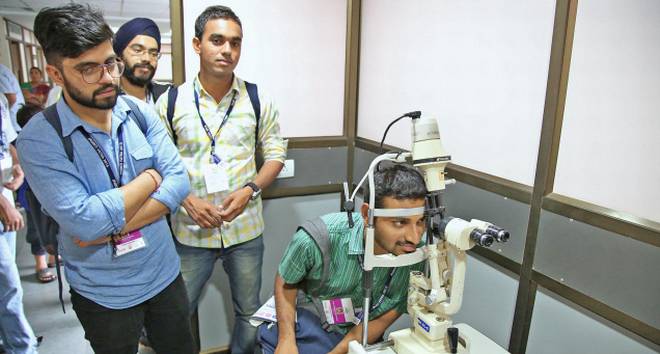
India’s public healthcare system has an annual government budget of $4.81 billion, which amounts to just $4 per capita for such a populous nation, making it one of the most “stingy” public healthcare systems in the world.
It is difficult to speculate which form of advanced healthcare model India might adopt; yet, surprisingly, a non-profit healthcare system named Aravind has achieved global leadership.
The Aravind Eye Care System, established in 1976 and headquartered in Madurai, southern India, is a large-scale non-profit ophthalmic healthcare system comprising numerous hospitals, research institutions, intraocular lens manufacturing facilities, eye banks, and training institutes.
Since its inception through March 2017, Aravind has treated 53.4 million patients. In 2016, it completed 4.1 million outpatient visits and performed 463,124 procedures, including surgeries, laser treatments, and intravitreal injections, with 50% provided free of charge or at subsidized rates.
Aravind is the world’s largest and most efficient eye care system, with 5,200 employees as of June 2017. Notably, 50% of its surgical procedures are provided free of charge or with substantial subsidies for patients. Despite this, Aravind maintains a robust profit margin, a feat that appears to defy conventional economic logic but is underpinned by its unique operational model.
So how did Aravind defy convention, achieving both philanthropy and scalable growth? VCBeat (WeChat: vcbeat) provides a comprehensive analysis for you.
It all began with their founder, Dr. Govindappa Venkataswamy, affectionately known as “Dr. V.” In 1976, after retiring at the age of 58 and inspired by the philosophy of the legendary Indian philosopher Sri Aurobindo, Dr. V embarked on his post-retirement project—what we now know as Aravind.
Dr. V has set an ambitious goal for himself: to bring the opportunity to regain sight to 12 million Indians suffering from preventable blindness. The majority of these individuals suffer from cataracts, with a high incidence rate among those under the age of 60. Blindness deprives these already impoverished people of their right to survival and sense of self-worth.
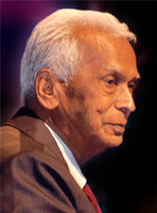
Dr. Govindappa Venkataswamy, Founder of Aravind
But before Aravind was established, Dr. V hit a wall at the banks. The reason is obvious: which bank would be willing to lend money to an old man for providing medical care and surgeries to the poor? From any perspective, this venture seemed destined to lose money.
The difficulty in raising startup capital did not deter Dr. V from his goal; he persuaded his sister, Dr. G. Natchiar, and her husband, Dr. Nam, to join the venture. Both are Harvard-trained ophthalmologists.
They mortgaged their property, pawned their jewelry, and contributed their savings to raise a total of $55,000 in startup capital. With these funds, they established their first nonprofit eye hospital in Madurai, one of India’s oldest cities. At the time, the hospital operated out of a rented space with only 11 beds.
At this hospital, six beds are reserved for the poor who cannot afford medical expenses, while patients in the remaining beds need only pay affordable rates. In this destitute country, where the vast majority of people live on less than $2 a day, Dr. V has drastically slashed the exorbitant fees associated with world-class advanced ophthalmic care.
Later, Dr. V abandoned his expectations for bank loans and established Aravind as a trust fund serving as the controlling operator, with surpluses reinvested to sustain operations and support charitable medical services, thereby achieving financial self-reliance.
As Aravind has grown, many of his other family members have willingly dedicated themselves to this cause, even though it entails heavy workloads and modest incomes. Today, nine members of Dr. V’s family serve on Aravind’s senior management team, only two of whom lack formal medical training. Additionally, 24 other relatives hold positions in lower-level management.
Over the past four decades, Aravind’s growth has been remarkable. Today, Aravind operates 11 hospitals, six community eye clinics, and 63 primary eye care centers, collaborates globally with eye hospitals in more than 30 countries, and performs over 300,000 ophthalmic surgeries annually—accounting for approximately 7% of the global total—making it unequivocally the world’s leading eye surgery healthcare system.
In addition to the philosophical inspiration that Sri Aurobindo provided to Dr. V, another company became a source of inspiration for the continuous improvement of Aravind’s business model: the fast-food giant McDonald’s. Although these two enterprises may seem worlds apart, Aravind successfully implemented McDonald’s model by adopting its assembly-line efficiency, stringent quality standards, strong brand recognition, standardization, consistency, and extreme cost control.
“McDonald’s can train tens of thousands of people worldwide, yet still ensure that their food preparation methods and the quality of the food produced remain exactly the same. This has inspired me. I hope to establish such a highly efficient model for eye surgery and disseminate it to every corner of the world,” said Dr. V in an interview.
Aravind’s operational model resembles a product assembly line., according to data reported by Forbes and the Baltimore Sun, the hospital’s operating hours are from 7:30 a.m. to 6:00 p.m., yet its ophthalmologists can perform approximately 50 surgeries per day, with a monthly average exceeding 400 procedures; in contrast, other ophthalmologists in India perform an average of only 300 surgeries per year.
Each operating room at Aravind is equipped with two surgical tables. While a surgeon is performing surgery on the first patient, nurses can prepare the next patient on the second table. As soon as the surgeon completes the current procedure, they simply swivel their chair to begin the next operation. This seamless transition between surgeries doubles efficiency and significantly reduces patient waiting times.
This aspect is crucial for cost control. The standardized, high-volume surgical process also leads to higher surgical quality, with a surgical infection rate of only 0.04%, which is lower than the 0.06% rate in the United Kingdom.
Another secret to Aravind’s efficiency lies in itsIts own training institutions have produced batch after batch of well-trained ophthalmic surgical assistants.. Most of these ophthalmic assistants are young women from rural areas who, after training, will handle many routine surgical tasks, allowing physicians to focus more on diagnosis and surgery.
This operational model offers two major advantages. First, it is cost-effective: with surgical assistants, each procedure requires only one surgeon and two assistants. Second, in India, where gender discrimination is severe and educational resources are unevenly distributed, this initiative also provides employment opportunities for impoverished women in rural areas.
As previously mentioned, Dr. V founded Aravind with the ideal of saving countless compatriots from blindness. Over the more than 40 years since its establishment, regardless of how much its scale has expanded or how high its international status has risen, its non-profit nature and commitment to helping the poor have never changed.
“Even the cleverest housewife cannot cook without rice.” If Aravind aims to help the poor who cannot afford medical expenses, it clearly cannot rely solely on passion, especially in the field of ophthalmology, where costs are notoriously high.
Their primary strategy is,Generate revenue from patients who can afford medical expenses to subsidize those in extreme poverty.Of course, this is not about exploiting affluent individuals. Aravind’s fees for these patients remain far more reasonable than those of other hospitals, and the profits generated are minimal. The seamless operation of this model is achieved through Aravind’s stringent cost control: the cost per surgery is only one-thousandth of that for comparable procedures in the United Kingdom. Essentially, the revenue from one paying patient subsidizes the surgical costs of three non-paying patients.
For impoverished patients, Aravind does more than simply wait for them to seek care and provide free medical treatment. In some remote mountainous regions of India, many patients with cataracts are unaware of the cause of their blindness, nor do they know that a surgery lasting only a few minutes can restore their sight.
For these patients, Aravind attracts them to seek medical care through two approaches. First, Aravind conducts weekly outreach in Tamil Nadu and Kerala"Hosting Eye Health Outreach Camp". The outreach camp visits various villages, providing free eye examinations, basic eye care, and affordable, high-quality glasses. Once a patient is diagnosed as requiring surgery, they and one family member are invited to travel to the nearby Aravind Hospital for treatment, with all transportation and accommodation costs covered by Aravind.
However, the impact of this initiative remained limited; the mobile screening camps attracted only 7% of patients who should have undergone surgery, as the frequency of visits was insufficient to reach every corner of rural areas.
Consequently, Aravind established physical vision centers in its outreach areas, hiring numerous local rural women, providing them with two years of training, and equipping them with cameras.This enables doctors at distant hospitals to conduct remote diagnoses.It was precisely these vision centers that enabled Aravind to increase its market penetration rate by 30% within one year.
At Aravind Eye Hospital, patients receiving free care typically sleep on floor mats in 30-bed wards, while paying patients have more options regarding amenities, such as the choice of air-conditioned private rooms.
Differential pricing is entirely unrelated to treatment outcomes. For cataract surgery, Aravind always treats all patients equally, striving to provide the best possible care for both groups in the same manner. Although paying patients can opt for newer, more complex surgical procedures that shorten the recovery period, these procedures have a slightly lower success rate. Patients in both groups interact with the exact same physicians throughout their treatment.
“High-quality, affordable, or even free medical services will naturally be favored by the general public,” said Dr. Nam, Chairman of Aravind.We Never Need to Advertise“, patients discharged from our hospital voluntarily promote us.” For the poor in rural areas, free treatment is extremely appealing; for the affluent, the high-quality therapeutic outcomes and affordable prices enjoyed by so many also make them more inclined to choose Aravind Eye Hospital.
Guided by a profound sense of medical benevolence, Aravind maintains humility and dedication in the face of widespread suffering, even while delivering world-class healthcare services. This approach has earned Aravind high esteem across both socioeconomic strata, fostering a virtuous cycle.
Aravind’s journey has been one of overcoming formidable obstacles, as its non-profit nature inherently presents numerous challenges.
In the 1980s, Aravind found itself in a dilemma. At that time, implanting intraocular lenses (IOLs) into patients' eyes had become the gold standard for cataract treatment. However, these IOLs were all imported, as India lacked domestic manufacturing capabilities, resulting in prohibitively high prices of approximately $150 per lens.
This situation placed Aravind in a difficult position. Should it still stratify treatment tiers, providing higher-quality care to paying patients, or charge paying patients more to subsidize the cost of intraocular lenses for free patients? However, neither option aligned with Aravind’s operational philosophy. After investigation revealed that the cost of intraocular lenses was not actually high, they opted for a third solution: manufacturing the lenses themselves.
In 1992, Aravind established Aurolab, marking a new leap forward. By manufacturing intraocular lenses (IOLs) in-house, Aurolab drove the price down to $2–$10 per unit, achieving further cost reductions.
To date, Aurolab can produce approximately 2 million intraocular lenses (IOLs) annually, which are not only supplied to its affiliated hospitals but also exported to more than 120 countries, with its products accounting for a 7% share of the global IOL market. CurrentlyAurolab’s business has also expanded to include surgical sutures, microsurgical blades, laser surgical equipment, and eye drops., generating greater profits for Aravind.
In recent years, medical AI has become a major hotspot.Aravind has also quietly collaborated with Google on artificial intelligence, becoming a part of Google's AI landscape. Since 2003,Aravind Hospital’s Automated Screening for Diabetic RetinopathyResearch has been conducted, but it has only achieved semi-automated screening. The application of AI technology will bring about a qualitative change in both the volume of information obtained and the speed of screening.
At the operational level, Aravind provides Google with medical images required for algorithm analysis, facilitating the development of the entire screening system. Dr. Kim, Chief Medical Officer at Aravind, stated that the research findings will be implemented in clinical practice at Aravind Eye Hospitals.
With decades of extensive clinical experience, Aravind has also pioneered numerous ophthalmic medical technologies and actively engaged in research on eye diseases, thereby enhancing its reputation within the industry. Its partners now span the globe, including organizations such as the Acumen Fund and the World Health Organization (WHO). Frequent academic exchanges among these entities have enabled Aravind to access additional resources, such as donations from other charitable organizations and new technologies from research institutions.
Aravind Hospital has long transcended its origins in Madurai, or even India, providing medical consulting services to more than 300 hospitals across many countries in Africa and Latin America, while also managing numerous other hospitals throughout India.
Aravind’s achievements have garnered worldwide recognition; it was awarded the Gates Award for Global Health in 2008 and further honored with the Conrad N. Hilton Humanitarian Prize in 2010.
However, Dr. Nam, Chairman of Aravind, regards these honors with equanimity. He emphasized that following the passing of Dr. V, his family remains committed to their mission, recognizing that the road ahead is long and arduous. He stated, “The uniqueness of our operational model does not actually lie in medical processes or clinical capabilities, as these can be replicated. What is truly unique and difficult to replicate is our steadfast value system.”
References:
1.https://opinionator.blogs.nytimes.com/2013/01/16/in-india-leading-a-hospital-franchise-with-vision/
2.http://www.baltimoresun.com/news/opinion/oped/bs-ed-avarind-hospital-20150819-story.html
3.http://www.thehindu.com/news/cities/mumbai/business/Taking-eye-care-to-every-corner-of-rural-India/article13980789.ece
4.https://www.forbes.com/global/2010/0315/companies-india-madurai-blindness-nam-familys-vision.html