

Chinese Giant Salamander Generates $350M Revenue: MEINI SOO Taps into the Trillion-Dollar Post-Medical Aesthetics Market
The Chinese giant salamander, commonly known as the "baby fish," is regarded by many as an ancient and mystical species. While its reputation as a "living fossil" often forms people’s first impression, few associate it with modern biotechnology.
In the first half of 2017, a reparative collagen product named “Meini Shuo” took the Chinese biotechnology market by storm. Owing to its unique “repair” function, it was enthusiastically embraced by women and even became a widely touted “skin-beautifying miracle” among internet celebrities, with sets priced at over RMB 3,000 selling out completely.
The rise to fame of “Meini Shuo” is driven, on one hand, by its significant and highly effective reparative properties, and on the other, by the fact that its reparative collagen is derived from the skin of giant salamanders—a unique offering in the entire collagen market.
From Ancient “Living Fossil” to Modern Biotech Product: How Does the Chinese Giant Salamander Create a Commercial Miracle?
For those in the know, the Chinese giant salamander is not only a living fossil but also a rare tonic with high nutritional and culinary value.
In ancient times, the giant salamander was a rare delicacy listed among the “Eight Treasures of the Sea” in the Manchu-Han Imperial Feast and was long regarded as a culinary treat for the imperial court. Modern medical analyses have shown that its nutritional content is several times higher than that of traditional health-promoting foods such as abalone, bird’s nest, and shark fin, earning it the reputation of “ginseng of the water.”
However, for a considerable period prior to this, the Chinese giant salamander was classified as a national second-class protected animal, and laws prohibited the trade of wild individuals. This ban began to be gradually lifted only in 2004.
In 2004, the State Forestry Administration introduced relevant policies stipulating that second-generation captive-bred Chinese giant salamanders could be sold, consumed, and processed into products. Effective June 1, 2015, the Ministry of Agriculture officially issued the document “Implementation of Identification Management for Farmed Chinese Giant Salamanders and Their Products Nationwide,” requiring farmed Chinese giant salamanders sold in the market to carry identification codes. Thus, a lucrative business opportunity quietly emerged in the Chinese giant salamander industry, which was seized by Zhou Minghui, a veteran.
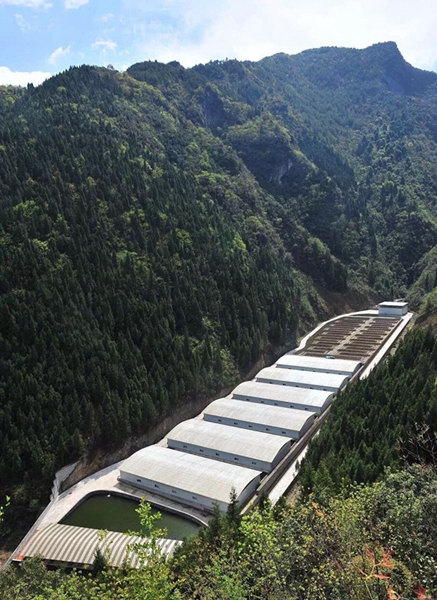
Ten years ago, Zhou Minghui began raising giant salamanders in the uninhabited area of the Three Gorges Dam and registered Chongqing Kunzheng Industrial Co., Ltd. A decade later, he has expanded his giant salamander base from breeding to deep processing, achieving an annual production scale of 600,000–800,000 raw salamanders and an annual output value of RMB 250 million. In 2012, the company was listed on the OTC market, becoming the first specialty aquaculture company in Chongqing to be publicly traded.
Unlike conventional aquaculture, giant salamanders are extremely difficult to raise.
During the interview, the reporter learned that giant salamanders are clean-loving and dirt-averse, with extremely high requirements for water quality. Therefore, Zhou Minghui’s giant salamander breeding bases all utilize natural spring water from karst caves, employing physical purification methods such as sand filtration and ultrafiltration to ensure water safety, maintaining a neutral pH level and high dissolved oxygen content. In terms of feed, the base insists on using live fish and shrimp, fully complying with national ecological organic standards. The Three Gorges giant salamander is one of the very few organic giant salamanders in China to have passed certification and testing for organic conversion through the food chain.
Nevertheless, the Three Gorges giant salamander industry has encountered a bottleneck in its development. This constraint lies not in the farming stage, but in the sales phase: many consumers are hesitant to consume it directly due to the common name “baby fish” (wawayu).
What should be done?
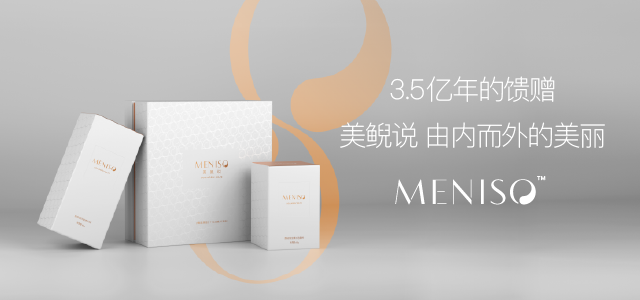
Direct sales have hit a bottleneck; only by deeply exploring the value of giant salamanders can we break through.
Zhou Minghui, in collaboration with seven prestigious institutions—the University of Manitoba (Canada), Tsinghua University, the Third Military Medical University, Southern Medical University, Southwest University, Wuhan Polytechnic University, and the Chinese Academy of Fishery Sciences—established the Giant Salamander Research Institute. The institute is dedicated to advancing research on the applications of giant salamanders in biopharmaceuticals, nutritional health supplements, and cosmetic skincare.
During the research process, the regenerative capacity of the Chinese giant salamander has attracted expert attention: when the body surface of the Chinese giant salamander is injured, the skin secretes a type of mucus with remarkable efficacy. This mucus can enhance cellular vitality and effectively activate the regenerative capacity of cells near the wound, thereby accelerating wound healing as a mechanism for self-protection and trauma repair. This trait is also a key genetic factor that has enabled the giant salamander to survive hundreds of millions of years of earthly tribulations.
Studies have shown that the reparative properties of giant salamanders are attributed to the presence of 61.3% optimally bioactive human collagen (COLLAGEN) and Cutaneous Hypopigmentation Factor (CHF) in their skin. These components help maintain skin elasticity and lubrication, resulting in a fine, smooth, and fair complexion, thereby delivering potent cosmetic benefits. Furthermore, the mucus secreted by giant salamanders contains a remarkable regenerative repair factor that enhances cellular vitality and effectively activates the regenerative capacity of cells near wound sites, thus accelerating wound healing. This offers significant efficacy for post-operative recovery and the restoration of problematic skin.
After eight years of effort, the Chinese Giant Salamander Research Institute has secured four major patents: “Preparation Method for Collagen Peptides from Chinese Giant Salamander Skin,” “Extraction Method for Chinese Giant Salamander Mucus,” “Application of Chinese Giant Salamander Mucus in Hemostatic Materials,” and “Method for Comprehensive Utilization of Chinese Giant Salamander.”
Furthermore, leveraging patented technology, the world’s first deeply processed giant salamander product based on patent technology, “Meini Shuo – Regenerative Collagen Peptides,” was launched in 2016. This product features high-quality collagen peptides extracted from the skin of ecologically farmed giant salamanders (Andrias davidianus), rich in unique regenerative and reparative factors inherent to the species. Utilizing proprietary extraction technology, it achieves a nanoscale molecular weight of 1,000 Daltons, closely mimicking human collagen for direct absorption by the human dermis with an absorption rate of 98%. Its exclusive Vitamin C complex effectively promotes the absorption and synthesis of collagen in the body.
From the Three Gorges giant salamander to Meini, this perfect transformation has not only resolved the bottlenecks hindering the development of the giant salamander industry chain but also unexpectedly ventured into the blue ocean of the “post-medical aesthetics market,” opening up an entirely new frontier.
In recent years, the “appearance economy” has gained increasing momentum, with the demographic seeking cosmetic procedures trending younger. Concepts such as non-surgical medical aesthetics and minimally invasive procedures have gradually become widely accepted. As the public becomes more familiar with the medical aesthetics industry, the desire to enhance and pursue beauty, coupled with growing consumer spending power, has rapidly unleashed demand in this “face-conscious era.”
However, many people only see the boom in the medical aesthetics market, yet fail to recognize that the “post-procedure medical aesthetics market” is a larger, overlooked blue ocean. After undergoing aesthetic procedures, what products should be used for maintenance? What aids can assist in recovery? These questions have received scant attention to date.
Compared to other similar collagen products, Meinishuo Reparative Collagen extracts high-quality collagen from giant salamander skin. It closely mimics human collagen, allowing for direct absorption into the dermis. This deeply moisturizes and repairs the dermal layer, promotes the regeneration of aging cells, regulates skin structure, rebuilds the reticular network, and enhances skin tension, thereby fundamentally addressing problematic skin concerns such as acne scars, dryness, fine lines, dullness, and sagging.
Meanwhile, the reparative collagen peptides derived from giant salamander contain unique regenerative repair factors specific to this species. These factors help repair skin cells damaged by minimally invasive or plastic surgery procedures, accelerate new cell regeneration and wound healing, replenish lost collagen, and thereby prolong and consolidate surgical outcomes.
Accelerating wound healing and repair by taking Meinieshuo Restorative Collagen after medical aesthetic procedures has become the most significant pain point addressed by Meinieshuo in the post-procedure market.
“Our users highly recognize and accept the Meinie Shuo product, with 30 units sold this month,” said Mr. Xia, head of Taiwan Platinum Skin Management Center.
Chongqing Bojin Skin Management Center is the first skin management center built with authentic medical aesthetic technology under the Taiwan-based medical aesthetics brand, Perfect. With 20 years of brand heritage, Perfect is a professional institution in Taiwan. Bojin represents Perfect’s new generation of skin management centers, integrating orthodox medical concepts with high-quality customization. Adhering to the philosophies of “aesthetics” and “customization,” it provides clients with comprehensive professional services, including personalized skincare, body contouring and slimming, and medical aesthetics consultations.
To gain a deeper understanding of the MeiNiShuo products, Mr. Xia conducted on-site visits in June to the giant salamander breeding bases in Kaixian and Wanzhou, discovering that the entire process from raw materials to final products is fully controllable. Meanwhile, the beauty salon had just launched an ultrasound scalpel minimally invasive procedure, which requires collagen supplementation both before and after the treatment.
After visiting the Three Gorges Giant Salamander Breeding Base, Ms. Xia immediately entered into a long-term partnership with Meinieshuo. She was particularly drawn to the regenerative factors derived from giant salamanders contained in Meinieshuo’s products. For women undergoing minimally invasive cosmetic procedures, these products facilitate rapid recovery and deliver noticeable results within a one-month cycle.
Chongqing Bojin Skin Management Center is just one of the institutions that have signed a cooperation agreement with Meini Shuo.It is reported that the “Meini Shuo” product has been introduced to 20 beauty clinics and plastic surgery hospitals in Chongqing, with an average monthly sales volume of 20 units and monthly revenue of RMB 4 million.
In the future, Meinisay has also launched a regional partner program, and interested enterprises or institutions are welcome to inquire.