

Yikang Medical Secures Approval Within a Month of New Hemodialysis Policy Rollout, Aims to Capture Share of $21B Market
The hemodialysis market in China has undergone three stages of development: the first stage involved tertiary Grade A hospitals and public hospitals providing hemodialysis services; the second stage saw private hospitals beginning to enter the hemodialysis sector; and the third stage was characterized by the opening of independent hemodialysis centers.
In late December 2016, the National Health and Family Planning Commission issued the basic standards and management specifications for four categories of independently established medical institutions, including hemodialysis centers. The policy encouraged the opening of hemodialysis centers to private capital and promoted their development along chain-based and group-oriented lines.
Under the new standards, hemodialysis centers, as the only type of patient-focused medical institution among the four independent medical entities, have attracted significant attention from private capital due to their substantial growth potential.
In this theoretical market space worth RMB 150 billion, with over 400,000 patients undergoing dialysis and a compound annual growth rate exceeding 10%, countless opportunities have emerged. Yikang Medical is a player in the hemodialysis market. This mysterious company, for which only business registration information can be found online, is set to build and operate two independent hemodialysis centers in September. Unveiling Yikang Medical,VCBeat (WeChat ID: vcbeat)Reporter's Exclusive Interview with Long Chong, Chairman of Yikang Medical.
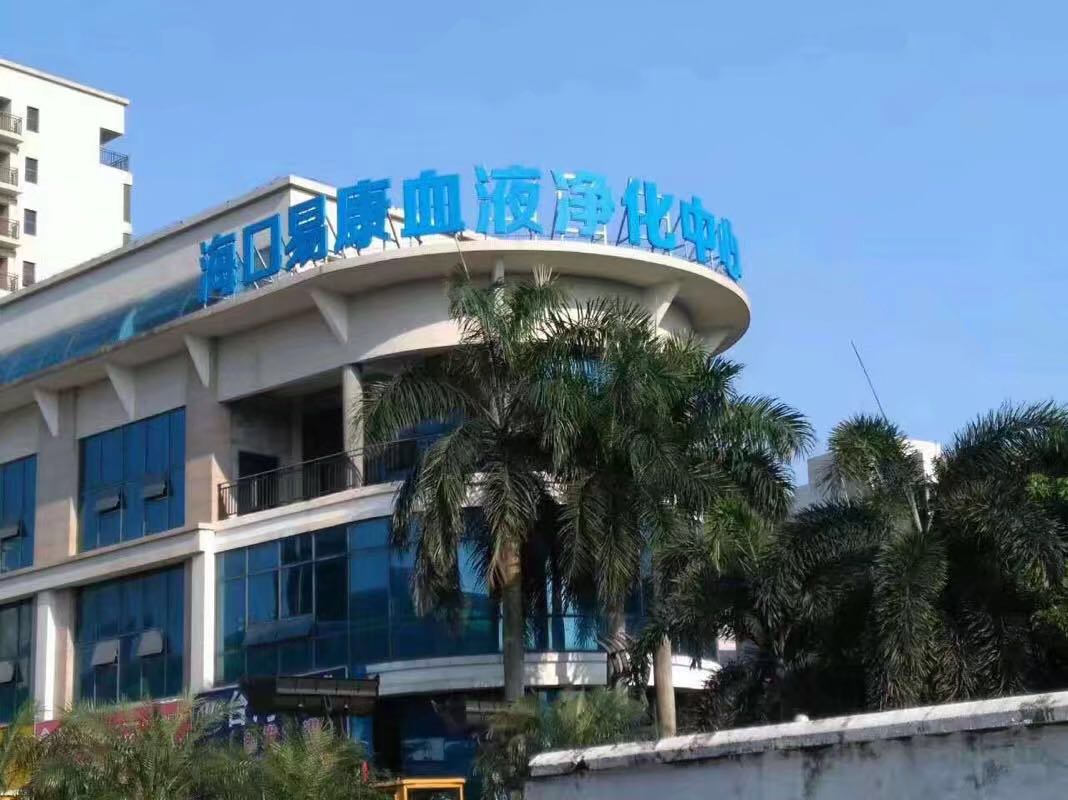
Haikou Yikang Blood Purification Center
After the 2016 standards for establishing independent hemodialysis centers were released, they passed the acceptance inspection at the earliest opportunity.
Prior to entering the hemodialysis industry, Long Chong served as Assistant to the Chairman of iKang Healthcare Group, where he was responsible for the group’s comprehensive management. He began engaging with the hemodialysis sector in 2011 and was among the first entrepreneurs in China to operate independent hemodialysis centers.
In January 2015, Yikang Medical was officially established. Yikang Medical is a for-profit chain of blood purification centers, with Beijing Yikang Medical Investment Management Co., Ltd. (hereinafter referred to as “Yikang Medical”) serving as its investment entity.
Long Chong previously had experience in the construction and operation of chain physical examination centers, and as one of the first entrepreneurs to promote independent hemodialysis centers, after forming a professional management team, Yikang Medical completed its angel round and Series A financing within one year of establishment, achieving rapid development.Approval documents for establishing independent blood purification centers in Hainan Province, Jilin Province, and other regions were obtained in early 2015. In January 2017, the centers passed the acceptance inspection conducted by the National Health and Family Planning Commission (NHFPC) regarding the basic standards and management specifications for independent hemodialysis centers. The provincial-level independent blood purification centers in Haikou and Changchun are expected to commence operations in September 2017.
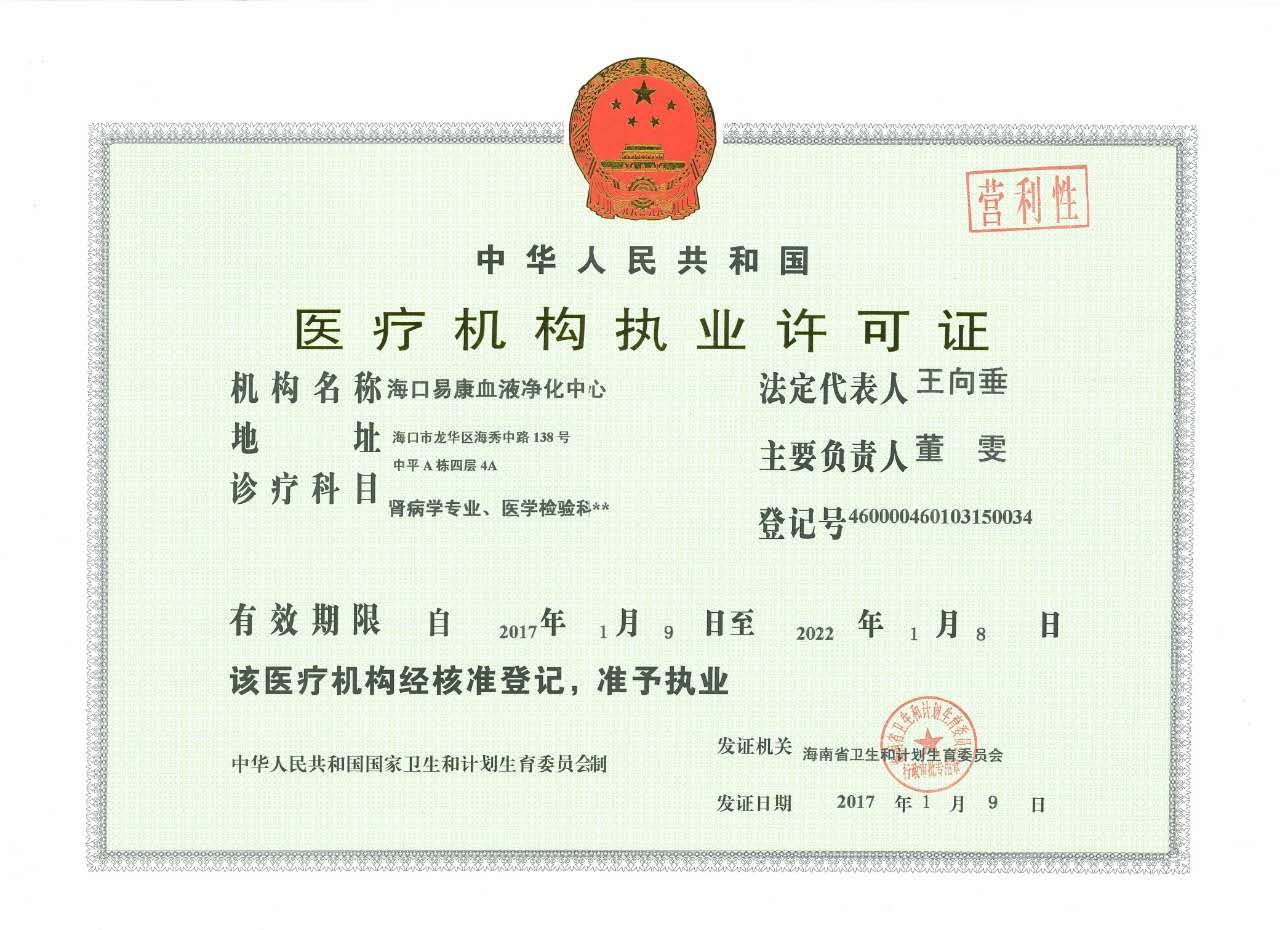
Relevant Qualifications of Haikou Yikang Blood Purification Center
As can be seen, its Medical Institution Practice License clearly states that its operational nature is “for-profit.” The concept of “for-profit” broke through the original non-profit requirement for hemodialysis centers following the issuance of the Basic Standards for Hemodialysis Centers (Trial) and the Management Specifications for Hemodialysis Centers (Trial) (hereinafter referred to as the “New Standards”) by the National Health and Family Planning Commission in 2016.
The current documents do not explicitly specify “for-profit” or “non-profit,” meaning that applicants may determine the nature of their medical institutions in accordance with existing laws and regulations.This also means that establishing a medical services company to operate a nationwide or regional chain of hemodialysis centers, thereby enabling independent dialysis centers to access the capital markets, has become a reality.
Under the new standards, hardware requirements are largely unchanged from the previous pilot policy: at least 10–20 hemodialysis machines must be equipped, and the usable area of medical facilities must account for no less than 75% of the total area, among other stipulations.
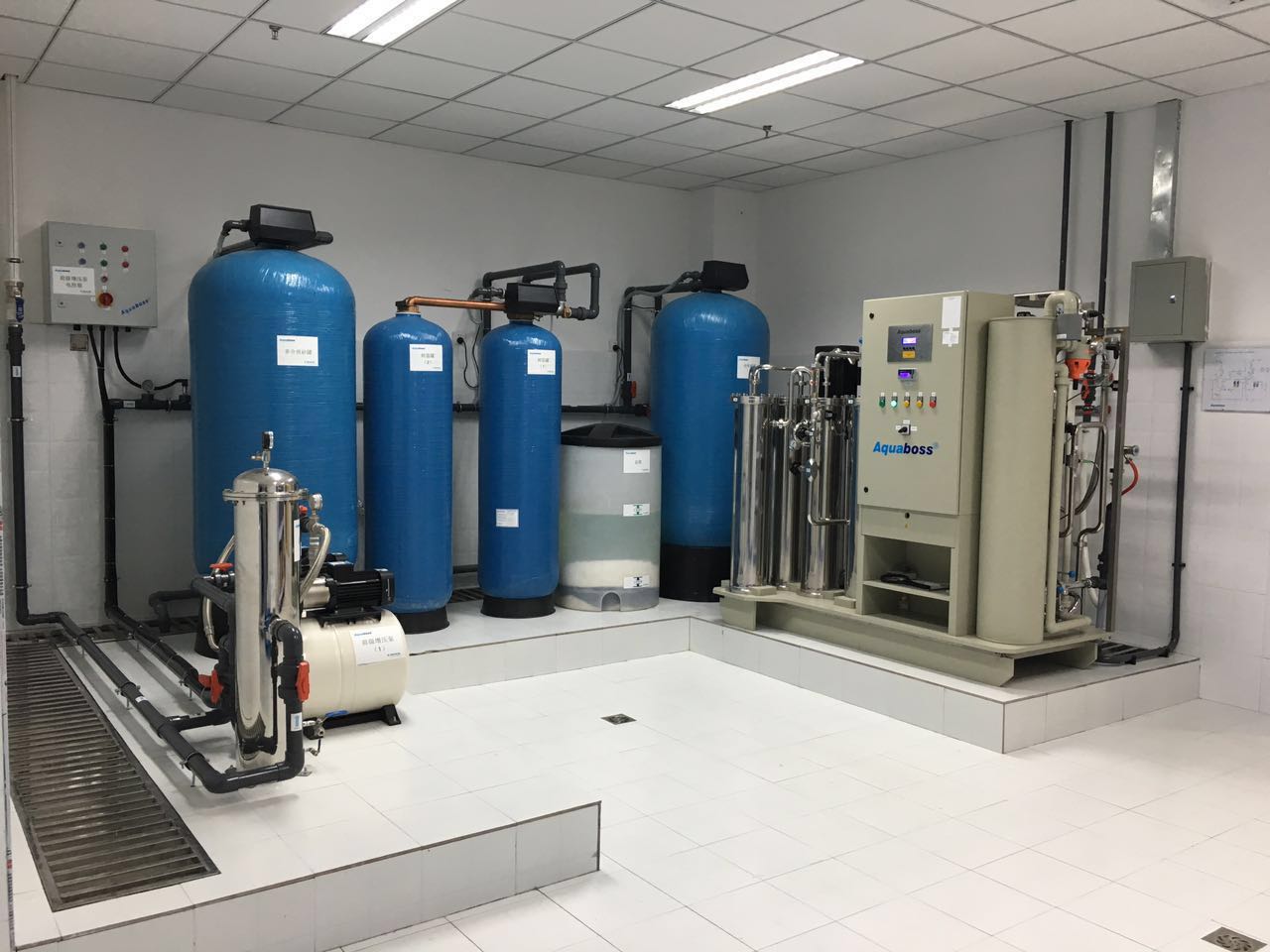
German Laoer Water Machine
Software-related staffingPartial RequirementsAs follows:
At least two licensed physicians are required, one of whom must be permanently registered at the institution and have engaged in hemodialysis for more than three years; the other may practice either permanently or at multiple sites including this institution, holding an intermediate or higher professional technical title in nephrology and having engaged in hemodialysis for more than three years;
For every additional 20 hemodialysis machines, at least one permanently registered licensed physician must be added to the institution; such physicians shall have more than three years of experience in blood purification.
Each dialysis machine shall be staffed with at least 0.5 nurses; there shall be at least one registered nurse who holds a professional technical title at the intermediate level or above and has been engaged in dialysis nursing for more than three years;
Long Chong told reporters, “The standards issued at the end of 2016 primarily emphasized improvements in staffing and patient admission experience.” Prior to the introduction of policies for independent hemodialysis centers, specifically in 2015, two hemodialysis centers in Haikou and Changchun had already been constructed in accordance with the provincial-level center standards, featuring facilities spanning 2,000–3,000 square meters with 70 beds. Their hardware fully complied with the requirements, so the focus was mainly on enhancing software aspects.
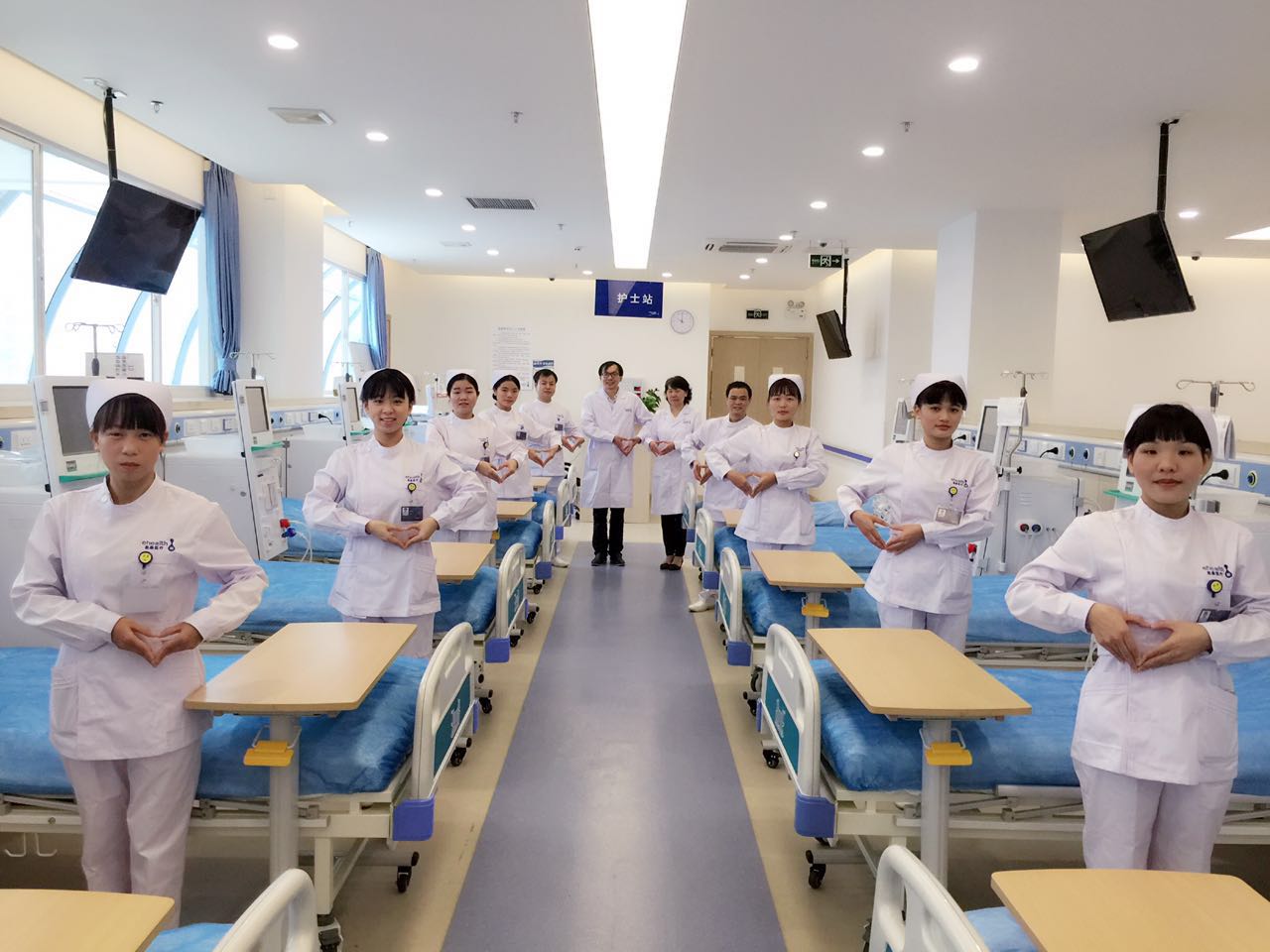
In terms of the “soft” infrastructure of Yikang Blood Purification Center, an expert committee composed of some of China’s top nephrology specialists was established at its inception, along with efficient and stable training and medical quality control mechanisms. Its medical and nursing staff were recruited after undergoing long-term training through collaborative partnerships with prestigious institutions in Beijing, including Beijing Hospital, Beijing Friendship Hospital, China-Japan Friendship Hospital, and Peking University Third Hospital.
Following the policy rollout in December 2016, Yikang’s blood purification center in Haikou passed standard accreditation in January 2017, obtained the Medical Institution Practice License, was classified as a secondary-level specialized facility, and became a designated provider for the New Rural Cooperative Medical Scheme and Hainan Provincial Medical Insurance.
Establish a replicable model to achieve capitalized operations
“High-standard medical quality control and the ability to scale and replicate are particularly important for a company,” Long Chong told reporters.“Unlike certain high-profit sectors such as cutting-edge treatments for major diseases or medical aesthetics, hemodialysis centers benefit from a highly stable patient base, consistent cash flow, and steady profit margins, making their business model easily replicable.”
In Yikang Medical’s projection, establishing a hemodialysis center with an area of 1,000–2,000 square meters and equipped with 20–80 dialysis machines would cost RMB 6 million to 15 million. The period from preparation to opening spans 12 months. Depending on the region, the service fee ranges from RMB 350 to 500 per session, while the average cost of medications and consumables is RMB 200 per patient visit.The facility is projected to achieve profitability within 1–1.5 years of commencing official operations.
Haikou Yikang Blood Purification Center has been designated as a medical institution covered by the New Rural Cooperative Medical Scheme and Hainan Provincial Medical Insurance, and is classified under Level II specialized management. According to previous interviews with industry insiders conducted by VCBeat, the classification of medical institutions holds two significant implications:
First, it determines the pricing standards for medical service items; for similar medical procedures, higher-tier hospitals charge more. For example, the price difference for hemodialysis between tertiary and secondary hospitals is 30–40 yuan.
Second, it determines the reimbursement rate of medical insurance; the higher the hospital level, the lower the reimbursement rate.
Long Chong emphasized that there are two backgrounds for becoming a designated medical institution under the New Rural Cooperative Medical Scheme (NRCMS) and Hainan Province’s medical insurance system. First, at the State Council level, various policies have been introduced to treat private medical institutions equally with public hospitals when applying for inclusion in medical insurance and NRCMS programs. Second, most local relevant departments have implemented these policies, giving the green light to private capital. Once the payment issue is resolved, more patients will access hemodialysis services.
Future: Deepen presence in second- and third-tier cities, targeting areas with scarce medical resources
When asked why Yikang established and opened its first blood purification center in Haikou, Long Chong cited the concept of “tourism dialysis.” “Hemodialysis patients require dialysis three times a week. If there are no hemodialysis facilities available at their travel destinations, patients are reluctant to travel. Therefore, as a renowned tourist destination, Hainan can host hemodialysis centers that serve not only local residents but also patients from across China.” In addition, the Hainan Provincial Committee of the Communist Party of China has been supportive of the establishment of independent hemodialysis centers in the province, making Haikou the preferred initial location for Yikang.
In Yikang Medical’s future plans, 45 hemodialysis centers are to be established by 2019. In addition to continuous advancement through financing, Long Chong emphasized,Yikang will not focus its primary development goals on developed coastal cities, but rather on second- and third-tier cities. The medical infrastructure in developed coastal areas is relatively robust, and the patient-to-equipment ratio has reached saturation compared to central and western regions.In the field of hemodialysis, China is currently experiencing a significant imbalance between supply and demand. “We do not wish to see regionalized competitive entry into this sector, as it would be highly unwise.”
During surveys of county-level cities in central and western China, each with populations ranging from hundreds of thousands to millions, Long Chong discovered that some counties and cities lacked even a single hemodialysis machine, leading to incidents such as patients filing petitions. Consequently, Yikang Medical’s strategy focuses on deeply penetrating small and medium-sized cities with scarce medical resources to meet the local demand for hemodialysis services.