

US vs. China: Why Independent Pathology Centers Account for Over 35% of the US Diagnostic Market but Less Than 5% in China?
By Luo Mei and Li Yanyu
Not long ago, the National Health and Family Planning Commission approved five categories of independently established medical institutions, including medical laboratory testing centers, pathology diagnosis centers, medical imaging diagnosis centers, hemodialysis centers, and hospice care centers. This move appeared to inject a “shot in the arm” into the current state of pathology in China.
For a long time, the United States has regarded pathology as “the foundation of medicine,” and pathologists as “doctors’ doctors.” In contrast, the current state of pathology in China is characterized by high risk, low income, a significant shortage of physicians, and neglect by some primary-care hospitals, making it resemble an obscure and unpopular discipline.
These two starkly contrasting attitudes have determined the developmental trajectory of the pathology sector. Consider the following data: independent clinical laboratories in China account for less than 5% of the overall clinical testing market; by contrast, this proportion reaches as high as 67% in Japan, 50% in Europe, and 35% in the United States.According to the annual report data from US LabCrop, the revenue of the US clinical laboratory testing industry was approximately $8 billion in 2016.
Independent clinical laboratories, also known as third-party medical testing institutions, differ from traditional hospital laboratory departments in that they are standalone medical facilities with independent legal entity status. They bear corresponding legal liabilities independently and have no affiliation with hospitals.
Why Have Independent Pathology Centers in the United States Developed So Rapidly? What Are the Differences in Policies and Industry Standards? This Article Primarily Uses the United States as an Example to Present Concepts and Certification Standards Related to Independent Pathology Centers in the United States and China.
Conceptually, regarding pathological diagnosis, the clinical department responsible for “laboratory diagnostics” is known in China as the Department of Clinical Laboratory Medicine, whereas in the United States, it exists as a subspecialty of clinical pathology within the Department of Pathology. Therefore, the Department of Pathology in U.S. hospitals is equivalent to the combined functions of China’s Department of Clinical Laboratory Medicine and Department of Pathology.
In U.S. hospital pathology departments, the core staff are divided into two categories: pathology technicians and pathologists, with pathology technicians significantly outnumbering pathologists.
In China, medical laboratory services are categorized into two main types: clinical diagnostics and pathological testing. Due to the relatively narrow market for standalone pathology laboratories, many companies primarily operate as independent clinical laboratories that offer comprehensive medical testing services, with pathology serving as one component of their overall service portfolio.
In many developed countries in Europe and the United States, pathological diagnosis is a critical component in the management of critically ill patients. While pathologists in China are often conflated with laboratory medicine physicians, overseas practices have achieved an exceptionally rigorous and meticulous standard in the review processes and talent development for pathological diagnosis.
In terms of cancer survival rates, the average five-year cancer survival rate in China is 30.9%, compared to 66.9% in the United States, while top U.S. cancer hospitals achieve five-year survival rates exceeding 80% for most cancers. The underlying reason is that pathological diagnosis is regarded as a critical component of cancer care abroad.
Based on U.S. cases, institutions involved in pathological testing and diagnosis can be broadly categorized into three types:
First, independent third-party medical testing laboratories,It also includes a small number of independent pathology centers with a single line of business, which mainly provide pathological testing and diagnostic services for various diseases, and have certified laboratory facilities and equipment;
Second, pathology laboratories established within various universities,At universities or medical schools offering pathology programs, separate pathology laboratories are generally established to support student research and practical training, while also providing external testing services; prominent institutions such as Harvard Medical School and UCLA maintain independent pathology laboratories.
Third, pathology departments and pathology diagnostic centers that have been spun off from medical centers or hospitals.In oncology treatment centers and large hospitals, there is a trend toward establishing specialized pathology departments or standalone pathology centers that operate independently from the main hospital facilities. These institutions differ from the first category of independent pathology centers in that they are affiliated entities, uniformly managed by the hospital or medical center. For example, both the MD Anderson Cancer Center and the Mayo Clinic are equipped with dedicated pathology diagnostic centers.
This is similar to domestic institutions involved in pathological diagnosis and testing. In China, entities engaged in pathological diagnosis and testing can also be categorized into three types:Third-party medical testing laboratories, healthcare institutions, and university pathology laboratories. Among these, the largest regional pathology consultation centers in China are concentrated within healthcare institutions.
For example, in 2011, the Department of Hospital Administration under the Ministry of Health presided over the “Launch Meeting for the Pilot Program of Remote Pathology Consultation for Tumors” in Beijing. At the meeting, it was announced that the Departments of Pathology at Peking Union Medical College Hospital, West China Hospital of Sichuan University, and the Second Affiliated Hospital of Zhejiang University School of Medicine had been designated as the three national regional pathology consultation centers, and plaques were awarded to them. Meanwhile, 19 provincial-level remote pathology consultation centers and 61 pilot hospitals for remote pathology consultation were identified, with the Department of Pathology at West China Hospital also serving as the remote pathology consultation center for Sichuan Province.
VCBeat’s analysis reveals that policy drivers are a common factor influencing the development of pathology centers in both the United States and China.Moreover, in the case of independent pathology centers, medical insurance alsoFor the United StatesProfound impact.
A. U.S. Policy Drives the Chain Expansion of Pathology Centers
From 1960 to 1980, total annual healthcare expenditure in the United States grew from $26.9 billion to $247.2 billion, and its share of U.S. GDP rose from 5.1% to 8.9%. By 1995, this proportion had reached 13.6%.
To alleviate the burden of medical expenditures, the United States entered a phase of healthcare cost containment in the early 1980s. The U.S. government and commercial health insurers focused on controlling costs by employing various measures, such as changing reimbursement models for healthcare services (e.g., shifting from fee-for-service to capitated payments) and adjusting health insurance policies (such as medical benefit design), in an effort to curb medical spending.
Driven by health insurance policies, hospitals face increasing pressure to control costs, which has also prompted them to outsource more testing items to independent laboratories with lower operating costs. By the mid-1980s, hospitals accounted for approximately 60% of the clinical laboratory market, private clinics held around 20%, and independent laboratories comprised roughly 20%.
In the 1980s, the enactment of the U.S. Clinical Laboratory Improvement Amendments (CLIA) standardized medical laboratory testing under legal frameworks, leading to the rapid replacement of small laboratories by large, high-quality independent medical laboratories. Compared with hospital-based clinical laboratories, independent medical testing institutions leverage economies of scale to offer advantages in efficiency, quality, and cost-effectiveness.
Regarding payment, cost-control measures in the diagnostic sector include diagnosis-related group (DRG) payments and global budgeting. These payment models have prompted hospitals to prioritize medical costs, outsourcing high-cost laboratory tests to independent clinical laboratories. Additionally, a greater proportion of outpatient testing has been referred to independent laboratories, resulting in a 12% reduction in hospital-based test volumes.
Private clinics offer a limited range of laboratory tests and face high operational costs. Since medical insurance either does not reimburse or provides reimbursement rates below the actual cost for clinic-based laboratory testing, many private clinics have been compelled to close their in-house laboratories and outsource specimen testing to independent laboratories. Furthermore, the elevation of laboratory accreditation standards has increased operational expenses, leading to the elimination of some clinic-based laboratories.
Nearly half of the independent laboratories' business comes from routine tests outsourced by outpatient departments. By the mid-1990s, the U.S. independent laboratory market was characterized by a duopoly dominated by LabCorp and Quest.
In pathology centers, the management of key equipment and reagents is also critically important. The FDA has previously announced guidance measures that could impact clinical laboratory testing operations, including strengthening oversight of laboratory-developed tests (“LDTs”) by categorizing them into Class I, II, and III based on risk levels, with regulation assigned to different agencies accordingly.
B. A Review of the Timeline for the Promulgation of Pathology Policies in China
In China, the National Health and Family Planning Commission has successively issued multiple policies to promote the development of pathology, including notices on encouraging social capital to establish medical institutions and implementing basic standards and management regulations for pathology diagnosis centers. The details are as follows:
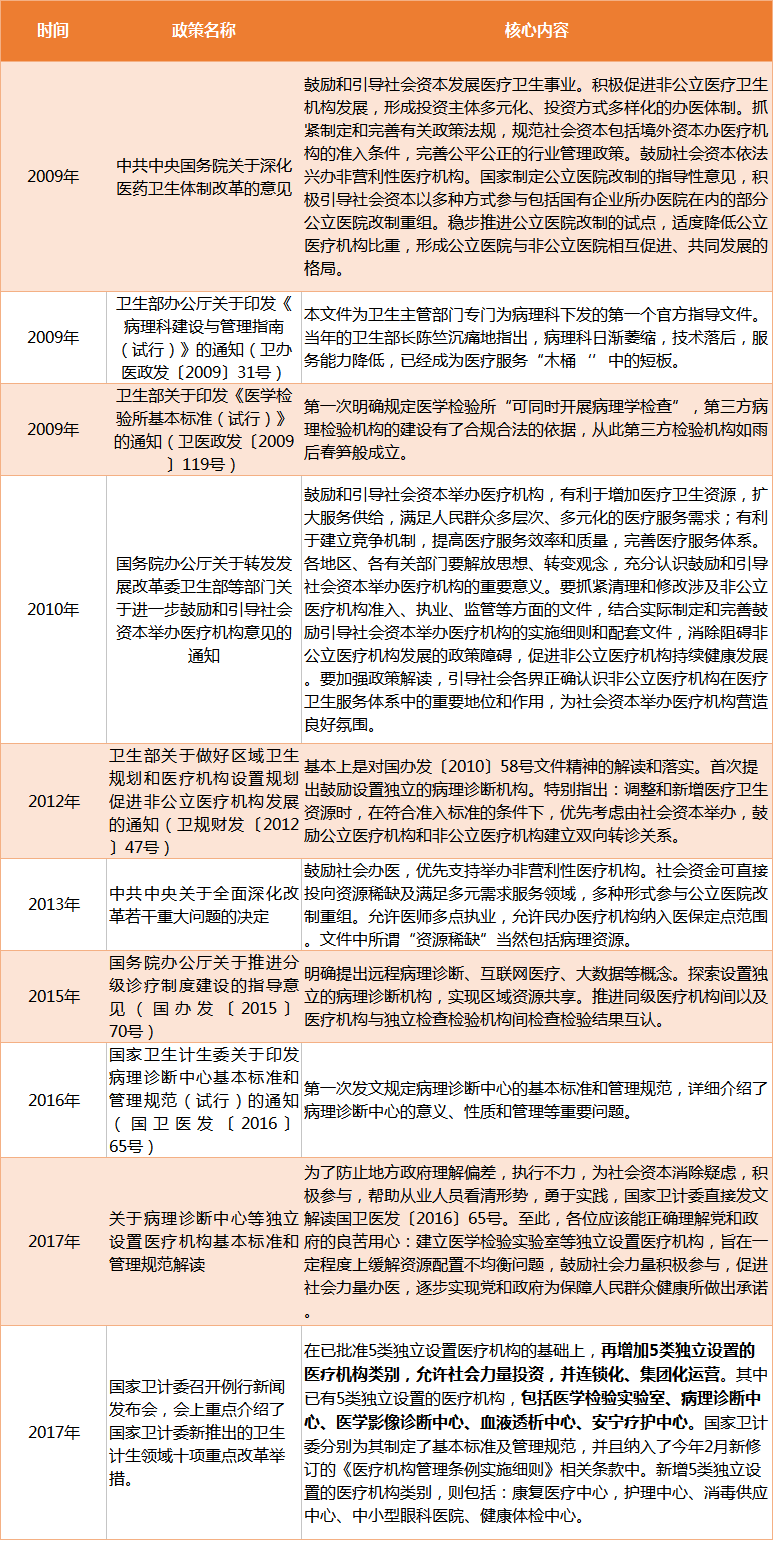
As can be seen from the list,China’s policies in the field of pathology date back to 2009. This was prompted by then-Minister of Health Chen Zhu’s solemn observation that pathology departments were shrinking, technologies were lagging, and service capabilities were declining, making them the “short stave” in the healthcare service “wooden bucket.”
On August 10, 2017, the National Health and Family Planning Commission held a regular press conference, at which it was announced that, on the basis of the five categories of independently established medical institutions already approved, five additional categories of independently established medical institutions would be added, allowing social capital investment and enabling chain-based and group-oriented operations.
Five categories of independently established medical institutions have already been introduced, including medical laboratory testing centers, pathology diagnosis centers, medical imaging diagnosis centers, hemodialysis centers, and palliative care centers. The National Health and Family Planning Commission has formulated basic standards and management specifications for each category, which have been incorporated into the relevant provisions of the Detailed Rules for the Implementation of the Regulations on the Administration of Medical Institutions, newly revised in February 2017.
A. International Standards for the Pathology Industry: A Case Study of the United States
1. Laboratory Accreditation Standards
CAP (College of American Pathologists)—The College of American Pathologists is a non-profit clinical laboratory accreditation organization in the United States. It develops detailed checklists covering all aspects of every discipline within clinical laboratories, based on the business standards and operational guidelines of the Clinical and Laboratory Standards Institute (CLSI) as well as the Clinical Laboratory Improvement Amendments of 1988 (CLIA ’88). Through rigorous requirements, it ensures that laboratories meet quality standards, thereby improving their practical operations.
Unlike ISO 15189 (Accreditation for Medical Laboratories) and ISO/IEC 17025 (General Requirements for the Competence of Testing and Calibration Laboratories), CAP accreditation is an international certification program administered by the College of American Pathologists. Widely implemented in the United States since 1962, CAP accreditation signifies that a laboratory’s quality meets world-class standards and is recognized by relevant international bodies. Currently, more than ten laboratories in China have met this standard and obtained CAP accreditation, with rapid growth observed primarily in first- and second-tier cities.
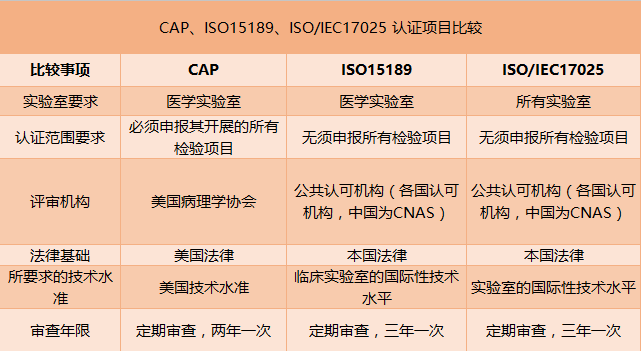
CAP Accreditation Criteria:Pathology departments in the United States are generally established in accordance with the standards developed by the College of American Pathologists (CAP). The CAP accreditation criteria are based on inspection checklists formulated by CAP itself, which can be purchased or obtained free of charge after applying for certification through the CAP website.
CAP Certification Process Includes Three Stages
·Pre-CAP Accreditation: Preparatory Work;
· CAP Accreditation Process: Initiate the CAP accreditation program by submitting an application to CAP, and complete the on-site inspection;
·Post-CAP Accreditation: Annual Internal Audit, CAP On-site Reassessment, and Proficiency Testing.
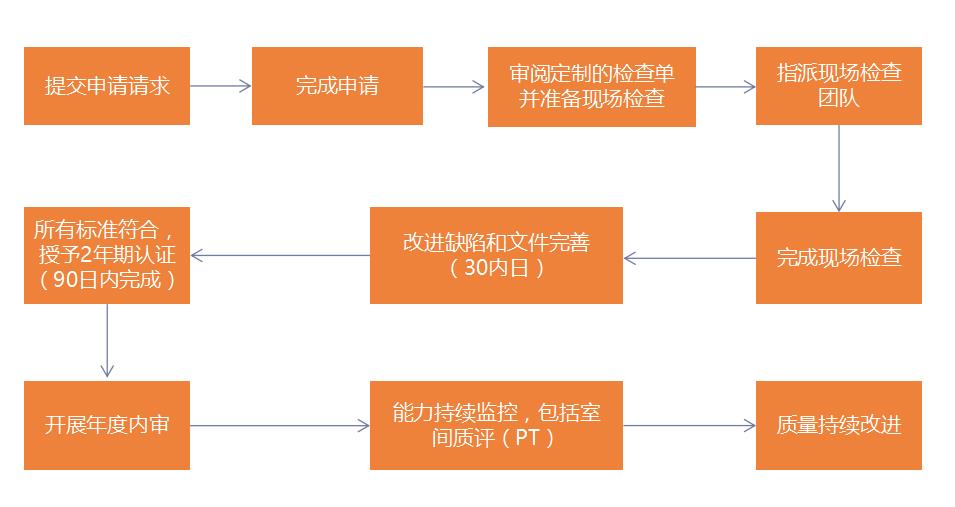
CAP Accreditation Process
The CAP currently has 18 inspection checkpoints for accreditation, including anatomic pathology, chemistry and toxicology, cytogenetics, cytopathology, etc.After laboratories applying for CAP accreditation submit their test menus and respective specialty sections, the College of American Pathologists (CAP) will tailor inspection checklists to align with each laboratory’s scope of services.
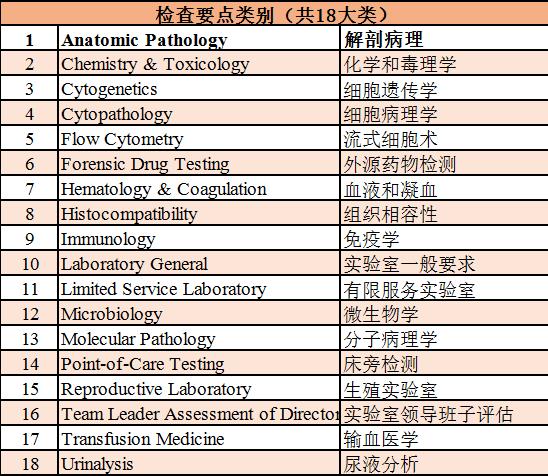
18 Key Inspection Points for CAP Accreditation
Laboratories applying for CAP accreditation are required to have a qualified Laboratory Director (Laboratory Manager). The qualification requirements for the Laboratory Director may vary depending on the types of testing performed. More complex testing procedures require the Laboratory Director to have more extensive experience. The Laboratory Director must hold an MD, DO, or PhD degree, or possess comprehensive competencies combining education and experience, in accordance with the personnel requirements established by CAP.
At least six months of participation in the CAP Proficiency Testing (PT) program, conducting medical laboratory testing on patient specimens, is required prior to applying for CAP accreditation.
To comply with CAP laboratory accreditation requirements, the laboratory must also establish the following key documentation system:
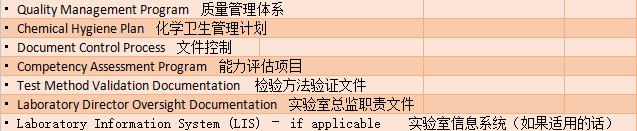
2. Pathologist Training System
Pathologists worldwide are subject to stringent licensure requirements, with eligibility contingent upon completing rigorous specialized training and passing requisite examinations. These credentialing standards are overseen by professional associations in each country, which also mandate the continuous accumulation of continuing medical education (CME) credits to ensure that pathologists maintain high diagnostic quality and keep their knowledge base up to date.
Taking the United States as an example, pathologists are classified as clinical physicians and must obtain a U.S. medical license to practice. Like other clinical physicians, pathologists must undergo a lengthy and rigorous training process.
1. Obtain a bachelor's degree;
2. Take and pass the Medical College Admission Test (MCAT);
3. Completed four years of medical school and earned a Doctor of Medicine (M.D.) degree;
4. Take and pass the United States Medical Licensing Examination (USMLE);
5. Apply for U.S. residency training programs;
6.3 years of general practitioner training;
7.5–8 years of specialized pathology training;
8. Upon completion of the program, graduates are eligible to apply for the position of Attending Pathologist, thereby obtaining the qualification to issue pathology diagnostic reports.
In addition to pathologists, the pathology department also employs specialized grossing physicians known as Pathologist Assistants (PAs). In foreign countries, Pathologist Assistants must undergo highly specialized training before they can formally practice.
Abroad, pathological specimen sampling follows fixed, standardized procedures; for each disease, there is a set of sampling standards that ensures uniformity in the handling of every specimen.
B. Summary of the 8 Basic Standards for Pathology Diagnosis Centers in China (Trial)
A Pathology Diagnostic Center is an independently established legal entity capable of independently bearing corresponding legal liabilities. It conducts pathological morphological observations via microscopy and utilizes techniques such as immunohistochemistry, molecular biology, special staining, and electron microscopy. By integrating patients’ clinical data, it issues pathological diagnostic reports for specimens including human organs, tissues, cells, body fluids, and secretions. This definition excludes pathology departments embedded within medical institutions.
1. Definition
The scope of diagnosis and treatment is pathology, which shall include relevant specialized disciplines such as the histopathology laboratory, cytopathology laboratory, immunohistochemistry laboratory, and molecular pathology laboratory. There shall be dedicated departments or full-time personnel for medical records, information management, instrument and consumable supply, and laboratory quality control. A remote pathology diagnosis department may be established.
2. Personnel
(1) There shall be at least five full-time licensed physicians holding intermediate or higher professional technical titles in clinical pathology. The head of the pathological diagnosis center shall be a licensed physician with an associate senior or higher professional technical title in pathology and with more than 15 years of experience in pathological diagnosis.
(II) There shall be at least 10 pathology technicians responsible for technical work in histopathology, cytopathology, immunohistochemistry, and molecular testing. At least one of them shall hold an intermediate or higher professional title and be responsible for overseeing pathology technical operations.
(3) Laboratory quality and safety management personnel shall hold intermediate or higher professional technical qualifications and have undergone specialized training.
3. Premises and Facilities
(1) The area of business premises shall account for no less than 75% of the total floor area. The building shall be equipped with dual-circuit power supply or emergency power generation facilities, and uninterruptible power supplies (UPS) shall be provided for critical equipment and network systems.
(2) The building area shall be no less than 600 square meters, with functional areas such as the molecular pathology laboratory configured in accordance with relevant standards and commensurate with the safety protection levels for hazardous chemicals and biosafety.
(3) The area and facilities of the laboratory and other areas can meet the needs of normal work.
(4) Establish a temporary storage area for medical waste, and either equip it with devices for treating contaminated materials and waste liquids or entrust their recovery and disposal to companies or entities with professional qualifications, under signed agreements.
4. Zoning Layout
(I) Pathology Functional Areas. The layout and workflow shall meet operational needs, comply with hospital infection control requirements, and clearly distinguish between clean and contaminated zones. Appropriate work areas shall be provided, including reception and specimen acceptance area, specimen preparation area, gross examination and tissue sampling area, tissue dehydration processing area, sectioning area, cytology processing area, special staining and immunohistochemistry work area, molecular pathology work area, reagent and consumables storage area, specimen storage area, medical waste disposal area, medical staff office area, slide reading and discussion area, library, and other basic functional areas. Where remote pathology diagnosis is conducted, a remote diagnosis room shall also be established.
(2) Auxiliary Functional Areas. Medical expense settlement, as well as instruments, consumables, and the sterile supply department, among others.
(3) Administrative Area. Departments for pathology archives, information management, and laboratory quality control and safety.
5. Equipment
(I) Basic Equipment. The quantity of routine equipment, such as centrifuges, pipettes, sterilization equipment, biological safety cabinets, specimen cabinets, slide storage cabinets, paraffin block cabinets, gross photography devices, and digital slide scanning systems, as well as optical microscopes, shall be commensurate with the workload. There shall be at least one multi-head microscope for concurrent viewing by five or more individuals. An appropriate number of molecular pathology diagnostic and technical equipment shall be configured, including a polymerase chain reaction (PCR) laboratory and corresponding equipment, nucleic acid extraction equipment, molecular hybridization instruments, refrigerated centrifuges, and fluorescence microscopes. Specialized pathology equipment includes enclosed automated tissue processors, paraffin embedding stations, automated HE stainers, slide flotation baths, rotary microtomes, automated liquid-based/thin-layer cytology preparation systems, cryostats (optional), and fully automated immunohistochemistry stainers. All specialized pathology equipment must possess medical device registration certificates at the level issued by the China Food and Drug Administration (CFDA).
(2) Information technology equipment. This includes networked computers and other devices with capabilities for information reporting and transmission, as well as information systems for specimen management, report management, digital slide management, quality control, viewing, and remote consultation.
6. Rules and Regulations
Establish a quality management system for the pathology diagnosis center, formulate various rules and regulations and job responsibilities for personnel, and implement diagnostic and treatment technical standards and operating procedures formulated or recognized by the state. The rules and regulations shall include at least the following: facility and equipment management system; instrument and reagent management system; specimen management system; quality management systems for the pre-examination, intra-examination, and post-examination phases; patient (specimen) registration and medical documentation management system; health statistics and epidemic reporting system; information management and patient privacy protection system; technical tiered management system; occupational safety and health protection management system for medical staff; medical waste/hazardous chemicals and biosafety management system; and fire safety management system. Standardized operating procedures appropriate to the pathology diagnosis items shall also be formulated.
7. Others
(1) Entities or individuals establishing a pathological diagnosis center must comply with the Regulations on the Administration of Medical Institutions (Decree No. 149 of the State Council of the People's Republic of China) and its implementing rules.
Relevant regulations.
(2) A pathology diagnosis center is a standalone medical institution, established and approved by the municipal-level or higher health and family planning administrative department. The pathology diagnosis center shall be reviewed and accepted by experts organized by the provincial-level health and family planning administrative department. After passing the acceptance inspection, it may conduct pathology diagnosis services only after completing practice registration according to jurisdiction.
(3) The pathological diagnosis center is an independent legal entity and independently bears corresponding legal liabilities.
(4) Pathology diagnosis centers shall establish robust systems for internal quality control, external quality assessment, and consultation; actively participate in activities organized by provincial pathology quality control centers; and undergo their regular evaluations. They shall cooperate with quality inspections and technical guidance conducted by health and family planning administrative departments and the provincial pathology quality control centers or other organizations entrusted by them.
(5) Entities undertaking pathological diagnosis tasks for other medical institutions shall sign medical service cooperation agreements with the respective institutions to ensure the quality and timeliness of pathological diagnosis services.
(6) Pathology diagnosis centers that entrust other medical institutions with reagents, laboratory tests, auxiliary examinations, and sterile supply items shall sign medical service cooperation agreements with the corresponding medical institutions to ensure the quality and timeliness of the relevant medical services.
A comparative analysis reveals that, despite significant differences in policies and standards governing the pathology sector between China and the United States, the development trajectory of independent pathology centers in the U.S. still highlights the potential and promising future of China’s pathology industry. This"Blue Ocean" industries are worth anticipating.