Traditional Medical Device Makers and AI Startups Forge Strategic Collaborations to Drive Innovation

1
This Week's Hot Topics
# Traditional Medical Devices and AI#
Since 2016, nearly one hundred medical AI startups have emerged in China, aiming to seize the opportunities presented by healthcare reform and grow into major corporations. Meanwhile, medical device companies are also reluctant to miss this opportunity; they are actively investing resources in the research and development of AI-driven medical products or seeking partnerships to enhance the intelligence of their devices and boost product competitiveness.
How are medical device companies strategizing in the field of artificial intelligence, and how can traditional technologies be integrated with AI? Meanwhile, how can emerging medical AI startups collaborate with traditional device manufacturers to penetrate the market? These are practical challenges facing enterprises today!
For traditional medical device companies, the process of establishing a new department to develop products is relatively complex. However, by partnering with artificial intelligence (AI) companies, they can avoid expending time, financial resources, and effort on this endeavor. Through such collaborations, AI systems can be integrated into medical devices for sale, thereby enhancing the competitiveness of the devices. For medical AI companies, collaborating with device manufacturers after product development offers two key benefits: first, it enables the validation of their products’ actual clinical efficacy through scientific research partnerships.
Viewpoint
1. Dahlweid: Artificial Intelligence Assists Physicians in Decision-Making and Managing Vast Amounts of Healthcare Information
In May 2017, GE showcased its lung nodule detection technology to the public at the CMEF exhibition in Shanghai. GE is involved in a wide range of areas within healthcare, and its strategic layout in artificial intelligence can be divided into two segments: medical imaging and healthcare services.
Dr. Michael Dahlweid, Chief Medical Officer of Digital Solutions at GE Healthcare, stated that artificial intelligence assists physicians in decision-making and managing vast amounts of healthcare information. Currently, GE is leveraging deep learning to pilot various tasks, including: identifying different types of cancerous tissue cells, determining the most effective treatment plans for intensive care unit (ICU) patients, predicting the likelihood of sepsis or infection complications in ICU patients, assessing cardiac issues using ultrasound, and predicting disease onset.
2、Yan Ziye: The intelligent imaging platform is merely a tool; what we provide is a comprehensive solution.
At this year’s CMEF exhibition, Wanli Cloud unveiled its AI-powered precision medicine platform—i Imaging. Currently, the i Imaging platform has launched DR screening and CT detection functionalities. According to official statements, i Imaging can reduce missed diagnoses of small pulmonary nodules by more than 50%, achieving a detection accuracy rate exceeding 95%. However, Dr. Yan Ziye from Wanli Cloud’s imaging platform emphasized that “the intelligent imaging platform is merely a tool; what we provide is a comprehensive solution.” In addition to offering cloud-based imaging services, Wanli Cloud places greater emphasis on intelligent processing and the establishment of quality control systems.
3. Siemens: syngo.via builds structured tasks covering the entire workflow of imaging acquisition, processing, and reporting, based on a vast amount of medical literature and cases.
Traditional industrial giant Siemens has also focused its artificial intelligence initiatives on medical imaging. According to VCBeat, Siemens Healthineers offers an AI-powered imaging solution called syngo.via. Leveraging vast amounts of medical literature and clinical cases, syngo.via builds a big data-driven knowledge base of clinical conditions. It then structures tasks across the entire workflow—including image acquisition, processing, and reporting—in accordance with established standards and guidelines.
syngo.via then simulates physicians’ workflow and knowledge retrieval to create corresponding image processing pipelines, thereby enabling “intelligent pre-processing” and “processing-as-reporting.” In other words, before a physician opens a case, syngo.via can automatically initiate parallel multi-software processing in accordance with relevant guidelines and consensus statements.
Siemens Healthineers and IBM have joined forces to sign a “Five-Year Global Strategic Development Plan.” IBM aims to leverage Siemens’ global medical device sales network, distribution channels, and professional connections to make significant inroads into the commercial applications within the global healthcare and wellness sectors.
Their collaboration will also help Siemens’ CT or MRI equipment achieve a qualitative leap from quantitative accumulation. For instance, this could involve integrating IBM Watson’s intelligent system into Siemens’ CT or MRI devices.
Report
2016 Report on Innovation Trends in AI + Healthcare IV: What Can AI Achieve in Healthcare? (Part 1)
2
This Week's Headlines
Leading medical big data and AI companies are all focusing on the six application scenarios of electronic medical records.Chapter
Author: Hao Xueyang
In this article, VCBeat will review the innovative applications of electronic medical records by leading Chinese healthcare big data and AI companies.
From a market perspective, there are currently six major challenges in the clinical use of electronic medical records:
1. Electronic Medical Record Systems Are Difficult to MeetDisease-specific specialization needs, particularly physicians’ personalized demands for clinical data in the field of major diseases.
2. The cumbersome operation of electronic medical records inevitably leads to physician burnout during data entry, significantly compromising the authenticity of the recorded data.
3. Interconnectivity of Electronic Medical Record (EMR) Data. This encompasses two aspects: first, the integration of internal hospital EMRs with other systems such as Hospital Information Systems (HIS); second, government-led regional sharing platforms, whose primary tasks are data extraction and facilitating information interoperability among hospitals. Throughout both processes, more advanced and comprehensive technologies must be employed to ensure the security of data storage and sharing.
4. The deployment of big data platforms based on electronic medical records (EMRs) within hospitals for research or clinical applications requires software vendors behind each hospital’s software system to open their data interfaces. However, these companies often demand exorbitant fees, exhibit passive cooperation, and repeatedly delay the process. Without an effective platform for the centralized storage of large-scale, multi-source, heterogeneous medical data, data mining can only be conducted in a fragmented, manual manner.
5. Due to the lack of structured data entry in electronic medical records (EMRs) by physicians in the past, documentation was predominantly recorded in narrative text, resulting in highly formulaic content. Similar to writing reports in Microsoft Word, historical EMRs in hospitals contain extensive blocks of natural language paragraphs. This has madeHospitals face challenges in quality control and data utilization.Therefore, accurately structuring these existing data sets remains a major challenge at the current stage.
6. Due to a lack of experience, primary care general practitioners frequently make misdiagnoses or miss diagnoses, leading to serious doctor-patient conflicts. Meanwhile, the clinical value of electronic health records (EHRs) in major hospitals has not yet been systematically exploited. Furthermore, given the heavy workloads of physicians in these large hospitals, it is difficult to effectively transfer advanced diagnostic and treatment expertise to the primary care level. Therefore, clinical decision support systems based on EHR data from major hospitals have become a key direction for future development.
It is precisely because of these challenges that new AI and big data companies have been presented with development opportunities.
Three Key Insights from the Interim Reports of 130 Pharmaceutical Companies: Robust Market Growth, Cooling M&A Trends, and Significant Transformation Pressure
Author: HighKangFlat
According to statistics from VCBeat (WeChat ID: vcbeat), as of August 23, 130 listed pharmaceutical companies had disclosed their semi-annual reports. The data show that the overall performance of listed pharmaceutical companies remained stable with positive trends, and both revenue and net profit recorded significant year-on-year increases.
On the other hand, major pharmaceutical policies implemented in recent years—such as the Consistency Evaluation, the Two-Invoice System, and the comprehensive reform of public hospitals—have drastically changed the pharmaceutical business environment. Listed pharmaceutical companies need to adjust their strategies to adapt to the new industrial landscape, and these changes are also reflected in their semi-annual reports.
Based on the overall performance of listed pharmaceutical companies in the first half of this year, it is evident that while corporate results have experienced some fluctuations under the influence of pharmaceutical policies, the sector’s overall performance remains robust. Additionally, following the wave of large-scale mergers and acquisitions (M&A) in previous years, M&A activity in the pharmaceutical market has cooled, with transactions increasingly concentrating on large-cap, high-quality targets. Some companies have also begun to divest non-core businesses to sharpen their operational focus and improve cash flow. Overall, due to its unique characteristics, the pharmaceutical industry is expected to maintain steady growth. Relevant companies should leverage the transitional policy window to adjust their business models and secure long-term growth momentum.
3
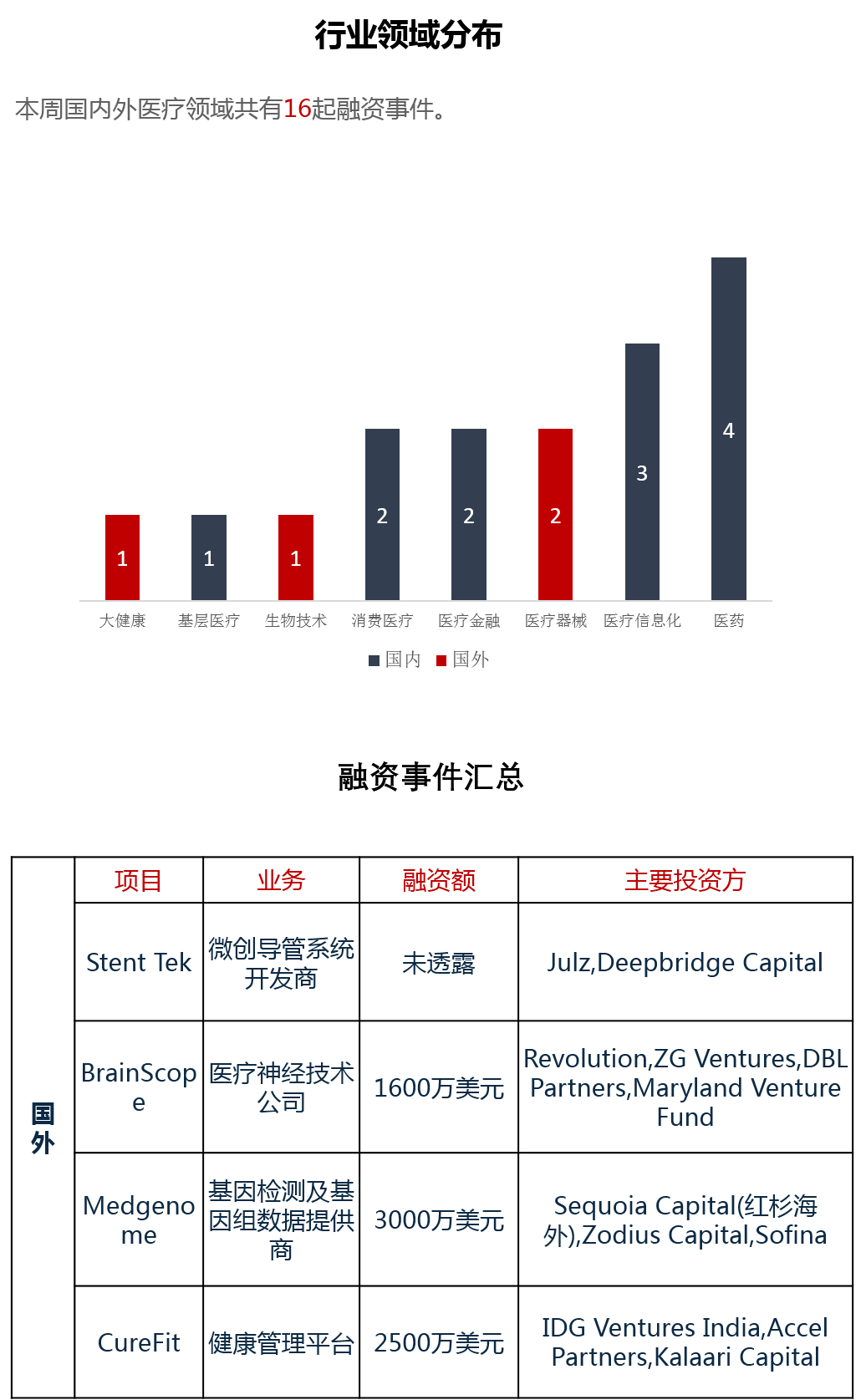
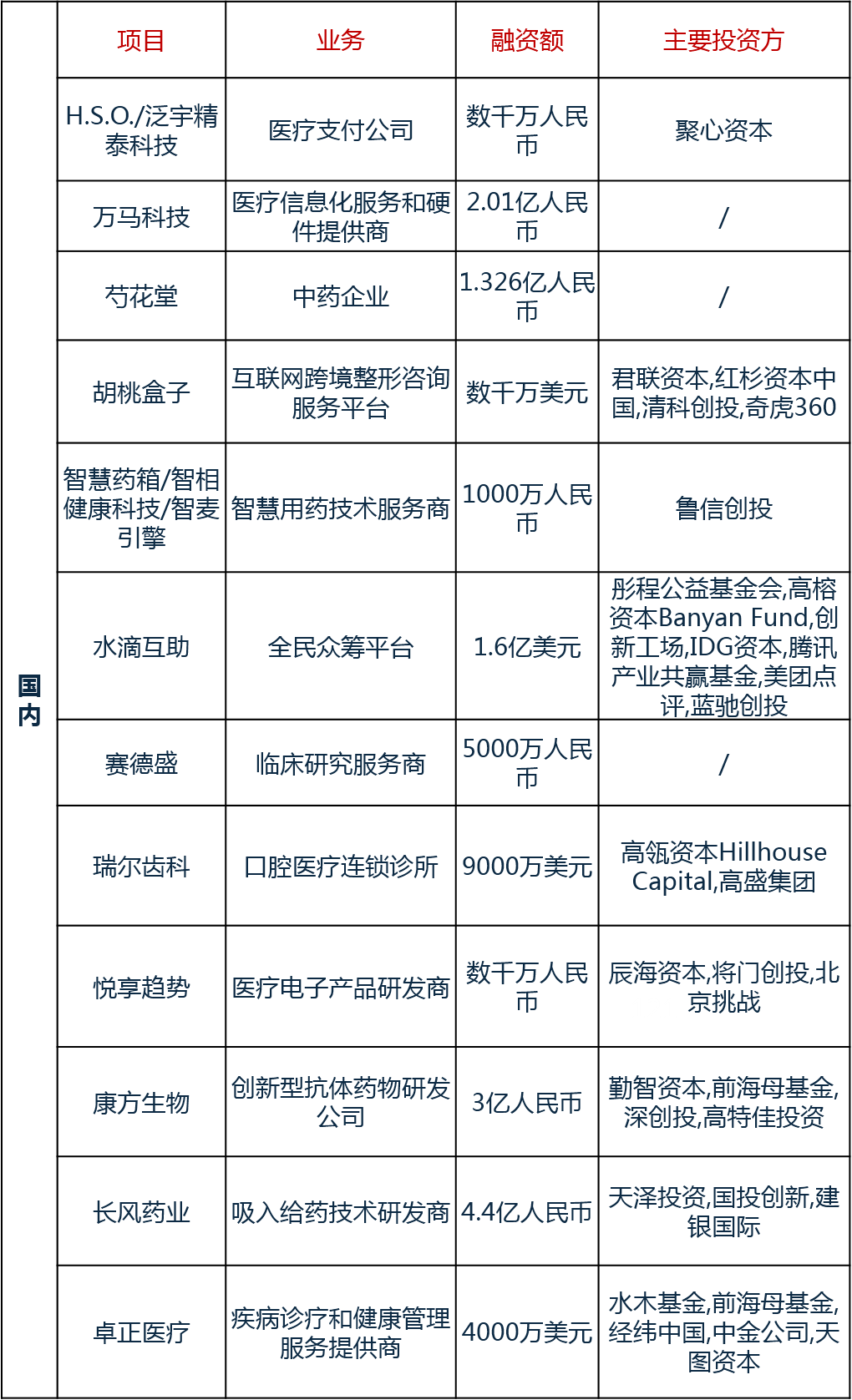
This Week's Financing Events in the Healthcare Sector
4
This Week’s Healthcare Industry Activity Updates

5
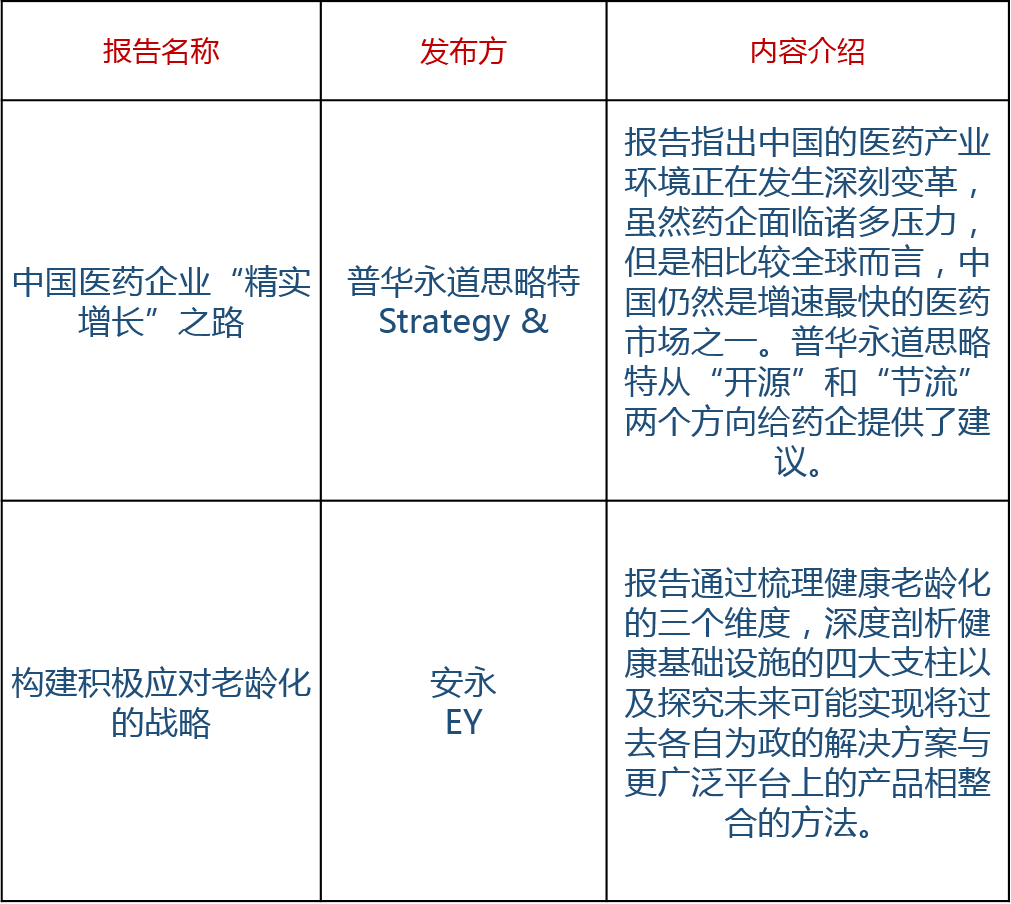
This Week's In-Depth Report
For more content, please visit the VCBeat Knowledge Base!