

Deepwise Healthcare: A Clinical-Guideline-Driven AI Medical Imaging Pioneer Founded by Alumni of Peking University, Baidu, and Siemens Healthineers
“Ultimately, AI-powered medical products are still medical devices. As such, they must adhere to clinical guidelines and medical pathways; otherwise, gaining hospital access will be difficult. Only by meeting clinical needs can AI-driven medical products gain final acceptance from physicians and hospitals,” stated Qiao Xin, CEO of Deepwise Medical, in an interview with VCBeat. He consistently emphasized the importance of following clinical guidelines and aligning with physicians’ workflow habits.
Deepwise Medical was founded in early 2017. Lei Ming, one of the seven founding members of Baidu, began leading a team of eight PhDs in exploring intelligent medical imaging as early as early 2015. The company secured RMB 35 million in its first round of financing shortly after its establishment. It has since developed its first medical imaging diagnostic system for early lung cancer screening, which is currently being piloted at several Grade A tertiary hospitals. In today’s crowded landscape of AI-driven medical imaging companies, what enabled Deepwise Medical to secure such substantial funding? With this question in mind, VCBeat conducted an interview with Qiao Xin, CEO of Deepwise Medical.
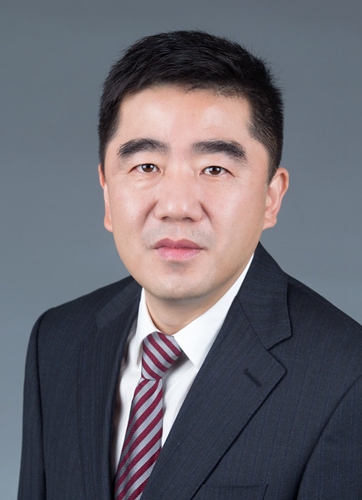
Qiao Xin, CEO of Deepwise Medical
Only Products Accepted in Clinical Practice Are Good Products
Qiao Xin pointed out that the data sources of some companies on the market currently come from only two or three hospitals, which is actually far from sufficient. Taking CT imaging as an example, there are hundreds of different CT scanner models currently in use on the market, manufactured by seven or eight vendors. During the productization process, if a model is trained using data from only a few scanner models or from publicly available datasets, it is difficult to achieve satisfactory performance in real-world applications, even if the accuracy in the laboratory setting is high. For another example, if certain companies use 1-mm CT images for research and development, the system may encounter difficulties in recognizing 5-mm CT images obtained from patients.
Additionally,Major medical equipment from companies such as GE, Siemens, and Philips is continuously being updated. For medical AI products to be viable for market promotion, they must be compatible with 90% of the imaging devices currently on the market.。
Although Deepwise Medical was only recently established, its core team had already been engaged in the development of medical AI products prior to the company’s founding, particularly screening solutions for pulmonary nodules. At the time of incorporation, the product already demonstrated high accuracy, and the team has been focusing on productization efforts over the past few months.
During the productization process, Deepwise Medical encountered more than ten instances of mismatch. To adapt to a wider range of usage conditions, the team returned to a research-oriented approach—collaborating with partner hospitals, acquiring new data, obtaining new annotations, and exploring new ideas—to overcome these challenges. Looking back on this journey, Qiao Xin, CEO of Deepwise Medical, feels that the difficulties of productization are in no way less than those of scientific research.。
Currently, Deepwise Healthcare’s pulmonary nodule product has overcome the challenges of inconsistent data and varying standards across hospitals, enabling its clinical deployment in hospital settings.
Additionally, Qiao Xin added,Their initial product positioning was to serve primary healthcare institutions. The medical images acquired at these facilities are far more complex than those from tertiary hospitals, with significant disparities in quality and standardization. However, as the primary care sector represents the largest market, overcoming these challenges is essential to capturing this market share.This process requires the team to possess profound clinical expertise and a deep understanding of primary healthcare as well as the operational landscapes of various hospitals, in order to achieve success.
To ensure the quality of data annotation, prior to system training, the data is annotated by at least two senior medical experts. In the event of discrepancies in their annotations, Deepwise Medical engages a more senior expert to establish the definitive standard, thereby ensuring the trustworthiness of the data used for training. Although this approach incurs higher costs, it guarantees the accuracy of the system.
After more than half a year of efforts, Deepwise Medical’s current early lung nodule screening product,The system has been deployed in more than 10 hospitals, assisting physicians in completing over 5,000 diagnostic cases. The overall sensitivity and specificity of the system are 98.6% and 92.9%, respectively (these data were derived from scientific experiments conducted on real-world complex cases, and this achievement has been presented at the Radiological Society of North America annual meeting).。
Qiao Xin emphasized that Deepwise Medical is currently not pursuing the volume of usage but rather focusing on universality, striving to validate its products with a wide variety of clinical data.
Medical AI products must also adhere to medical pathways and clinical guidelines.
The product has two positioning strategies,First, it assists primary care hospitals in early disease diagnosis and screening. Second, it supports tertiary hospitals in making scientific decisions and providing adjunctive treatment for complex cases. Tertiary hospitals have higher expectations and requirements for AI technology; they need not only screening but also further analysis of lesion morphology by integrating other diagnostic information, thereby facilitating clinical decision-making and achieving the goal of precision medicine.。
Qiao Xin also emphasized the importance of clinical guidelines. Once medical imaging reports are issued, they are transmitted to clinicians, who determine whether further treatment is necessary based on these guidelines in conjunction with the patient’s other clinical data and physical characteristics. Therefore, it is the responsibility of radiologists to understand clinical needs and the clinical significance of various guidelines, providing clinically valuable imaging information. Radiologists must not make arbitrary assumptions about clinical needs or provide information that is not clinically relevant.
Ultimately, AI-powered medical products are still medical products; as such, they must adhere to clinical guidelines and medical pathways, or they will not be accepted by physicians.
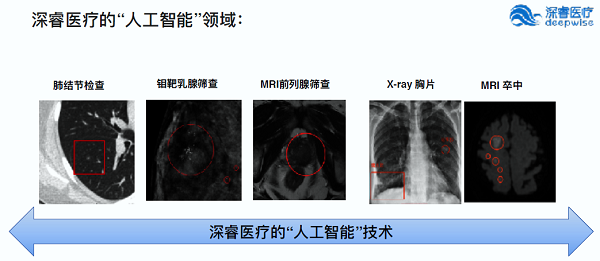
Certainly, Deepwise Medical has not only conducted in-depth research in the field of lung tumors. According to Qiao Xin, they have already expanded into mammography, MRI prostate examinations, X-ray chest radiographs, and stroke assessment. Their pulmonary nodule screening product can not only accurately identify the location of nodules but also generate structured reports that comply with guideline standards.
Furthermore, since most nodules do not require surgery in the early stages but rather regular follow-up, physicians can use Deepwise Medical’s system during follow-up visits to rapidly locate and compare previously identified nodules. This provides clinicians with a more scientific basis for decision-making.
As future products achieve a certain level of professional sophistication, they will gradually become mainstream. Deepwise will provide cloud-based diagnostic solutions by deploying its systems on platforms accessible to the general public, thereby enabling widespread and convenient access to the medical benefits offered by advanced artificial intelligence technologies.。
A Team with Deep Expertise in the Healthcare Sector
Before the establishment of Deepwise Healthcare, its co-founder Lei Ming had already led a technical team from Peking University and the Chinese Academy of Sciences to explore intelligent medical imaging. Prior to founding Deepwise, Qiao Xin served as General Manager of the CT Business Unit at Siemens Healthineers (China), Vice President of Greater China, and President of the Medical Services Division. In 2016, through discussions with Lei Ming, he became aware of the rapid advancements in artificial intelligence technology. He subsequently engaged in in-depth consultations with medical experts, earning unanimous recognition from industry specialists. Consequently, Qiao Xin co-founded Deepwise Healthcare together with Lei Ming and Li Yiming.
In addition to its robust research and development capabilities, Deepwise Medical’s senior management team comprises numerous professionals from the medical imaging sector. Sally Yang, Vice President of Sales (an American citizen), formerly served as General Manager of Terrecon China; Mr. Li Chaoyang, Vice President of Marketing, was previously Marketing Director at Siemens; and Dr. Xin Ying, Director of Clinical Research, is a former senior clinical expert at Siemens Healthineers. Many members of the medical team hold master’s or doctoral degrees in medical imaging and possess extensive experience in medical image diagnosis, maintaining long-standing collaborative relationships with radiology and clinical departments at hospitals across China.
In terms of market strategy, Deepwise Medical has initiated the CFDA certification process for its products. Moving forward, the company will continue to expand into primary healthcare applications while collaborating with medical device manufacturers to provide intelligent core solutions for their equipment.