

How China's First Multi-Practice Clinic Was Launched: The Apricot Doctor Model
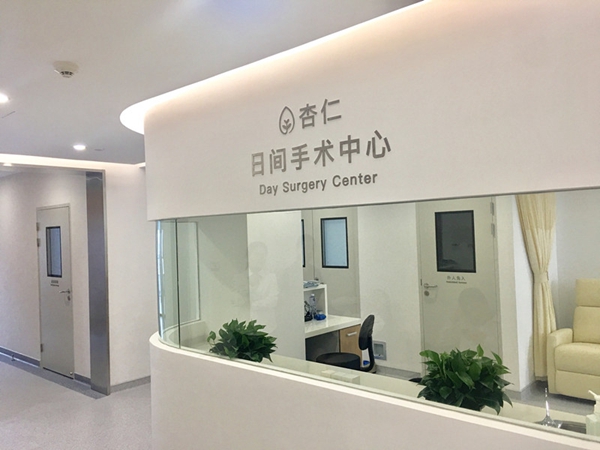
It is becoming increasingly convenient for doctors to start their own practices. An internet platform company named Xingren Doctor has established a clinic model centered on multi-site practice and shared office spaces. To date, Xingren Doctor has opened its fifth such clinic within three years.
Over the past three years, Xingren Doctor’s platform has accumulated 430,000 real-name verified physicians. In the most recent year alone, the total revenue from online consultations exceeded RMB 180 million.
So, how exactly does the clinic proposed by Xingren Doctor, the first in China to enable multi-site practice for physicians, operate?
Since 2014, numerous internet healthcare companies have expanded into offline clinics, aiming to monetize traffic and implement a business model centered on in-depth medical services through the integration of online and offline channels. However, after several years of practical operation, it has become evident that delivering offline medical services is far from simple, as these companies have encountered challenges such as difficulties in obtaining clinic approval licenses, a shortage of medical professionals, and low trust among residents.
To address these challenges, on July 17, 2016, Xingren Doctor established China’s first WeWork studio for physicians’ multi-site practice—Xingren Clinic—in Shenyang. This launch not only marked Xingren Doctor’s formal integration of online platform services with offline physical operations, but also pioneered the WeWork model in China.
The so-called “WeWork model” refers to an operational framework in which Xingren Doctors assumes responsibility for site selection, design and renovation, equipment procurement, license applications, staff recruitment, and other complex tasks involved in establishing a standard outpatient clinic. After completing all construction-related work and undertaking ongoing maintenance and management, physicians engage in multi-site practice at the facility, with medical service revenues shared between the physicians and Xingren Doctors.
After nearly a year of piloting its model in Shenyang, Almond Doctor has introduced the “physician partner” concept to its clinics that have sequentially opened or entered trial operations in Shenzhen, Guangzhou, Shanghai, and Chengdu. Under this partnership model, Almond Doctor and the physician partners jointly contribute capital, co-manage the practices, share profits, and bear risks together.
Xu Lin, Co-founder and COO of Almond Doctor, shared the list of partners for its five current offline clinics. Interestingly, the distribution of professional titles and seniority among these physician partners closely aligns with Almond’s online user profile. Previous user profiling data from Almond indicated that, in terms of physician titles, attending physicians and associate chief physicians ranked as the top two most active user groups, accounting for 45% and 27% of active users, respectively.
Testing the Waters with a Partner Recruitment CampaignFollowing the opening of its Shenyang clinic last July, Xingren Doctor announced the launch of a partner recruitment initiative for Xingren Clinics. The program aims to collaborate with physicians in various cities who are interested in establishing clinics by setting up a joint clinic development fund. Physicians can contribute capital to this pooled fund, which surpassed RMB 40 million within the first month of the campaign.
According to Xu Lin, Xingren selected Shanghai, Chengdu, Shenzhen, and Guangzhou—the cities with the highest participation rates in its partner recruitment campaign—as the first batch of locations for establishing Xingren Partner Clinics. The formal recruitment drive was launched in March, and within 30 days, 243 physicians were signed on as clinic partners.
On the other hand, with the addition of physician partners, Xingren has been able to share and reduce the costs of opening clinics. Although the cost for each of Xingren’s clinics currently ranges between RMB 6 million and RMB 7 million, Xingren’s actual investment accounts for only half of that amount.
In terms of site selection, Almond Doctor also prioritizes physicians’ input, often choosing locations near Grade A tertiary hospitals. For instance, the Almond Clinic located in Shanghai’s Riziguang Center was not chosen because Tianzifang attracts fashionable crowds from across China with its high foot traffic, but rather to facilitate physicians’ multi-site practice by making it more convenient for them to visit the clinic after their regular hospital shifts.
This strategic approach is evident in the site selection for Xingren’s multiple clinics. The Xingren Shanghai Outpatient Clinic is located only 630 meters from Ruijin Hospital and 3.3 kilometers from Huashan Hospital. Within a 1.5-kilometer radius of the Guangzhou Outpatient Clinic are several Grade A tertiary hospitals, including Guangdong Provincial People’s Hospital, Guangdong Provincial Hospital of Chinese Medicine, and Guangzhou Women and Children’s Medical Center. The Shenzhen Outpatient Clinic is separated from Shenzhen Fourth People’s Hospital by only a wall.
Furthermore, Almond Health aims to break free from the geographic constraints and limitations on patient attraction inherent to traditional clinics. Although its locations are primarily situated in commercial hubs, it deliberately avoids high-visibility storefronts, instead nesting itself deep within commercial office buildings.
Xu Lin: “We do not select street-front retail spaces, as the rent is relatively high. The rent for the first floor can be five times that of the upper floors. We are not concerned with prime location; it suffices that physicians can conveniently come to provide consultations.”
Currently, the peak usage periods for Almond Clinics in several cities are on weekends.
Establishing a doctor-centric supply-and-demand relationship between physicians and patients. Since most private clinics are unable to integrate with social health insurance, patient acquisition has always been the critical vulnerability for chain clinics operated by social capital. In addressing this issue, Almond Health has largely abandoned its own patient-drivation strategies, instead adopting a “physician-referral” model for patient acquisition.
Under this framework, in addition to serving as a registered site for physicians’ multi-site practice, Xingren Doctor grants physicians substantial autonomy. For instance, physicians set their own consultation fees, with Xingren receiving only a fixed share of revenue for the use of consultation rooms and equipment; there is no mandatory requirement for the duration of physician–patient interactions; and no in-house pharmacy is operated, with medication delivery fully outsourced to third-party providers.
Perhaps platform-based clinics like Xingren Doctor will also see their day in the sun, though the wait may be somewhat long.
From the perspective of Xingren Doctor’s platform-based clinics, two factors are required: first, physicians must be able to practice freely; second, the platform must possess expertise in clinic operations and have access to a sufficiently large pool of physicians.
Physicians’ multi-site practice was first addressed in 2009, when the former Ministry of Health issued the Notice on Issues Concerning Physicians’ Multi-Site Practice and launched pilot programs in selected regions. Two years later, Beijing implemented the Interim Measures for the Administration of Physicians’ Multi-Site Practice in Beijing. Under these measures, licensed physicians with intermediate or senior professional titles who meet the eligibility criteria and complete registration are permitted to legally provide diagnostic and therapeutic services at two to three medical institutions within Beijing’s administrative jurisdiction.
It was not until December 2014, when Professor Deng Kaibo established a studio at Beijing Cicheng Medical Center to pilot the multi-site practice model for physicians, that it caused a sensation in the industry.
From the perspective of application requirements, although policies vary slightly across regions, licensed physicians in most areas who meet the following criteria are eligible to apply for multi-site practice. For instance, they must have obtained a Physician Practice Certificate and have worked in a corresponding professional technical position for more than five years; they must also be in good health and capable of performing the duties associated with multi-site practice.
Of particular note is that licensed physicians whose primary practice location is at township health centers, village clinics (stations), outpatient departments, clinics, or infirmaries are excluded from the scope of multi-site practice. Since Xingren Doctor operates clinics, it aligns with the scenarios for multi-site practice for most physicians.
Because multi-site practice by physicians is highly beneficial to the healthy development and rational mobility of the medical industry, it can also better promote the resolution of the problem of unequal distribution of social medical resources.
In the future, as more and more physicians apply for multi-site practice privileges, it will indeed be a once-in-a-century opportunity for Almond Doctor or similar platform-based enterprises.