

CMS Proposes Landmark Reimbursement Expansion for Telehealth Services
July 2018 may be a significant watershed for the U.S. healthcare industry.
Just two weeks ago, the Centers for Medicare and Medicaid Services (CMS) proposed a plan to formally incorporate telemedicine into the Medicare system.
This means that telemedicine, which previously occupied an ambiguous status, may now be formally endorsed and certified as an integral part of effective and valuable healthcare processes. Once this change is implemented, more than 130 million American patients covered by CMS will be able to access medical resources without geographic restrictions through telemedicine, enabling them to receive physician diagnoses more rapidly than before.
“Telemedicine” is a concept that has been discussed for decades and is no longer new; however, emerging technologies such as advanced materials, AI, big data, and AR/VR are endowing it with entirely new significance and broad market prospects, while the number of telemedicine patients continues to rise steadily.
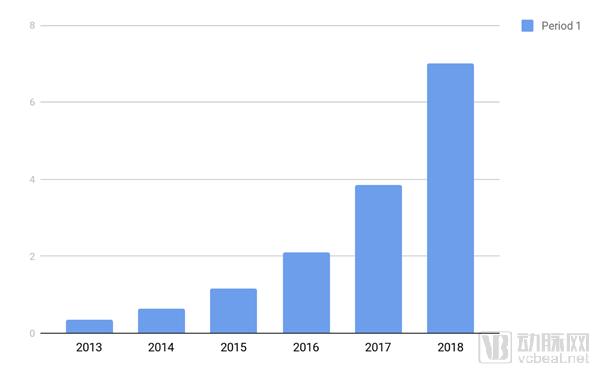
Global Telemedicine Patient Statistics and Forecast, 2013–2018 (Unit: Million)
The proposal put forward by CMS this time is likely to fire the first shot in the further explosion of the telemedicine industry: from healthcare startups to large-scale telemedicine companies, many players in this industry will have a clearer path to commercialization, which will also promote the continued expansion of this market, help break the current imbalance of medical resources, and improve medical efficiency.
Detailed Interpretation
This proposal regarding the Physician Fee Schedule includes:
·Inclusion of “physicians’ remote assessment of whether patients require further examination or treatment” in the medical insurance payment system
· Supports high-frequency channel communication technology
·Inclusion of “physicians’ assessment of patient-uploaded photos” in the medical insurance reimbursement system
· Expand Medicare coverage for telehealth services, which will subsequently include long-term preventive care
It is evident that both physicians’ and patients’ adoption of telemedicine has been incorporated into the existing health insurance reimbursement system, eliminating financial concerns. This enables preliminary assessment via remote consultations to determine whether in-person diagnosis is necessary, thereby alleviating the burden on physicians.
“CMS aims to leverage emerging technologies, such as audio-visual applications and patient-facing health platforms, to facilitate patients’ access to effective medical services. The redesigned home health payment system encourages quality over quantity and eliminates incentives that may lead to ‘overtreatment,’” said CMS Administrator Seema Verma.
This regulation holds significant importance for the genuine integration of telemedicine into the healthcare system.
“The introduction of this CMS initiative has broadened the market prospects for many telehealth-related technologies and played a positive role in standardizing the market,” said Dr. Li Jiang, founder of VivaLNK, a Silicon Valley-based manufacturer of medical-grade flexible wearables and provider of telehealth solutions. The company has independently developed eSkin electronic skin technology and backend algorithms, enabling ultra-thin, soft, and stretchable electronic patches to adhere closely to the human body, while facilitating real-time, convenient monitoring, collection, and analysis of various physiological parameters via a cloud platform. “Recently, we have engaged in in-depth collaborations with companies such as Alacrity Care and Myia on remote diagnosis and treatment of cancer and cardiovascular diseases. It is foreseeable that such partnerships will become more frequent and smoother following the implementation of the CMS initiative.”
Beyond the straightforward “payment” function, CMS has proposed a series of initiatives aimed at promoting electronic information sharing among different healthcare institutions and enhancing overall transparency in the healthcare industry. Meanwhile, these measures are designed to effectively alleviate the administrative burden on physicians and healthcare facilities, freeing up more energy and time for patient care.
For instance, another concept within the PFS framework involves simplifying and standardizing documentation required by evaluation and management guidelines; reducing unnecessary physician supervision of radiologist assistants; and minimizing overly complex status reporting for outpatient care.
According to CMS projections, following the implementation of this program, a physician with more than 40% of their patients in the Medicare system would save an average of 51 hours of work time per year.
# The Major Trend of Telemedicine
The proposal put forward by CMS this time is just one of a series of recent moves to improve medical efficiency. In March this year, CMS launched the MyHealthEData project, allowing patients to own all their health information and share it with any of their healthcare providers. Meanwhile, Blue Button 2.0 enables patients to access all past treatment and test records, which can also be shared with other healthcare providers.
It is evident that, as a key agency managing health insurance services, payments, and information for over 130 million patients in the United States, the Centers for Medicare & Medicaid Services (CMS) is vigorously promoting the “removal of barriers to health information,” returning control of health data to patients. This initiative serves as a fundamental cornerstone for further advancing telemedicine.
The largest player in the U.S. telemedicine market is Teladoc. Founded in 2013, this telemedicine company partners with major health insurance providers and large corporations to offer remote diagnostic services to patients, commanding a market share as high as 75%. According to 2017 data, it served 17 million people, with annual consultation visits growing from 120,000 in 2013 to nearly 1 million.
With the CMS’s approval of this proposal, Teladoc is likely to attract more partners.
In addition to large-scale telehealth providers like Teladoc, a range of related startups also have greater opportunities for commercialization.
For example, Catalia Health, an AI-powered medical robotics company, aims to deliver care management systems tailored to diverse scenarios through its AI robots and algorithms. With the approval of the CMS program, home-based medical assistant robot solutions can be integrated into the insurance reimbursement system. In the future, data may also be interoperable with healthcare systems, providing deeper patient-related insights.
VivaLNK, mentioned above, is another example. The company’s Fever Scout temperature-monitoring product has received FDA clearance and is marketed in multiple countries and regions, including Australia and the United States. Li Jiang told reporters that the company recently launched a Developer Program, providing support in hardware products, algorithms, and software. Collaborators include medical research institutions, sports companies, and relevant research departments at prestigious universities. For instance, in its collaboration with Stanford University’s Department of Psychiatry and Behavioral Sciences, VivaLNK’s Vital Scout ECG product was used for data collection and 24-hour monitoring to study areas such as the correlation between stress and depression in adolescents.
“Healthcare is a highly specialized field that encompasses many aspects. This collaborative model allows professional companies and institutions to focus on their areas of expertise. For instance, in conducting the Stanford study, if we could not obtain continuous data across different scenarios, it would be difficult to effectively measure key variables such as stress levels among adolescents,” said Li Jiang.
“Through our collaboration with VivaLNK, Simon MacGibbon, CEO of Myia, stated, ‘The completeness and accuracy of VivaLNK’s device outputs have enabled our team to fully meet customized needs, allowing us to focus on exploring new approaches for the prediction, prevention, and treatment of cardiovascular diseases.’”
With business models becoming increasingly clear, these players are likely to collaborate in building a new healthcare system: one where information belongs to patients, doctors’ burdens are reduced, medical services are more transparent and effective, and less constrained by geographical limitations.
The Chinese Telemedicine Market Has Broad Prospects
Although CMS policies only affect patients in the United States, as the world’s most active market and largest economy, U.S. policy directions serve as a “barometer” for the global telemedicine market and offer valuable insights for the Chinese market.
In China, the tiered diagnosis and treatment system has been implemented for several years, yet its effectiveness remains insignificant.
The underlying reason is that the digitization of medical information in China has long lagged behind. Information and systems across hospitals at various levels remain fragmented and siloed, and there is no clear classification of medical services; rehabilitation, outpatient care, and inpatient services are often housed within the same large hospital.
This is gradually changing under the strong impetus of the government.
In early 2015, the National Health and Family Planning Commission clarified that online consultations constitute strictly regulated medical activities, stipulating that service providers must be licensed medical institutions, and introduced policies related to physicians’ multi-site practice. Subsequently, many physicians, after submitting credentials such as their Physician Qualification Certificate and Physician Practice Certificate and completing multi-site practice registration, have been able to provide medical services both in hospitals and on online hospital platforms.
“Under current policies, multi-site practice does not require approval from one’s primary employer. However, I informed my employing institution that my growing online visibility would attract many patients seeking care based on my reputation, creating a synergistic effect between online and offline services without disrupting my offline clinical duties,” said Lin Zhimiao, Associate Chief Physician in the Department of Dermatology and Venereology at Peking University First Hospital, in an interview with People’s Daily.
According to data released by Xinhua News Agency, as of December 2017, telemedicine had been implemented in 13,000 medical institutions across China, with more than 60 million remote services provided, including pathology, imaging, and electrocardiogram (ECG) diagnostics.
Driven by technological advancements, the transmission of medical images has become more convenient and rapid, while the expansion of network coverage has made online diagnostic and therapeutic resources more accessible. As a result, remote consultations have become a critical component in the tiered diagnosis and treatment system, serving as an essential supplement for follow-up visits, multidisciplinary consultations, and postoperative care.
Meanwhile, electronic medical record (EMR) systems for patients in China are being progressively established. Since 2010, following the establishment of a pilot office by the Hospital Management Institute under the National Health and Family Planning Commission, a series of documents related to EMRs have been drafted and formulated. These efforts include establishing industry standards and implementing graded assessments for the digitization of hospital medical records. The application of EMRs is being promoted across multiple dimensions, including documentation, coding, functionality, interoperability, and management.
The “Danggui” project, recently released by the OMAHA Alliance (Open Medical and Healthcare Alliance, OMAHA), represents an industry-led initiative aimed at promoting the digitization of medical information through blockchain technology. Established through a collaborative effort involving prominent healthcare enterprises, government agencies, media outlets, and other stakeholders, OMAHA seeks to drive industry standardization, regulate practices, and enhance overall efficiency.
The white paper for the “Danggui” project states: “We aim to ensure that every individual has their own personal health record, enabling the public to access, manage, and utilize their data while ensuring privacy and security, thereby empowering individuals through data.”
From another perspective, China has long faced an imbalance in medical resources, which are disproportionately concentrated in coastal cities and first- and second-tier metropolitan areas. Telemedicine can help address this issue. In April 2018, Premier Li Keqiang announced three measures at the State Council’s executive meeting, including the “Internet + Healthcare” initiative, aiming to “not only improve the efficiency of medical services and reduce the need for patients to travel, thereby enhancing convenience, but more importantly, enable a broader population to access high-quality medical resources.” At Huashan Hospital Affiliated to Fudan University in Shanghai, which the Premier visited, the consultation center has completed over 6,500 remote consultations, covering more than 20 provinces and autonomous regions, including Yunnan, Qinghai, Xinjiang, and Tibet.
“As we can see, many provinces are now launching government-initiated telemedicine centers, aiming to integrate systems at the township, county, and city levels with these centers, thereby reducing disparities in medical infrastructure, healthcare environments, and standards of care between urban and rural areas. The telemedicine market is gradually developing, with very promising future prospects,” said Li Jiang from VivaLNK.