

The Rising Appeal of Specialty Medical Consortia: How Tertiary Hospitals Are Transforming Healthcare Delivery
On September 1, 2017, at the National On-Site Promotion Conference on the Development of Medical Consortia held in Shenzhen, Li Bin, Deputy Head of the State Council Leading Group for Healthcare Reform and Director of the National Health and Family Planning Commission, announced that by the end of June 2017, 1,764 tertiary hospitals across China had engaged in the development of medical consortia in various forms, accounting for 80% of all tertiary hospitals nationwide; in eight provinces and municipalities, including Jiangsu, Chongqing, Sichuan, and Shaanxi, over 90% of tertiary hospitals participated in the establishment of medical consortia.
For a long time, high-quality medical resources have been concentrated in large hospitals and major cities, while primary care services remain weak. Furthermore, fragmentation among healthcare institutions, with each operating in silos, has led to gaps in service coverage. The development of Medical Consortia and the family doctor contract service system serve as the two “wings” advancing the tiered diagnosis and treatment system. To decentralize high-quality medical resources to the grassroots level, enhance overall service efficiency, and ensure the sustainable development of the healthcare system, it is essential to seize the opportunity presented by Medical Consortium construction and break down various barriers that hinder institutional collaboration and resource integration.
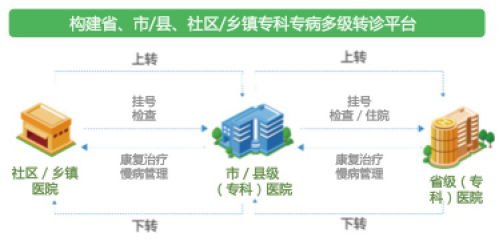
Specialized Multi-Tier Referral Platform for Specific Diseases, Gradually Realizing the Model of "Minor Ailments Treated in the Community, Serious Conditions Referred to Hospitals, and Rehabilitation Returned to the Community"
Academician Wang Chen, Chairman of the Respiratory Disease Branch of the Chinese Medical Association, believes that compared with regional medical consortia, specialized medical consortia are designed to specifically address issues related to medical care and discipline development in a particular specialty, representing an “enhancement-oriented” model. It is essential to fully establish assistance mechanisms and outreach programs, acknowledge existing disparities, foster mutual support, and maximize the replication of high-quality medical resources.
Specialized Medical Consortium: Bridging the Gap Between Experts and Patients with Complex Conditions at the Grassroots Level
Conventional medical consortiums are often initiated by government authorities or hospital leadership, with the primary aim of enhancing hospital branding rather than being patient- or discipline-centered. Once the initial momentum subsides, such consortia are prone to losing their expert specialists.
In contrast, specialized medical consortia adopt a people-centered approach, leveraging standardized disease treatment and talent development as key mechanisms to ensure patients receive consistent, high-quality care. Previously, it was extremely difficult for patients at primary care hospitals to consult specialists in key departments at tertiary Grade A hospitals. Now, through specialized medical consortia, even patients with complex and refractory conditions at the primary care level can receive timely guidance from experts.
Hunan Pediatric Medical Consortium is a pediatric healthcare alliance based on network information technology, covering 94 medical institutions in Hunan and neighboring provinces including Jiangxi, Yunnan, and Guangxi. It has recruited nearly 5,000 specialized physicians and achieves interconnectivity and data sharing through the deep integration of technologies such as healthcare services, internet, cloud computing, Internet of Things (IoT), and big data.
Li Aiqin, Vice President of Hunan Children’s Hospital, believes that this medical consortium facilitates the downward transfer of mature foundational technologies from large hospitals to primary care institutions, thereby continuously meeting the demand for managing minor illnesses at the grassroots level. It addresses the urgent needs of primary care hospitals by enabling two-way referrals for critically ill patients through “referral interaction,” and leverages remote diagnostics to allow large hospitals to handle complex cases requiring specialized skills that primary care facilities cannot immediately develop.
The construction of specialized medical consortia often includes functions such as remote consultations, two-way referrals, disciplinary collaboration, remote imaging, remote teaching, and portal sub-websites.
1. Ophthalmology Medical Consortium
Taking the Jianggan District Fundus Disease Consultation Center as an example. Under the leadership of the Jianggan District Health and Family Planning Bureau, led by the Fundus Disease Center of Zhejiang Eye Hospital, and with technical support from Zhuojian Technology, the Jianggan District Fundus Disease Consultation Center is a regional fundus disease diagnosis and treatment platform aimed at improving the regional diagnosis and treatment level of fundus diseases in Jianggan District. It is the first regional fundus disease consultation platform in Hangzhou City and even Zhejiang Province.
Through the “Jianggan District Fundus Disease Consultation Center” platform, community physicians can upload patients’ examination results in real time. Specialists from Zhejiang Eye Hospital can promptly conduct remote consultations on patients’ fundus conditions and provide feedback to the community hospitals. Based on the consultation outcomes, community physicians can determine whether further referral is necessary and arrange referral appointments for eligible patients via the platform. This approach ensures timely and efficient patient care while conserving medical resources and expanding access to healthcare services for those in need.
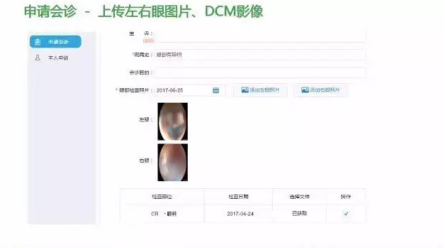
As of now, the Jianggan District Fundus Disease Consultation Center has implemented functions including remote consultations, two-way referrals, regular on-site clinics, and physician training.
2. Mental Health Center Specialized Hospital Alliance
In July 2017, the Specialized Hospital Alliance of the Mental Health Center Affiliated to Zhejiang University School of Medicine, spearheaded by Hangzhou Seventh People’s Hospital, was officially established. The alliance comprises 19 psychiatric specialty hospitals, including Jinhua Second Hospital, Shaoxing Seventh People’s Hospital, Wenzhou Seventh People’s Hospital, and Jiaxing Kangci Hospital. Members engage in mutual enhancement and exchange across areas such as hospital management, joint discipline development, telemedicine, technical improvement, and two-way patient referrals. This collaboration facilitates mutual recognition of test results, sharing of distinguished experts, high-quality medical resources, scientific research and educational resources, and development achievements, thereby promoting homogeneous development among hospitals within the alliance.
The establishment of the alliance is conducive to adjusting and optimizing the structural layout of medical resources, promoting the downward shift of focus and resources in healthcare services, and enhancing service capacity at the primary level. Meanwhile, it also facilitates better integration of medical resources across different levels, improves the overall efficiency of the healthcare service system, and supports the effective implementation of tiered diagnosis and treatment to better meet the public’s health needs.
Specialized Medical Consortiums: Close-Knit Integration Is the Future
There are significant differences between tightly integrated medical consortia and loosely affiliated medical consortia. At present, the majority of medical consortia in China are loosely affiliated. Specialized medical consortia, due to their involvement in cross-provincial hospital collaboration, also face considerable challenges in achieving unified allocation and management of personnel, finances, and resources.
On June 9, 2017, in accordance with the spirit of the “Guiding Opinions of the General Office of the State Council on Promoting the Construction and Development of Medical Consortia” (Guo Ban Fa [2017] No. 32), and under the unified arrangement and deployment of the Shaanxi Provincial Health and Family Planning Commission, the First Affiliated Hospital of Xi’an Jiaotong University, as the leading hospital in Shaanxi Province, joined the National Clinical Research Center for Respiratory Diseases • China-Japan Friendship Hospital Respiratory Specialty Medical Consortium, and thereby established the Shaanxi Provincial Close-Knit Respiratory Specialty Medical Consortium.
Supported by the superior resources and specialized technical strengths of the National Clinical Research Center for Respiratory Diseases • China-Japan Friendship Hospital’s Department of Respiratory Medicine, fully leveraging the role of the First Affiliated Hospital of Xi’an Jiaotong University and its collaborative network, establishing a cross-regional specialty alliance through respiratory specialty collaboration, forming a complementary development model focused on the prevention, diagnosis and treatment, talent training, and clinical research of respiratory diseases.
In this regard, Geng Jianping, Secretary of the Party Committee of the First Affiliated Hospital of Xi’an Jiaotong University, stated that the establishment of the Shaanxi Provincial Close-Knit Respiratory Specialty Medical Consortium aims to strengthen exchanges and cooperation, jointly implement technical outreach and two-way referrals, promote tiered diagnosis and treatment for respiratory diseases in Shaanxi Province, provide convenient access to medical care for patients with complex and critical conditions, improve the overall level of diagnosis and treatment for respiratory diseases in the province, advance the construction and development of the respiratory specialty discipline, and explore new models for healthcare reform in Shaanxi.
Specialized Medical Consortiums: Policy Framework Awaits Further Refinement
Whether specialized medical consortia or other types of medical consortia, all must be built upon the national top-level design. Without overarching policy guidelines, even the most prominently promoted models of medical consortia will remain castles in the air and trees without roots. In light of existing policies, specialized medical consortia currently need to achieve breakthroughs in the following six areas:
1. The top-level design of specialized medical consortiums, including standards and regulations, must be led and implemented by the state. Examples include referral criteria, referral processes for specific diseases, and postoperative patient referral methods.
2. The development of specialized medical consortiums requires support from corresponding information systems to efficiently carry out management, operations, and regulatory oversight.
3. The development of specialized medical consortia requires support from the national fiscal budget. Both tertiary and primary hospitals incur substantial costs during the establishment of such consortia. Therefore, budgetary constraints constitute a major obstacle to the development of medical consortia.
4. Talent Mobility and Development. Currently, policies permit physicians to practice at multiple sites within specialized medical consortia. However, existing regulations lack detailed provisions to further clarify the scope of services physicians are authorized to provide.
5. Currently, the majority of funding for specialized medical consortiums is directed toward data openness, including the deployment of front-end servers and interface integration. If the government were to open up software and hardware resources and make effective use of data centers, hospitals could minimize such investments.
6. Allocation of Interests: It is crucial to establish a reasonable reconciliation mechanism for the equitable distribution of revenues generated within specialized medical consortia among different hospitals and physicians. If the government can establish a financial accounting system among hospitals based on health insurance policies, it would be of significant importance to the development of medical consortia.
Regarding the existing issues, Wang Hesheng, Director of the State Council’s Office for Healthcare Reform and Deputy Director of the National Health and Family Planning Commission, has also signaled certain directions:
"Focus on key links, with the core being to address the issue of incentive mechanisms."First, by implementing supporting policies in areas such as fiscal investment, health insurance reimbursement, and personnel management, we can fully mobilize the enthusiasm of tertiary public hospitals to participate in the development of medical consortia, effectively addressing the challenges faced by large hospitals“Let Go”issues.
Second, by deploying experts and co-developing specialized departments through various measures, we will promote the decentralization of high-quality medical resources, enhance service capabilities at the primary care level, and effectively address the challenge of ensuring that grassroots institutions are capable of “taking on” these responsibilities.
Third, tertiary hospitals shall provide contracted patients with priority services such as consultation, examination, and hospitalization, while ensuring smooth downward referral channels for patients in the postoperative recovery phase or those with stabilized critical conditions, thereby effectively addressing the issue of patient willingness to seek care at these facilities.
Fourth, by exploring mechanisms that facilitate the vertical integration of medical resources—such as personnel mobility, distribution incentives, and global budget payment under medical insurance—we can effectively address the need for supporting policies.
The construction of medical consortiums will reengineer and restructure China’s healthcare service system. By establishing specialized medical consortiums across different regions, the public will enjoy greater convenience through family physician enrollment and access to comprehensive, full-cycle medical services within these consortiums.
The development of medical consortiums and the family doctor contract service are the two “wings” driving the advancement of the tiered diagnosis and treatment system. Specialized medical consortiums should comply with national standards and regulations, leverage information technology to enhance management, operations, and talent development, break down barriers hindering inter-institutional collaboration and resource integration, establish tightly-knit medical consortiums, channel high-quality medical resources to the grassroots level, and achieve sustainable development.