

Ping An Technology Unveils Five Core AI+Healthcare Application Scenarios Driven by Real-World Medical Needs
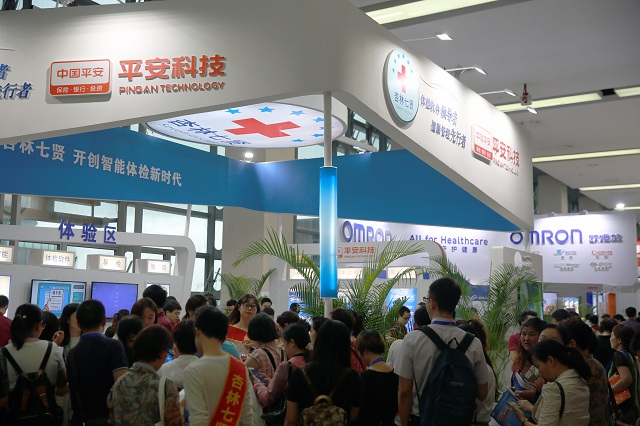
Recently,Ping An Technology Makes Appearance in Chongqing, Attending the 11th China Health Service Industry Conference. At the conference, Ping An Technology signed a cooperation agreement with Tianfangda, a leading domestic provider of health examination software, and unveiled for the first time its health management-related products and technical solutions, including facial recognition, voiceprint recognition, big data analytics, and an intelligent health examination data entry system.。
On May 9, 2017, Ping An Technology surpassed well-known domestic and international companies on the internationally authoritative public face recognition benchmark dataset LFW (Labeled Faces in the Wild), achieving world-leading results with a recognition accuracy of 99.8% and the lowest variance.
In his address in the interim report, Ma Mingzhe, Chairman of Ping An Group, pointed out that “Ping An will gradually transform from a capital-driven company into a technology-driven one.” It is Ping An Technology, its wholly-owned subsidiary, that shoulders the responsibility for driving the technological development of Ping An Group.
Currently, Ping An Technology has achieved significant breakthroughs in five major innovative technologies: facial recognition, voiceprint recognition, predictive AI, decision-making AI, and blockchain. It focuses primarily on two key sectors of the Ping An Group: financial assets and healthcare.
To gain insight into Ping An Technology’s strategic layout in the field of AI-driven healthcare, VCBeat conducted an exclusive interview with Dr. Xiao Jing, Chief Scientist and Dean of the Technology Research Institute at Ping An Technology.
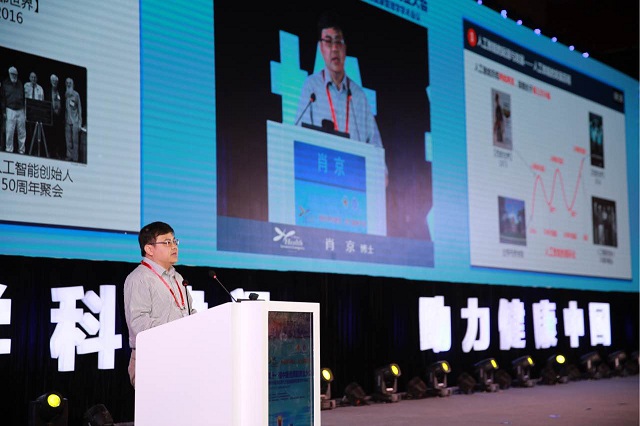
Dr. Jing Xiao
The Four Key Elements of AI: Technology, Data, Scenarios, and Experts
Dr. Xiao Jing, who holds a Ph.D. from Carnegie Mellon University, has over two decades of research experience in artificial intelligence and big data analytics. He told VCBeat thatThe development of artificial intelligence in the healthcare sector relies on four key elements: technology, data, scenarios, and experts.. Over the course of more than three years of development, Ping An Technology has built substantial expertise and gained deep insights in four key areas.
InTechnical Aspects, Ping An Technology currently employs over 6,000 professional IT technical personnel and IT management experts. It conducts in-depth research in fields such as computer vision, natural language processing, speech recognition, and machine learning. Key team members are primarily from renowned domestic and international universities and research institutions, including Carnegie Mellon University (CMU), Massachusetts Institute of Technology (MIT), University of California, Los Angeles (UCLA), Princeton University, Tsinghua University, and Zhejiang University.
The “Ping An Brain” intelligent engine, built by the Ping An Technology team after several years of effort, boasts industry-leading data mining and analytics capabilities, enabling functions such as text understanding, image recognition, speech recognition, precise matching, trend forecasting, and anomaly analysis.
InIn the Field of Medical Big Data, Ping An itself has its own advantages. Over the course of more than 30 years of development, the Ping An Group has been consistently engaged in the healthcare and medical sector, accumulating a data volume exceeding hundreds of millions—a feat that other artificial intelligence companies cannot match.
Furthermore, Dr. Xiao Jing believes that the analysis of big data at Ping An Technology has mainly undergone four stages:
Rule Engine: Ping An Technology has distilled specific rules from its medical expertise and, through iterative experimentation and exploration, applied them to insurance anti-fraud and health management.
Data Correlation Analysis: Primarily involves statistical clustering and linear regression analysis of data;
Machine Learning: Analyze structured data; Ping An Technology collaborates with medical experts to define significant features, then builds models for clinical application.
Deep Learning: This stage primarily involves the analysis of unstructured data, such as medical imaging, speech, and text data.
AtScenarioAspectAs an industry-leading comprehensive financial services company, Ping An Group’s business spans over 200 application scenarios covering users’ daily needs—including clothing, food, housing, and transportation—across its financial services, healthcare, automotive services, and real estate finance ecosystems.
InExpert PerspectiveDr. Xiao Jing stated, “In the healthcare sector, Ping An boasts a robust medical support team. Currently, Ping An Good Doctor employs over 1,000 full-time physicians and more than 1,000 part-time specialists. These medical teams have provided highly professional and practical guidance for Ping An Technology’s strategic initiatives in the ‘AI + Healthcare’ domain, helping the company avoid costly missteps.”
Five Major Application Scenarios of AI + Healthcare
Dr. Xiao Jing explained that Ping An’s strategic expansion into “AI + Healthcare” was a natural progression. As one of Ping An’s core businesses is insurance, which is closely intertwined with healthcare—for instance, health insurance, as widely recognized, serves as the most direct form of medical coverage—it is entirely logical for Ping An to venture into the healthcare sector.
Currently, Ping An Technology has covered five major scenarios in the field of AI + healthcare: facial recognition for identity verification, epidemic prediction, intelligent image reading, medical insurance fraud detection, and "similar case" services. We have provided a brief interpretation of each of these five scenarios.
Facial Recognition for Identity Verification
Ping An Technology’s facial recognition technology is currently mainly applied inIdentity Verification in the Diagnosis and Treatment Process, including the following application scenarios: facial recognition for appointment registration; pre-consultation facial verification to prevent fraudulent or substitute examinations; and facial recognition for printing examination reports, offering a convenient and fast channel for citizens.
This technology is not merely theoretical; Ping An Technology has piloted its technical solutions with medical institutions such as the Eighth Affiliated Hospital of Sun Yat-sen University, and facial recognition for identity verification has been implemented across multiple stages of the healthcare process.
Epidemic Prediction
In the first half of 2017, the world’s first AI and big data-based influenza prediction model, developed by Ping An Technology, was officially launched. This model can accurately forecast influenza trends and precisely predict the risk of disease onset for both individuals and populations. It assists public health authorities in timely epidemic monitoring and guides the public in disease prevention, thereby effectively reducing national costs associated with disease control and prevention. The conditions covered include influenza, cancer, chronic diseases, hypertension, and diabetes.
Intelligent Image Interpretation
Intelligent image interpretation is the research focus of most AI-plus-healthcare startups in China. Currently, the majority of these companies have developed their own products and achieved certain successes in areas such as lung cancer, diabetic retinopathy, thyroid diseases, and gastrointestinal disorders. However, in actual clinical practice, many companies are limited to deployment in only a few or dozens of hospitals due to single-source data, lacking generalizability.
Dr. Xiao Jing introduced that there are many models of large-scale medical equipment currently used in hospitals at all levels across China; for instance, there are nearly 100 different models of CT scanners. To ensure that their products can be deployed in the majority of hospitals, Ping An Technology incorporated data from hospitals at various levels during AI training, thereby enabling the system to accommodate the needs of most hospitals. Currently,Ping An Technology’s pulmonary nodule detection system has achieved a clinical sensitivity of 94%, and research on gastric cancer, cervical cancer, and other diseases is steadily progressing.。
Medical Insurance Fraud Detection
Medical insurance is fundamentally a public health security system, yet some unscrupulous individuals exploit it for illegal profit through practices such as “medicine fraud,” fake hospitalizations, and referral manipulation.RodenticideIt refers to criminals luring citizens with the promise of "social security card cash-out" schemes to purchase their social security cards, and then profiting by buying pharmaceuticals with these cards and reselling them.Hospital Bed-HangingAlso known as "fake hospitalization," it is generally defined as a situation where a patient does not stay in the hospital or incurs no treatment fees for more than three consecutive days.
To address these issues, Ping An Technology has established a visualized relationship network that integrates temporal and spatial dimensions to construct a healthcare utilization network across multiple facets, including patients, diseases, diagnosis and treatment, physicians, and hospitals. By leveraging machine learning and other related algorithms, the system identifies fraudulent activities and groups.
For instance, if a patient averages 20 medical visits and over 40 prescription purchases per month for three consecutive months, with reimbursement amounts exceeding 2,000 yuan, and the medical services are received in two geographically distant areas, the system will initially flag it as fraud.
"Similar Cases" Service
The “Similar Cases” service leverages semantic recognition technology to retrieve the most relevant case records and physicians’ responses based on symptoms entered by users. Dr. Xiao Jing introduced that this technology can enhance the diagnostic and treatment capabilities of primary care physicians, enabling them to fulfill the roles of general practitioners. Meanwhile, it also serves consumer-end users, helping to reduce unnecessary medical visits.
"AI + Healthcare" Products Must Be "Grounded"
Throughout the interview, Dr. Xiao Jing repeatedly used the term “down-to-earth.”
We strongly concur with this assertion. According to interviews conducted by VCBeat with dozens of medical AI companies, many “AI + healthcare” firms have developed their own products over the past year or more. While these products demonstrated high diagnostic accuracy during laboratory-based R&D, their performance significantly declined in clinical settings, falling far short of the results achieved in the lab.
Addressing this “out-of-touch” phenomenon, Dr. Xiao Jing believes thatThe development of products in the field of AI + healthcare must be based on clinical practice.ofActual Requirements, during the preparation phase, it is essential to communicate extensively with clinicians from different hospitals and at various career stages to understand their pain points. When preparing training data, the team also needs to collect clinical data from diverse hospitals and perform annotation. After the product is launched, it must be continuously refined in real-world clinical practice to transform artificial intelligence, often perceived as a “high-end” technology, into a tool of practical value.
Therefore, the medical AI products launched by Ping An Technology are developed based on thorough communication and guided by practical needs, aiming to address the real-world challenges faced by users such as physicians, government agencies, and the general public. These products are not merely high-level research projects confined to laboratories; rather, they are innovative solutions capable of tangibly resolving clinical issues.