

Huiying Medical: Pioneering a New Path in AI-Driven Healthcare with Talent-Powered Innovation
Throughout the history of human civilization, every major breakthrough in science and technology has brought about profound changes in productive forces and production relations; artificial intelligence is no exception. If “Internet Plus” was a keyword with distinct Chinese characteristics and zeitgeist in recent years, then “Artificial Intelligence” or “AI Plus” will be the dominant global theme of the next era. From heads of government to futurists, anthropologists, and entrepreneurs, all have expressed significant attention to artificial intelligence.
Prophet Kevin Kelly (KK) stated, “The greatest thing in the next 20 years may not have emerged yet, but it is predictable that artificial intelligence will be the most important technological trend in the next 20 years.”
Yuval Noah Harari, author of Sapiens: A Brief History of Humankind and an anthropologist, stated, “Artificial intelligence (AI) represents a profoundly significant revolution in human history, as well as a major biological revolution that will impact our lives and the Earth.”
Tesla and SpaceX CEO Elon Musk posted, “Computer science in countries like China and Russia is very strong. I believe that the race for artificial intelligence superiority at the national level could very well become the cause of World War III.”
The Economist recently pointed out in an article that China is poised to surpass the United States in the field of artificial intelligence. It is estimated that by 2030, AI-related growth will add $16 trillion to global GDP, with some analyses suggesting that nearly half of this incremental wealth will flow to China. It is no exaggeration to say that artificial intelligence has become a new driving force and catalyst for industrial upgrading and corporate digital transformation in China. Humanity stands at the dawn of the Fourth Industrial Revolution, with AI serving as its catalyst.
In the field of AI + medical imaging, there are already more than 40 startups alone. Compared with the development paths and product modalities of similar companies, Huiyi Huiying is taking a completely different path in developing artificial intelligence.
Domestic Strategy: One Step Ahead, AI Deeply Integrated into Medical Scenarios and Already Involved in Clinical Diagnosis and Treatment of Single Diseases
Currently, the integration of AI and medical imaging is primarily focused on leveraging AI to enhance the diagnostic efficiency of radiologists, thereby reducing rates of missed diagnoses and misdiagnoses. A prominent example is lung nodule screening. Most domestic medical imaging intelligence companies are currently at this stage. Chai Xiangfei stated that Huiyi Huiying also offers such computer-aided diagnosis services in its AI 1.0 version, which employs machine learning to perform qualitative analysis of medical images. According to Huiyi Huiying’s estimates, this intelligent preliminary diagnosis can reduce the time required for breast disease image interpretation by 60–70% and for chest radiography by nearly 50%. In terms of diagnostic accuracy, the initial model launched in early 2016 achieved an accuracy rate of 85–90%. Through self-iteration using data from various hospitals and precise model tuning, the accuracy has now exceeded 95% in many hospitals.
During this phase, Huiyi Huiying not only established strategic partnerships with multiple medical device companies—jointly launching the world’s first intelligent DR system with Qixi Medical, which has been deployed in dozens of hospitals—but also collaborated with leading medical equipment manufacturers to jointly advance the in-depth application of AI in imaging scenarios. Only profitable AI is sustainable AI. Commercialization is the top priority for the development of the AI industry, and meeting customers’ real needs is the key to the scenario-based implementation of AI.
Zhou Zhenyu, Senior Director of Clinical Science at Philips Healthcare, stated, “With global shortages of medical resources and an urgent need for healthcare systems to improve efficiency, we aim to deliver better diagnostic and therapeutic outcomes for patients at lower costs. Huiyi Huiying has effectively addressed practical challenges in clinical applications through its outstanding performance in imaging engines powered by big data and knowledge bases. In the coming years, the informatization of clinical departments, particularly the integration of artificial intelligence, is bound to have a significant impact on patients. Huiyi Huiying’s products are more inclined toward imaging solutions grounded in clinical practice and capable of fostering long-term collaborative development, presenting new disease-centric value through innovative approaches.”
AI 2.0 is a big-data intelligent cloud platform incorporating radiomics quantitative analysis. Quietly launched in May 2017, it integrates imaging, clinical, pathological, genomic, and follow-up data. The platform extracts over 1,000 features from imaging data, performs dimensionality reduction, and leverages machine learning techniques for data analysis and mining. This big-data and omics-based approach delivers quantitative results that assist clinicians in making precise diagnoses, evaluating treatment efficacy, and predicting prognosis. It even holds promise for enabling radiologists to participate more directly in clinical diagnosis and treatment. In this regard, Huiyi Huiying appears to be operating on a distinctly different dimension and level compared to its peers.
In fact, establishing such an intelligent analytics platform based on diverse types of medical big data is a systematic engineering endeavor. The first step is to break down the barriers between different categories of medical data, integrating and connecting imaging data with genomic, proteomic, immunological, and pathological data. This requires data cleaning, structuring, analysis, and mining, demanding significant investment in interdisciplinary senior professionals. “Why are we building a big data analytics platform? Our aim is to achieve practical application by comprehensively leveraging diversified and multi-dimensional data. Only in this way can we establish a critical point of high clinical reliance. Otherwise, relying solely on imaging alone is not sufficiently central to the entire decision-making process. We use imaging as the entry point but extend in two directions: one toward genomics, proteomics, and immunology, and the other toward clinical follow-up, ultimately achieving holistic integration. This will significantly enhance the product’s value.”
In terms of specific disease categories, Huiyi Huiying’s products have already matured and are being deployed in Grade 3A hospitals. These include screening-oriented applications such as chest CT miss-detection prevention, mammography screening, and MRI analysis for cerebral infarction and intracerebral hemorrhage. Other solutions delve deeper into specific diseases, supporting the diagnosis and treatment of various cancers, including lung cancer, breast cancer, colon cancer, rectal cancer, gastric cancer, cervical cancer, ovarian cancer, nasopharyngeal cancer, and prostate cancer. The AI system generates precise diagnostic reports based on artificial intelligence and data mining. By leveraging extensive imaging and clinical data, these services enable radiologists to participate more actively in clinical diagnosis and treatment. As technology matures and perceptions evolve, the strategic role of hospital radiology departments and radiologists in China is expected to align with that of their counterparts in developed Western countries.
According to reports, Huiyi Huiying’s products and services have currently been adopted by more than 500 primary-care hospitals and over 200 top-tier Grade IIIA hospitals. In addition, since July 2017, all of Huiyi Huiying’s services have been available in an international version and are already in use at institutions such as Stanford University School of Medicine and Harvard Medical School. Artificial intelligence in healthcare is an international revolution and transformation, which underscores the significance of the Chinese government’s elevation of AI to a national strategic priority.
Global Push: Cultivating Interdisciplinary AI Super-Talents to Reshape the Medical Value of AI and Big Data
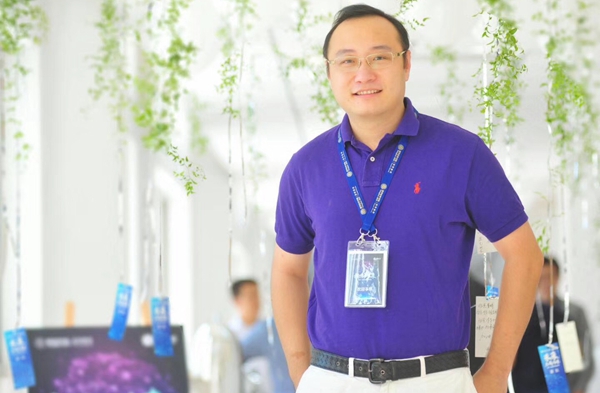
Chai Xiangfei, Founder and CEO of Huiyi Huiying
Chai Xiangfei, Founder and CEO of Huiyi Huiying, holds a Ph.D. in Medical Imaging from the University of Amsterdam and completed his postdoctoral research at Stanford University. He has studied and worked at three world-leading medical imaging institutions: the Stanford Cancer Center, the Netherlands Cancer Institute, and the Department of Radiology at KU Leuven in Belgium. He is primarily responsible for driving the deep integration of AI and big data technologies into healthcare scenarios and defining related products.
Professor Lei Xing, Director of the Stanford Center for Medical Physics and a leading scientist in medical artificial intelligence, has joined Huiyi Huiying as Chief Advisory Scientist. Professor Xing serves as the Division Chief of Medical Physics in the Department of Radiation Oncology at Stanford University School of Medicine. He is a tenured professor at Stanford University, with joint appointments in the Department of Electrical Engineering, Molecular Imaging and Biological Informatics, and Bio-X. With over two decades of dedication to teaching and research in medical imaging, medical physics, and medical informatics, he has published more than 350 professional papers. He has led major research projects funded by the NIH, DOD, NSF, ACS, RSNA, and other institutions. His accolades include the American Cancer Society Research Scholar Award, the Best Paper Award from the American Association of Physicists in Medicine (AAPM), and the Google Research Award. He is a Fellow of both AAPM and the American Institute for Medical and Biological Engineering (AIMBE), and a recipient of China’s National Thousand Talents Program.
It is reported that after Professor Xing Lei officially assumed the role of Chief Advisory Scientist at Huiyi Huiying, he will leverage his research and clinical expertise in tumor diagnosis and treatment to accelerate the R&D and clinical application of AI for oncology. His efforts will focus on the development and upgrading of systems for radiotherapy and chemotherapy, missed-diagnosis prevention systems, and imaging big data research platforms (including radiomics analysis platforms). Furthermore, with medical imaging at the core, he will conduct in-depth scientific research and market exploration in computer vision, speech recognition, natural language processing, and machine learning. By leveraging imaging data mining as a foundation, he aims to provide precise imaging and artificial intelligence support and guidance for clinical cancer diagnosis and treatment.Chai Xiangfei stated, “Professor Xing Lei’s appointment marks the beginning of Huiyi Huiying’s international strategic layout. It will also lead Huiyi Huiying toward deeper integration among industry, academia, research, and healthcare, centering on imaging to serve as the ‘goalkeeper’ for radiology departments and steadfastly upholding our positioning.”
If recruiting top-tier talent represents merely a small step in Huiyi Huiying’s AI strategy, then cultivating more specialized professionals for the industry stands out as its most remarkable move. The scarcity of specialized talent has long been the greatest challenge and bottleneck for artificial intelligence. Shortly after Xing Lei announced his formal joining of Huiyi Huiying, the company simultaneously launched its Global AI Talent Excellence Program. Under Xing Lei’s guidance, Huiyi Huiying will fully implement this program, sending outstanding master’s-level and above professionals in medicine, mathematics, and computer science to top global institutions for advanced study, thereby enhancing the global competitiveness of China’s interdisciplinary talent in medical AI. “The integration of AI and healthcare requires collaborative efforts from all sectors and the entire industry. Huiyi Huiying is willing to proactively accelerate this process and ensure the realization of its true value,” said Chai Xiangfei.
In addition to Xing Lei and Chai Xiangfei, who serve as core talent for the product with over a decade of extensive experience in radiation oncology, Huiyi Huiying’s team also comprises a group of outstanding professionals from top-tier universities both in China and abroad, including Harvard University, UCSD, the University of California, Berkeley, Stanford University, the University of Melbourne, Tsinghua University, and Peking University. These individuals have previously held positions at leading medical and research institutions, specializing in data processing, medical research, clinical diagnosis and treatment, and scientific research services, thereby accumulating rich practical experience. In Chai Xiangfei’s view, medical AI is a multidisciplinary field that requires the collaborative participation of experts from various industries to achieve success.