Unlocking the Immeasurable Value of Healthcare Big Data: A Prospectus on AI-Driven Medical Innovation

1
# This Week's Hot Topics
#AI + Big Data#
Future Healthcare, Data First. The transformation driven by new regulations and emerging technologies is underway across industries; the big data revolution has already swept through numerous sectors beyond healthcare, bringing about profound changes.
With the rapid expansion of big data in the healthcare sector, big data not only addresses existing challenges such as difficult and costly access to medical care, offering viable new approaches for China’s healthcare reform, but also holds significant guiding value for novel medical research, including breakthroughs in critical and emergency care, discovery of new diseases, and control of infectious diseases.
McKinsey predicts that fully leveraging healthcare big data could generate $300 billion to $450 billion in added value; as a country with the world’s largest population and a significant gap in its healthcare market, China’s potential value is even immeasurable.
Perspective
1、Dr. Yu Zhong :“Virtual Doctor” is one of the most milestone products of future artificial intelligence in the healthcare field.
Dr. Yu Zhong, founder of Jinglun Century, did not focus on any single specific product in the early stages of his venture. Instead, he established a comprehensive product architecture system covering the entire healthcare process. This system encompasses the four key stages of medical and health services: disease prediction, prevention, diagnosis and treatment, and rehabilitation. Each stage is designed based on big data and artificial intelligence methodologies.
Virtual doctors are AI-powered physicians. Built upon the Jinglun Century Disease Prediction and Diagnosis & Treatment Expert System, they are deployed on intelligent service robot hardware. Leveraging the robots’ capabilities in speech recognition, image/video recognition, perceptual computing, and proactive interaction, these virtual doctors engage with patients/clients in disease diagnosis, treatment, and follow-up management. Through continuous information exchange and feedback with clients, they constantly collect data and learn, thereby enhancing their knowledge base and optimizing system rules. Ultimately, this process trains the robots to serve as virtual doctors specializing in “standardizable” medical services, positioning them as optimal partners for human physicians.
2、Liang Wei:In China, we may be the only company that can directly access hospitals'Hundreds of Information SystemsCompanies that Scrape Data
In 2009, Liang Wei graduated with a master’s degree from Peking University and founded Bowei Software. Given his academic background in image processing, Liang chose medical imaging as the entry point for his entrepreneurial venture. Initially, Bowei Software focused on traditional two-dimensional image processing; later, the company developed three-dimensional reconstruction technology for medical imaging.Instrument analysis systems and PACS products.
BoLeveraging its proprietary heterogeneous data fusion technology, the solution directly captures clinical data from various hospital software systems (such as HIS, EMR, PACS, and LIS) without modifying original system code or requiring vendor participation. It automatically establishes data associations and outputs a structured database. This approach not only simplifies coordination, shortens project timelines, and enhances security, but also boosts the implementation efficiency of data integration and sharing by nearly 100-fold.Data from various software systems within the hospital can be collected directly without the cooperation of software vendors, and it can also achieveUsing Big Data for Health Insurance Cost Control
, and also leverages historical data migration technology to facilitate the upgrade and replacement of chain pharmacy systems.
3. Wang Silun: China's accelerating aging population creates a vast market, and there are significant differences between China and the United States in the prevention and treatment of Alzheimer's disease
Founder of Brain DoctorDr. Wang Silunstates: "MRI images offer numerous advantages. First, MRI acquisition does not expose the human body to ionizing radiation. Second, structural MRI scans are widely used in clinical practice and are readily accessible. Third, they are cost-effective and time-efficient; typically, the cost for an MRI scan is around a few hundred yuan, which is significantly lower than that of PET/CT. Additionally, the short scanning time minimizes disruption to clinical workflows. Therefore, the American College of Radiology recommends structural MRI as the optimal imaging modality for diagnosing Alzheimer’s disease (AD).
Brain Doctor’s database actually consists of two parts: one is a database of human brain gray matter volume, cortical thickness, white matter volume, and hippocampal structure based on the normal population; the other is a database of these same metrics based on patients with Alzheimer’s disease (AD).Dr. Wang Silun’s team leveraged these two databases to train artificial intelligence models.
4. Qiao Xin:Medical AI products must adhere to clinical guidelines and medical pathways; otherwise, gaining hospital access will be challenging. Only by meeting clinical needs can medically developed AI products ultimately gain acceptance from physicians and hospitals.
Deepwise Medical CEO QiaoXin stated that their initial product positioning was to provide services to primary healthcare institutions. The medical images acquired at these primary care facilities are far more complex than those from tertiary hospitals, with significant disparities in quality and standardization. However, as the primary healthcare sector represents the largest market, capturing this market necessitates overcoming these challenges. This process requires the team to possess profound clinical expertise in primary care and variousA deep understanding of the hospital’s situation is essential to achieve this.
The product has two strategic positions: first, to assist primary care hospitals in early disease diagnosis and screening; second, to support tertiary (Grade 3A) hospitals in making scientific decisions and providing adjunctive treatment for complex cases. Tertiary hospitals have higher expectations and requirements for AI technology, going beyond mere screening to integrate other diagnostic information for further analysis of lesion sites, including morphological characteristics. This enables scientifically informed clinical decision-making, thereby achieving the clinical goal of precision medicine.
Report
2
This Week's Headlines
Top 40 Medical Equipment Financial Leasing Companies in China: Is the Current State of Medical Device Leasing a Cause for Optimism or Concern?
Author: Yang Juan
As the primary hardware infrastructure for hospital operations, the importance of medical equipment is self-evident. But do hospitals need to purchase every single piece of equipment, ranging from small IV poles to large-scale CT scanners and MRI machines? No. In fact, there is another option: leasing. Medical equipment leasing is not an unusual practice; rather, it is a product of the development of China’s healthcare industry.
The accelerating pace of population aging and the growing demand for medical services are driving rapid development across the entire healthcare industry. Consequently, competition in the medical market is becoming increasingly intense, prompting major healthcare institutions to continuously upgrade their medical equipment, particularly by introducing advanced large-scale medical devices, to enhance their comprehensive capabilities and diagnostic proficiency.
However, high-end medical equipment requires substantial capital investment. The high procurement costs of such equipment not only increase the financial burden on hospitals but also result in elevated healthcare costs for patients. Therefore, reducing the procurement costs of medical equipment has become an urgent challenge for healthcare institutions.
Generally, healthcare institutions have three channels to secure funds for equipment procurement: internal hospital resources, government allocations, and external financing. The new healthcare reform proposes the comprehensive elimination of markups on pharmaceuticals and consumables, posing significant profitability challenges for many hospitals. Without profits, it is virtually impossible for hospitals to allocate substantial capital for purchasing medical equipment. Consequently, hospital construction and renovation often rely on government support; however, limited government financial resources make it difficult to meet the demand for medical equipment across all hospitals.
Finally, in situations where both hospitals and the government were unable to provide assistance, financial leasing of medical equipment, a method capable of rapidly providing funds to medical institutions, gained development opportunities.
How Should Community Clinics Choose Locations, Acquire Patients, and Manage Operations? Influencers Such as Yu Ying, He Chao, and Duan Tao Offer Their Insights
Author: Luo Mei
Recently, community clinics have begun to gain momentum with the addition of numerous internet-famous doctors, such as Duan Tao and Yu Ying.
They are physicians who have served within the public healthcare system while also maintaining an active presence in the field of internet-based healthcare. Possessing robust clinical expertise and a deep understanding of the current medical system, they aspire to realize their professional ideals amidst the sweeping trend toward tiered diagnosis and treatment. By establishing clinics, they aim to provide accessible and convenient community-based medical services to patients.
However, community healthcare has long suffered from a lack of patient trust. In terms of institutional credentials, community healthcare facilities are not public Grade 3A hospitals but rather clinics operated by individual practitioners; regarding medical equipment, they lack the comprehensive resources available at Grade 3A hospitals; and in terms of clinical expertise, these facilities do not have many specialists or professors affiliated with Grade 3A hospitals...
This has long been the reality of community healthcare in China—a setting often overlooked by practicing physicians, yet it is the closest to patients and represents the most critical step in implementing tiered diagnosis and treatment.
So, what types of community healthcare services are highly favored by residents? How should community healthcare facilities approach site selection, customer acquisition, and operations? Are there any benchmark models worth learning from? And how does capital view the community healthcare sector?
3
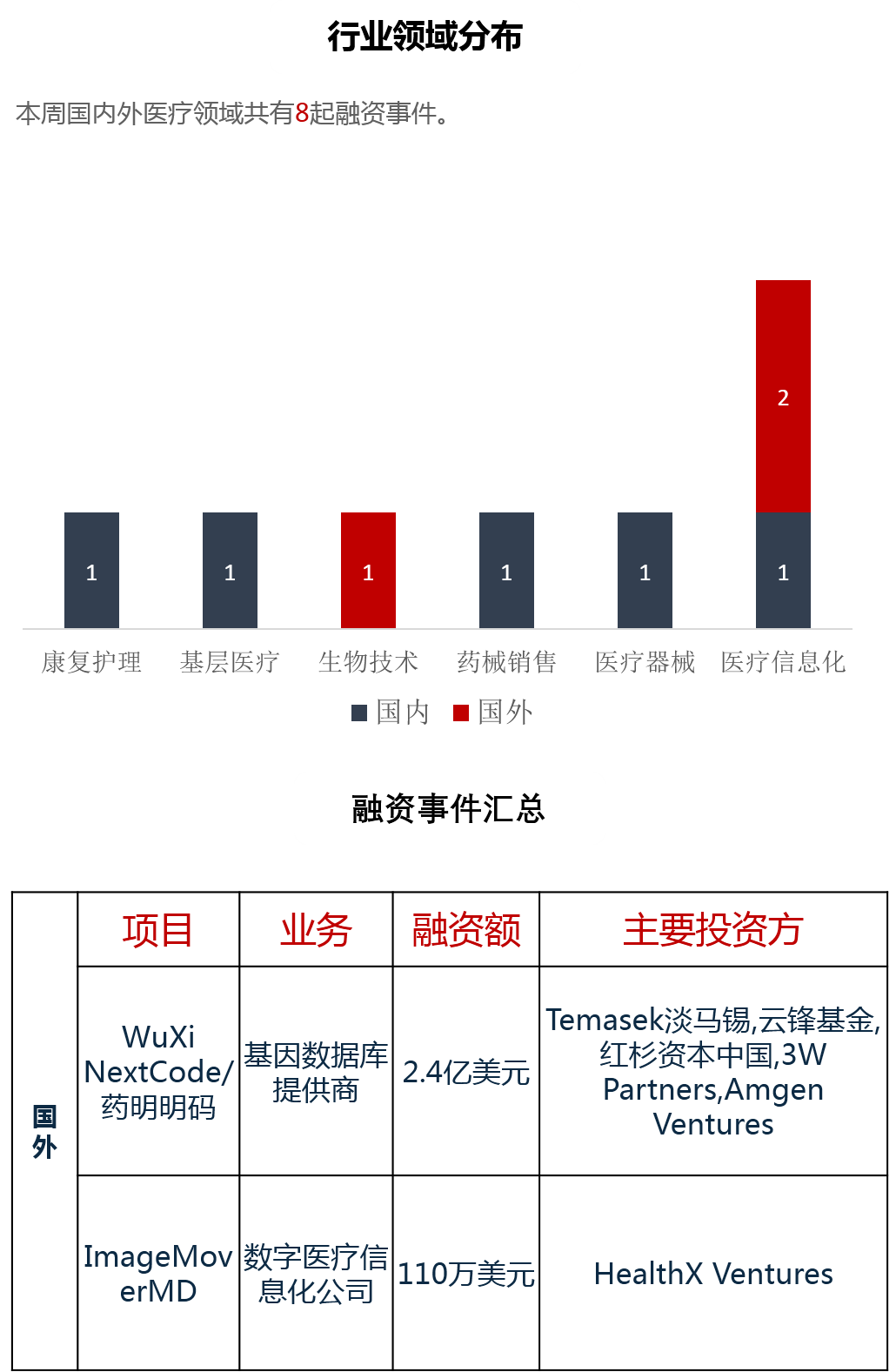
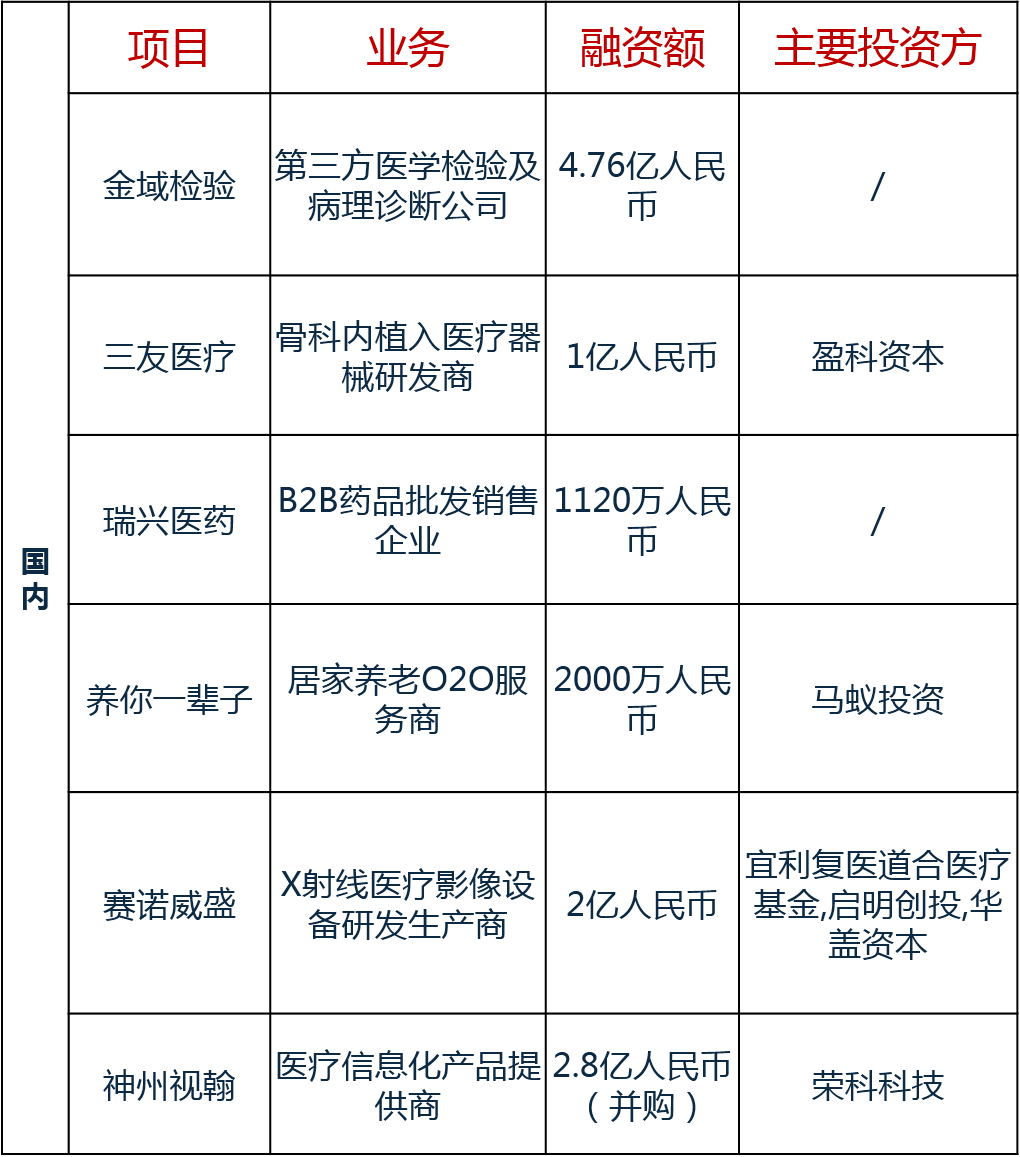
This Week’s Financing Events in the Healthcare Sector
4
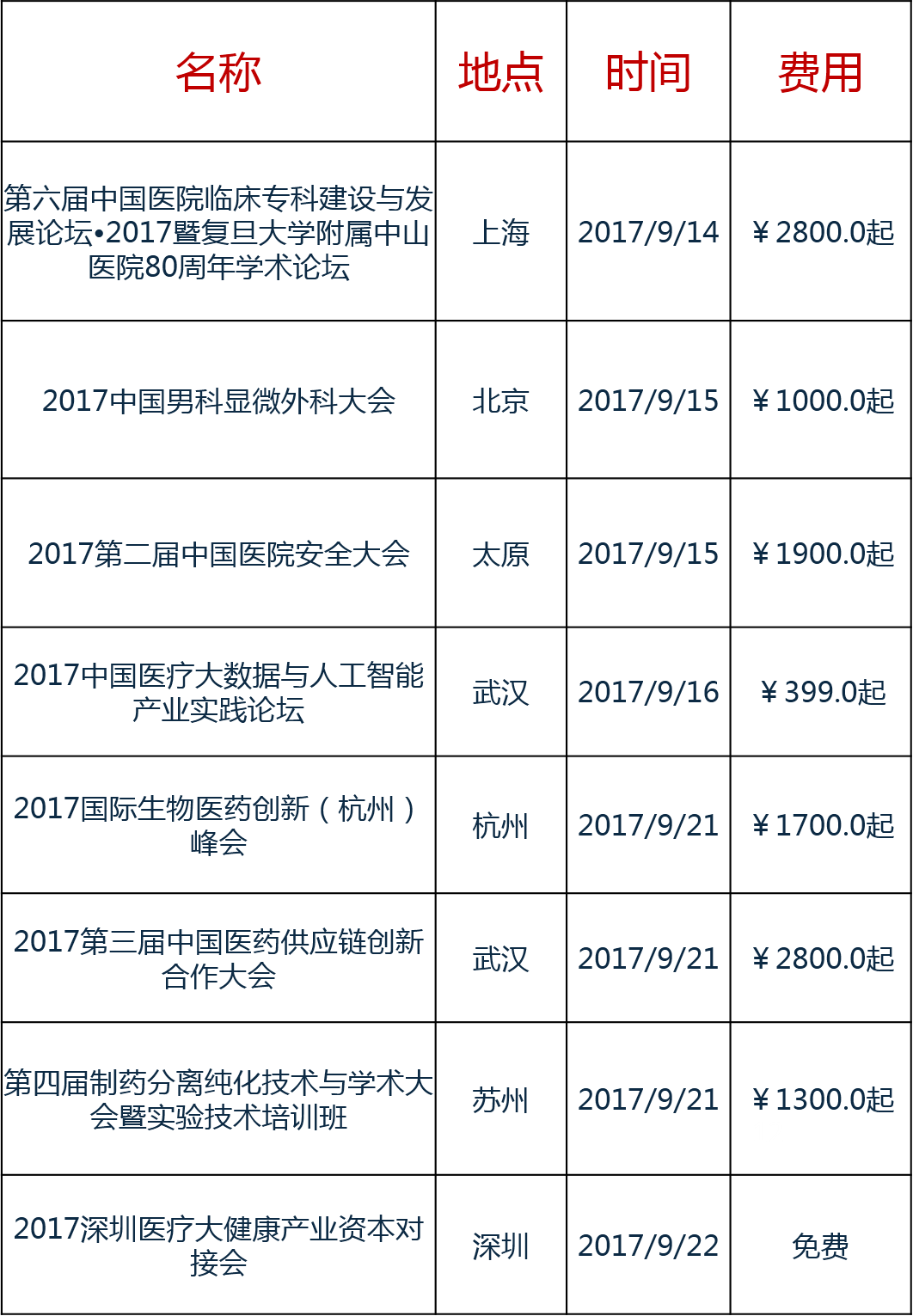
Healthcare Industry Activity Update This Week
5
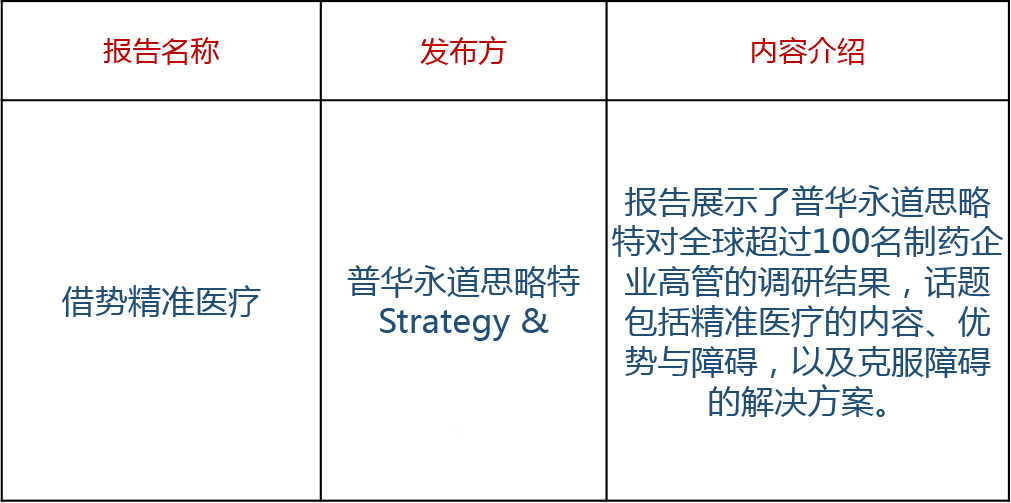
This Week's In-Depth Report
For more content, please visit the VCBeat knowledge base!