

BangNi Online Files IPO Prospectus: An Internet-Native Offline Sports Rehabilitation Platform Building Scenario-Based Care
In the medical field, the World Health Organization (WHO) defines rehabilitation medicine as the fourth category of medicine, alongside preventive medicine, clinical medicine, and healthcare medicine. Sports rehabilitation is a branch within this field and is inherently an interdisciplinary specialty.
From the perspective of entrepreneurs in this field, sports rehabilitation is a specialized domain that combines the youthfulness and universality of sports with the professionalism of medical care. Rehabilitation is a long-term recuperation process, and the development of the industry requires time to mature. It is not merely a matter of how many startups and capital enter the market.
Currently, the overall rehabilitation market size in China is only around RMB 20 billion, and capital inflows into the sports rehabilitation sector are even rarer. In contrast, the fitness and rehabilitation industry abroad boasts substantial market potential; in 2014 alone, the output value of the U.S. rehabilitation and fitness equipment sector reached as high as USD 4 billion.
A Young Audience, a Mature Industry: Entrepreneurs Entering the Field of Sports Rehabilitation Are Betting on the Vast Market Beneath the Surface. In the realm of sports rehabilitation, how can young companies uncover scenario-based service opportunities?VCBeat (WeChat ID: vcbeat)Exclusive Interview with Yu Yang, CEO of Beijing Bangni Online Technology Co., Ltd. (hereinafter referred to as “Bangni”)
"People are more important than projects; that was the thinking then, and it remains so now."
Bangni is a medical technology company specializing in app development, rehabilitation hospital operations, and new media marketing and promotion. Established in 2016, it was spun off from Rhine Health Technology Co., Ltd. as the division dedicated to sports rehabilitation business, with a core focus on providing comprehensive rehabilitation solutions.
In establishing a company, talent is crucial; in Yu Yang’s view, people are more important than projects.This was particularly evident in his introduction of the team. What impressed VCBeat most was that, unlike the conventional approach of listing names followed by job titles, Yu Yang introduced most members of Bangni’s team by their nicknames.
Yu Yang previously worked in sales at a publicly listed company, serving as a Regional Manager. After meeting like-minded entrepreneurial partners—Hayden, Rock, Wang Yong, and Wood—they discussed launching a venture. Once they had determined their business direction, Yu Yang resigned from his job and began assembling his own team. “Xiu Jun, our Product Manager, previously worked at Samsung; Lao Na, our Operations Manager, has three years of experience in e-commerce; and Chen Laoban, our Technology Manager, brings extensive expertise in software R&D...”
From four members a year ago to 17 today, we have developed a comprehensive solution for your software team, covering everything from product requirements confirmation to development and operations.
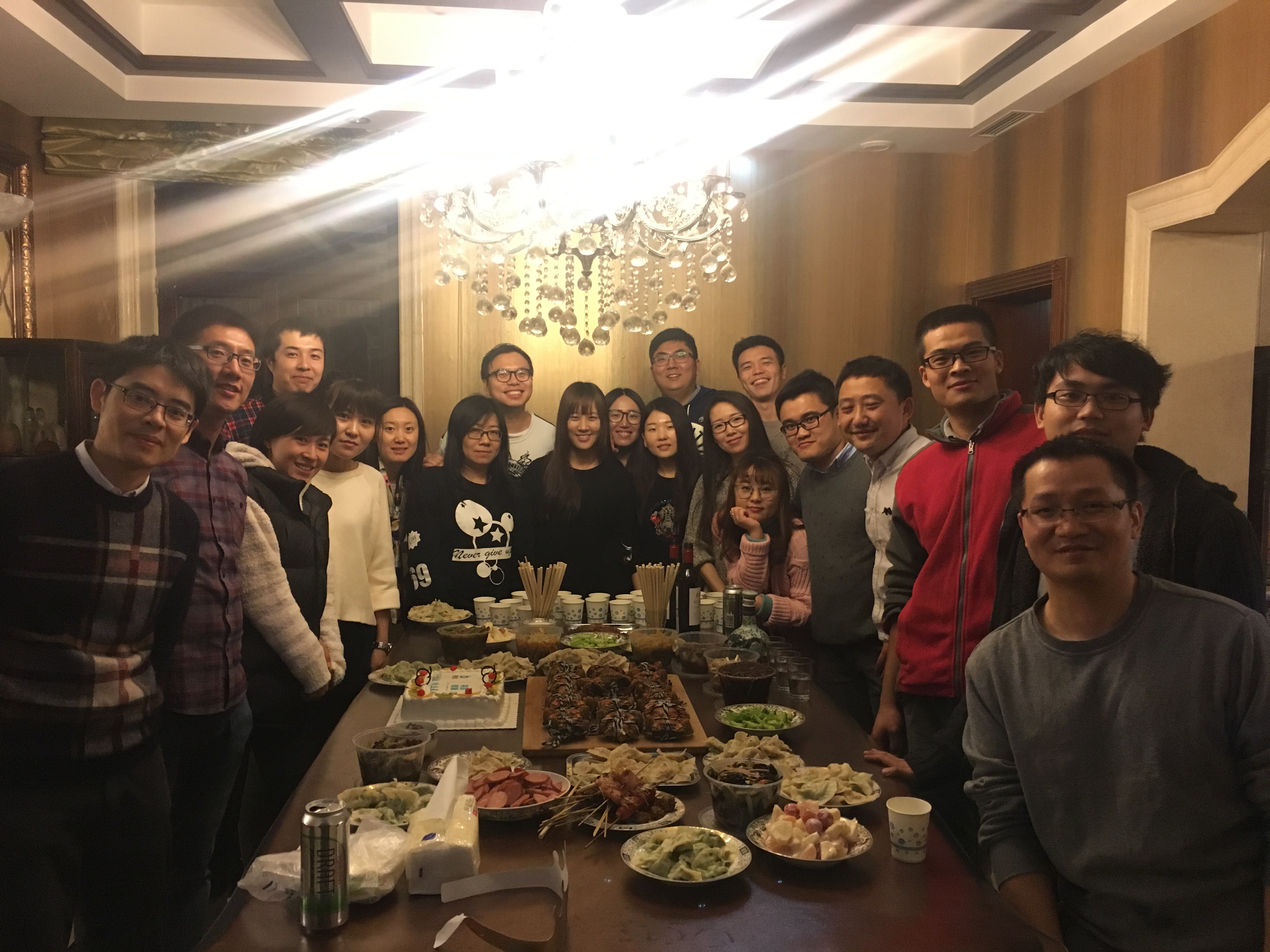
The Team Behind VCBeat Online
Following the decision to establish an offline sports rehabilitation center, Yu Yang’s primary focus shifted to recruiting rehabilitation talent. The medical team comprises a Chief Physical Therapist from the Orthopedics Department of a Rehabilitation Hospital, along with graduates from the German Sport University Cologne, Sheffield Hallam University in the UK, and Beijing Sport University.
Faced with the widespread shortage of talent and the difficulty in finding rehabilitation therapists across the sports rehabilitation sector, Yu Yang and his team started their recruitment efforts at hospitals in Beijing. They sought out everyone from leading experts in rehabilitation to popular online therapists, and even traveled to Anhui Province, Tianjin Municipality, and Hunan Province to conduct off-site interviews with interested candidates. In Yu Yang’s words, the rehabilitation team was essentially “recruited one by one.”
“When building our rehabilitation team, I was mocked and even dismissed as a fraud. I also tried Luo Yonghao’s so-called recruitment strategy, which turned out to be completely ineffective.” Recalling the arduous process of seeking professional rehabilitation talent, Yu Yang could only smile helplessly.
Healthcare is, at its core, a service, centered on an “online + offline + products” model.
In terms of business model, Bangni focuses on an "online + offline + product" model, relying on rehabilitation technology and leveraging internet platforms to start with online operations.
Online, we launched a rehabilitation app under the same name, strategically focused on popularizing rehabilitation knowledge through digital channels and providing rehabilitation guidance and tools. Users of the app and its mini-program can perform joint goniometry via photo capture, access rehabilitation video tutorials, and utilize tools such as timers and counters. The platform also fosters spontaneous social interaction by building a community for engagement between rehabilitation therapists and patients. By operating both professionally generated content (PGC) and user-generated content (UGC), the app enables users to document their rehabilitation journeys, exchange experiences with others, and identify personalized rehabilitation plans. Additionally, the application collects data to support data-driven product services.

Bangni's online services also include:
Online Rehabilitation Training Camp: Provides guidance on recovery techniques for the knee joint (post-anterior cruciate ligament reconstruction, post-meniscectomy), shoulder joint, and ankle joint, as well as instruction in physical fitness exercises.
Online Mobile Clinic: Provides consultations and live-streamed courses with rehabilitation physicians and therapists, with content delivered by both your in-house rehabilitation team and externally integrated rehabilitation teams;
Currently, the monetization of certain B2B rehabilitation services and related products has begun to yield results. As online operations have started to take shape, efforts have expanded into offline business. According to Yu Yang, a sports rehabilitation center is being prepared in Beijing and is expected to commence operations by the end of the year.
Its offline sports rehabilitation centers offer medical services including:
Basic Sports Rehabilitation: Includes pre-consultation appointment scheduling, rehabilitation guidance services, and post-consultation follow-up;
Rehabilitation Accessories: Based on user needs, the Bangni App partners with manufacturers to provide OEM products. Brands previously collaborated with include Bauerfeind (Germany) and Yilaifu (Taiwan), among others.
Equipment and Facility Rental: Includes wheelchairs, Continuous Passive Motion (CPM) devices, and other aids that facilitate the rapid recovery of limb mobility after surgery, enabling restored range of motion in the knee, hip, and ankle joints.
The average cost of offline sports rehabilitation services is estimated at around RMB 400, which is considered a low-to-mid range price in the market. In addition, Bangni has partnered with tertiary rehabilitation hospitals to undertake the managed operation of their sports rehabilitation departments.
When discussing the rationale behind its dual-track strategy, Yu Yang told VCBeat that the team had planned for the integration of online and offline services from the outset. The decision to operate an offline sports rehabilitation center stems from Bangni’s consistent emphasis on the value delivered by medical services.
After four months of observation and research, and after engaging with leading experts in the rehabilitation industry, he found that no one believed online services could address the core issues in the rehabilitation process.“At its core, healthcare is a service, and the essence of service lies in the patient experience. For a healthcare enterprise, delivering a high-quality experience—underpinned by quality and safety—is of paramount importance.”
Provide a more convenient rehabilitation experience and build scenario-based sports rehabilitation services
According to Yu Yang, CEO of Bangni Online, sports rehabilitation sits at the crossroads of healthcare, wellness, and athletics, with a greater emphasis on scenario-based therapeutic services.
In a previous interview with a sports rehabilitation entrepreneur, VCBeat observed a phenomenon: establishing an offline sports rehabilitation center does not require approval for medical qualifications; it merely necessitates setting up the operational environment. Given these seemingly low regulatory barriers, is founding a sports rehabilitation center truly that straightforward? Yu Yang told the reporter, “This is actually related to the inherent characteristics of sports rehabilitation itself.”
In China, there are no specific requirements or standards set for rehabilitation in the approval process for clinics, which are the smallest units of medical institutions.“Opening a rehabilitation clinic may require equipping it with dental chairs and implementing medical waste disposal measures. However, since dental chairs are standard facilities in dental clinics, regulatory authorities might apply the setup requirements for dental or internal medicine clinics to a rehabilitation clinic.” This mismatch, in the absence of corresponding establishment standards, is one of the reasons why many institutions have not applied for medical practice licenses.
Sports rehabilitation is an applied science. Some startups choose to operate as clinics, emphasizing medical care and applying for medical qualifications, while others fall into a regulatory gray area, requiring only the establishment of rehabilitation settings.
When establishing a sports rehabilitation center, rent and labor costs constitute the largest expenditures. Basic sports rehabilitation facilities and equipment, which vary depending on the services offered, are considered fixed costs. Serving more users requires hiring additional therapists and securing larger premises; therefore, labor and rent account for a significant proportion of total expenses.
During the site selection process for offline facilities, Yu Yang prioritizes user experience. For individuals requiring sports rehabilitation, convenience is the primary need. Therefore, his site selection criteria include factors such as easy-to-find locations, sufficient parking space, and rental costs within a reasonable range.
He emphasized,The customer base for Bangni Sports Rehabilitation Center is driven by online-to-offline conversion, rather than relying on proximity and foot traffic—a model commonly referred to as the “restaurant business.”
“Customers won’t just walk into a store, see the sports rehabilitation center, go in for a consultation, and then pay. Customer acquisition follows established channels.” According to Yu Yang, Bangni’s customer base comes from three sources:
First, online traffic acquisition: leveraging the Internet’s advantages to identify broader user acquisition channels by engaging with users through apps, social media groups, and media operations, thereby converting them into offline customers.
Second, collaborate with hospitals to facilitate patient referrals;
Third, it provides services to B-end clients, such as professional sports teams. In scenario-based treatment, professional teams may lack products like anti-gravity treadmills, and their team doctors and in-house rehabilitation therapists may be unable to meet rehabilitation needs, prompting them to seek assistance from specialized sports rehabilitation centers.
After targeting the core audience at younger individuals with certain internet usage capabilities and needs for sports rehabilitation, Yu Yang believes that the prospects for sports rehabilitation are promising.
Where there is a market, there is bound to be competition, yet such a dynamic appears to be absent in the field of sports rehabilitation, in his view,Institutions offering sports rehabilitation are inherently scarce, so competitive dynamics are virtually nonexistent; startups in this market have devoted significant effort to market education.
“Medical services are unlikely to experience explosive growth and are generally insulated from economic cycles. Even during economic downturns, when incomes decline, patients still need to seek medical care; therefore, growth in this sector tends to be steady, sustained, and rational. Among the four major branches of medicine, rehabilitation medicine is particularly worthy of investment and anticipation.”
Yu Yang told reporters that in their future strategy, Bangni hopes to integrate the upstream and downstream industrial chains while addressing the demand for sports rehabilitation. Currently, they are focusing on matters closer to the core of healthcare—providing online and offline rehabilitation services for patients with sports injuries.