

Comvee Leverages AI and Big Data to Transform Diabetes Complication Management: A Smart Clinic Platform for Integrated In-Hospital and At-Home Care
In April 2017, Zeng Lei (a pseudonym), who had been living with diabetes for nearly nine years, went to Guangzhou Overseas Chinese Hospital for his annual diabetic foot screening as usual, only to find that the examination was significantly different from previous ones.
In addition to observing changes in the appearance of his toes, skin, and nails, and inquiring about his usual footwear and exercise habits, the physician performed a series of foot screenings using instruments, including thermal sensation testing, ankle reflex assessment, vibration perception threshold measurement, and Doppler examination of the extremities.
The data detected by these devices is synchronously uploaded to the hospital-specific platform developed by "Control Diabetes"Smart Department Management Platform for DiabetesBased on the screening results, as well as historical monitoring and dietary records, the platform’s intelligent analysis revealed that Zeng Lei’s risk level for diabetic foot had surprisingly reached Grade 2.
The physician, leveraging data analytics provided by the platform, issued a comprehensive foot care guide for Zeng Lei covering diet, daily routine, exercise, and self-examination, and advised him to undergo follow-up examinations at the hospital every two to three months.
Zeng Lei never imagined that despite the intact appearance of his feet, he harbored hidden risks of diabetic foot. Following this targeted care guide, he immediately initiated a self-foot-care regimen upon returning home, adopting a multi-pronged approach encompassing diet, exercise, foot care, and self-monitoring. Whenever he encountered uncertainties regarding blood glucose control, he could receive instant assistance from diabetes care managers via WeChat.
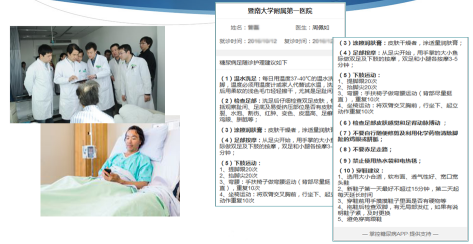
This is a typical case of diabetic foot care management by Guangzhou Overseas Chinese Hospital, based on the Smart Department Platform for Diabetes Control.
On April 20, 2016, Tangkong Diabetes partnered with Guangzhou Overseas Chinese Hospital (also known as the First Affiliated Hospital of Jinan University) to establish China’s first “Internet Diabetes Hospital”. Within three months of the project’s launch, standardized screening and care for diabetic complications, such as diabetic foot disease and retinopathy, were provided to over 1,100 patients with diabetes. This initiative effectively controlled their conditions and led to significant improvements in clinical outcomes, treatment adherence, and other key metrics.
The Current State of Diagnosis, Treatment, and Management of Diabetes Complications in China Is Alarming
Diabetes itself is not the greatest concern; rather, it is the complications of diabetes that pose significant threats. These complications can affect multiple organs throughout the body, leading to conditions such as retinopathy, peripheral neuropathy, and diabetic nephropathy, which severely impair patients’ quality of life and reduce their life expectancy.
Among these, diabetic foot is one of the most severe and costly chronic complications of diabetes. As the disease progresses, 30% of China’s 114 million diabetic patients will develop diabetic foot disease. This means that tens of millions of patients will suffer from diabetic foot, with some even facing the risk of amputation. A study published in the Diabetes Guidelines indicates that early and appropriate prevention and treatment can prevent amputation in up to 85% of patients.
However, China has long lacked an effective approach to the diagnosis and management of diabetes complications, manifesting in the following four pain points:
Clinical Care Level
● Lack of effective screening toolsMost primary healthcare institutions lack essential screening tools for diabetic complications, such as fundus cameras, four-limb Doppler flowmeters, and digital vibration perception threshold testers. Although health smart devices like intelligent glucometers and blood pressure monitors enable cloud-based data storage and sharing, their adoption at the primary care level remains low. Furthermore, data fragmentation hinders the development of a comprehensive data model system covering diverse age groups and physical characteristics, thereby failing to provide sustained and effective in-depth data support.
● Shortage of specialized technical talentPrimary care physicians lack sufficient expertise in the diagnosis and treatment of diabetes-related conditions, resulting in significantly lower patient trust compared to physicians at tertiary hospitals. However, due to their limited numbers and heavy workloads, physicians at tertiary hospitals struggle to provide effective management of diabetic complications. This has led to an awkward situation where primary care institutions are unable to manage the condition, while tertiary hospitals are unable to provide adequate ongoing care.
Management Level
● Non-standardized clinical diagnosis and treatment management pathwaysHospitals face obstacles in data collection and maintenance, with a lack of data interoperability between hospitals and primary healthcare institutions, leading to complex and redundant services. There is a scarcity of out-of-hospital monitoring records for blood pressure, blood glucose, medication, exercise, and diet, as well as a lack of dynamic tracking; consequently, isolated physical examination data fail to constitute high-quality health records. This prevents hospitals and physicians from implementing scientific stratified management and treatment for patients at high risk of complications, making it difficult to achieve standardized, personalized, and scalable health management.
● Poor patient self-management skillsThe scarcity of physician resources prevents doctors from dedicating substantial time and effort to the prevention and management of chronic diseases, making self-management critically important for patients with conditions such as diabetes. However, many patients lack specialized knowledge and health awareness, hindering their ability to effectively manage their condition on a daily basis. Relevant data indicate that the correct understanding rate among diabetic patients regarding insulin use, dietary management, and foot care is less than 20%; furthermore, 61.4% of patients do not understand dietary control, and 36.88% lack knowledge of exercise management.
In summary, the current state of diagnosis, treatment, and management of diabetes complications in China is deeply concerning. How to effectively manage the health of over 100 million individuals with diabetes has become a critical public health issue that demands urgent attention.
AI + Big Data: Empowering the Diagnosis, Treatment, and Management of Diabetes Complications
Clearly, to improve the current state of diagnosis and treatment management for diabetes complications, it is first necessary to address technical challenges. Managing diabetes begins with technology, launching“AI + Big Data” Smart Diabetes Department Platform. Doctors and physician assistants collaborate on the platform to provide patients with personalized, continuous, integrated diabetes management services across inpatient and outpatient settings.
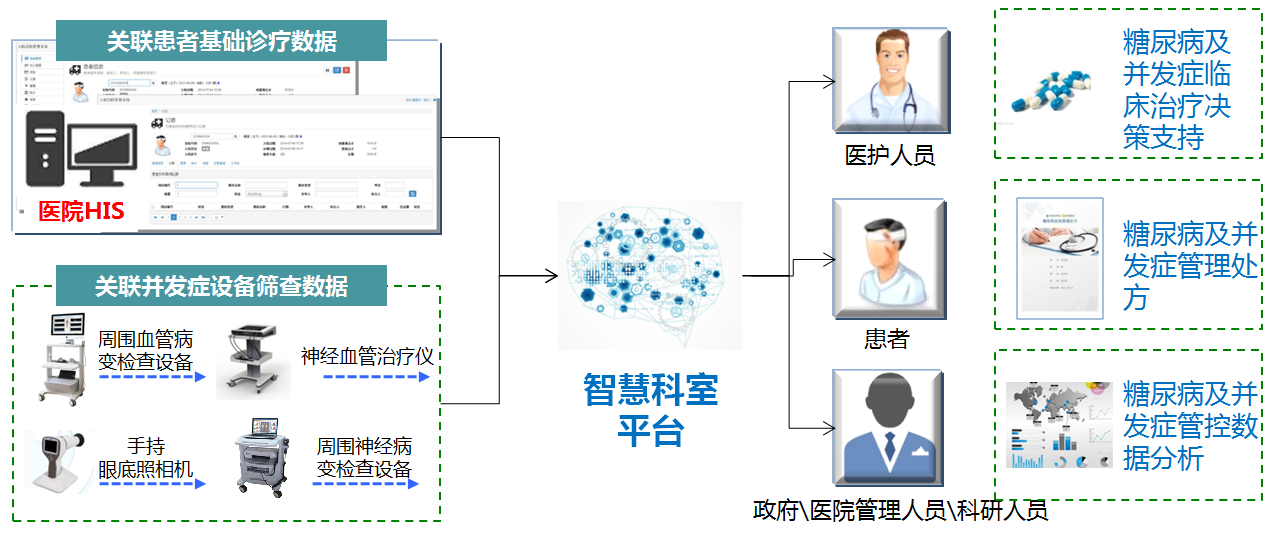
Taking diabetic foot as an example, the system incorporates an intelligent stratified management sub-platform that converts text and voice inputs into computer-readable language, based on the American Diabetes Association (ADA) high-risk factor classification system. It connects to multiple foot screening devices and glucometers to collect patient examination data in real time. Leveraging this data for in-depth mining and intelligent analysis, and integrating it with the patient’s historical blood glucose monitoring records, the system generates a comprehensive examination report. This report assists physicians in making accurate clinical decisions and provides personalized diabetic foot care plans for patients.
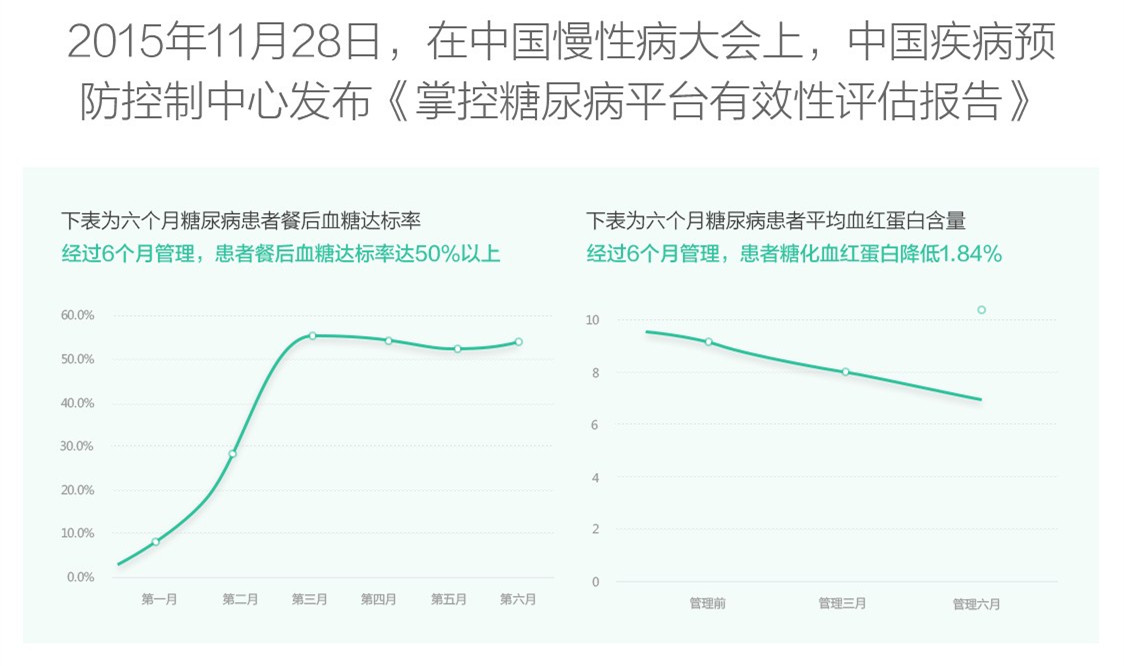
As a leading player in China’s mobile health sector for diabetes management, Tangkong Diabetes has consistently received widespread acclaim from the industry. At the Chinese Conference on Chronic Diseases held on November 28, 2015, the Chinese Center for Disease Control and Prevention released the “Evaluation Report on the Effectiveness of the Tangkong Diabetes Platform,” which demonstrated that the platform’s services help improve patients’ adherence to blood glucose monitoring, regular medication use, and effective exercise behaviors. The report further indicated that the platform aids in blood glucose control among individuals with diabetes, establishing it as a feasible and appropriate technology for diabetes management.
Guangzhou Overseas Chinese Hospital leverages the Smart Diabetes Department Platform to provide “in-hospital” and “out-of-hospital” care management for diabetic foot.Establish a standardized, collaborative, and integrated one-stop service for the screening, diagnosis, treatment, management, and remote support of diabetic complications, to curb the occurrence and progression of complications at their source.
In addition to diabetic foot disease, the Smart Department Platform provides comprehensive, end-to-end management services—spanning prevention to treatment—for common diabetes complications such as diabetic retinopathy and diabetic nephropathy, greatly benefiting China’s 100 million people with diabetes.
According to VCBeat, Zhangkong Diabetes is the sole platform provider for the Diabetes Management Physician Collaboration Network of the Chinese Medical Doctor Association. Based on collaborative projects with the Chinese Medical Doctor Association,"Mastering Diabetes" is currently replicating this effective management model for preventing complications across China, with projections to cover 50 hospitals by the end of 2017 and 200 hospitals in 2018.