

China Medical Consortium Development Alliance Founded by Health160, Dr. Hu Dayi Group, and Yizhitong Submits Prospectus

Shenzhen Ningyuan Technology
Integrated Internet Healthcare Service Platform

“The 4th Internet Plus Healthy China Conference and the 2nd China Health Science Popularization Innovation Competition” was held on September 9 at the China National Convention Center in Beijing. At a parallel forum of the conference, Shenzhen Ningyuan Technology (Health 160), Dr. Hu Dayi’s Doctor Group, Yizhitong Mobile Healthcare, and other enterprises jointly established the “China Medical Consortium Development Alliance.”
Responding to Policy Calls: Establishing Medical Consortiums
Members of the China Medical Consortium Development Alliance include Shenzhen Ningyuan Technology (Health 160), Dr. Hu Dayi Physician Group, Dr. Hu Dayi Clinic Group, Yizhitong Mobile Healthcare, Beijing Zhongke Haide Technology, and Beijing Taogu Technology. The consortium is honored by Academician Yao Jianquan of the Chinese Academy of Sciences as its Honorary President, with Li Hao, founder of Yizhitong, serving as President. Luo Ningzheng, CEO of Shenzhen Ningyuan Technology (Health 160), along with heads of other member organizations, serves as Vice President, while a renowned cardiovascular expert chairs the Alliance’s Expert Committee. At the unveiling ceremony, alliance council members including President Li Hao and Vice President Luo Ningzheng delivered speeches one by one.
China Medical Consortium Development Alliance is a non-profit social organization voluntarily formed by large Grade A tertiary hospitals, provincial medical institutions, national expert specialty alliances, renowned internet healthcare enterprises, and other stakeholders in the health industry. It is committed to establishing a new model of collaborative technological innovation characterized by joint development, complementary advantages, shared benefits, risk sharing, and contractual arrangements. The Alliance aims to organize and promote the development of medical consortiums and tiered diagnosis and treatment systems along standardized, normalized, and technology-driven pathways, thereby contributing to China’s economic development and the improvement of public health.
The Alliance’s primary missions include providing policy guidance, industry information, and services for the translation of scientific research achievements to groups and individuals across the health industry; coordinating, organizing, and supporting interconnectivity among medical institutions; studying industry development trends and delivering industry intelligence services; collecting and compiling industry data, analyzing operational dynamics, and publishing industry operation reports; submitting policy recommendations to relevant government authorities, facilitating the formulation of industry codes of conduct, and building a communication bridge between enterprises and the government; promoting resource sharing among Alliance members and fostering cooperation in areas such as funding, technology, markets, and intellectual property; vigorously driving in-depth collaboration along the upstream and downstream of the healthcare sector, aligning production with demand, enhancing regional cooperation, and accelerating the widespread adoption of motion control technologies and products; and creating favorable conditions and securing policy support to publicize and commend Alliance members or social enterprises that have made outstanding contributions to the internet-based development of the healthcare industry.
The China Medical Consortium Development Alliance was established in response to national policy initiatives. In 2017, the development of medical consortia was officially included as a key priority in the Government Work Report and specifically deployed by the Executive Meeting of the State Council. This April, Premier Li Keqiang presided over an Executive Meeting of the State Council to advance the construction of medical consortia, aiming to deepen institutional and mechanistic reforms and provide the public with high-quality, convenient medical services.
In fact, as early as June 2017, Shenzhen Ningyuan Technology (Health 160) responded to policy calls by launching a Medical Consortium. Leveraging its extensive experience in internet healthcare operations and platform advantages, it provides referral appointment and consultation services. Traditional medical consortia often suffer from drawbacks such as high connectivity costs, low referral efficiency, limited informatization, and single payment methods. Internet platforms possess inherent advantages in addressing these challenges.
Currently, Health 160 has facilitated multi-hospital collaboration, implemented tiered diagnosis and treatment, and enabled collaborative resource sharing. By breaking through the bottlenecks of traditional medical consortium formation pathways, it has achieved friendly mutual assistance in clinical care, joint development through interconnected scientific research and education, and efficient, convenient mobile services, thereby becoming a key driver in the implementation of the tiered diagnosis and treatment system.
Furthermore, by integrating resources vertically and fostering cross-regional collaboration horizontally, Health 160 optimizes the allocation of medical resources, thereby guiding the public to shift their healthcare-seeking concepts and habits and gradually establishing an orderly pattern of medical care. This approach maximizes the optimal allocation of resources such as talent, equipment, and information. Leveraging its substantial offline medical resources and inherent internet healthcare capabilities, the advantages of the Health 160 Internet Medical Consortium are evident.
In-Consultation Payment Volume Surpasses RMB 3 Billion This Year, May Exceed RMB 10 Billion Next Year
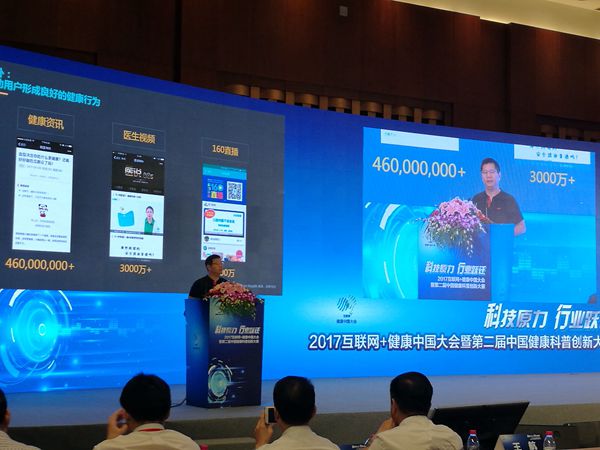
Luo Ningzheng delivered a keynote address titled “Making Health Simpler” at the main forum of the conference. He summarized how Shenzhen Ningyuan Technology (Health 160) has enhanced efficiency and user experience for both patients and physicians, inside and outside hospitals; disclosed current operational metrics of Health 160; and provided a detailed explanation of the company’s future industrial strategy centered on “connectivity, openness, and ecosystem.”
Luo Ningzheng stated that within hospitals, Health 160 is committed to optimizing the healthcare experience, primarily providing technical support for appointment registration, online payment, report inquiries, and post-consultation follow-ups. Luo revealed that the annual volume of online appointment registrations on the Health 160 platform has grown rapidly, with an estimated figure exceeding 103 million this year and expected to surpass 150 million next year. He also disclosed that the cumulative transaction amount for in-consultation payments on Health 160 has currently reached RMB 1.5 billion, is projected to exceed RMB 3 billion within the year, and is anticipated to surpass RMB 10 billion in 2018.
In addition, Health 160 has established “virtual clinics” within online hospitals to enhance user experience through remote consultations while improving operational efficiency for hospitals. Currently, Health 160 is progressively building end-to-end online hospital platforms for more than 3,000 large hospitals across over 200 cities in China. Health 160 is also facilitating the outflow of prescriptions from hospitals, enabling users to purchase Chinese and Western medicines, injections, and insurance-covered drugs online regardless of whether they consult online or offline. Corresponding medications are dispensed and delivered through online pharmacies, external traditional Chinese medicine pharmacies, and in-hospital pharmacies.
Beyond the hospital setting, the platform also offers a vast amount of professional medical and health content. To date, the total readership of text-and-image health articles on Health 160 has exceeded 460 million, video views from doctors—including those in the “Medical Insights in 60 Seconds” series—have surpassed 30 million, and live broadcasts on 160 have accumulated over 15 million views.
Luo Ningzheng stated that the positioning and goal of Health 160 is to bridge the gap between inside and outside hospitals, promote the internet transformation of physical hospitals, and assist hospitals in achieving internet-based operations. Currently, Health 160 has reduced patient dwell time at individual hospitals by more than three hours, significantly improving the medical care environment. Due to improved operational efficiency, hospital outpatient volumes have increased by up to 30%, with hospital follower counts reaching as high as 500,000. With the assistance of Health 160, the influence of hospitals has been further enhanced.
According to Luo Ningzheng, Health 160 will evolve into an internet healthcare operator that interconnects the government, patients, doctors, hospitals, pharmaceutical companies, and insurance providers, with each connection generating new value. For instance, on the user side, the medical and health services provided by Health 160 include not only faster appointment registration but also online consultations, disease triage, purchase of medication and insurance, and health information. Similarly, for doctors, the “160 Doctor” platform enables medical professionals to better manage their patient base, build personal brands, and practice independently, thereby maximizing the professional value of physicians.
Currently, in addition to its core platform operations, the business layout of Health 160 (Shenzhen Ningyuan Technology) encompasses the pharmaceutical e-commerce platform 160 Pharmacy, the infection control technology service provider Blue Dragonfly, the medical accompaniment and consultation platform Tixin Xiaohu, and the medical informatization alliance Yimeng Wang. Health 160’s services have expanded to over 200 cities across 31 provinces, including Beijing, Shanghai, Guangzhou, Shenzhen, Hong Kong, Changsha, Zhengzhou, Hefei, Chengdu, Wuhan, Nanjing, and Haikou. The platform serves 3,245 hospitals, including more than 1,200 Grade A tertiary hospitals. It provides access to over 500,000 physicians, with more than 10,000 active doctors on the provider end daily, and has cumulatively served over 140 million patients.