Establishment of a Traceability System for Chinese Herbal Medicines Urgently Needed: Alibaba Health, Tasly, and Jiuzhou Tong Enter the Market
Traditional Chinese medicine, a precious legacy bequeathed by our ancestors, has evolved into a multi-billion-dollar industry today. However, the quality of Chinese herbal medicines remains a concern due to issues such as non-standardized cultivation and contamination residues.With the source of living water cut off, quality issues in Chinese herbal medicines have become a hidden threat to the inheritance of Traditional Chinese Medicine.
In this context,Led by the China Food and Drug Administration and the Market Order Department of the Ministry of Commerce, guiding opinions on the construction of a traceability system for the circulation of traditional Chinese medicinal materials were issued and implemented in phases across China.
At the corporate level, listed companies associated with traditional Chinese medicine (TCM), such as Tasly, Kangmei Pharmaceutical, and distribution enterprises including Jointown Pharmaceutical Group and AliHealth, have already established a presence in TCM material traceability systems. Other companies, such as Zhongyaocai Tiandi Wang (TCM Material Network) and Zhengyi Technology, are also promoting the development of traceability systems for TCM materials.
VCBeat (WeChat ID: vcbeat) interviewed multiple companies involved in building traceability systems for the circulation of traditional Chinese medicinal materials, exploring issues such as the problems that traceability systems can address, details of system implementation, and development trends.
Traceability Systems Serve as a Protection for the Traditional Chinese Medicine Industry
A source familiar with Alibaba Health’s traceability code business told VCBeat that, in terms of product characteristics, Chinese herbal medicines possess the dual attributes of both agricultural products and pharmaceuticals.
Circulation Pathways of Traditional Chinese Medicinal Materials
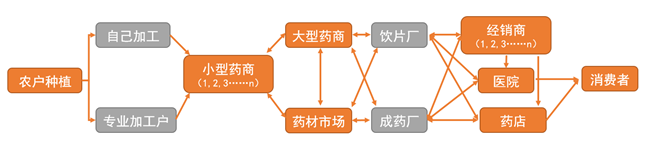
Source: Yaocai Bang
As an agricultural product, it suffers from poor standardization, making it difficult to measure quality standards. Meanwhile, it is closely tied to its region of origin, and its production process is lengthy and complex, which makes it prone to quality issues such as excessive pesticide residues and the substitution of inferior goods for superior ones. As a pharmaceutical product, however, it serves the critical function of treating diseases and saving lives; any quality defects could lead to delayed treatment, undermining this vital mission.
Therefore, traceability of Chinese herbal medicines is essential.The comprehensive data collection across the production process (e.g., temperature, humidity, soil conditions, and pesticide application) and circulation environment, enabled by traceability systems, facilitates the monitoring and authentication of product quality. This approach is beneficial for ensuring patient safety, purifying the market for traditional Chinese medicinal materials, and safeguarding the healthy development of the industry.
Zhang Bin, head of the traceability system at TCM Materials Heaven Network (Zhongyaocai Tiandi Wang), believes that establishing a traceability system for traditional Chinese medicinal materials serves functions on four levels. From a national perspective, a comprehensive traceability system can create a full-process chain for traditional Chinese medicinal materials and prepared slices, ensuring that sources are traceable, distribution paths are verifiable, and responsibilities are accountable, thereby achieving the goals of regulatory oversight, market standardization, and public benefit.
From a market perspective, the lack of industry-wide traceability has led to serious issues in the circulation of traditional Chinese medicinal (TCM) materials, such as counterfeiting, fraud, and the substitution of inferior products for high-quality ones. If the sourcing and distribution processes of TCM materials were transparent, market competition would become more open, thereby enhancing market vitality.
For enterprises engaged in the trade of Chinese crude drugs and prepared slices, traceability systems enable tracking of the entire cultivation and processing lifecycle. Should issues arise at any point in the supply chain, information technology can be leveraged to conduct backward tracing from downstream to upstream, identifying root causes and thereby fundamentally addressing quality and safety concerns associated with traditional Chinese medicine (TCM) products. Furthermore, Chinese crude drugs bearing traceability labels serve as a corporate credential for each company. Each consumer interaction with these labels reinforces recognition and trust in the manufacturer, encouraging safer product use, boosting sales, and enhancing corporate profitability.
The ultimate beneficiary of the traceability system for Chinese herbal medicines is the consumer. A robust traceability chain safeguards consumers’ right to information and enhances public confidence in product quality and safety. It also places agricultural producers under public scrutiny, promoting transparency and standardization in production, thereby ensuring that consumers can use safe and reliable Chinese herbal materials and decoction pieces.
Policy Drives the Construction of Traceability Systems for Traditional Chinese Medicine Materials
The establishment of a traceability system for the circulation of traditional Chinese medicine (TCM) materials can lay a solid foundation for industry development, and relevant regulatory authorities have long since commenced providing guidance on the construction of TCM material traceability systems.
Currently, the most influential and widely covered channel is the Chinese Herbal Medicine Circulation Traceability System within the “National Key Product Traceability System.”
Initiated by the Department of Market Order under the Ministry of Commerce, the program has supported the establishment of traceability systems for traditional Chinese medicinal materials in 18 provinces and municipalities across China in three batches since 2012.
The first batch of cities, renowned as production hubs and trading markets for authentic medicinal herbs, includes Baoding, Bozhou, Yulin, and Chengdu. The second batch covers seven provinces, municipalities, and autonomous regions with abundant traditional Chinese medicine (TCM) resources, including Jilin, Jiangxi, and Henan. The third batch comprises seven provinces, municipalities, and autonomous regions, including Shanxi, Inner Mongolia, and Liaoning.
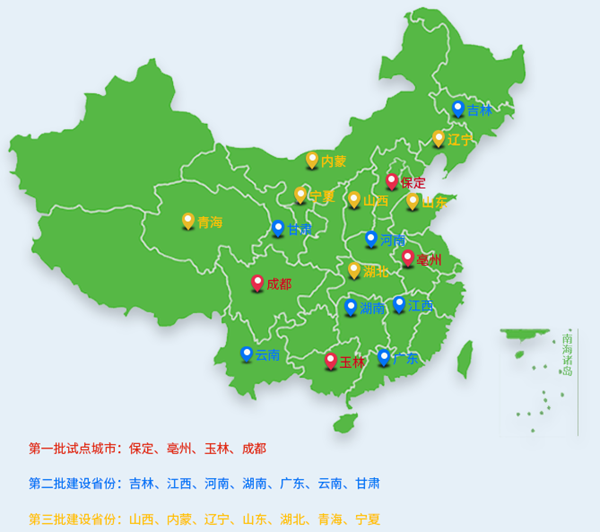
Source: Official Portal for National Key Product Traceability
According to data provided by the Department of Market Order Regulation under the Ministry of Commerce, a circulation traceability system has been preliminarily established. This system is centered on national and local traceability management platforms and supported by six subsidiary traceability subsystems covering: (1) cultivation and breeding of Chinese herbal materials; (2) distribution of Chinese herbal materials; (3) specialized markets for Chinese herbal materials; (4) production of prepared slices of Chinese crude drugs; (5) distribution of prepared slices of Chinese crude drugs; and (6) utilization of prepared slices of Chinese crude drugs.
The system covers approximately 2,000 enterprises and 15,000 merchants across China.Consumers can access circulation information for the Chinese herbal medicines they have purchased at any time and from any location via mobile phones, the internet, or terminal inquiry kiosks. This establishes a comprehensive traceability chain within the pilot areas, ensuring that the sources of Chinese herbal medicines and decoction pieces are traceable, their distribution paths are verifiable, and accountability is enforceable.
In terms of regulations, the “Outline of the ‘Healthy China 2030’ Plan” points out that breeding bases for seedlings of bulk, authentic, and endangered medicinal materials should be established, dynamic monitoring information on the traditional Chinese medicine (TCM) materials market should be provided, and green development of the TCM materials planting industry should be promoted. Modern logistics management and technologies should be widely applied to improve the modern circulation network and traceability system for TCM materials.
The “Law on Traditional Chinese Medicine,” which officially came into effect on July 1 this year, states that the state encourages the development of a modern circulation system for traditional Chinese medicinal materials, improves technical standards for their packaging and storage, and establishes a traceability system for their distribution.
Tasly, Jointown Pharmaceutical Group, and AliHealth Have Entered the Market
In addition to the government’s “visible hand,” the market’s “invisible hand” has also provided significant impetus to the development of traceability systems for traditional Chinese medicine (TCM) materials, with companies such as Tasly, Kangmei Pharmaceutical, Jointown Pharmaceutical Group, and AliHealth already making strategic investments in this area.
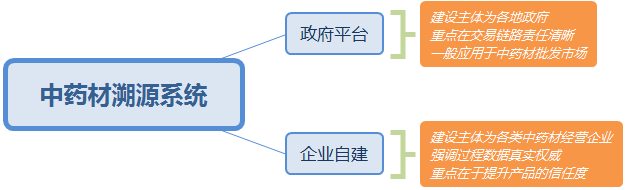
A representative from Alibaba Health’s traceability code division stated that there are currently two main categories of traditional Chinese medicine (TCM) material traceability platforms.One category comprises government platforms, primarily the Chinese Medicinal Materials Traceability Platform operated by the Ministry of Commerce. This system broadly covers the entire supply chain from cultivation and breeding to end-use, although it currently focuses mainly on wholesale markets for Chinese medicinal materials. The second category consists of enterprise-built traceability systems, which are typically developed by manufacturers of Chinese medicinal materials.
Government-led traceability platforms emphasize the provenance of traditional Chinese medicine (TCM) materials traded by various entities across the entire supply chain, ensuring clear transaction ledgers and well-defined accountability within the trading links. In contrast, enterprise-built traceability systems generally focus on the integrity and authority of data related to the cultivation, processing, and testing of TCM materials, with an emphasis on ensuring transparency and credibility throughout the supply chain processes.
Let us now examine specific implementation cases.
Since 2013, Tasly Holding Group has pioneered innovative efforts to establish a full-process quality traceability system for traditional Chinese medicinal (TCM) materials. In that year, Tasly entered into agreements with the municipal governments of Baoding and Anguo in Hebei Province. Leveraging Anguo’s millennium-old trading hub as a key marketplace, the company developed a new model characterized by “joint provincial-ministerial development, corporate implementation, reliance on technological innovation, and market-oriented operations,” thereby building a TCM material traceability system.
Jointown Pharmaceutical Group commenced the development of a traceability system for Chinese herbal medicines in 2014, when Hubei Province was designated as one of the third batch of provinces to establish a circulation traceability system for Chinese herbal medicines, with Jointown serving as the system implementation contractor.
In late December last year, Hubei Province officially launched its traceability platform for traditional Chinese medicinal (TCM) materials, enabling end-to-end traceability across cultivation, distribution, production, and usage. Jointown Pharmaceutical Group introduced more than 40 traceable TCM material products; with a simple smartphone scan, information such as product name, cultivation base, planting time, and quality inspection details is instantly displayed.
Within Alibaba Health’s business operations, product traceability constitutes a critical component, offering systematic solutions for tracing pharmaceuticals, health supplements, and food products. In the area of traditional Chinese medicinal materials and prepared slices traceability, Panlong Yunhai’s Notoginseng powder joined Alibaba Health’s “Code for Assurance” traceability platform last August, becoming the first health supplement and wellness product enterprise to onboard onto the platform.
Panlong Yunhai Pharmaceutical stated that by listing its products on Alibaba Health’s “Ma Shang Fang Xin” (Scan for Assurance) platform, consumers can gain a more intuitive understanding of the entire process behind Panlong Yunhai’s authentic Notoginseng powder—from cultivation and production to cleaning and processing—simply by scanning a QR code. According to a representative from Alibaba Health’s traceability system, the “Ma Shang Fang Xin” platform plans to collaborate with more companies in the health supplement and herbal decoction piece sectors in the future to further enhance its product traceability infrastructure.
Cost Is the Main Bottleneck to the Promotion of Traceability Systems
As evidenced by specific implementation cases, the companies that have already begun establishing traceability systems for Chinese herbal medicines and processed slices are all large-scale enterprises.Small businesses are not proactive in building traceability systems, resulting in a situation where such systems are well-received in principle but see limited practical adoption.
Jiang Shunping, General Manager of Beijing Zhengyi Technology, told VCBeat thatThe primary reason small businesses are unenthusiastic about traceability systems is the cost of implementation.
He pointed out that establishing a traceability system requires not only hardware investment from enterprises but also the restructuring of their existing business processes. The capital expenditure on essential equipment for this system, such as automatic coding machines, scanners, and barcode readers, amounts to millions of yuan. Furthermore, since scanning is required at every stage of the distribution process, the existing workload is undoubtedly increased.
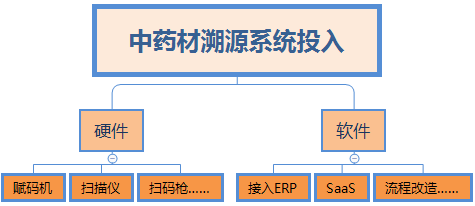
Of course, the primary issue remains the mismatch between costs and returns.That is, after implementing a traceability system, enterprises see little short-term gain, which dampens their enthusiasm.
Additionally, industry insiders have noted that consumer acceptance of traceability systems remains low, with few consumers proactively using traceability codes to verify authenticity or learn about the product’s production and distribution process.
“Consumers primarily purchase herbal decoction pieces at hospitals or chain pharmacies, trusting the quality endorsement provided by these institutions. Therefore, if a traceability system is to be promoted in the future, the stance of these two channels will be crucial.”
Zhang Bin from TCMCIN.com also stated that the development of traceability systems for traditional Chinese medicine (TCM) materials entails substantial R&D expenditures. Even after implementation, significant human, material, and financial resources are required to oversee and audit the numerous stages involved. Consequently, the high cost of traceability necessitates coordinated funding from national initiatives, government support, and corporate investment.
To promote the nationwide adoption of a traceability system for Chinese herbal medicines, it is essential to leverage government publicity and legal framework dissemination, engage more third-party platforms to amplify outreach efforts, and employ innovative self-regulatory measures and mechanisms. These actions will stimulate corporate enthusiasm and encourage proactive participation in the development of the traceability system.
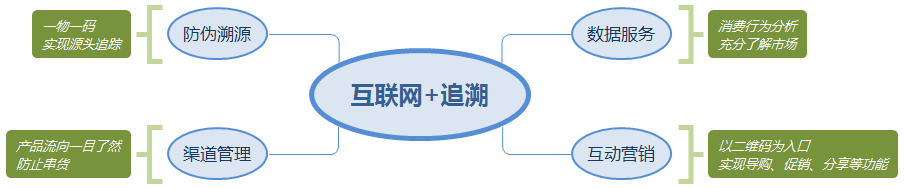
While boosting corporate enthusiasm, traceability solution providers are also adding new features to traceability codes beyond simple anti-counterfeiting and traceability, in order to meet the needs of enterprises and consumers.
Taking Zhengyi Technology as an example, its “Zhengyi Mada” solution combines anti-counterfeiting traceability with interactive marketing, the latter being a significant selling point.
Jiang Shunping stated that in the era of mobile internet,By using QR codes as an entry point, businesses can unlock commercial value through manufacturer-consumer interactions, guided shopping, brand dissemination, promotions, and social sharing. In an era where interactive marketing has become the trend, this approach indirectly enhances corporate acceptance of traceability systems.
“Internet Plus” Traceability May Become the Ice-Breaking Direction
Currently, traceability systems for Chinese herbal medicines remain fragmented, with each operator working in isolation. The lack of unified industry standards is a significant factor constraining the development of these traceability systems.
In response to this situation, Zhang Bin from the Chinese Herbal Medicine TianDi Network stated that there is currently no unified national standard for traceability systems in China. As this is a systematic project involving the entire industry chain, each enterprise has developed a system tailored to its own characteristics and specific circumstances.
He believes that while a unified national standard may not necessarily emerge in the future, general standards will gradually become consistent during the early and middle stages of traceability system development. It is also possible that several more robust and scientifically advanced traceability systems will gradually integrate smaller systems, with these major players engaging in both competition and collaboration to jointly improve and standardize industry-wide norms.
He stated that the main obstacles to establishing a unified national standard are primarily cultural, regional, varietal, and specific traceability technologies.“China’s medicinal herb-producing regions are vast in area. In the early stages, each region sought a traceability system suited to its own needs, cultivating its own base of loyal users. Given the wide variety of Chinese medicinal herbs, these systems could not encompass all products at once and would require a considerable amount of time to integrate. Each integration effort by various platforms tests technological capabilities, as every data platform has its own standardized data collection metrics, transmission formats, and interface specifications.”
A relevant official from Alibaba Health’s traceability products division also stated that, in light of the overall development trends in the traceability industry, a single nationwide unified platform is not the future direction. With the advancement of the internet, e-commerce, and big data, as well as evolving government regulatory philosophies, the future product traceability system will be a new “Internet + Traceability” framework characterized by multi-party participation and collaborative governance. This system will integrate government oversight with industry development, combine traditional industries with internet technologies, and link enterprise-built traceability systems with government regulatory platforms and e-commerce platforms.
The Growth of the Traditional Chinese Medicine Industry Drives the Formation of a Traceability System
Currently, the development of the traditional Chinese medicine (TCM) industry has been incorporated into national development strategies. With the advancement and implementation of supportive policies for TCM, market circulation order is being further standardized, and the quality of TCM materials continues to improve. As the consumer concept of “preventive treatment and health preservation” becomes increasingly widespread, the status of the TCM industry is rising rapidly, and the market development environment is continuously optimizing, thereby providing substantial room for market growth.
Data from the National Bureau of Statistics shows that in 2016, the sales revenue of the Chinese herbal decoction pieces industry reached RMB 192.2 billion, accounting for the smallest proportion (6.5%) within the pharmaceutical manufacturing sector, yet it achieved the fastest growth rate (13.1%), surpassing the overall growth rate of the pharmaceutical economy and demonstrating strong development momentum.
In February this year, the Ministry of Human Resources and Social Security issued the 2017 edition of the National Reimbursement Drug List, in which adjuvant drugs and traditional Chinese medicine (TCM) injections were strictly restricted, while TCM decoction pieces, as alternatives, were not subject to such restrictions.
Next is the zero-markup policy. The National Health and Family Planning Commission has mandated that all public hospitals across China eliminate drug markups, except for those on traditional Chinese medicine (TCM) decoction pieces, by the end of September this year. Consequently, to offset the revenue loss resulting from the removal of drug markups, hospitals may increase the utilization of TCM decoction pieces.
In terms of reducing the drug revenue proportion, the National Health and Family Planning Commission also requires that pilot cities for healthcare reform lower their overall drug revenue proportion to approximately 30%. Traditional Chinese medicine (TCM) decoction pieces are excluded from this calculation and will also benefit from the incremental growth resulting from drug revenue proportion controls.
Based on this assessment, the market size of the Chinese herbal decoction pieces industry may exceed RMB 200 billion. As a key lever for the “upgrading and enhancement” of the traditional Chinese medicine (TCM) industry, the development of traceability systems for TCM materials is being accelerated by relevant companies, with mature and well-established traceability systems expected to emerge in the near future.
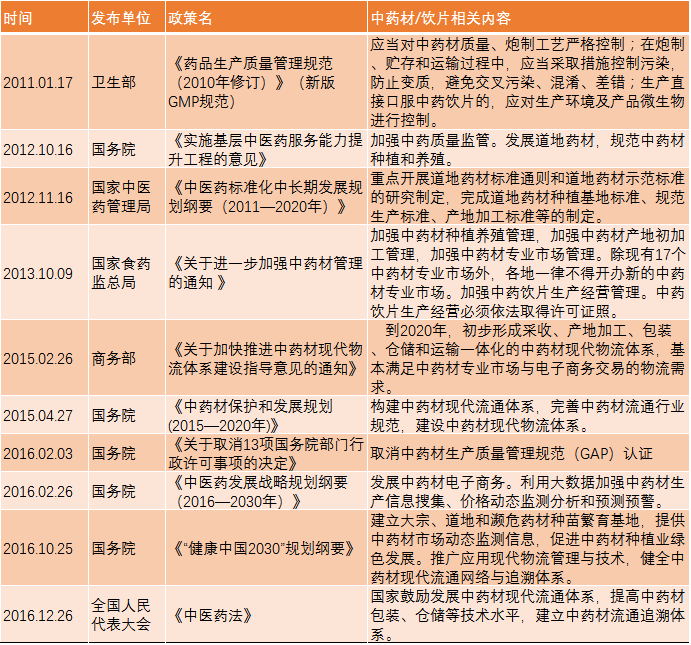
Appendix: Policies Related to the Traditional Chinese Medicine Industry