

National Health Town Industry Overview: Policy-Driven, 47% Engaged in High-End Medical Services, Total Investment Exceeds RMB 200 Billion
“Choose a city to grow old in; meet one person to grow white-haired with.” These twelve characters by Feng Jicai vividly capture people’s aspirations for life and love.
Imagine choosing a health-focused town featuring a city with convenient transportation and a beautiful environment, offering tranquility for mental cultivation and activity for physical wellness. Integrated with premium health screenings, advanced medical care, active aging services, health and wellness programs, eco-friendly vacations, and creative entertainment, how would your life change?
This dream, which once seemed unattainable, became a reality nine years ago. In 2008, China’s Wuhu Life Health City selected a leaping frog as the totem for its newly launched project, symbolizing the poetic line “Amidst the fragrance of rice blossoms, they speak of a bountiful year, listening to the chorus of frogs.” It seemed that Zheng Yonggang, Chairman of the Board of Shanshan Investment Holdings, and his partners could already foresee the joy of the project’s future completion.
Shanshan has joined forces with the Wuhu Municipal Government and the Wuhu National Economic and Technological Development Zone in Anhui Province to transform the area into a demonstration zone for innovation in the biopharmaceutical industry, characterized by distinct industrial features and comprehensive supporting facilities. This zone integrates industries such as life sciences, biotechnology, healthcare, research, development, and production of high-tech products, as well as wellness and healthy living.
Nine years have passed, and life and health cities like Wuhu have sprung up across China, with their scale and invested capital continuously increasing. According to incomplete statistics from VCBeat (WeChat ID: vcbeat), 17 regions in China have currently developed health towns, of which 47% involve high-end medical services, 64.7% are already operational, and the total investment exceeds RMB 200 billion.
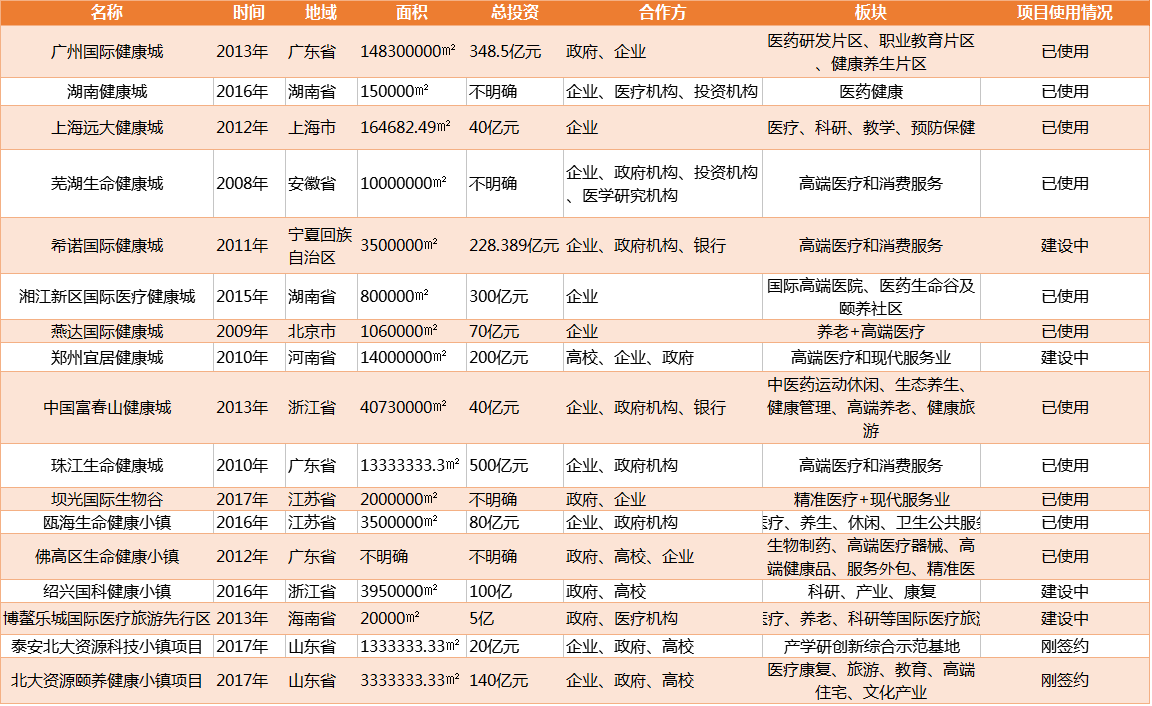
Health Town is the product of integrating medical and elderly care resources with leisure and vacation offerings.Examining the 17 existing health-themed towns in China, they all share common features: a natural environment, appeal through medical services, chronic disease recuperation, and leisure-oriented elderly care. For instance, the OuHai Life Health Town is bordered by the University City to the south and the Wenrui Tang River to the west, relying on the Sanyang Wetland and Daluo Mountain as its environmental backdrop. It is committed to building a comprehensive global healthcare industry chain, supported not only by high-tech projects but also by natural landscapes. Here, infrastructure development—including roads, power lines, and water pipes—must yield to “green” priorities.
In Ouhai Life and Health Town, “back-and-forth deliberation” is a commonplace occurrence. For instance, in the construction of a single road, multiple meetings are required just to determine its alignment and layout. Zhongxing Avenue, one of the town’s main thoroughfares, underwent several route adjustments before its final path was established—running from Longwan, through the Litouyang plot, crossing the Tang River, and finally connecting to National Highway 104. Staff members from the Town Administrative Office have witnessed the town’s rapid development firsthand. Roads here must not only be built with ample width and scientific design but also achieve aesthetic harmony, ensuring consistency with the Tang River water network and the overall environmental planning.
Meanwhile, the creation model of Health Towns particularly requires policy support from the government.
Currently, there are three main known models. The first is the “enterprise-led, government-supported” model, in which the government is responsible for the positioning, planning, infrastructure development, and approval services of the town, while introducing private enterprises to build characteristic towns. An example is China’s Fuchun Mountain Health City.
Second, foster public-private partnerships and coordinated development, with the government leading strategic planning and collaborating with large enterprises to cultivate major industries, as exemplified by the Guangzhou International Health City.
Third, the government leads infrastructure development and market-oriented investment promotion. The government establishes state-owned enterprises to conduct nationwide investment promotion in alignment with industrial positioning, as exemplified by the Ouhai Life Health Town.
In terms of investment amount, the total capital for the 17 Health Cities listed exceeds RMB 200 billion, with an average investment of over RMB 10 billion per Health City built within each health town. However, among these 17 Health Cities constructed, the utilization rate has reached 64.7%.It is evident that people have a high level of recognition for Health City, placing increasing importance on health and aspiring to live in areas with beautiful environments.
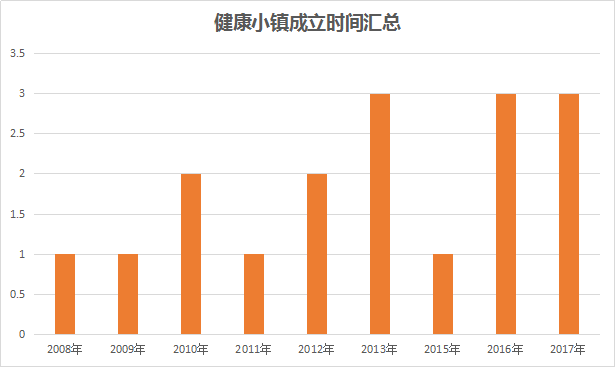
From the perspective of when various regions became involved in health towns, the earliest instance was in 2008 with one city, while the highest number occurred in 2013, 2016, and 2017, each seeing participation from three provinces or municipalities. Using three-year intervals as benchmarks, the development of health towns increased consistently every three years, with explosive growth observed particularly during 2010–2013 and 2015–2017.
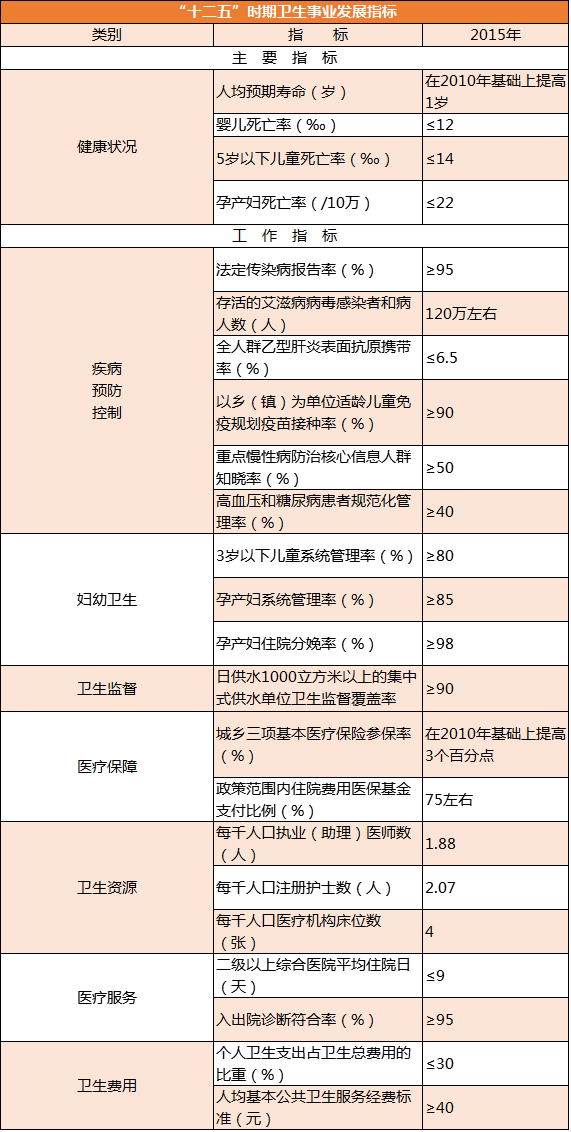
An analysis reveals that one of the reasons for the gradual increase in Health City from 2008 to 2010 was the issuance of the “12th Five-Year Plan” by the state. The plan aimed to initially establish a basic medical and healthcare system covering both urban and rural residents by 2015, ensuring that all residents have access to basic medical security and basic public health services. It sought to significantly improve the accessibility, quality, and efficiency of medical and healthcare services, as well as public satisfaction; substantially reduce the individual burden of medical expenses; continuously narrow disparities in health resource allocation across regions and health status among population groups; basically achieve universal access to medical care for all people; and increase average life expectancy by one year compared to the 2010 level. The specific indicators are as follows:
In the same year, local governments also introduced specific policies. For instance, during the 12th Five-Year Plan period, Zhengzhou City in Henan Province prioritized the development of the Zhengzhou Yiju Health City project. Located in western Zhengzhou, as well as eastern and southern Xingyang City, the project covers a total area of 117 square kilometers, with an initial phase spanning 14 square kilometers. It is planned to accommodate a population of 500,000 to 750,000, with an investment of RMB 20 billion.
By consolidating premium medical resources, such as those of the Medical School of Zhengzhou University, and integrating related leisure and convalescence industries, this Health City enhances the health and leisure functions of the Western New Town, drives development in western Zhengzhou, and thereby elevates the comprehensive service capabilities of Zhengzhou’s urban core. It is a newly developed, high-end, modern medical service district centered on contemporary medical services, higher medical education, health intervention and management, rehabilitation and wellness, elderly care, Traditional Chinese Medicine (TCM) leisure tourism, and biomedical R&D, serving as a healthcare hub for central and western China.
A total of 14 medical institutions, R&D organizations, and medical colleges were among the first to enter Zhengzhou Yiju Health City, with a total investment of RMB 14.75 billion and a capacity of up to 26,000 beds—more than eight times the number of beds at Henan Provincial People’s Hospital.
From 2011 to 2013, health-focused towns in coastal cities experienced rapid development, primarily concentrated in Guangdong Province and Zhejiang Province. This growth was also driven by the issuance of the “Implementation Opinions on Promoting the Development of the Health Service Industry in Zhejiang Province.”
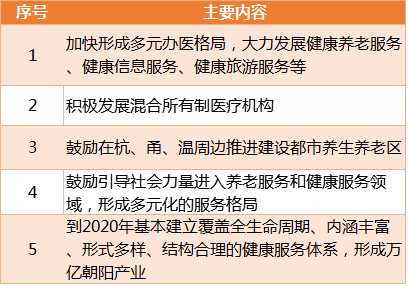
Subsequently, on April 23, 2014, the People’s Government of Zhejiang Province issued the “Implementation Opinions on Accelerating the Development of the Elderly Care Service Industry,” which called for the improvement of seven measures, including policies on investment and financing, land supply, community-based home care service facilities, and tax and fee incentives.
Additionally, driven by national economic growth and rising household incomes, China has undergone its third round of consumption upgrading. During this process, consumer spending on education, entertainment, culture, transportation, telecommunications, healthcare, housing, and tourism has grown most rapidly, with particularly strong growth in consumption linked to the IT, health, automotive, and real estate industries.
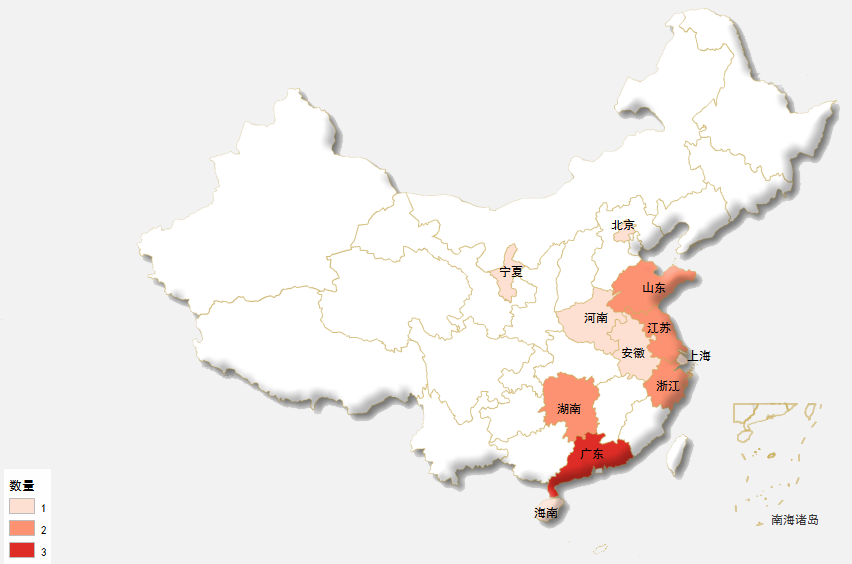
From a geographical distribution perspective, the locations of Health City projects are primarily concentrated in developed cities within economically advanced provinces, such as Guangdong, Jiangsu, and Zhejiang. Projects have also been launched in inland regions, including Henan Province, the Ningxia Hui Autonomous Region, and Anhui Province.
Thus, leveraging the premium medical resources available in developed cities, these projects have established local health and wellness hubs centered on either high-end healthcare or a combination of high-end healthcare and elderly care, thereby securing a sufficient base of target audiences and consumers in those regions.
Notably, the Xinuo International Health City has been established in the Ningxia Hui Autonomous Region. Located in Yongning County, it is bounded by Binhe Avenue to the east, Yongning Yingbin Avenue to the south, Huinong Canal to the west, and Zhonggan Ditch to the north. Centered on Ningxia, the project aims to build a strategic hub city for Northwest China, capable of attracting 100,000 visitors for tourism and convalescence, and generating annual direct economic benefits of USD 1–2 billion.
According to VCBeat, the total investment in the Xino Health City project amounts to $3.5 billion, with an initial investment of $1.5 billion. The project will be developed in three phases and will include a medical district, a central business district (CBD), residential areas, and a golf course, among other facilities. The medical district serves as the core component of the project and will feature one general hospital and four specialized hospitals. Additionally, ten centers focusing on cosmetic surgery, disease prevention, healthcare, and rehabilitation will be established, along with six medical universities and R&D centers. Other functional zones will house museums, libraries, schools, and public facilities.
Generally, industry insiders define a “Health City” as an integrated platform that offers diversified, specialized, one-stop services centered on the broader health industry, fostering deep convergence among prevention, treatment, and wellness sectors. Although operational philosophies for Health Cities across various regions in China are largely aligned, standardized practices have yet to emerge. Companies are exploring different focuses and depths tailored to their specific circumstances, thereby cultivating regionally distinctive development models.
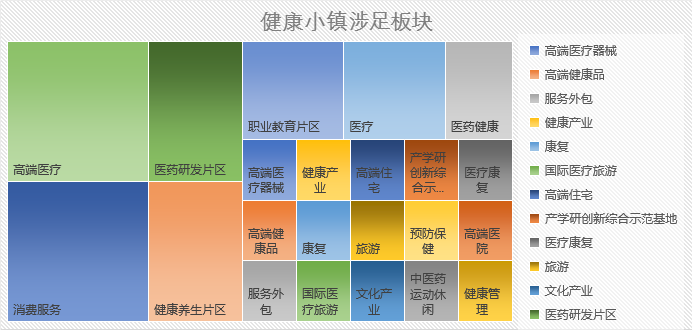
According to the data, health city development across China spans a wide variety of sectors, primarily covering high-end medical devices, premium health products, service outsourcing, the health industry, rehabilitation, international medical tourism, high-end residential properties, integrated demonstration bases for industry-academia-research innovation, medical rehabilitation, tourism, the cultural industry, preventive healthcare, high-end hospitals, health management, pharmaceuticals and health, traditional Chinese medicine (TCM), and pharmaceutical R&D zones. Among these, the most frequently involved sectors are health and wellness zones, vocational education zones, high-end medical care, and consumer services.
Among these, the high-end healthcare and consumer services sector, represented by Wuhu Life Health City, leverages Wuhu’s unique advantages in convenient transportation and natural environment to integrate work, living, and leisure within a 10-minute activity radius, thereby creating a “new urban complex” that pursues a modern healthy lifestyle.
Wuhu Life Health City is dedicated to developing producer services and consumer services within the life and health industry. It aggregates and cultivates high-end health service sectors, including premium health check-ups, medical healthcare, health management, and the silver economy. Simultaneously, it drives the extension of the industrial chain in upstream and downstream life sciences, encompassing research and development, manufacturing, and marketing, while radiating support to complementary sectors such as finance, logistics, and technology transfer. This comprehensive approach aims to realize a circular economy for the life and health industry within the park.
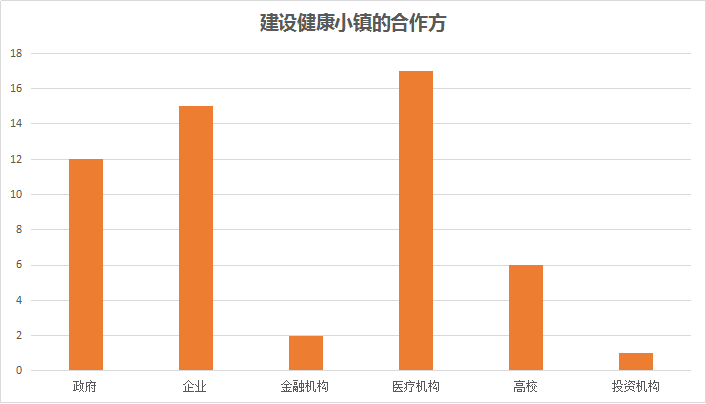
Investors in health cities across China include universities, enterprises, government agencies, financial institutions, medical institutions, and investment firms.Among them, the most frequent collaborators are medical institutions, followed by government agencies and enterprises.
This unique combination of partners has given rise to a distinctive business model: the “Public-Private Partnership (PPP) model.” Under this model, certain government responsibilities are transferred to private entities (enterprises) through franchise arrangements, establishing a community relationship between the government and private entities characterized by “shared benefits, risk sharing, and full-process collaboration.” This approach alleviates the government’s fiscal burden while reducing investment risks for private entities.
China (Wuhu) Life and Health City is a typical example of the “Public-Private Partnership (PPP) model.” It primarily features government leadership, soft technological resources, private-sector mechanisms, and venture capital. According to the strategic vision of the Wuhu Municipal Committee of the Communist Party of China and the Wuhu Municipal People’s Government, it will be developed into an innovative demonstration zone for biopharmaceuticals with distinct industrial characteristics and comprehensive supporting functions, integrating industries such as life sciences, biotechnology, healthcare, research, development and production of high-tech products, as well as wellness and healthy living.
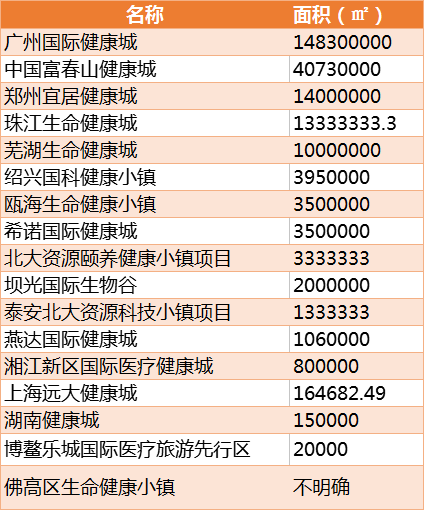
In terms of the area of health cities established across China, Guangzhou International Health City covers the largest land area, reaching 148,300,000 square meters; followed by China Fuchun Mountain Health City, Zhengzhou Yiju Health City, Pearl River Life and Health City, and Wuhu Life and Health City.
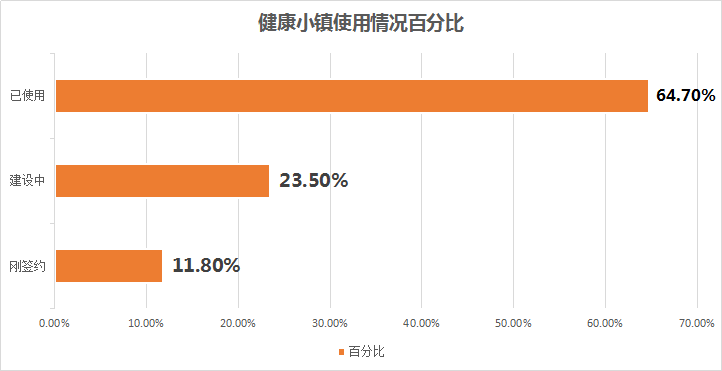
Although health cities across China cover a vast area, the list shows that their utilization rate is relatively high. Among these 17 health cities, 64.7% are already in operation, 23.5% are under construction, and 11.8% have just been signed.
Their operations are primarily conducted through investment promotion. According to Hu Haiping, Chairman of Zhongke Wuhu Science and Technology Park Co., Ltd. and President of Shanshan Holding Group, within just one year of commencement, the Health City has attracted more than 20 projects, including a Life Technology Incubation Center, Shenzhen Beike Biology, the Molecular Diagnosis Industrialization Base of the Guangzhou Institutes of Biomedicine and Health (Chinese Academy of Sciences), and Asia’s largest supercritical CO₂ extraction center, driving total investment to exceed RMB 3 billion.
Guided by the theory of “ecological industrialization and industrial ecologization,” China’s Fuchun Mountain Health City adheres to the principle of integrated development encompassing five dimensions: industry, urban infrastructure, culture, people, and landscape. Rooted in ecological construction, it accelerates industrial development. With the goal of establishing the Health Town as a 3A-level scenic area, it is improving supporting facilities such as the Daqi Mountain Alpine Greenway and the Daqi Mountain Road landscape belt, while expediting the construction of the “Fuchun Mountain Health City Biotech Health Industrial Park” project, striving to create the health city’s “One Belt, One Road, One Park” framework.
More than 20 years ago, the concept of a “Health City” was unfamiliar to most people. Today, however, it has become increasingly well-known, and in the future, people may find themselves even more reliant on such Health Cities.
From the perspective of its functions, Health City undertakes responsibilities in healthcare, medical tourism, and elderly care. In other words, it centers on people’s basic needs—clothing, food, housing, and transportation—as well as the life cycle events of birth, aging, illness, and death. It focuses on various risk factors and misconceptions affecting health, advocates for self-health management, and pursues not only individual physical health but also holistic well-being encompassing mental, psychological, physiological, social, environmental, and ethical dimensions. Its scope, along with health-related information, products, and services, also involves actions taken by various organizations to meet societal health demands.
Secondly, as industries across the board enter a period of stagnation, real estate developers are pivoting to healthcare, capital is flocking to the sector, and favorable policies—such as integrating “preventive treatment” into healthcare reform and elevating “Big Health” to a national strategy—are driving significant growth in its inherent potential and demand. This dual stimulus from policy and market forces will undoubtedly attract diverse funding and cross-industry participation, collectively expanding and strengthening the Big Health industry.
Finally, as population aging intensifies, prioritizing prevention and promoting health are the only ways to fundamentally reverse the unfavorable situation in China’s overall disease prevention and control landscape. The broader health industry is akin to an iceberg at sea: the pharmaceutical and medical sector focused on treating diseases and saving lives represents merely the tip visible above the water, while the astonishingly vast portion submerged beneath the surface comprises integrated services such as combined medical and elderly care, comprehensive health services, and health management.
Currently, the prospects for Health Towns appear promising; however, several challenges persist in practical implementation:
First, from an investment perspective, a Health Town is not a short-term, quick-return project; rather, it requires all participating parties to be prepared for a long-term commitment. The construction phase is merely the initial step, while subsequent management, maintenance, and operations constitute the core focus. These elements must not be fragmented, as this would lead to resource wastage; instead, they should be integrated to ensure that the specialized town is built on a foundation of sustainable development.
Second, how to accurately position health towns and avoid the pitfalls of “homogenization” and “ghost towns” has become an issue that local governments must confront.
Third, regarding funding, the development of Health Towns requires substantial capital investment. In particular, basic infrastructure investments have long payback periods and face financial constraints, necessitating joint efforts from the government, enterprises, and residents. How local governments can incentivize corporate participation and promote the Public-Private Partnership (PPP) model has become a key breakthrough point.
Fourth, in addition to rational planning for health towns, it is essential to clarify the respective responsibilities of the government and the market. For areas where market mechanisms can play a role, various barriers should be removed to create conditions that enable the market to play its decisive role in resource allocation.
If, in the process of developing health towns across China, the aforementioned issues are avoided while fully respecting the wishes of original residents, thereby achieving harmony and integration between humanity and nature, as well as between humanity and history, then the scenic beauty and comfortable living described in the ancient poem—“Mountain hues and lake glories follow every step; hard to paint, hard to verse, through ages past”—will ultimately be realized.