

Global CAR-T Clinical Research Landscape: 376 Trials and a 4.5-Fold Surge in Four Years
2017 was a pivotal year for global CAR-T research. During this year, the FDA reviewed the Biologics License Applications for Novartis’ and Kite Pharma’s CAR-T therapies; the world’s first CAR-T therapy was approved for market launch; and in the same year, Gilead Sciences acquired Kite Pharma, formerly Novartis’ biggest competitor.
Kate Pharma’s CAR-T therapy may be approved in the second half of this year, likely becoming the second CAR-T therapy to be marketed globally.
However, Novartis and Kite represent only the tip of the iceberg in this market. In addition to Novartis and Kite Pharmaceuticals, companies such as Juno Therapeutics, Johnson & Johnson, Fosun Pharma, and GeneChem have all established a presence in this field. According to data from ClinicalTrials.gov, there are currently nearly 400 CAR-T clinical trial programs worldwide.
So, how are these projects progressing, and what is China’s position in the global market? VCBeat has compiled global CAR-T clinical trial data, hoping that these figures will help us find the answers.
Main Contents:
Overview of Global CAR-T Clinical Trials
Distribution of CAR-T Research by Disease Indication
Project Trial Phase
Changes in the Number of CAR-T Clinical Trials Over the Years
Number and Geographic Distribution of CAR-T Studies in China
Key Medical and Research Institutions and Enterprises
CAR-T (Chimeric Antigen Receptor T-Cell Immunotherapy), fully known as Chimeric Antigen Receptor T-Cell Immunotherapy, is a novel cell therapy that has been in existence for many years but has only recently been optimized and introduced into clinical practice.
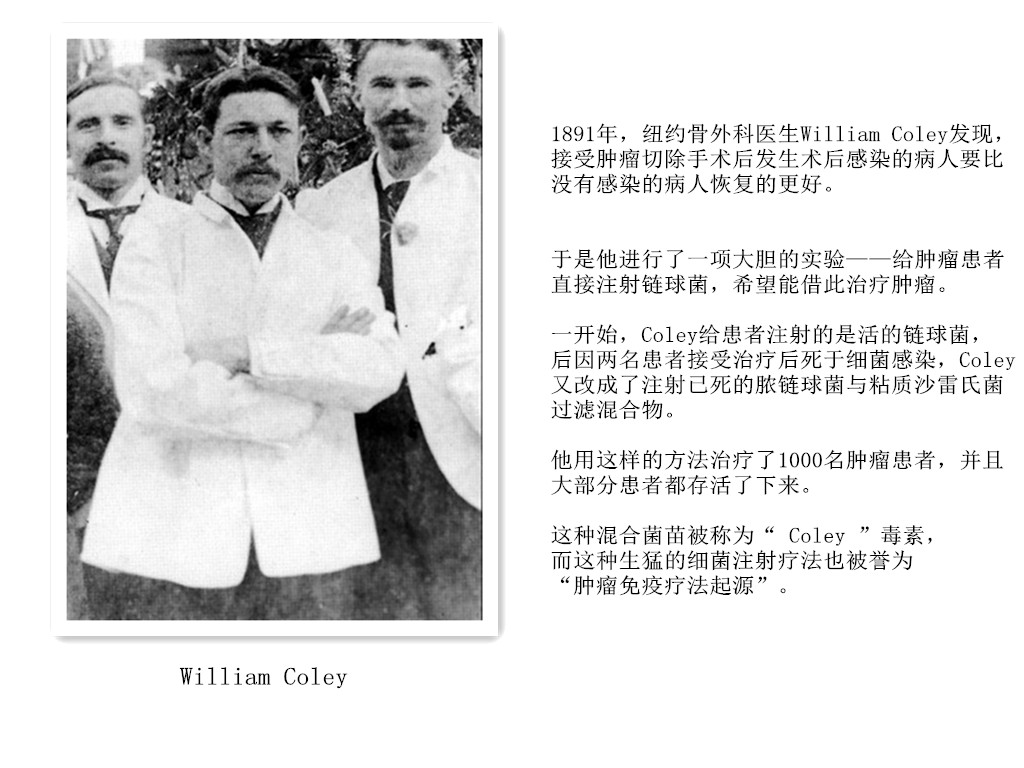
Similar to other immunotherapies, the fundamental principle of CAR-T therapy is to harness the patient’s own immune cells to eliminate cancer cells. However, it differs in that it is a cell-based therapy rather than a conventional drug. CAR-T is currently one of the more effective treatments for malignant tumors, demonstrating significant efficacy in the treatment of acute leukemia and non-Hodgkin lymphoma, and is regarded as one of the most promising approaches in oncology.
According to data from ClinicalTrials.gov, there are currently 376 registered CAR-T clinical trial projects worldwide, with the United States having the highest number at 140. China ranks second globally. Notably, in March this year, China had 90 ongoing CAR-T trials; within just over three months (as of June 19, 2017), this number had risen to 127.
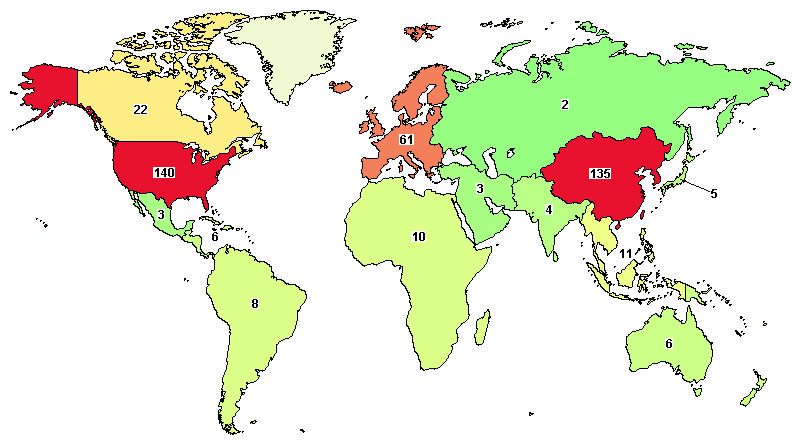
Image source: clinicaltrials.gov
Among global research projects, 191 are currently recruiting participants for clinical trials, accounting for more than 50% of the total. A total of 74 projects have been completed, with results obtained for 20 of them.
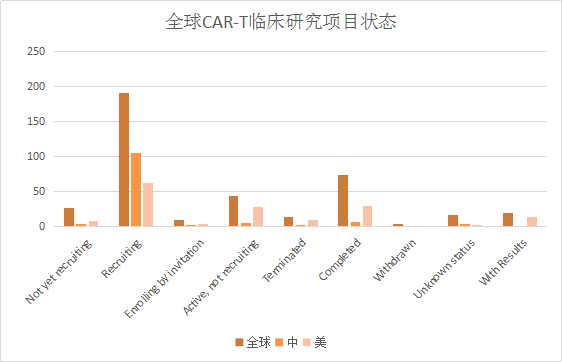
Among research projects in the United States, although the majority are still in the recruitment phase, it is evident that 29 studies have been completed, with 14 of them having yielded results. In contrast, only six projects have been completed in China, and none have yet reported results.
However, the situation in China is far from pessimistic; Chinese CAR-T research is poised for significant breakthroughs. Clinical trials currently recruiting in China account for 83.5% of the total number of projects, with an additional five trials actively being prepared. A substantial body of research findings is expected to emerge successively over the next three to five years.
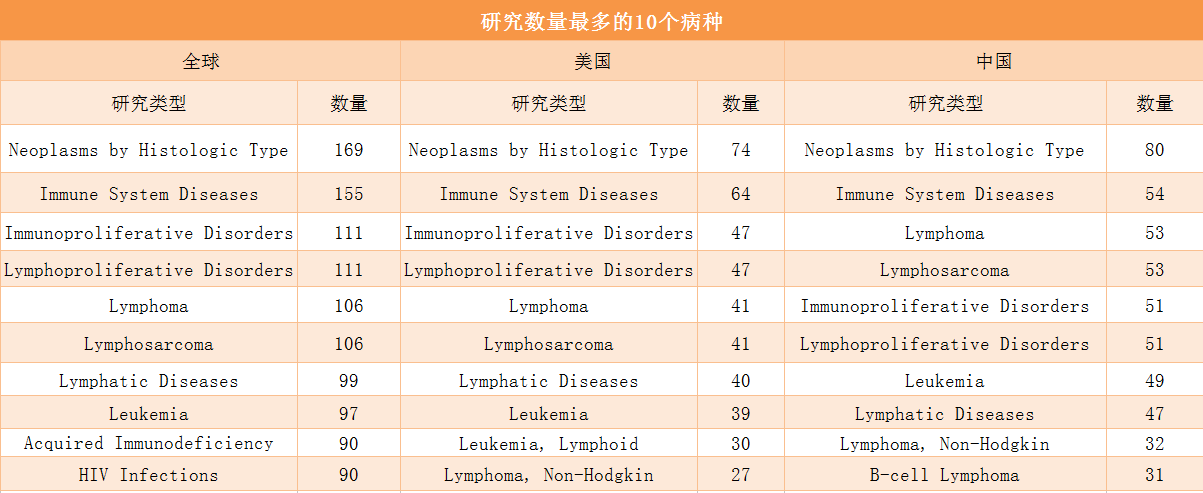
Across global, U.S., and Chinese markets, histological tumor types and immune system disorders account for the largest number of studies in CAR-T research.
These two categories do not refer to a single disease entity but rather to broad classes of diseases. For instance, histological tumor types encompass epithelial tumors, mesenchymal tumors, and connective tissue tumors, among others. The volume of research in these two categories reflects the overall direction of CAR-T research.
From the perspective of individual diseases, lymphoma, non-Hodgkin lymphoma, leukemia, and HIV-related studies are the most numerous. The reason may be that, given the current level of medical care, these diseases are quite challenging, and conservative and mild treatment plans have limited effects. CAR-T therapy has shown significant efficacy in the treatment of acute leukemia and non-Hodgkin lymphoma.
Therefore, it demonstrates stronger patient-driven demand and feasibility, with a more substantial market potential.
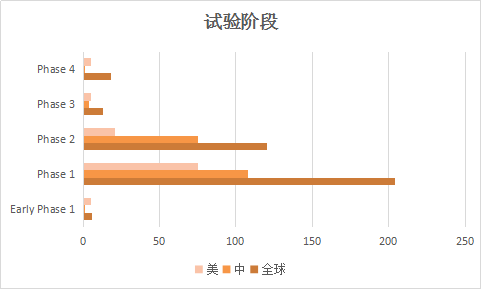
In terms of trial phases, the clinical trial stages in China and the United States are consistent with the global landscape, with the majority of projects in Phase I, followed by a decreasing number of projects in Phases II, III, and IV.
It can be inferred that over the next five years or so, as Phase I projects progressively advance, CAR-T clinical trial research will enter a period of vibrant diversification and intense competition. Furthermore, with the market launch of Novartis’s product and Kite’s product entering the approval stage, more companies, institutions, and capital are likely to enter this market, signaling an imminent industry boom.
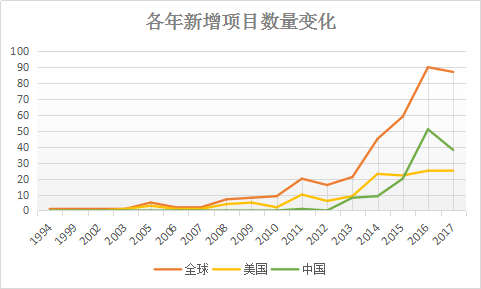
The earliest registered project was a prospective study on HIV conducted in collaboration between Rigshospitalet (the Danish National Hospital) and University College London. This long-term observational trial has enrolled ten cohorts of patients since its inception in 1994.
This study is currently the largest research project in Europe, with follow-up conducted on more than 20,000 patients across 35 countries, including Israel and Argentina. It is an ongoing research initiative expected to be completed by December 2030.
Global CAR-T research officially commenced in 2008–2009, with a steady year-on-year increase thereafter, culminating in a significant surge in 2013. Specifically, the annual growth in the number of studies was 24 from 2013 to 2014 and 31 from 2015 to 2016.
CAR-T research in the United States officially began around 2010–2011. However, based on the annual growth in the number of projects, U.S. CAR-T research has maintained a relatively steady and moderate growth trajectory. Except for a doubling in growth observed between 2013 and 2014, the fluctuation in newly added research projects during other periods remained relatively small.
China’s earliest CAR-T research project was launched in 2011 under the leadership of Professor Li Taisheng from Peking Union Medical College Hospital. This experimental study aimed to evaluate the effects of total glycosides of Tripterygium wilfordii on T-cell immune activation and inflammation in HIV treatment. The study enrolled a total of 23 patients and concluded in 2013.
In terms of the annual number of new studies, China started later than the global average, but its trend mirrors the global pattern. Chinese CAR-T research began in 2012 and 2013. Driven by the globalization of biomedicine, the number of CAR-T studies in China surged rapidly, with an increase of 51 studies from 2015 to 2016—twice that of the United States.
The U.S. market has become polarized, with leading players such as Novartis, KITE, and JUNO emerging, while the Chinese market is advancing at full speed, with strong optimism from both capital investors and enterprises.
So, how is CAR-T research in China progressing, and who can gain a competitive edge? We have reviewed Chinese projects once again.
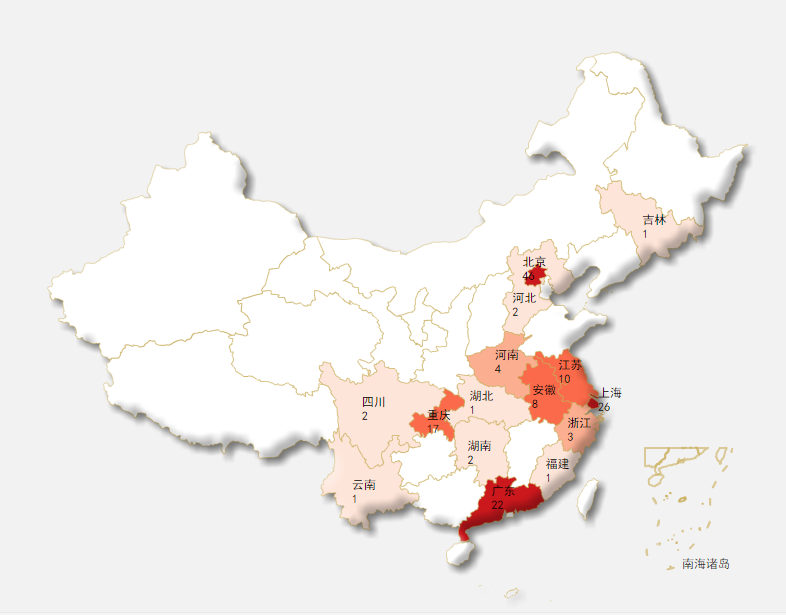
Note: Some projects may be jointly conducted by enterprises and medical institutions across multiple locations.
The five cities with the most ongoing research projects are Beijing, Shanghai, Guangdong, Chongqing, and Jiangsu. Among them, Beijing has 46 projects, Shanghai has 26, Guangdong has 22, Chongqing has 17, and Jiangsu has 10.
Projects in Beijing, Guangdong, and Chongqing are more often led by medical institutions.
Among the 46 projects in Beijing, 24 were initiated solely by medical institutions. The Chinese People's Liberation Army (PLA) General Hospital participated in a total of 15 studies, including 13 independent projects. The PLA No. 307 Hospital participated in five projects, two of which were independent, while the remaining three were conducted in collaboration with the PLA General Hospital and Peking University, respectively.
Among the 22 research projects in Guangdong Province, 15 were conducted exclusively by medical institutions. The Shenzhen Institute of Immunology and Gene Therapy participated in 8 projects (independently leading 5 of them), while Fuda Cancer Hospital Guangzhou independently led 5 projects.
In the Chongqing region, this trend is even more pronounced, with all 17 projects being undertaken by medical institutions. Among them, Southwest Hospital has 12 CAR-T research projects, all conducted independently; Xinqiao Hospital has five ongoing projects, four of which are carried out in collaboration with Xuzhou Medical University or the Second Affiliated Hospital of Henan University of Chinese Medicine.
In stark contrast to Beijing, projects in Shanghai are predominantly initiated by enterprises in collaboration with medical institutions, with only four studies initiated solely by hospitals. Among these enterprises, Genesky Biotechnologies (Shanghai) participated in the highest number of projects, totaling seven; Shanghai Cell Therapy Group had three independently initiated projects; and Shanghai Ucardio Biotechnology also had three projects, conducted in partnership with the First Affiliated Hospital of Soochow University and the First Affiliated Hospital of Harbin Medical University, respectively.
This phenomenon appears to be linked to the disparity between resources available to healthcare institutions and those accessible to enterprises. The medical prowess of Beijing, Shanghai, and Guangdong is self-evident; although Chongqing is classified as a second-tier city, the research capabilities of its Southwest Hospital and Xinqiao Hospital rank among the top in China.
Shanghai’s medical capabilities rank among the top in China, but the city is also home to the nation’s leading biomedical industrial park, which has attracted a large number of pharmaceutical innovation enterprises. Compared with its strengths in healthcare, Shanghai’s industry-specific advantages are more pronounced. Consequently, CAR-T clinical trials in Shanghai have seen greater participation from companies focused on CAR-T research.
There are 11 ongoing clinical trials in Jiangsu Province. Although this ranks fifth in terms of quantity, most projects in the region are conducted in collaboration with hospitals or enterprises from other regions. Xuzhou Medical University is the leading institution for CAR-T research in the area, participating in a total of seven projects.
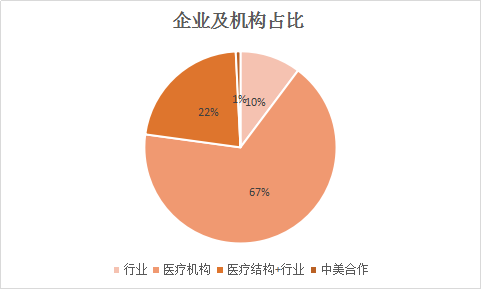
Continuing from the previous discussion, there are four types of project initiators. The first type is industry-led, initiated and participated in by enterprises alone. The second type involves medical and research institutions applying and participating independently. The third type consists of joint applications and participation by medical and research institutions together with enterprises. The fourth type involves collaboration between Chinese medical or research institutions or enterprises and foreign organizations.
Among the four types, projects initiated solely by medical institutions account for the highest proportion at 67%; followed by those jointly initiated by medical institutions and industry players, representing 22%; while studies initiated exclusively by the industry constitute only 10%. This may be because clinical trials require recruiting a certain scale of volunteers, and hospitals hold an advantage in terms of patient resources.
Chinese PLA General Hospital
The hospital with the largest number of ongoing research projects is the Chinese People's Liberation Army General Hospital, with a total of 15 projects. Among these, four are in Phase I clinical trials, nine are conducting combined Phase I and II trials, and the status of the remaining two has not yet been disclosed. Of these, five studies are related to lymphoma, including one project each on Hodgkin lymphoma and non-Hodgkin lymphoma.
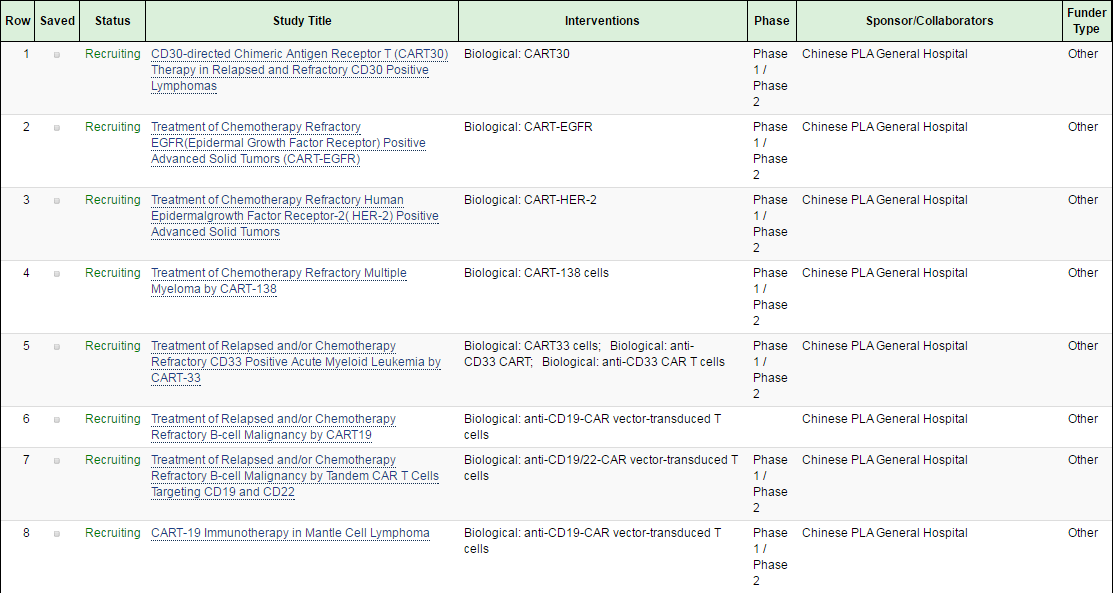
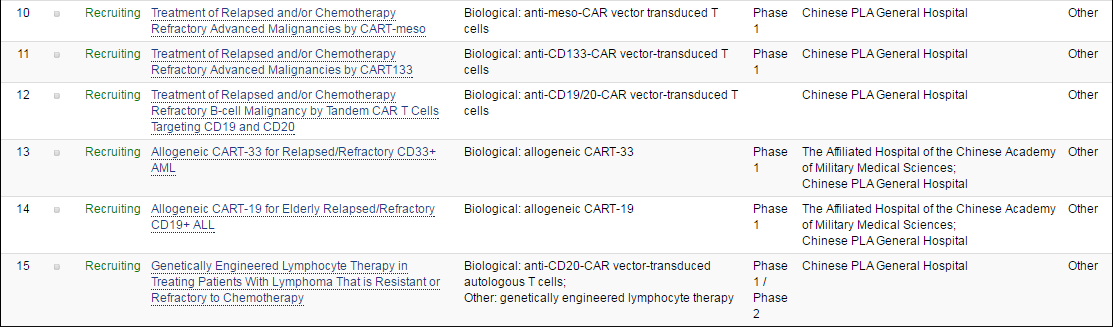
Image source: clinicaltrials.gov
Southwest Hospital
Next is Southwest Hospital, with a total of 12 projects: one has entered Phase II clinical trials, and 11 are being conducted as combined Phase I/II trials. Among these projects, six focus on leukemia and seven on lymphoma.
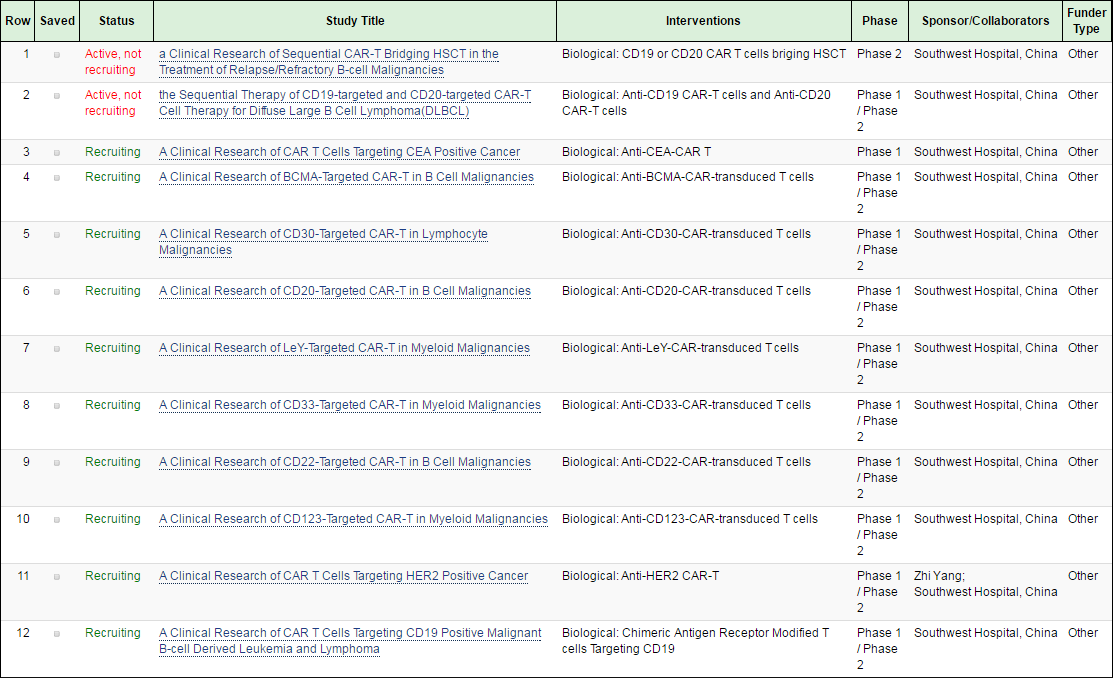
Image source: clinicaltrials.gov
Shenzhen Institute of Immune Gene Therapy
The Shenzhen Institute of Immunology and Gene Therapy has a total of nine projects, eight of which are conducting Phase I and Phase II trials concurrently, while one project is in Phase I clinical trials. The most common indications are B-cell malignancies and B-cell lymphomas, with two studies each.
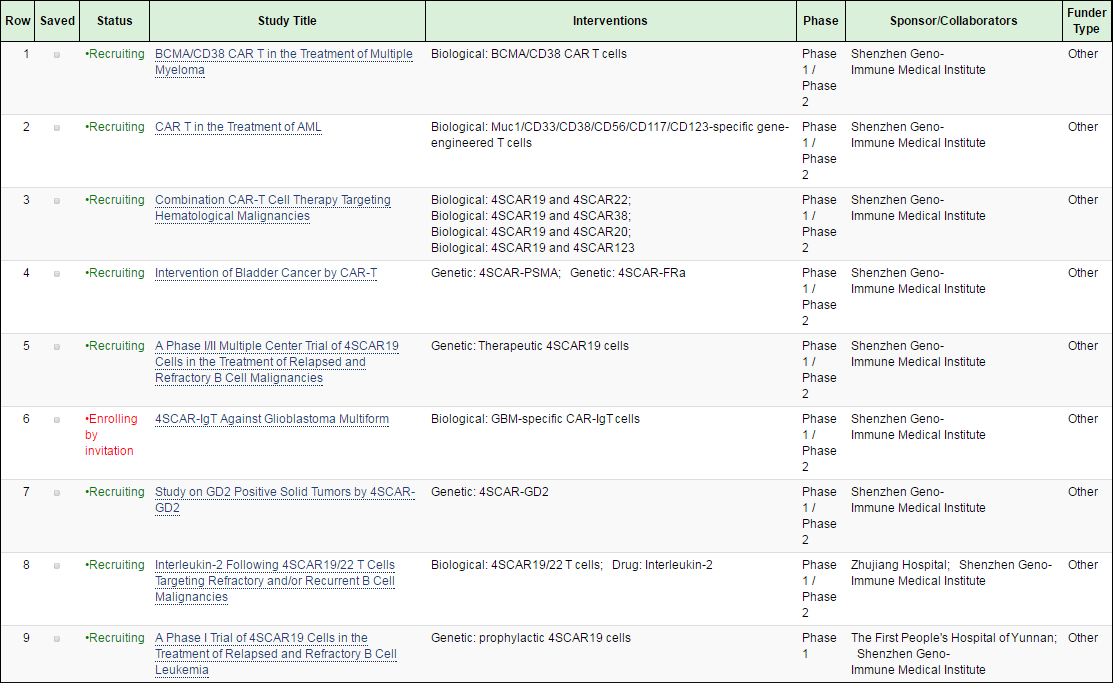
Image source: clinicaltrials.gov
GeneChem
Among enterprises, Shanghai GeneChem Co., Ltd. has submitted the largest number of clinical research projects. GeneChem has a total of seven clinical research projects, with two in Phase I clinical trials and five undergoing combined Phase I/II clinical trials. The majority of the company’s projects are related to liver cancer.
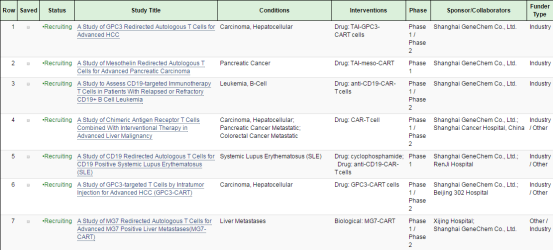
Image source: clinicaltrials.gov
Founded in 2002, this company is China’s largest comprehensive provider of disease-related gene research services and has established the country’s largest lentiviral library, comprising nearly 150,000 independent clones that cover almost all human genes. GeneChem has identified hundreds of candidate target genes playing critical roles in specific tumors and maintains long-term, close collaborations with 2,000 clinical scientists across more than 300 Grade A tertiary hospitals nationwide, spanning nearly 11 fields of oncology research.
GeneChem has completed two rounds of financing to date. The Series A round was closed in December 2014, with investors including Tsinghua Holdings’ Ginkgo Capital and Purun Investment; however, the company did not disclose the amount raised. The Series B round was completed in January 2016, raising RMB 100 million, with investors including Huaxia Xinnuo, Aoyang Technology, Huasheng Capital, and Honghui Capital.
Malino Biotech
Ranked second is Malinuo Biopharma, with a total of five projects currently underway, all in Phase I clinical trials. Among these, two projects target lymphoma, two target glioblastoma, and one targets mesothelin-positive tumors.
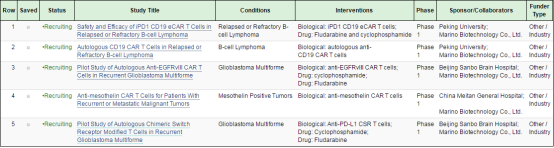
Image source: clinicaltrials.gov
Malinuo Biopharma, established in 2015, has secured a portfolio of international patents with independent intellectual property rights through its collaboration with the University of Southern California. The company has developed a globally leading CAR-T therapy technology, which demonstrates superior metrics in efficacy and safety and has been validated in clinical trials. The scope of the company’s clinical trials encompasses the treatment of various cancers, including leukemia, lymphoma, glioblastoma, pancreatic cancer, ovarian cancer, and lung cancer.
The company has not yet disclosed its financing details.
Anhui Unimed Cell Therapy
Anhui Unimed Cell Therapy is a key enterprise under the Anhui Unimed Bioeconomy Group. The company has introduced the latest scientific research achievements, clinical treatment technologies, and R&D teams from Baylor College of Medicine in the United States, the University of Science and Technology of China, Nanjing Medical University, and Anhui Medical University. It primarily provides cell-based biological therapy services, focusing on tumor-targeted T-cell therapies. Current business offerings include CAR-T cell therapy, stem cell therapy, and genetic testing.
Anhui Unimed Cell Therapy has a total of six registered clinical research projects, one of which is in Phase I clinical trials, while the stages of the other projects remain unclear.
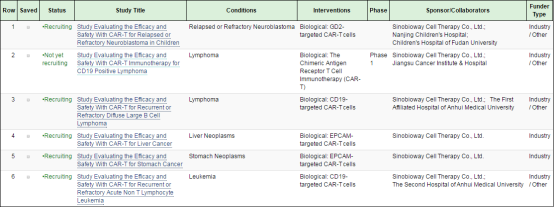
Image source: clinicaltrials.gov
Anhui Weiming Cell Therapy has not disclosed its financing information; however, based on data from the National Enterprise Credit Information Publicity System, it can be inferred that the company completed a round of financing in 2015, with investors including Qunxian Huizhi, Yihai Venture Capital, and Fangfu Capital.
Among the 127 ongoing research projects in China, one is in Phase IV clinical trials and four are in Phase III clinical trials. After identifying the enterprises and medical research institutions with the largest number of clinical projects, VCBeat decided to pinpoint those at the forefront of innovation.
Shanghai Public Health Clinical Center is the only institution that has advanced the project to Phase IV clinical trials.. Established in 1914, the center is a Grade A tertiary hospital in Shanghai.
According to data from ClinicalTrials.gov, the Shanghai Public Health Clinical Center currently has only one CAR-T investigational project. This trial was first registered in August 2016 and focuses on HIV antiretroviral therapy; it is not yet recruiting participants.
Among industry researchers, no company has yet advanced its projects to Phase III or IV clinical trials. Seven companies have progressed to Phase II, namely Ucardi Bio, Biocytogen, GeneChem, BoShengJi, Senlang Bio, ImmuneOnco, and KangAiRuiHao.
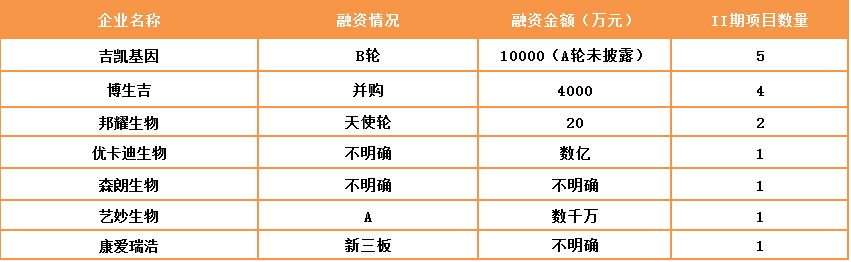
Data sourced from the VCBeat Knowledge Base
Conclusion
In summary, although China’s CAR-T research did not start early, it has experienced rapid growth since 2013. With the market launch of Novartis’ product this year, more participants are expected to recognize the industry’s potential and join the field.
China ranks second globally in the number of clinical research projects, trailing only the United States. Although most products are still in Phase I clinical trials or earlier stages, there are nonetheless leading companies and standout products. The most advanced clinical projects have already entered Phase IV trials, and domestic products are expected to reach the market within three to five years.
From a geographical perspective, the Beijing-Shanghai-Guangzhou region boasts the most abundant resources, holding advantages in both corporate and hospital resources. Additionally, the driving force exerted by medical and research institutions on the CAR-T market should not be underestimated, particularly those with exceptional strength such as the PLA General Hospital (301 Hospital) and Southwest Hospital.
From a regulatory perspective, there are no approved precedents in China yet, and the approval and regulatory framework may need further refinement; however, this situation is common globally. As the first country to have such products launched on the market, the United States’ experience can serve as a reference for improving China’s approval and regulatory processes.