

Sisram Medical Ltd, a Fosun Pharma-Backed Aesthetic Device Company, Sets HKEX IPO with Post-Issue Market Cap of HK$39.07 Billion
VCBeat (WeChat ID: vcbeat), September 12 – Fosun Pharma (600196.SH) announced today that its controlled subsidiary, SISRAM MEDICAL LTD (“Sisram”), has set the IPO price at HK$8.88 per share on the Hong Kong Stock Exchange. Upon completion of the offering, its market capitalization will be approximately HK$3,907.20 million (RMB 3.27 billion).
Upon completion of the issuance, Fosun Pharma (through its subsidiary) will indirectly hold 52.96% of the shares in Sisram.
Assuming the global offering is completed in accordance with the current timetable, Sisram is expected to be listed on the Main Board of The Stock Exchange of Hong Kong Limited (the “Hong Kong Stock Exchange”) on Tuesday, September 19, 2017, with trading in its shares on the Main Board of the Hong Kong Stock Exchange commencing at 9:00 a.m. on the same day. Shares of Sisram will be traded in board lots of 400 Sisram shares each, under the stock code 1696.
Fosun’s Strategic Focus on the Medical Aesthetics Sector
Sisram, a subsidiary of Fosun Pharma in Israel, is a “global leading supplier of energy-based medical aesthetic devices,” with its primary assets being its subsidiaries.Alma Lasers (Feidun). Alma Lasers’ product portfolio spans five major areas: postpartum restoration, anti-aging, hair removal, skin treatments, and pigmentation treatments. The company was acquired by Sisram in 2013. According to a report by Medical Insight,Sisram is currently the largest supplier of energy-based medical aesthetic devices in the Chinese market.
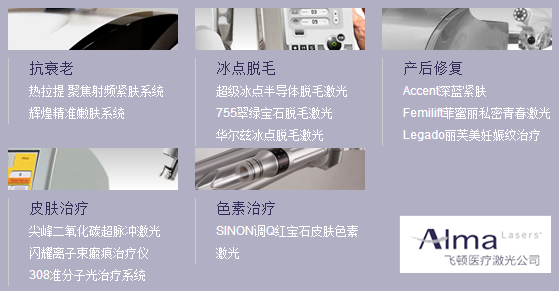
Alma Medical Product Series
Regarding the spin-off listing of Sisram, Fosun Pharma had previously stated to the media that the primary objective was to “provide financial support for its wholly-owned subsidiaries with complete industrial chains and sound operations; the funds raised will be primarily used for technological research and new product development, market expansion, and brand promotion.”
Sisram possesses robust independent R&D capabilities,Over the past three years, more than 90% of its sales revenue has been derived from independently developed products. Its sales network covers more than 80 countries and regions worldwide.
The IPO filing also shows that Sisram’s revenue has hovered around $100 million over the past three years, with first-quarter revenue this year reaching $32.647 million, an increase of approximately 18% year-on-year.
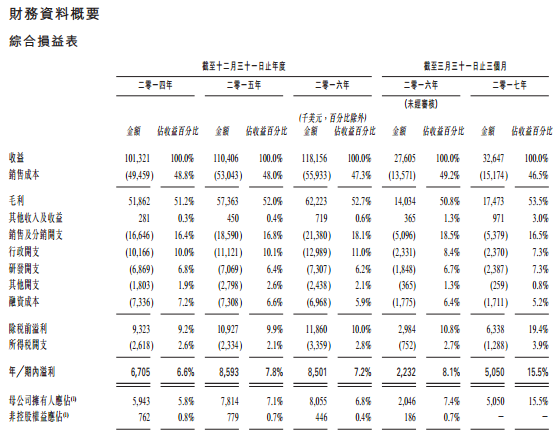
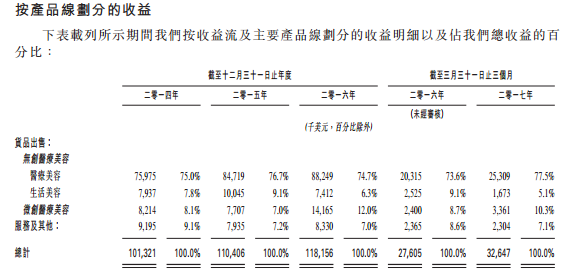
By product,Non-invasive medical aesthetic products are a significant source of revenue for Sisram., accounting for over 80% of its total revenue; minimally invasive medical aesthetics, services, and others each accounted for approximately 9% of the total revenue.
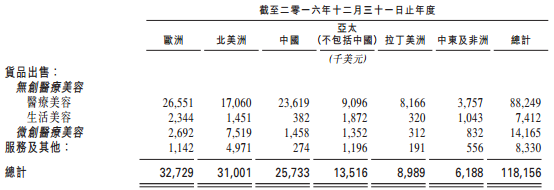
By region,Europe, North America, and China are Sisram’s primary sales regions., with sales revenue accounting for approximately 30%.
The industry size will reach $3 billion.
The IPO documents also show that in 2016, the global market size of non-invasive and minimally invasive medical aesthetic devices, measured by sales revenue, was approximately $8.4 billion.It is expected to reach $13.9 billion in 2021, with a compound annual growth rate (CAGR) of 10.5%.
According to the VBInsight report, from 2014 to 2016, energy-based medical aesthetic devices accounted for the largest market share in this sector, generating global sales revenues of USD 2 billion and USD 2.7 billion, respectively, and are expected to remain a rapidly growing segment through 2021.
Additionally, the global medical aesthetics market benefits from favorable factors such as rising per capita disposable income, strengthened consumer willingness, an aging population with longer life expectancy, and increased awareness and acceptance of medical aesthetic procedures.
According to World Bank data, global consumer spending increased from $28.7 trillion in 2005 to $42.7 trillion in 2015, representing a compound annual growth rate (CAGR) of 4.1%. With rising living standards, growing personal wealth and disposable income in certain markets have enabled consumers to allocate more of their disposable income toward medical aesthetic treatments.
Due to increased life expectancy, many countries are experiencing population aging. According to the World Population Prospects: The 2015 Revision (United Nations, 2015 data), the number of people aged 60 and over is projected to increase by 55.4%, from 901 million in 2015 to 1.4 billion in 2030. A VBInsight report anticipates that this demographic shift will boost demand for anti-aging treatments, thereby driving demand for medical aesthetic procedures.
Advances in medical aesthetic technologies have enabled a wider range of indications to be treated through minimally painful, safe, and effective medical aesthetic procedures. Specifically, an increasing number of consumers prefer non-invasive and minimally invasive medical aesthetic treatments, as these options are generally more cost-effective for patients while remaining relatively effective due to technological advancements. Such treatments are also considered safer, with lower procedural risks and shorter downtime compared to traditional invasive surgical procedures.
Regarding this listing, Chen Qiyu, Co-President of Fosun Group and Chairman of Fosun Pharma, had previously stated: “We are very optimistic about the growth prospects of the global medical aesthetics market, which offers immense development potential, particularly in developing countries represented by China, Brazil, Russia, and India.”Following Sisram’s listing in Hong Kong, Fosun Pharma will continue to support the business development of Sisram and Alma in China and globally.”