

Fan Xiaoqie Scales Traditional Chinese Pediatric Tuina with Proprietary SaaS System, Expanding by 7 Stores in Two Months
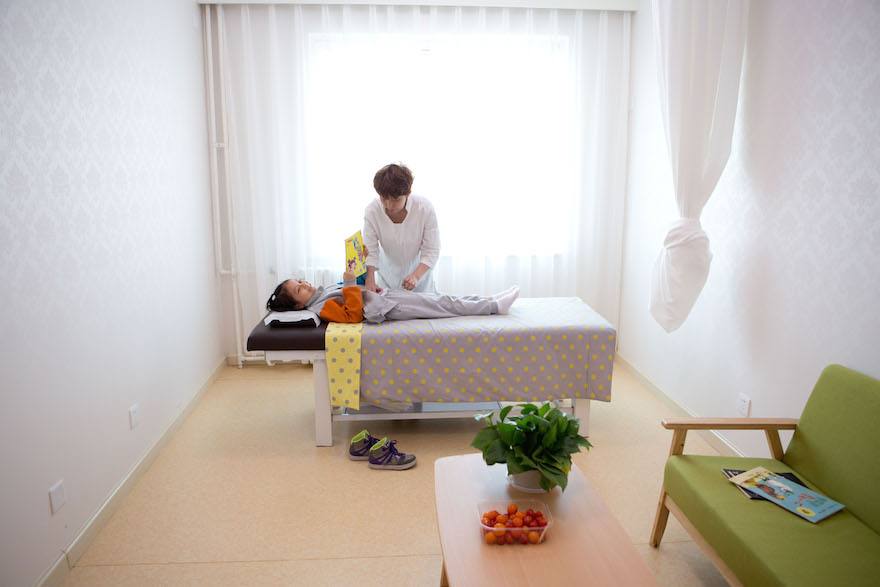
Due to difficulties in accessing pediatric care, distrust of doctors, anxiety over children’s health, and fear of side effects, most people remain skeptical about pediatric tuina (pediatric massage). Nevertheless, Fan Xiaoqie has successfully popularized this service, attracting favorable attention from the capital market. In June 2017, the company completed a pre-A financing round worth several million yuan, following an earlier angel investment of RMB 1 million received in April 2016.
Fan Xiaoqie is a children's health management brand specializing in pediatric tuina (pediatric massage). By integrating offline operations with an online children's health system through professional therapists' pediatric tuina services, it primarily addresses issues such as weak constitution and susceptibility to illness in infants and young children aged 0–6 years, enabling them to grow up healthily in a low-medication environment.
Over years of operation, Fan Xiaoqie has leveraged its health data management system to conduct targeted online user outreach. Within just one year of its founding, it firmly established its position in the pediatric massage market, with new stores recouping their costs in less than a month. This success has made the expansion of Fan Xiaoqie’s pediatric massage clinics—from 3 to 10, then to 30, and ultimately to 100 locations—a predictable outcome.
“Building a chain requires laying a solid foundation before expansion. With our prototype store model refined, we are accelerating our store openings, and reaching 30 stores by year-end is a certainty,” said Ren Xinxin, founder of Fan Xiaoqie, confidently.
Pediatric Massage Market Discovered in the Backend Data of "Da Na Jia"

Ren Xinxin, the founder of Fan Xiaoqie, is a mother of two. Prior to establishing Fan Xiaoqie, Ren founded “Xinfu Tui Na,” a chain of traditional massage clinics, and “Dana Jia,” an internet-based SaaS platform for Traditional Chinese Medicine (TCM) massage, thereby accumulating five years of hands-on experience in offline massage therapy. The other two co-founders, Yang Linyuan and Lü Xin, both have prior work experience at investment firms.
The motivation for offering pediatric tuina (Chinese therapeutic massage) stems from their prior entrepreneurial experience. While operating “Da Na Jia,” a SaaS platform for traditional Chinese medicine (TCM) tuina services, they provided online appointment booking and staff management SaaS systems to over 4 million small and medium-sized tuina clinics in Beijing.
By analyzing the backend data of Dana Jia, they discovered that the repurchase rate for pediatric massage services at more than a dozen partner stores was exceptionally high, with the same members visiting two to three times per week. Consequently, after six months of research and development, Ren Xinxin founded Fan Xiaoqie in April 2016.
Fan Xiaoqia currently employs 46 therapists. Therapist selection is based on two criteria: first, candidates must be graduates of a College of Traditional Chinese Medicine with a solid grasp of theoretical foundations; second, they must have at least three years of experience in the tuina (Chinese therapeutic massage) industry and must pass standardized training and assessments before commencing work.
Building a SaaS Health System to Promote Information Transparency
Due to factors such as difficulties in accessing pediatric care, low trust in physicians, parental anxiety over children’s health, and fear of side effects, public confidence in the pediatric massage industry remains low. Therefore, Fan Xiaoqie has decided to start by addressing information transparency.
Leveraging prior experience in developing SaaS systems for health data management, Fan Xiaoqia has established a new health data management system tailored to the pediatric massage industry. This system comprises four interfaces: service therapists, mothers, operational staff, and infant data records. Under this unified platform, all stakeholders can perform functions such as recording, querying, evaluating, and managing data.
After each individual therapy session, users will automatically receive a session report, which includes the patient’s physical condition during the session, feedback from the therapist, and daily care precautions for the infant.
As the number of conditioning sessions gradually increases, Fan Xiaoqie will issue phased constitution reports to provide mothers with feedback on their baby’s constitutional characteristics and offer long-term conditioning recommendations. This enables mothers to take timely preventive measures if similar prodromal symptoms recur in the baby.
By establishing a method for quantifying vital signs, it is not only possible to allow users to quantify the actual effects of Tuina (Chinese therapeutic massage), thereby enhancing customer stickiness, but also to help the platform reduce its reliance on therapists.
Customer acquisition channels are primarily online dissemination and word-of-mouth.
Young mothers born in the 1980s and 1990s, who have been drawn in through knowledge dissemination and health consultations, constitute the primary member base for Fan Xiaoqie.
To capture the attention of mothers, Fan Xiaoqia has made online articles, short videos, and live streams related to pediatric tuina massage key strategies for engaging young mothers.
Vertical communities such as Babytree and Dabai Mama, along with new media platforms like Toutiao and Tencent Video, have become the primary channels for Fan Xiaoqie’s outreach. Subsequently, Fan Xiaoqie primarily converts its accumulated online community users into in-store customers through mechanisms such as trial vouchers and group-buying offers.
Additionally, Fan Xiaoqie conducts micro-lectures and provides basic acupoint combination guidance in WeChat groups. Once parents personally experience the benefits, there is a high probability that these followers will convert into offline customers at physical stores.
According to Ren Xinxin, Fan Xiaoqie has provided over 30,000 health consultations, and its online parenting health live-streaming courses have attracted more than 100,000 viewers.
Mothers are a community that frequently exchanges parenting experiences. Fan Xiaoqie organizes an offline event every one to two weeks to disseminate knowledge and acquire new members. Through word-of-mouth marketing, the member referral rate reaches 25%. The card-purchase conversion rate for users who participate in offline experiences is 43%, with one out of every seven new customers coming from personal referrals.
Store count to reach 100 by end of June next year
Fan Xiaoqie is not concerned about cash flow or under pressure to recoup its investment amid the rapid expansion of its stores.
It is reported that Fan Xiaoqie, which had been in operation for just over two months last year, was already profitable, having reached the break-even point within two weeks of business operations.
Fan Xiaoqie’s primary revenue stream comes from membership prepayments ranging from 2,000 to 10,000 yuan. The store broke even and achieved a slight profit within its first month of operation, with further revenue growth in the second month. Currently, Fan Xiaoqie has nearly 600 pediatric members and has provided health management services for over 7,000 patient visits.
Ren Xinxin’s pediatric massage project has also attracted investor interest. In April 2016, Fan Xiaoqie secured RMB 1 million in personal angel investment. This June, the company completed a pre-A financing round worth several million yuan.
Currently, all Fan Xiaoqia stores are company-operated. The initial funding comes from two sources: self-funded capital and capital contributed by store partners. The stores also operate in two formats: wholly owned stores and shop-in-shop locations established through institutional partnerships.
Regardless of whether the funding comes from Fan Xiaoqie itself or from store partners, Fan Xiaoqie insists on retaining full equity ownership. The company centrally provides a comprehensive suite of management and support services, including staffing, systems, and store fit-outs. Store partners are entitled to profit-sharing rights.
During its store expansion, Fan Xiaoqie not only standardized the decoration style of its offline stores but also leveraged its self-developed SaaS system to provide a software foundation for its chain stores.
All pediatric conditioning data from any Fan Xiaoqia store will be entered into the system, ensuring seamless service continuity even if customers switch to a different branch or therapist. Furthermore, data-driven management enables the platform to monitor the normal order volume for each store and therapist, allowing for real-time intervention and management in case of anomalies. This closed-loop system serves as the software foundation for Fan Xiaoqia’s future store expansion and unified management.
Currently, 40% of Fan Xiaoqie’s users come from online channels. Having secured its stronghold in Beijing, Fan Xiaoqie plans to expand to other provinces and cities by the end of this year, launch franchising next year, and expects to operate 100 stores in second- and third-tier cities by June 2018.