

Japan's CVIC Launches Specialized Cardiac Imaging Center in Hangzhou with Panorama, Pioneering the Future of Independent Diagnostic Services
Recently, Japan’s CVIC (Cardiovascular Imaging International Medical Imaging Center) and Hangzhou Quanjing jointly announced the establishment of the Hangzhou Flagship Center of Cardiovascular Imaging International Medical Imaging, dedicated to cardiac imaging diagnosis, at the Hangzhou Quanjing Medical Imaging Diagnostic Center. This marks the first introduction of a specialized third-party independent imaging center in China, representing another innovation for the nascent third-party independent imaging center industry in the country.
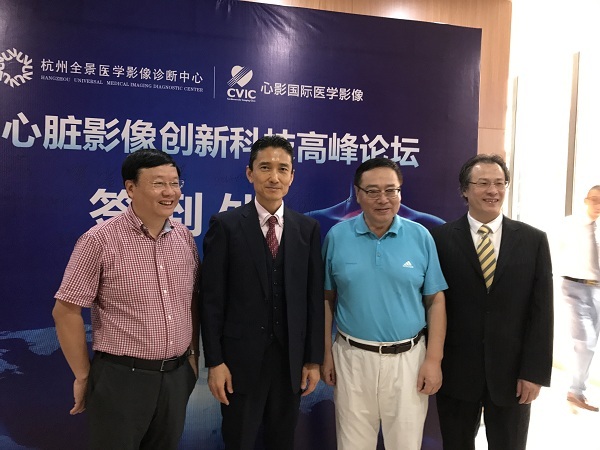
Zhao Shihua, Masahiro Terashima, Zhang Zhaoqi, Li Chengzhou (from left to right)
Routine health checkups rarely detect early-stage heart disease.
In September 2004, former U.S. President Bill Clinton was hospitalized due to chest pain. Examinations revealed that several major coronary arteries were more than 90% blocked. Ultimately, Clinton had to undergo coronary artery bypass grafting (CABG) surgery. After his recovery, questions were raised as to why his annual comprehensive physical examinations had failed to detect his heart condition.
This is primarily because early detection of heart disease is clinically challenging. As most people age, their cardiac function begins to deteriorate, leading to the development of atherosclerotic plaques, fibrotic plaques, and moderate stenosis; however, they often remain asymptomatic. Ultimately, acute symptoms may erupt suddenly, resulting in death before timely medical intervention can be administered.
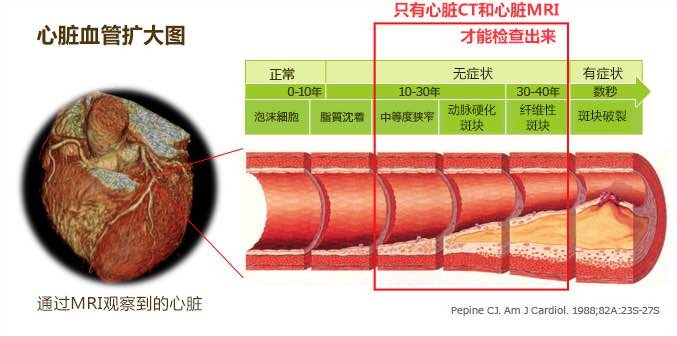
Data released by the U.S. National Institutes of Health shows that more than half of deaths caused by heart attacks had no prior warning signs, with men accounting for 50% and women as high as 64%.
While conducting clinical research on cardiac MRI at Stanford University in the United States, Dr. Masahiro Terashima, founder of CVIC, identified this issue. During his research, he discovered that cardiac imaging diagnostic techniques could enable the diagnosis of heart diseaseEarly DiagnosisConsequently, he decided to return to Japan to promote this technology. Upon his return, Masahiro Terashima established CVIC, Japan’s first specialized cardiac imaging center.
A Third-Party Independent Imaging Center Specializing in Cardiac Imaging
CVIC Chairman Yoshitomo Furusawa told VCBeat that cardiac magnetic resonance imaging (MRI) technology does not require contrast agents for heart examinations, thereby eliminating the risk of iodine allergy. Cardiac MRI delivers high-definition images with rich contrast, enabling visualization of the heart safely and non-invasively without radiation exposure. Leveraging these images, CVIC can identify subtle early-stage lesions even in clients without any clinical symptoms, thus facilitating early diagnosis.
Additionally, CVIC performs comprehensive, high-difficulty cardiac magnetic resonance imaging (MRI) examinations to enable 3D reconstruction of cardiac images, along with detailed interpretation of both static 3D images and dynamic cine sequences. These visually intuitive images of pathological changes help health checkup clients better understand and prioritize their cardiac conditions, thereby reducing communication challenges for physicians when conveying diagnostic findings to patients.
At CVIC, clients can receive their test results on the same day and obtain the analysis report within three days. If further treatment is required following the examination, CVIC will coordinate with local specialized cardiac hospitals and experts. For complex cases, CVIC can also facilitate consultations with leading cardiovascular authorities in China and Japan.
In Japan, CVIC has gained recognition from medical experts and has been designated as the testing institution by 380 medical facilities. It performs over 3,600 cardiac magnetic resonance imaging (MRI) examinations annually, accounting for 10% of the national caseload in Japan, ranking first in the country in terms of examination volume. Eighty percent of these clients are referred by authoritative Japanese cardiologists, with some hailing from the political, business, entertainment, and healthcare sectors.
Li Dongying, CEO of CVIC and General Manager for China, stated, “CVIC primarily assists cardiologists in diagnosis and treatment throughout the entire healthcare process. If physicians believe patients require imaging diagnostics, they will recommend them to undergo examinations at CVIC. Cardiologists then formulate subsequent treatment plans based on the diagnostic reports issued by CVIC. Compared with hospitals, CVIC’s cardiac MRI services mainly target asymptomatic individuals at risk of heart disease, aiming to detect subtle lesions and enable early intervention. Hospitals primarily focus on patients who already present symptoms and require further confirmation. Hospitals lack the capacity and manpower to conduct widespread screening, whereas third-party imaging centers serve as a valuable complement.”
In addition to preoperative examinations, Li Dongying also stated that MRI is a superior option for regular postoperative follow-ups, as many other diagnostic modalities involve radiation exposure. For patients who are physically weakened immediately after surgery, such radiation constitutes an additional harm, whereas non-invasive MRI is widely recognized as an excellent alternative.
Through this collaboration with Panoramix Medical, the Xinying International Medical Imaging Hangzhou Flagship Center has been established. Its customer acquisition channels include hospital referrals on one hand, and leveraging the Panoramix Medical platform to serve general health check-up users on the other.
As China’s first third-party independent medical imaging diagnostic institution, Panovue Medical operates multiple physical testing centers, each exceeding 10,000 square meters, in Shanghai, Hangzhou, Chongqing, Guangzhou, Wuhan, and other cities. This is why CVIC has chosen to partner with Panovue Medical.
Specialized Imaging Centers as a Competitive Advantage
Amidst severe disparities in the allocation of medical resources and the increasing saturation of public Grade 3A hospitals, the emergence of third-party diagnostic centers offers a flexible solution to this challenge. These centers can operate as independent diagnostic institutions serving patients directly, or partner with public and private hospitals at various levels to share their diagnostic workload, thereby facilitating the optimal integration and distribution of high-quality medical resources.
To support the scaled development of third-party diagnostic centers, China has successively introduced policies this year that establish third-party diagnostic institutions (including clinical laboratory centers and medical imaging centers) as independent legal entities responsible for their own legal liabilities. However, to ensure medical quality and safety, health and family planning administrative departments at all levels must uniformly incorporate these institutions into local medical quality control systems.
Since the national government opened up policies for third-party independent imaging centers, many such facilities have emerged.

Major Third-Party Imaging Centers in China
With so many independent imaging centers, it is difficult for the general public to distinguish which one is better or more suitable for their needs. The collaboration between PanView Medical and CVIC has raised awareness of both brands among the general public, establishing that for cardiovascular disease examinations, the PanView Heart & Image International Medical Imaging Hangzhou Flagship Center is the optimal choice.
Therefore, PanView Imaging’s collaboration with CVIC gives it a certain competitive edge among third-party imaging centers. Additionally, CVIC is gradually expanding its operations in China by leveraging PanView Imaging’s physical imaging centers. According to Li Dongying, the Hangzhou PanView facility is merely the first CVIC location established in China; going forward, CVIC and PanView will jointly bring CVIC’s specialized cardiovascular expertise to cities such as Chongqing, Guangzhou, Wuhan, Shanghai, and Beijing.
Meanwhile, CVIC will also join hands with leading domestic authorities in cardiac imaging, such as Professor Hu Dayi and Professor Zhao Shihua, to amplify its academic influence.
Regarding the rapidly emerging “AI + medical imaging” technology in China, Li Dongying stated that they are gradually beginning to engage with this new technology. Years of accumulation have endowed CVIC with ample relevant data—a unique advantage that lays the foundation for future research and development.